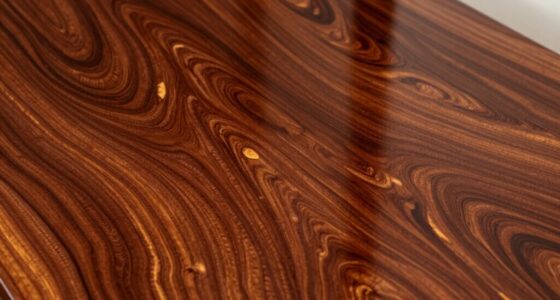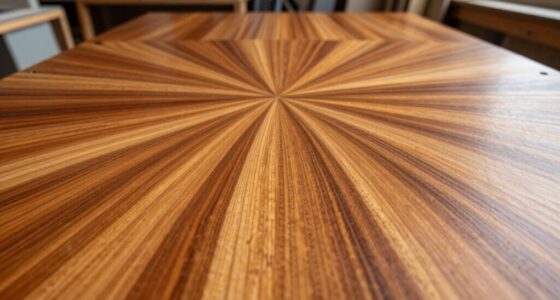
Your choice of veneer glue impacts flatness more than you might expect. The type of adhesive can cause warping or bubbling, compromising both appearance and structure. Additionally, viscosity plays a big role—thicker glues can trap air pockets, while thinner ones may not hold up under stress. Environmental conditions, like humidity, also affect curing. Taking time to test your adhesive on scrap pieces can uncover potential issues early, ensuring a smoother finish in your final project. There’s more to explore on this topic.

Get business pricing on tools and workshop supplies
- Business-only prices and quantity discounts
- Tax-exempt purchasing
- Multiple users, one account, clear invoices
Key Takeaways
- The choice of adhesive directly impacts veneer adhesion, influencing the final product’s flatness and structural integrity.
- Poor-performing glues can lead to warping and bubbling, compromising the veneer’s aesthetic appeal.
- Viscosity affects application; thicker glues may create air pockets that weaken the bond and reduce flatness.
- Environmental conditions like humidity and temperature can hinder glue performance, leading to issues like peeling or lifting edges.
- Testing adhesives on scrap pieces helps identify performance issues early, ensuring better flatness in the final product.
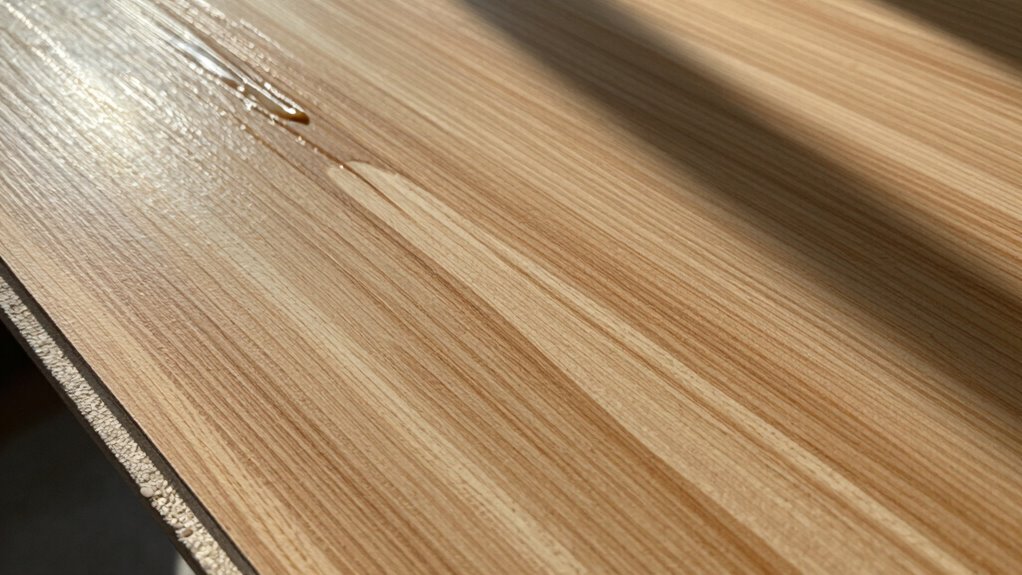
When selecting the right veneer glue, you’ll find that your choice greatly impacts the flatness of your project. The type of adhesive you use can considerably affect veneer adhesion, which in turn influences how well your veneer lays flat. If you choose a glue that doesn’t perform well under pressure or when exposed to heat and moisture, you might end up with warping or bubbling. These issues can ruin the aesthetic and structural integrity of your work, so it’s vital to evaluate glue performance before you start.
One key factor in glue performance is its viscosity. A thicker glue may seem like it’ll provide better adhesion, but it can actually lead to uneven application. This inconsistency can create air pockets between the veneer and the substrate, which not only weakens the bond but can also lead to visible defects. On the other hand, a thinner glue may spread more easily and fill those gaps, but it might not hold up as well under stress. Striking the right balance is essential for achieving that smooth, flat finish you’re aiming for.
Viscosity plays a crucial role in glue performance; finding the right balance is key to achieving a flawless veneer finish.
Temperature and humidity also play a big role in how your glue performs. Some adhesives are more sensitive to environmental conditions than others. If you’re working in a humid space, for example, some glues may not cure properly, compromising veneer adhesion. This can lead to issues down the line, like peeling or lifting edges. Always check the manufacturer’s recommendations for the glue you choose, especially regarding the climate in which you’re working. Understanding adhesive properties can help you select the most suitable glue for your environment.
Another aspect to evaluate is the drying time. A fast-drying glue might seem convenient, but it can also lead to rushed applications, increasing the likelihood of mistakes. On the flip side, a glue with a longer open time allows you to make adjustments and guarantees better contact between the veneer and the base material. This extended working time can ultimately contribute to a flatter, more professional-looking finish.
Finally, don’t underestimate the importance of testing. Before committing to a particular adhesive, try it out on scrap pieces. This will give you a better idea of how it performs regarding both adhesion and flatness. Additionally, understanding glue performance factors can help you make more informed choices for future projects. By taking the time to choose the right veneer glue, you’ll not only enhance the quality of your project but also make sure that the final product meets your expectations.
As an affiliate, we earn on qualifying purchases.
Frequently Asked Questions
What Types of Veneer Glue Are Available on the Market?
When you’re choosing veneer glue, you’ve got several options. PVA adhesives are popular for their ease of use and cleanup. Urea formaldehyde offers a strong bond, ideal for high-stress applications. Contact cement is great for quick adhesion, but it requires precision since it bonds on contact. Finally, hot glue provides a fast, temporary hold for quick projects. Each type has its unique benefits, so pick what best suits your needs!
How Does Humidity Affect Veneer Glue Performance?
Humidity affects glue performance greatly. When the air’s moisture level rises, it can cause the glue to absorb moisture, weakening its bond and potentially leading to warping or delamination. Conversely, low humidity can make the glue dry too quickly, preventing proper adhesion. You’ll want to monitor humidity levels closely to guarantee your veneer projects maintain the flatness and durability you aim for, as the right conditions are essential for ideal glue performance.
Can Veneer Glue Be Used for Other Woodworking Projects?
Absolutely, you can use veneer glue for other woodworking projects! Its adhesive properties make it great for laminating, edge banding, or even assembling intricate joints. You might’ve thought it’s only meant for veneers, but its versatility shines in various applications. Just make sure you choose the right type for your project, as some glues work better with different materials. Give it a try; you’ll be surprised at its effectiveness beyond just veneer work!
What Safety Precautions Should Be Taken When Using Veneer Glue?
When using veneer glue, always wear safety gear like gloves and goggles to protect yourself. Guarantee good ventilation by working in a well-ventilated area or using a fan to disperse fumes. For cleanup, use a damp cloth immediately after spills, and keep solvents handy for tougher spots. Store adhesives in a cool, dry place, tightly sealed, to prevent leaks and maintain their effectiveness. Taking these precautions helps guarantee a safer workspace.
How Can I Clean Excess Veneer Glue From My Project?
To gracefully tidy up excess veneer glue, you can employ a few savvy glue removal techniques. Start by gently scraping away the bulk with a putty knife, being careful not to harm the surface. Next, use a damp cloth with warm water to wipe down the area. For stubborn spots, a little mineral spirits can work wonders. Keep your clean up tools handy, and you’ll achieve a pristine finish in no time!
As an affiliate, we earn on qualifying purchases.
Conclusion
Choosing the right veneer glue can make or break your project’s flatness. Just like a ship sailing smoothly across calm waters, the right adhesive keeps your veneer snug and aligned, preventing warping and uneven surfaces. So, next time you’re in the workshop, remember that glue is more than just a sticky substance; it’s the unsung hero of your craftsmanship. Invest in quality glue, and your finished piece will be as flat as a pancake on a Sunday morning.
As an affiliate, we earn on qualifying purchases.
As an affiliate, we earn on qualifying purchases.
Fall yard work Picks
leaf blowers
As an affiliate, we earn on qualifying purchases.