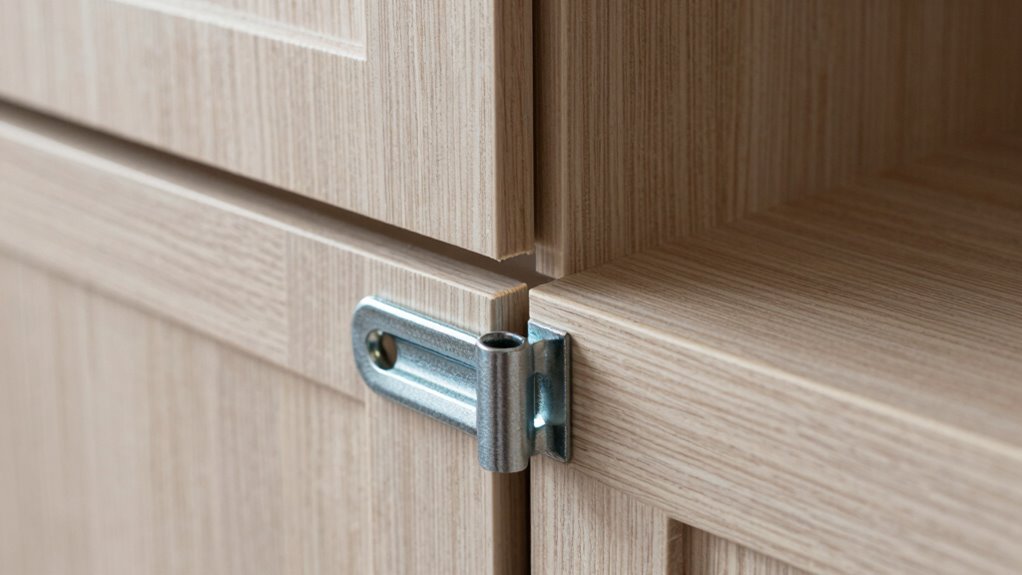
To pull out-of-square cabinets into perfect corners, start by placing clamps in a sequence that pulls the panels square. Begin with a clamp in the center, applying gentle pressure, then add clamps along the edges, gradually increasing pressure from the middle outward. Make small adjustments as you go, ensuring the panels stay aligned. Following the right clamp order is key for professional results—keep exploring for more tips on perfecting your cabinet construction.
Key Takeaways
- Begin by clamping the corner that is most out of square to correct the initial misalignment.
- Use sequential clamps, tightening each gradually to pull the frame into proper 90-degree corners.
- Place clamps along the edges in a logical order, starting from the center and moving outward.
- Incorporate shims or scrap wood to fill gaps and maintain consistent pressure during clamping.
- Continuously check for squareness with a carpenter’s square and adjust clamps as needed before the glue sets.
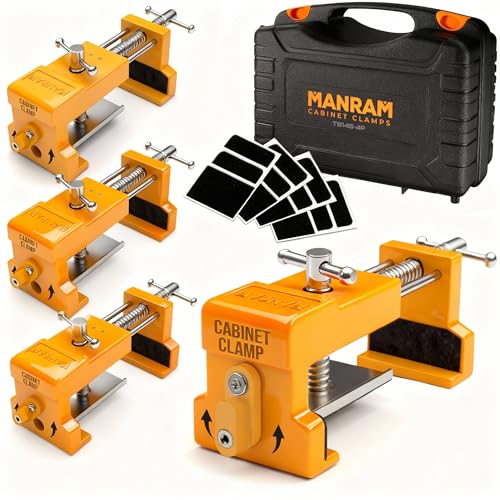
Premium Cabinet Clamps 4 Pack with Protective Case, Solid Cast Steel Construction, Integrated Drill Guide with EVA Pads, Face Frame Alignment Tool Clamp for Cabinet Installation & Woodworking
All-in-One Cabinet Clamp & Drill Guide System – These cabinet clamps for installing cabinets combine tightening, aligning, pre-drilling,…
As an affiliate, we earn on qualifying purchases.
As an affiliate, we earn on qualifying purchases.
Why Warped Wood Makes Achieving Perfect Cabinet Corners Difficult
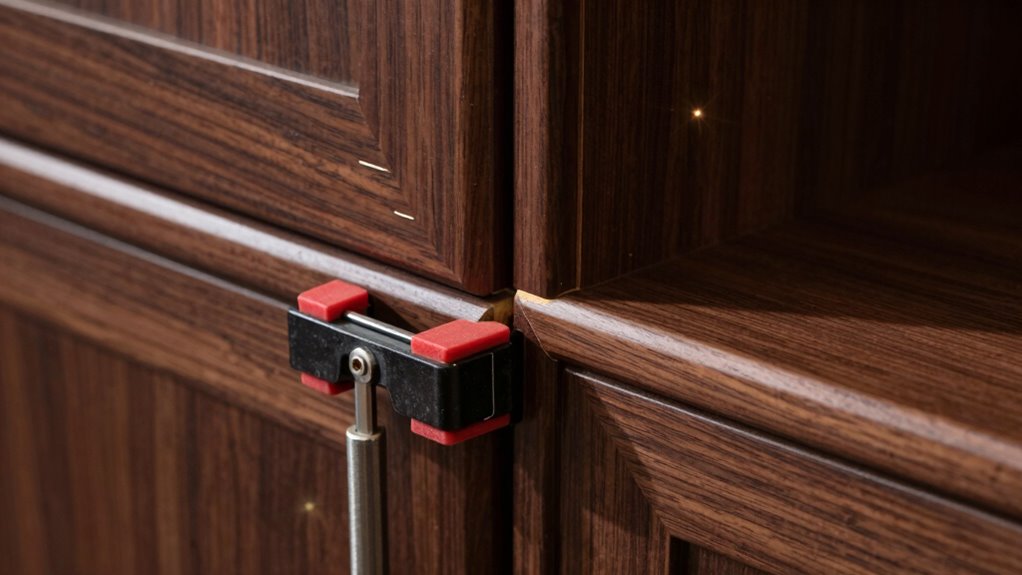
Warped wood can considerably complicate the process of achieving perfect cabinet corners. When wood warps, it bends or twists out of shape, leading to uneven edges and gaps. This cabinet distortion makes it difficult to align panels precisely, resulting in gaps or misaligned corners. Warping often occurs from moisture changes or uneven drying, causing the wood to lose its straightness. As a result, even if you clamp pieces tightly, the warped sections may resist straightening, making it challenging to create seamless corners. Addressing wood warping before assembly is essential; otherwise, the cabinet’s structure will remain out of square. Recognizing and managing these warping issues early on helps guarantee your cabinet corners are tight, aligned, and professional-looking. Proper drying techniques can help prevent warping and maintain the wood’s stability throughout your project.

DIYLOG Corner Clamp for Woodworking, 90 Degree Corner Clamp, 4 Pack 5.5"x 5.5" Aluminum Alloy Right Angle Woodworking Tools, Positioning Squares for Picture Frame, Box, Cabinets, Drawers
【90 Degree Wood Working Tools and Equipment Precision Angle Clamp】Made of high quality aluminum alloy to ensure 90…
As an affiliate, we earn on qualifying purchases.
As an affiliate, we earn on qualifying purchases.
Essential Tools and Materials for Clamping Out-of-Square Cabinets
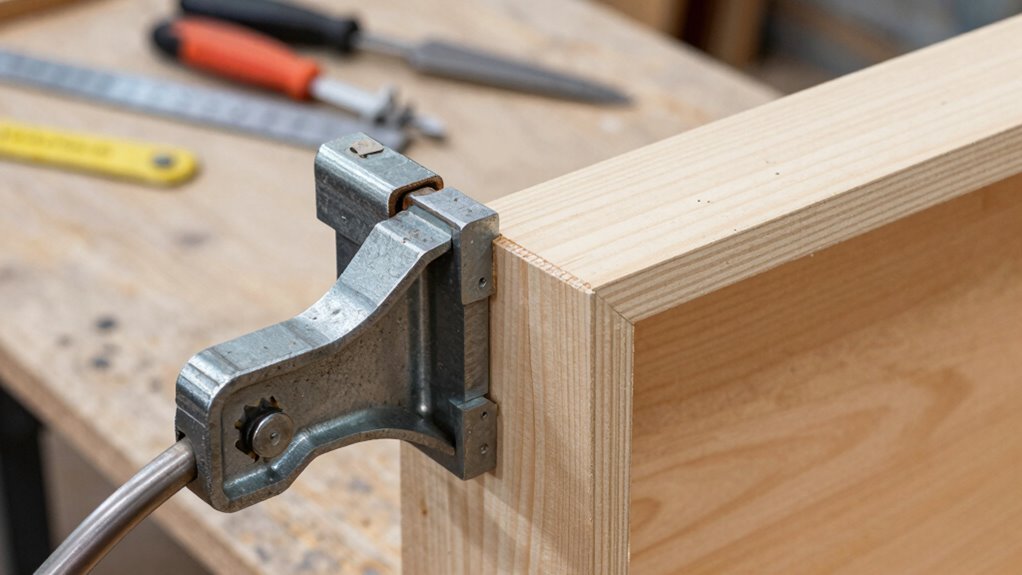
To effectively clamp out-of-square cabinets, you need the right tools and materials that can handle irregularities and guarantee tight, accurate joins. Start with sturdy bar clamps or corner clamps designed to apply even pressure across uneven surfaces. Use shims or scrap wood to fill gaps and maintain alignment, especially when working with warped wood. Having cabinet hinges on hand helps you temporarily hold panels in place while adjusting the clamps. Once clamped, make certain the wood finish remains unaffected by using protective pads or scrap pieces to prevent scratches. Quality clamps with smooth operation are essential for fine adjustments. Additionally, understanding the clamping process and how to adapt it to irregular surfaces ensures a professional, durable cabinet finish. These tools and materials help you pull warped or out-of-square parts into proper alignment, ensuring a professional, durable cabinet finish.

Nelson Wood Shims 8" 24 Pack – Kiln Dried Wood
Nelson Wood Shims Store
As an affiliate, we earn on qualifying purchases.
As an affiliate, we earn on qualifying purchases.
How Clamp Order Pulls Warped Materials Into Perfect Alignment

When you use clamps in the correct order, you can effectively pull warped or out-of-square materials into perfect alignment. Start by clamping along the grain orientation to guarantee the wood’s natural strength guides the correction. Applying clamps gradually, from the center outward, helps distribute pressure evenly, preventing new warping. This method not only straightens the panels but also maintains the integrity of the grain flow, which is vital for aesthetic consistency. Proper clamp order minimizes stress points, reducing the risk of damage and assuring the joint stays true over time. Additionally, aligning the material correctly during clamping enhances finish durability, as the wood remains stable and less prone to shifting or cracking. Using the appropriate clamping techniques ensures a more reliable and long-lasting result. This disciplined approach results in a perfectly aligned, professional-quality cabinet.
DIYLOG Corner Clamp for Woodworking, 90 Degree Corner Clamp, 4 Pack 5.5"x 5.5" Aluminum Alloy Right Angle Woodworking Tools, Positioning Squares for Picture Frame, Box, Cabinets, Drawers
【90 Degree Wood Working Tools and Equipment Precision Angle Clamp】Made of high quality aluminum alloy to ensure 90…
As an affiliate, we earn on qualifying purchases.
As an affiliate, we earn on qualifying purchases.
How to Clamp Cabinets for Square, Professional Results

Achieving perfectly square cabinets requires careful clamping techniques that guarantee all corners and edges align precisely. Start by applying clamps in a sequence that pulls corners into perfect 90-degree angles, ensuring the structure stays square throughout. Use cauls or scraps of wood between clamps and cabinet surfaces to prevent damage and maintain even pressure. As you clamp, check for square using a carpenter’s square, adjusting clamps as needed. Once clamped, focus on cabinet hardware placement before glue sets, so everything lines up correctly. Proper clamping also optimizes finishing techniques, making sanding and painting easier and more professional-looking. Remember, consistent pressure and attention to detail during clamping are key to achieving professional results with beautifully aligned, square cabinets. Incorporating clamp order techniques can significantly improve the accuracy of your project.
Troubleshooting Common Clamping Problems and Misalignments
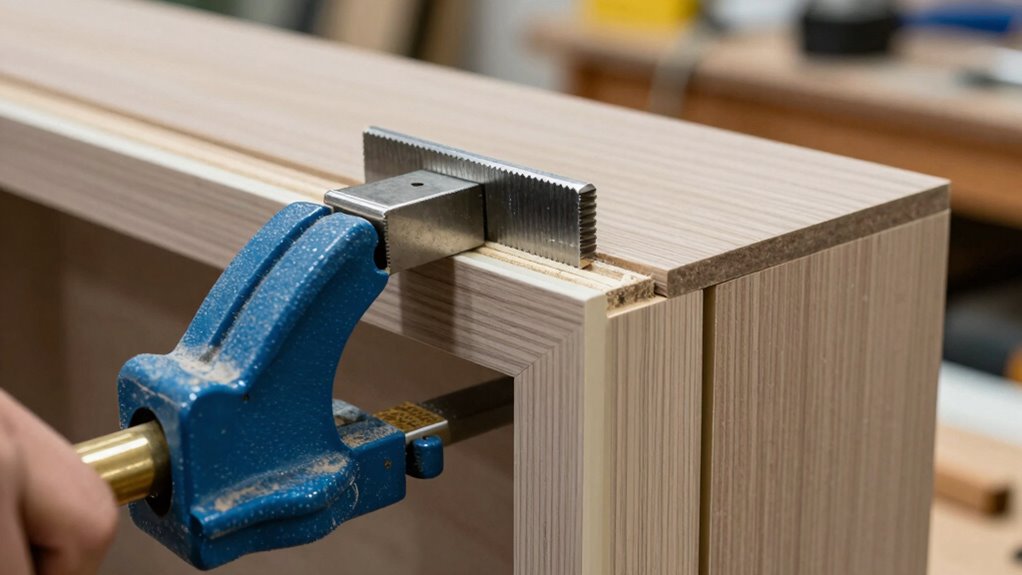
Clamping errors can lead to misaligned cabinets and frustration during assembly. You might notice uneven gaps or crooked edges, which often result from improper technique or pressure. Addressing these issues quickly is key to ensuring your cabinets stay square and professional-looking. Using consistent pressure and proper clamping techniques is essential for achieving accurate alignment during the process.
Common Clamping Errors
Misaligned clamps are a common cause of problems during cabinet assembly, leading to uneven joints and gaps. If your clamps aren’t positioned correctly, your cabinet hardware may not align properly, causing issues with door hinges and drawer slides. Poor clamping can also affect your paint finishing, as gaps can trap dust or moisture, ruining a smooth surface. Be sure to double-check clamp placement before tightening—using consistent pressure across all clamps helps maintain proper alignment. Avoid over-tightening, which can warp components or squeeze out glue prematurely. Proper clamping ensures your panels stay true during glue curing, resulting in cleaner joints and a better finish. Paying attention to clamping technique now guarantees your work stays accurate during the process, saving you time and effort in the long run, producing cabinets that are both functional and visually appealing. Additionally, understanding the importance of exponential accuracy can help you troubleshoot and refine your clamping methods for even better results.
Correcting Misalignment
When you notice uneven joints or gaps after gluing, it’s time to rectify the misalignment. First, gently loosen your clamps and realign the panels, ensuring the edges are flush. Sometimes, a small tap with a mallet can help settle the pieces into proper position. Once aligned, reapply clamps carefully, making sure they’re evenly distributed. Check your cabinet hardware placement to avoid further misalignment issues during assembly. If the misalignment affects the finish, use finishing techniques like sanding or filling gaps with wood putty to create a smooth surface. Correcting misalignment early prevents larger problems later and ensures your cabinet looks professional. Keep your clamps tight but not over-pressurized, and double-check your work before final curing to maintain precision. Proper clamping pressure is essential to prevent distortion and ensure the high-quality appearance of your project.
Tips to Make Your Out-of-Square Cabinets Stay Square Over Time
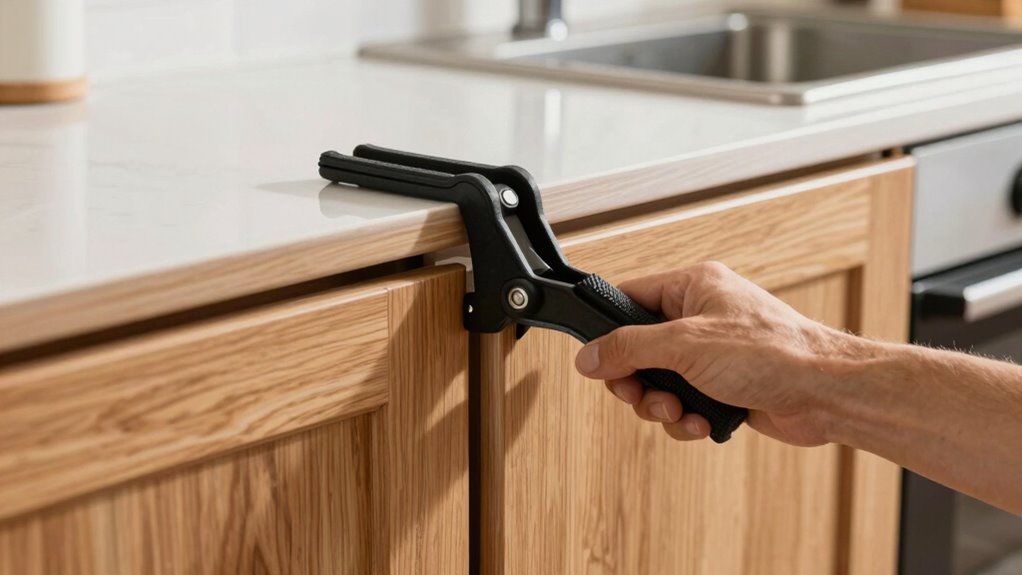
To guarantee your out-of-square cabinets remain square over time, you need to focus on proper installation techniques and regular maintenance. First, ensure your cabinet finishes are applied carefully, avoiding excess glue or fasteners that could warp the wood. Proper finishing helps stabilize the wood and prevents warping or swelling, which can cause misalignment. Always prioritize woodworking safety by wearing protective gear and following safety guidelines during installation and maintenance. Regularly check the cabinets for shifts or gaps, and tighten any loose screws or fasteners promptly. Using quality hardware and avoiding over-tightening ensures the cabinets stay true. Consistent upkeep and attention to detail will help your cabinets maintain their square shape, keeping your space functional and visually appealing over time. Wood movement is a natural phenomenon that can affect the alignment of your cabinets if not properly accounted for during installation.
When to Use Out-of-Square Clamping Techniques vs. Standard Methods
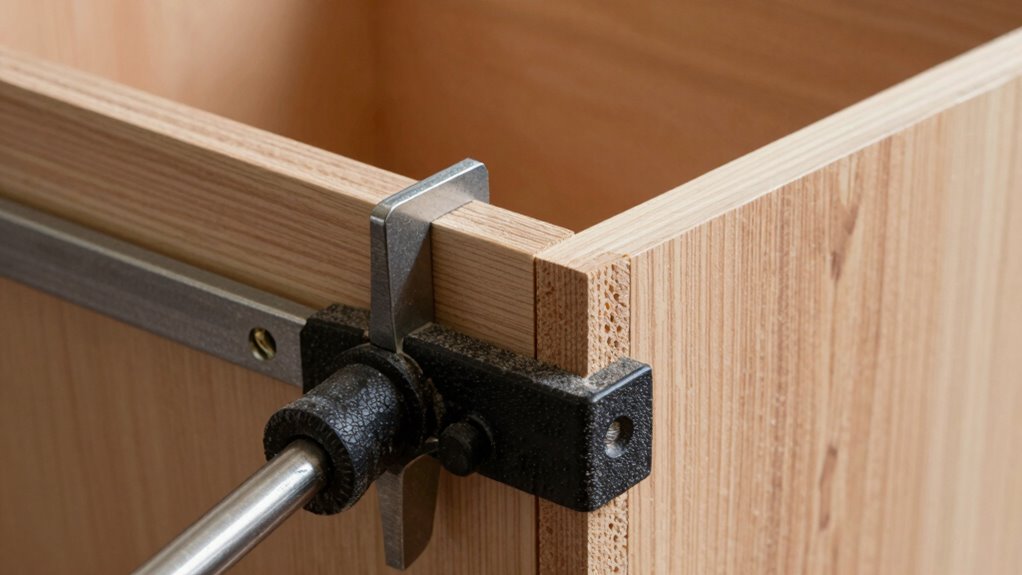
Choosing the right clamping method depends on the specific project and the alignment you need to achieve. Use standard clamping methods for straightforward cabinet framing methods when panels are square and well-aligned. However, when dealing with out-of-square situations or complex frames, custom clamping techniques become essential. Out-of-square clamping techniques are ideal when you need to correct or prevent misalignment during assembly, ensuring your cabinet stays true. If your project involves irregular angles or warped materials, these custom methods provide the flexibility needed to pull panels into perfect alignment. Knowing when to switch between standard methods and out-of-square techniques helps you achieve precise, durable cabinets. Use your judgment based on the framing complexity and the degree of misalignment to select the most effective approach.
Final Tips for Building Flawless, Durable Cabinets
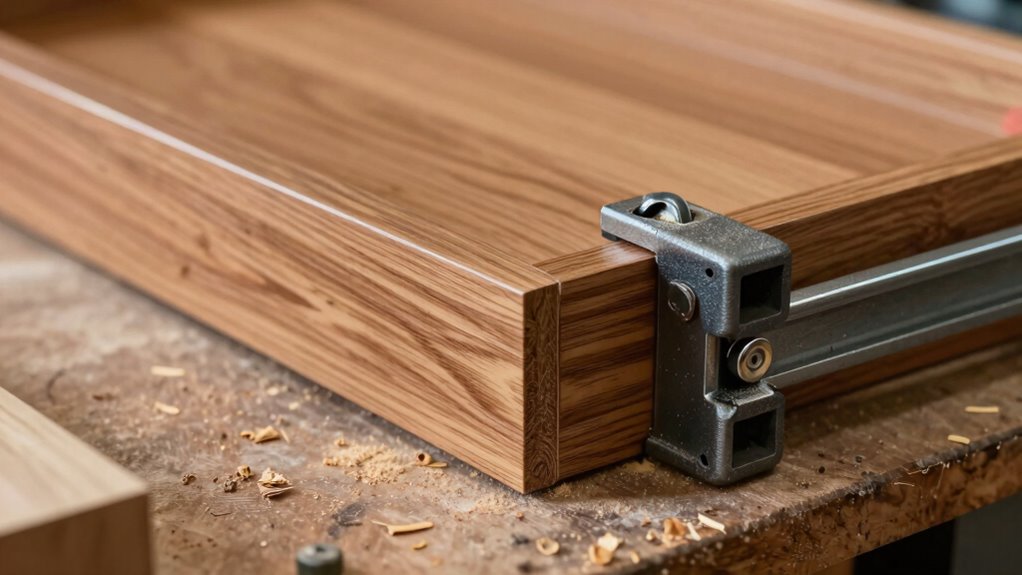
Achieving flawless, durable cabinets hinges on attention to detail throughout the building process. Start with careful cabinet finishing to ensure surfaces are smooth and protected. Proper sanding and sealing prevent future chips and scratches, enhancing longevity. When installing hinges, double-check alignment to ensure smooth opening and closing. Precise hinge installation avoids gaps and misalignment, which can compromise durability and appearance. Use quality hardware and follow manufacturer instructions for best results. Before final assembly, review all joints and surfaces, making adjustments as needed. Tighten fasteners securely without over-tightening, which can cause warping. Proper cabinet finishing is essential for creating a professional look and extending the life of your cabinets. By focusing on meticulous finishing and precise hinge installation, you’ll craft cabinets that not only look professional but also stand the test of time.
Frequently Asked Questions
Can Out-Of-Square Cabinet Techniques Be Used on Larger Projects?
Yes, you can use out-of-square cabinet techniques on larger projects. For large-scale cabinetry, these methods help guarantee structural reinforcement and precise alignment, even when dealing with bigger panels and frames. By applying clamps strategically, you maintain squareness during assembly, reducing warping or misalignment. Just make sure to adjust your clamping pressure and positioning to accommodate the increased size, so the entire structure stays true and solid.
What Are the Best Clamping Materials for Delicate Woods?
A stitch in time saves nine, especially with delicate woods. For clamping, use soft clamping pads to prevent damage and guarantee even pressure. Rubber or silicone pads work best, offering wood protection and reducing marks. These materials distribute pressure gently, so your delicate wood stays pristine. Always choose clamps with padded surfaces, and double-check your setup before tightening fully—your craftsmanship depends on it.
How Long Should Clamps Remain in Place for Optimal Results?
You should keep clamps in place for at least the recommended drying time, usually 24 hours, to guarantee proper adhesion and stability. Adjust clamp pressure carefully—too tight can damage the delicate wood, while too loose won’t secure it properly. For ideal results, maintain consistent pressure during the drying period and avoid removing clamps prematurely, as this can compromise the bond and cause warping or misalignment.
Are There Specific Brands of Clamps Recommended for Out-Of-Square Cabinets?
You’re better off sticking to trusted clamp brands like Bessey, Irwin, or Kreg, especially for out-of-square cabinets. These brands are known for durability and reliable clamp accessories that won’t let you down. While some lesser-known options might save you a buck, they could end up costing more in the long run. Trust quality to pull everything into alignment — after all, a stitch in time saves nine.
How Do I Prevent Clamps From Damaging Cabinet Surfaces?
To prevent clamps from damaging cabinet surfaces, always use protective padding like soft cloth or foam between the clamp jaws and the wood. Guarantee proper clamp alignment so even pressure distributes without causing dents or marks. Check the padding regularly and adjust clamps carefully, avoiding overtightening. This approach helps maintain your cabinet’s finish while achieving a precise, out-of-square correction with minimal surface damage.
Conclusion
With the right clamp order and a little patience, you can gently guide your warped cabinet pieces into perfect harmony. Remember, even the most charming imperfections can be softened with careful alignment and thoughtful techniques. Trust your tools and instincts, and over time, your cabinets will become both beautiful and resilient. Sometimes, a gentle touch and a strategic approach are all you need to turn a tricky project into a masterpiece.