To eliminate shadows where you cut, position your shop lights directly overhead and from multiple angles to guarantee even coverage. Use adjustable and task-specific lighting over workbenches and cutting zones to focus light precisely where needed. Incorporate diffusers to prevent glare, and avoid placing bright lights directly in your line of sight. An effective layout combines ambient, task, and accent lighting, so shadows don’t impede your work—continue exploring these strategies for a brighter, safer workspace.
Open a free Amazon Business account
Business pricing, bulk buying and tax-exempt orders.
As an affiliate, we earn on qualifying purchases.
Key Takeaways
- Position overhead and task lighting directly above cutting areas to minimize shadows and improve visibility.
- Use multiple light sources from different angles to achieve even illumination and eliminate shadow hotspots.
- Install adjustable fixtures over workbenches for customizable angles tailored to cutting tasks.
- Incorporate diffusers or indirect lighting to reduce glare and reflections, enhancing safety and clarity.
- Regularly evaluate workspace shadows with portable lights and adjust lighting placement accordingly.
adjustable shop workbench lighting
As an affiliate, we earn on qualifying purchases.
As an affiliate, we earn on qualifying purchases.
Why Proper Shop Lighting Improves Cutting Precision and Safety

Proper shop lighting is essential because it directly impacts your ability to see clearly while working. Good lighting, including decorative lighting and ambient illumination, helps you distinguish details and subtle differences in materials. When your workspace is well-lit, you reduce the risk of mistakes, ensuring cuts are accurate and clean. Bright, even lighting minimizes shadows that could obscure your view of the cut line or blade, preventing errors and accidents. Decorative lighting adds aesthetic appeal while enhancing overall visibility, creating a more comfortable environment. Ambient illumination provides consistent light coverage, helping you maintain focus and precision during intricate tasks. Additionally, understanding lighting design principles can help you optimize your setup for maximum efficiency. Implementing proper placement of lights ensures even coverage and minimizes glare, further improving your work quality. Considering lighting layout and fixture types can also help you achieve balanced illumination tailored to your workspace’s specific needs. Properly applied lighting techniques can significantly reduce eye strain and fatigue, making your work more comfortable over extended periods. Employing task lighting directly at your work area can further improve visibility and safety. Overall, a well-lit shop boosts safety, improves your cutting accuracy, and makes your work more enjoyable.
LED task lighting for woodworking
As an affiliate, we earn on qualifying purchases.
As an affiliate, we earn on qualifying purchases.
Evaluate Your Workspace to Find Shadow-Prone Areas
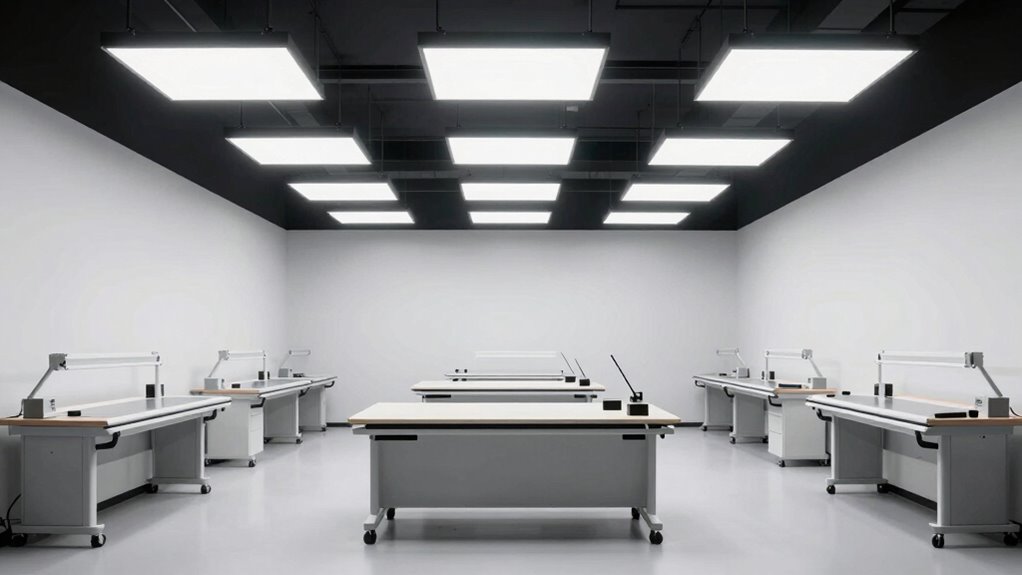
Start by observing your workspace to spot shadow hotspots that could hinder your work. Assess your existing lighting setup to see which areas lack sufficient illumination. This evaluation will help you identify where adjustments are needed to create a more even and effective lighting layout. Incorporating simple lighting strategies can make a significant difference in reducing shadows and improving overall visibility. Additionally, considering task-specific lighting can enhance precision and safety during detailed work. Incorporating ergonomic principles into your lighting plan ensures comfort and prevents eye strain during long hours of work. Evaluating lighting placement and fixture positioning can further optimize light distribution across your workspace. Paying attention to light quality can also reduce glare and improve visual comfort throughout your tasks.
Identify Shadow Hotspots
To effectively identify shadow hotspots in your workspace, you need to carefully observe how light interacts with your environment. Move around your shop at different times of day and note areas where shadows persist or intensify. Look for lighting blind spots—zones where your current setup leaves parts of your workspace poorly illuminated. Pay attention to corners, beneath shelves, and around machinery, as these spots often become shadow hotspots that hinder your work. Use a flashlight or portable light to highlight areas that don’t get enough light. Mark these shadow-prone areas so you can address them later. Recognizing these hotspots now helps you plan targeted lighting adjustments, ensuring every part of your shop is well-lit and free from distracting shadows. Additionally, understanding how light distribution affects your workspace can guide you in optimizing your overall lighting layout for maximum coverage. Properly assessing lighting uniformity ensures you eliminate uneven shadows that can cause visual fatigue or safety issues. Being aware of light placement principles can further improve how you position fixtures for even illumination across your entire workspace. Incorporating lighting maintenance into your routine ensures consistent performance and prevents the development of new shadow areas over time. Regularly inspecting your lighting setup helps maintain lighting effectiveness, keeping your workspace safe and efficiently lit.
Assess Existing Lighting Setup
Evaluating your current lighting setup is essential for pinpointing shadow-prone areas in your workspace. Start by examining how your existing lighting technology provides ambient illumination across the shop. Look for uneven light distribution, dark spots, or areas where shadows fall on your work surfaces. Use a flashlight or your phone’s camera to identify problematic zones during different times of the day. Take note of fixtures that cast harsh shadows or create glare, and determine whether your current lighting adequately covers all work zones. This assessment helps you understand where improvements are needed. By understanding how your lighting technology interacts with your workspace, you can make informed decisions to optimize ambient illumination and reduce shadows where you cut. Additionally, understanding the impact of lighting quality can help you choose the best solutions for a safer, more efficient work environment.
As an affiliate, we earn on qualifying purchases.
Choose the Best Lights to Reduce Shadows in Your Workshop
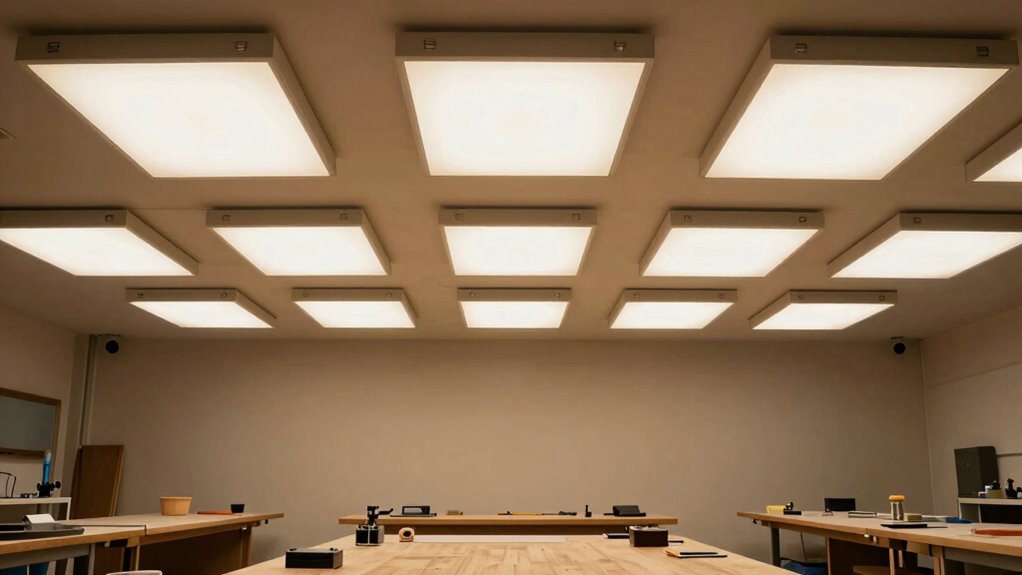
To reduce shadows, focus on ideal light placement that evenly covers your workspace. Use multiple light sources to eliminate dark spots and guarantee consistent illumination. Choose bright, neutral bulbs for clear visibility without creating harsh glares. Proper light placement is essential for ensuring all areas are well-lit and shadows are minimized during your work. Additionally, understanding lighting principles can help you optimize your setup to achieve the best results. Incorporating lighting design concepts can further enhance uniform coverage and reduce glare, making your workspace safer and more efficient. Implementing lighting layout strategies can help you achieve a balanced and shadow-free environment tailored to your specific workspace needs. Recognizing the importance of thermal behavior in lighting can also assist in selecting fixtures that perform well under varying conditions, ensuring consistent, high-quality illumination.
Optimal Light Placement
Properly placing your lights is essential for minimizing shadows and ensuring you see every detail clearly. Start by positioning ambient lighting overhead to evenly illuminate your workspace. Use decorative fixtures to add style and supplementary light, especially around key work areas. Consider installing task lighting directly over cutting and assembly zones to reduce shadow cast by your body or tools. Additionally, understanding vehicle performance fundamentals can help you optimize your workspace for better visibility and safety during detailed tasks. Recognizing the importance of lighting placement can make a significant difference in shadow reduction. Here are three key tips: 1. Mount ambient lighting fixtures centrally to distribute light uniformly. 2. Use decorative fixtures to enhance aesthetics and provide additional brightness. 3. Place task lights close to your work surface for focused, shadow-free illumination. Proper placement guarantees consistent light coverage, minimizes shadows where you cut, and improves overall visibility for precise work. Adjusting your lighting setup helps you see every detail clearly and work safely. Incorporating lighting best practices from indoor air quality principles can also contribute to a healthier, more comfortable workspace.
Use Multiple Light Sources
Using multiple light sources in your workshop is essential for minimizing shadows and achieving even illumination. By combining different fixtures, you can target specific areas and reduce dark spots, making your workspace safer and more efficient. Select lights with suitable lighting color to create a natural, comfortable environment that reduces eye strain. Incorporate a variety of light types—overhead, task, and accent lighting—to cover all angles and tasks. Prioritize energy-efficient options like LEDs to keep costs down and reduce environmental impact. Proper placement of these light sources guarantees consistent brightness throughout your workshop, eliminating shadows where you work most. This layered approach improves visibility, precision, and safety, helping you complete projects more accurately and comfortably.
Choose Bright, Neutral Bulbs
Choosing bright, neutral bulbs is key to reducing shadows and creating a well-lit workspace. The right color temperature guarantees your workspace looks natural and minimizes eye strain. Look for bulbs around 4000K to 5000K, which provide a neutral, daylight-like glow. When selecting bulbs, consider their lifespan to avoid frequent replacements that disrupt your workflow. Here are three tips:
- Pick bulbs with a color temperature between 4000K and 5000K for clear, accurate visibility.
- Opt for LED bulbs, which offer longer bulb lifespan and energy efficiency.
- Ensure bulbs emit even, bright light to eliminate shadows in key work areas.
Choosing the right bulbs improves visibility, reduces shadows, and keeps your shop well-lit without constant maintenance.
As an affiliate, we earn on qualifying purchases.
Position Shop Lights to Eliminate Shadows at the Cut Line
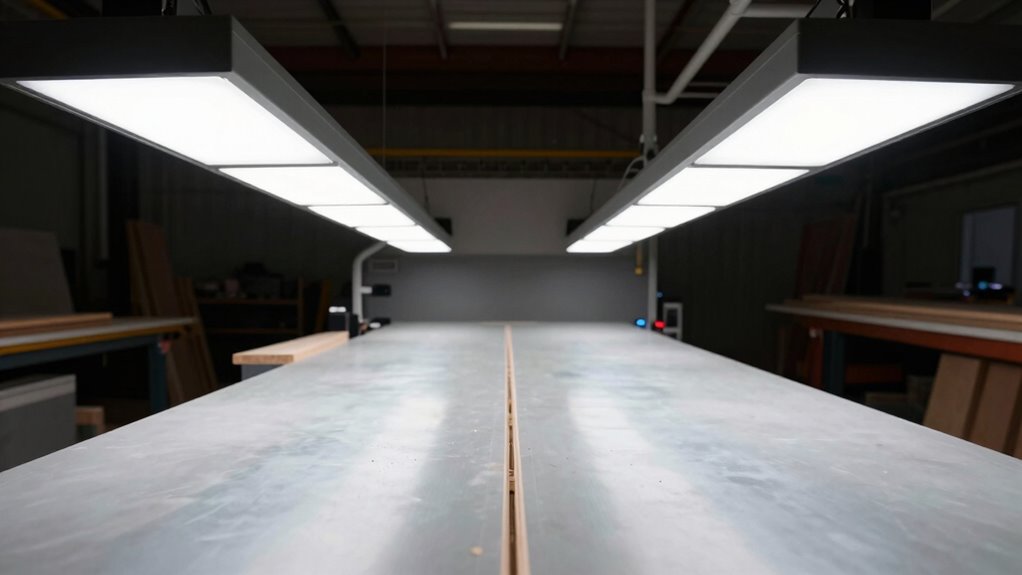
To guarantee your cut line remains visible and precise, position your shop lights so they minimize shadows directly over this area. Proper placement reduces shadow cast and improves light diffusion, ensuring you see every detail clearly. Place lights at angles that cross the cut line instead of from the same side. This setup minimizes shadows caused by your hands or tools. Here’s a visual guide:
| Light Placement | Effect on Shadows |
|---|---|
| Overhead directly above | Creates minimal shadow cast |
| Angled from sides | Distributes light evenly |
| Slightly behind cut line | Reduces shadow cast on workpiece |
| Higher elevation | Enhances light diffusion |
| Low and close | Focused illumination, fewer shadows |
Use Adjustable and Task-Specific Lights for Better Focus

Adjustable and task-specific lights give you the flexibility to direct illumination exactly where you need it most. With adjustable fixtures, you can focus light on particular work areas, reducing shadows and enhancing visibility. Proper task lighting minimizes eye strain and improves precision during detailed cuts or assembly. Here are three ways to optimize your shop lighting:
- Install adjustable fixtures over workbenches for customizable angles.
- Use focused task lighting on cutting stations to eliminate shadows.
- Position adjustable lights to highlight tools and materials clearly.
Design Lighting Layouts to Minimize Shadows, Glare, and Reflections

Designing your shop’s lighting layout with care can substantially reduce shadows, glare, and reflections that hinder visibility and safety. To achieve this, consider the color temperature of your lights; a neutral or cool white (around 4000K to 5000K) helps prevent color distortion and glare. Proper light diffusion is essential—use fixtures with diffusers or indirect lighting to spread light evenly, minimizing harsh shadows and reflections on shiny surfaces. Position lights strategically to evenly illuminate work areas from multiple angles, reducing the chance of shadows obstructing your view. Avoid placing bright lights directly in your line of sight, as they can cause glare. By thoughtfully combining color temperature and effective light diffusion, you create a well-lit environment that enhances safety and productivity.
Test and Fine-Tune Your Lighting Setup for Optimal Visibility
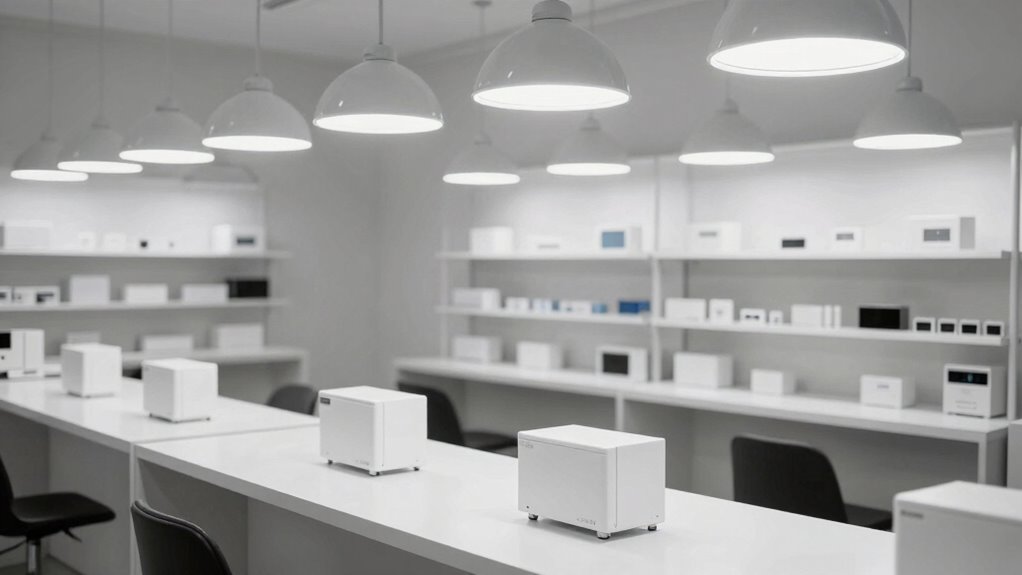
Testing and fine-tuning your lighting setup is essential to guarantee ideal visibility in your shop. Proper adjustments ensure lighting aesthetics balance functionality and style, especially when incorporating decorative fixtures. To evaluate your setup:
Ensuring proper lighting balance creates a safer, more efficient, and visually appealing workspace.
- Walk through your workspace and observe shadows, glare, and reflections on your work surfaces.
- Use a flashlight or handheld light to pinpoint areas needing more illumination or glare reduction.
- Adjust fixture angles, dimming levels, or add supplemental lighting to eliminate dark spots and improve overall clarity.
Fine-tuning these elements helps create a well-lit environment that enhances visibility and complements your decor. Remember, the goal is to achieve even, shadow-free lighting where you actually cut, making your work safer and more efficient.
Troubleshoot Common Shadow Problems in Your Shop
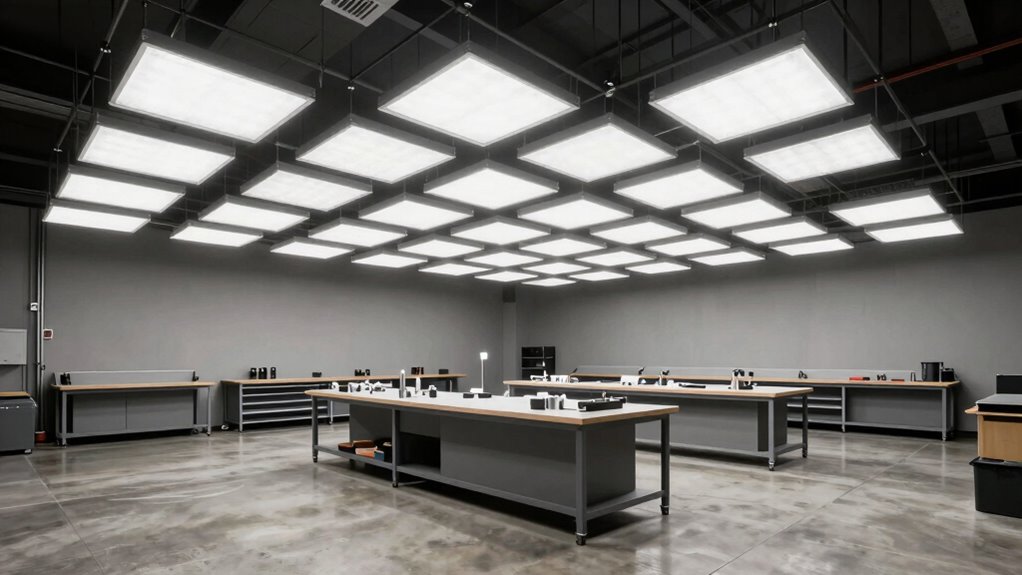
Have you noticed persistent shadows that hinder your work? Shadow casting often occurs when your lighting setup isn’t evenly distributed or lacks proper light diffusion. To troubleshoot, first identify where shadows form most frequently. Adjust the angle and height of your lights to minimize direct shadow casting on your work surface. Using diffusers or translucent covers can help spread light more evenly, reducing harsh shadows. Check for objects or fixtures that block light and reposition them if possible. Consider adding multiple light sources from different angles to eliminate shadow zones. Proper light diffusion ensures softer, more uniform illumination, making shadows less noticeable. By systematically adjusting your lighting setup, you’ll improve visibility and create a safer, more efficient workspace.
Maintain Your Lighting System for Consistent, Shadow-Free Work
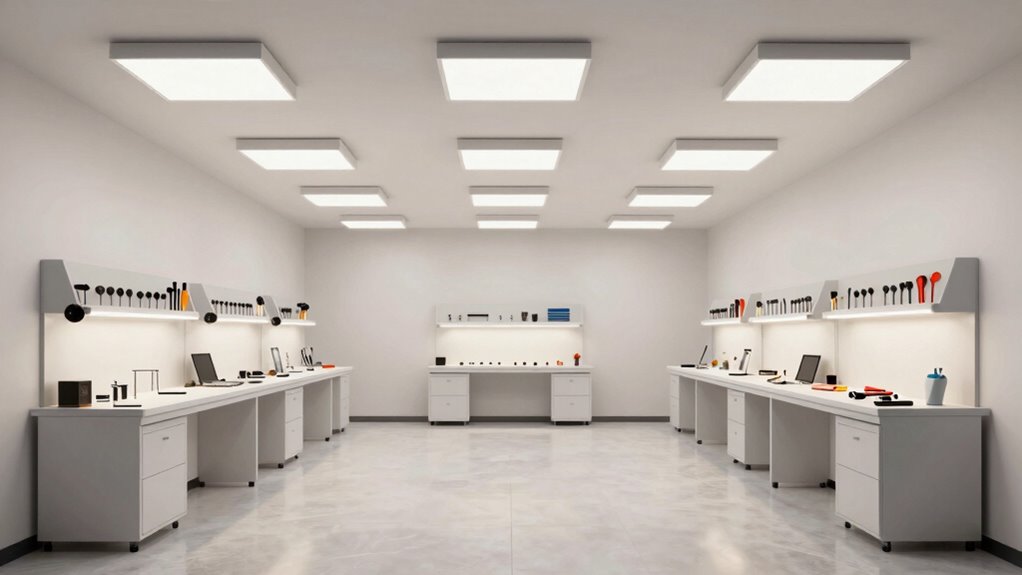
To guarantee your shop remains well-lit and free of shadows, maintaining your lighting system regularly is vital. Proper upkeep ensures consistent, shadow-free work and highlights decorative accents that add character to your space. Here’s what you should do:
- Check and replace bulbs to ensure even illumination, preventing dim spots that create shadows.
- Clean fixtures and lenses to maximize light output and avoid dust buildup that dims ambient lighting.
- Adjust light placement when adding new tools or workstations to maintain ideal coverage and eliminate shadow-prone areas.
Regular maintenance keeps your ambient lighting effective, making your shop safer and more efficient. It also preserves the aesthetic appeal by ensuring all lighting elements, including decorative accents, shine brightly and uniformly.
Frequently Asked Questions
How Can I Identify Hidden Shadow Areas in My Workshop?
To identify hidden shadow areas in your workshop, use shadow mapping techniques by observing how light falls across surfaces, especially in corners and under fixtures. Incorporate light diffusion to soften shadows and reveal dark spots. Move your light sources around, noting where shadows persist. This hands-on approach helps you pinpoint and eliminate hidden shadows, ensuring a well-lit workspace that minimizes cutting errors and enhances safety.
What Are the Best Types of Lights for Shadow-Free Cutting?
Your workshop deserves a spotlight so bright, it feels like daylight! For shadow-free cutting, opt for LED options or fluorescent fixtures, as they provide consistent, glare-free illumination. LED lights are energy-efficient and produce minimal heat, perfect for detailed work. Fluorescent fixtures distribute light evenly, reducing shadows and enhancing visibility. Combining these lighting types guarantees your workspace stays uniformly lit, so you can cut with precision and confidence every time.
How Often Should I Inspect and Update My Shop Lighting?
You should inspect and update your shop lighting at least every six months. Regular maintenance guarantees ideal visibility and safety, especially when using advanced lighting technology like LED fixtures. During inspections, check for dimming or flickering lights and replace or upgrade as needed. Staying proactive with your maintenance schedule helps eliminate shadows effectively, ensuring your workspace remains bright, safe, and efficient for precise cutting and other tasks.
Can Natural Light Help Reduce Shadows During Daytime Work?
Yes, natural lighting can help reduce shadows during daytime work. You should position your work areas to maximize sunlight exposure, which provides even illumination and minimizes harsh shadows. Adjust window placements or use skylights to optimize natural light. By leveraging sunlight positioning effectively, you can create a brighter, safer workspace, reducing reliance on artificial lighting and improving visibility while you cut or assemble.
Are There Specific Lighting Designs Recommended for Different Workshop Layouts?
When it comes to workshop layouts, a tailored lighting design is your best bet. You should consider dividing your space into lighting zones, placing fixtures strategically to avoid shadows where you work most. For example, task areas need bright, direct lighting, while storage zones can have softer illumination. Proper fixture placement ensures even coverage, making your workflow smooth as silk. Remember, a well-lit workshop is the key to avoiding daylight’s shadowy surprises.
Conclusion
By carefully planning your shop lighting, you’ll cut with greater precision and stay safer—it’s like shining a flashlight on your best work. Regularly evaluate and adjust your lights to eliminate shadows where you actually cut, ensuring a clear view every time. Keep your lighting system maintained, and your workspace will glow with confidence. When your shop is well-lit, cutting becomes as smooth as slicing through warm butter, making your projects easier and more enjoyable.
Flea & tick season Picks
flea and tick prevention
As an affiliate, we earn on qualifying purchases.