Maintaining proper shop humidity is essential because fluctuations can cause your projects to warp, crack, or deteriorate. Ideally, keep humidity levels between 40-60% for wood and other sensitive materials. Too much moisture leads to swelling and mold, while too little causes cracking and warping. Using reliable tools like hygrometers and dehumidifiers helps control these levels. If you want to protect your projects more effectively, understanding how to manage humidity is key.
Key Takeaways
- Humidity levels above 60% can cause warping, swelling, and mold growth in stored materials.
- Maintaining humidity between 40-60% helps prevent project distortion and material deterioration.
- Fluctuating or high humidity accelerates chemical reactions, leading to deformation and structural damage.
- Using calibrated hygrometers ensures accurate monitoring of humidity to avoid warp-inducing conditions.
- Proper climate control (dehumidifiers and ventilation) keeps humidity stable, protecting stored projects from warping.

JEDEW 2 Pack Hygrometer Thermometer Digital Humidity Meter Indoor/Outdoor Humidity Monitor Reptile Thermo-Hygrometer for Greenhouse Humidors Terrarium Jars, Fahrenheit (℉) /Celsius(℃) (2)
- Wide Application Areas: Suitable for home, office, greenhouse, terrarium
- Quick Response Sensor: Measures every 10 seconds for accuracy
- Wide Measurement Range: 0℃ to 70℃ and 10% to 99% RH
As an affiliate, we earn on qualifying purchases.
As an affiliate, we earn on qualifying purchases.
Why Maintaining Proper Shop Humidity Is Critical for Your Projects

Maintaining proper shop humidity is essential because fluctuations can directly affect your project quality. When humidity levels are off, your materials become vulnerable to moisture damage, which can lead to warping, cracking, or swelling. Climate control helps stabilize the environment, ensuring consistent moisture levels that protect your tools and materials. Without proper regulation, high humidity can cause wood to swell and metal to rust, while overly dry conditions make everything brittle and prone to splitting. By keeping humidity in an ideal range, you reduce the risk of moisture damage and create a more predictable workspace. Proper humidity control is also crucial for preventing mold and mildew growth, which can compromise both your workspace and your projects. This not only safeguards your projects but also enhances precision and finish, saving you time and resources in the long run. Additionally, understanding and maintaining climate stability can extend the lifespan of your tools and materials, ensuring your projects remain in excellent condition over time. Regular monitoring of environmental conditions helps you respond swiftly to any humidity fluctuations before they impact your work. Being aware of humidity levels allows you to adjust your climate control systems promptly, avoiding costly mistakes.

Waykar 34 Pints 2000 Sq. Ft. 2025 Energy Star Dehumidifier for Home
- High Capacity Dehumidification: Removes 34 pints per day for large spaces
- Targeted Airflow Adjustment: 90° manual airflow for focused drying
- Wide Humidity Range: Adjusts from 30% to 80% RH
As an affiliate, we earn on qualifying purchases.
As an affiliate, we earn on qualifying purchases.
How Humidity Can Warp Wood, Metal, and Other Materials in Your Shop
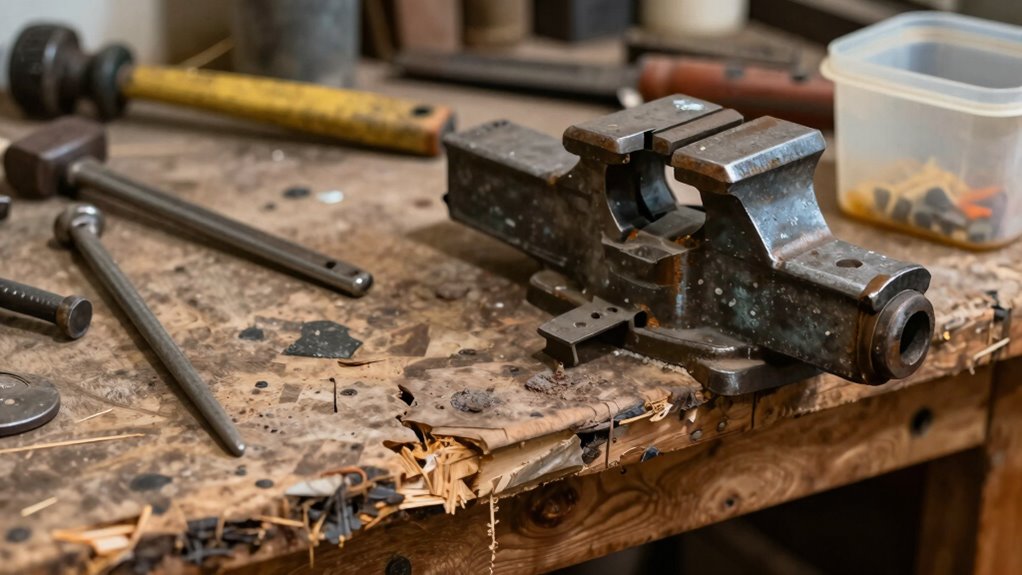
When humidity levels fluctuate in your shop, they can cause your materials to warp, bend, or crack unexpectedly. High humidity accelerates chemical reactions within materials, leading to expansion and deformation, especially in wood. Moisture absorption can cause swelling, while drying out leads to shrinking and cracking. For metals, moisture promotes corrosion, which weakens structural integrity over time. Fluctuating humidity also impacts other materials, making adhesives less effective and causing surface distortions. To prevent damage, understanding how humidity influences chemical reactions helps in choosing appropriate storage and protective measures. Proper humidity control is essential for corrosion prevention and maintaining material stability, ensuring your projects stay true to their original specifications and avoid costly repairs. Additionally, consistent humidity levels help preserve traditional crafts and techniques, maintaining the authenticity of handcrafted items. Implementing humidity control systems can significantly reduce these risks and improve your workshop’s overall material longevity. Being aware of the specific material sensitivities can further guide tailored strategies to protect your valuable assets. Moreover, understanding the effects of humidity fluctuations can aid in diagnosing and mitigating ongoing material issues before they become severe. Recognizing the role of environmental stability is crucial for long-term material preservation and project success.

General Tools MMD4E Moisture Meter for Wood, Walls & Water Leak Detection
- Humidity Sensor: Detects moisture levels for mold prevention
- Water Leak Detection: Identifies moisture in wood and drywall
- Moisture Reader: Backlit LCD with large digits for easy reading
As an affiliate, we earn on qualifying purchases.
As an affiliate, we earn on qualifying purchases.
How to Measure and Monitor Shop Humidity With Hygrometers

To effectively manage your shop’s humidity levels, you need a reliable way to measure and monitor the moisture in the air. Digital hygrometers offer quick, accurate readings, making it easier to keep humidity in check. Regular humidity calibration ensures your device remains precise over time. Use a hygrometer placed at eye level in your workspace for consistent monitoring. Consider tracking humidity daily to catch fluctuations early. Proper device maintenance helps ensure your hygrometer provides reliable data. Additionally, avoiding placement near sources of airflow interference can improve measurement accuracy. Monitoring humidity levels is essential for color accuracy in stored projects, preventing warping and damage. To prevent damage to stored materials, maintaining optimal humidity is essential for preserving project integrity. Here’s a quick overview:
| Tool | Purpose | Tips |
|---|---|---|
| Digital hygrometer | Measures moisture levels | Calibrate periodically |
| Hygrometer placement | Ensures accurate reading | Keep away from direct sunlight |
| Monitoring routine | Maintains consistent control | Record readings for trends |

TempPro TP50 Digital Hygrometer Indoor Thermometer Room Thermometer
- Wellness Indicator: Humidity level icon for air conditions
- High Accuracy & Quick Refresh: ±2-3%RH and ±1°F, updates every 10 seconds
- High & Low Records: Displays temperature and humidity extremes
As an affiliate, we earn on qualifying purchases.
As an affiliate, we earn on qualifying purchases.
What Is the Ideal Humidity Range for Storing Different Projects?
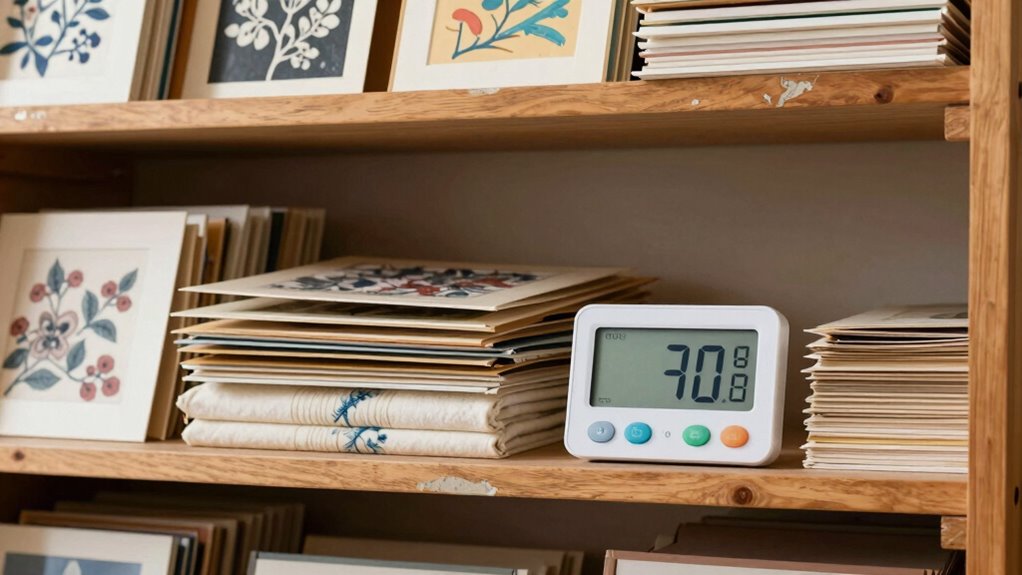
Understanding the ideal humidity range for your projects helps keep them in top condition. Wood works best between 40-60%, while paper art prefers 30-50%. For fabric storage, maintaining 50-65% humidity is ideal to prevent damage. Proper humidity levels also help ensure safe and stable storage environments, reducing risks of mold or warping home energy management. Additionally, maintaining appropriate humidity can help prevent material degradation over time. Managing humidity effectively also minimizes long-term deterioration of stored items.
Wood Projects: 40-60
Maintaining the right humidity level is essential for preserving the quality and stability of your wood projects. When humidity stays within the 40-60% range, you minimize wood expansion and contraction caused by moisture absorption. Excess moisture can lead to warping, cracking, or swelling, while too little can make wood brittle and prone to splitting. Keeping humidity steady prevents these issues, ensuring your projects remain stable over time. A consistent environment reduces the risk of unpredictable movement, especially in handcrafted furniture or detailed woodworking. Use a hygrometer to monitor levels and consider a humidifier or dehumidifier if needed. Staying within this ideal range helps your wood projects retain their shape, strength, and aesthetic appeal, ultimately prolonging their lifespan. Understanding humidity’s impact on wood helps you make informed decisions for storage and care.
Paper Art: 30-50
Keeping the right humidity level is just as vital for preserving paper art as it is for wood projects. Maintaining a humidity range of 30-50% prevents warping, mold, and brittleness. Proper humidifier maintenance guarantees consistent levels, so check filters and controls regularly. Dehumidifier placement is essential; position it away from direct sunlight and drafts for even moisture control. Use the table below to select the best environment for your projects:
| Project Type | Ideal Humidity Range | Key Consideration | Recommended Equipment |
|---|---|---|---|
| Paper Art | 30-50% | Prevent warping and mold | Humidifier, dehumidifier |
| Photographs | 30-50% | Avoid mold, fading | Controlled environment |
| Books | 30-50% | Minimize brittleness | Dehumidifier, storage boxes |
| Prints & Drawings | 30-50% | Preserve details and texture | Consistent humidity control |
Fabric Storage: 50-65%
When storing fabric projects, it’s important to maintain a humidity level between 50% and 65%, as this range helps prevent mold growth and fabric deterioration. Proper climate control ensures that moisture levels stay consistent, avoiding the extremes that cause damage. Good air circulation is essential; it prevents stagnant air, which can promote mold and musty odors. Use dehumidifiers or humidifiers as needed to keep humidity within this ideal range. Avoid storing fabric in areas prone to temperature fluctuations or high humidity, like basements or attics. Proper ventilation and climate control systems help maintain steady humidity levels, protecting your projects from warping, mold, and deterioration over time. Keeping within this range ensures your fabric remains in excellent condition for future use. Additionally, incorporating whole-house climate control systems can help sustain consistent humidity levels across your storage areas, providing extra protection for your delicate projects. Maintaining stable environmental conditions is crucial for long-term preservation of delicate fabrics and projects, especially considering the climate variability common in many regions. Understanding the importance of humidity management and air circulation can significantly enhance the longevity of stored fabrics and prevent potential damage caused by fluctuating moisture levels.
Practical Strategies to Control and Reduce Shop Humidity
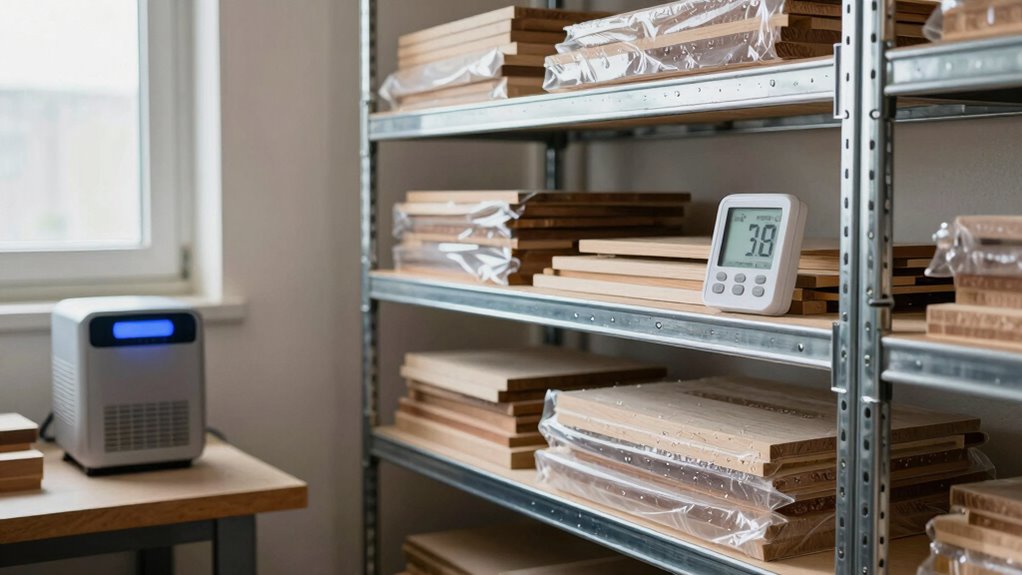
Controlling and reducing shop humidity is essential for protecting your tools, materials, and workspace. One effective strategy is implementing climate control solutions, such as air conditioners or heaters, to maintain consistent humidity levels. Using dehumidification systems is particularly beneficial, as they actively remove excess moisture from the air, preventing high humidity buildup. Proper ventilation also helps circulate air and reduce moisture pockets. Seal any gaps or leaks in doors, windows, and walls to prevent outside humidity from entering. Regularly monitoring humidity levels with a hygrometer allows you to stay within the ideal range. Maintaining proper indoor humidity control is crucial for preventing damage and ensuring a stable environment that safeguards your projects from warping, corrosion, and damage caused by excess moisture. Incorporating free floating techniques can also help in balancing indoor air moisture levels effectively.
Common Mistakes That Lead to Humidity-Related Damage and How to Avoid Them
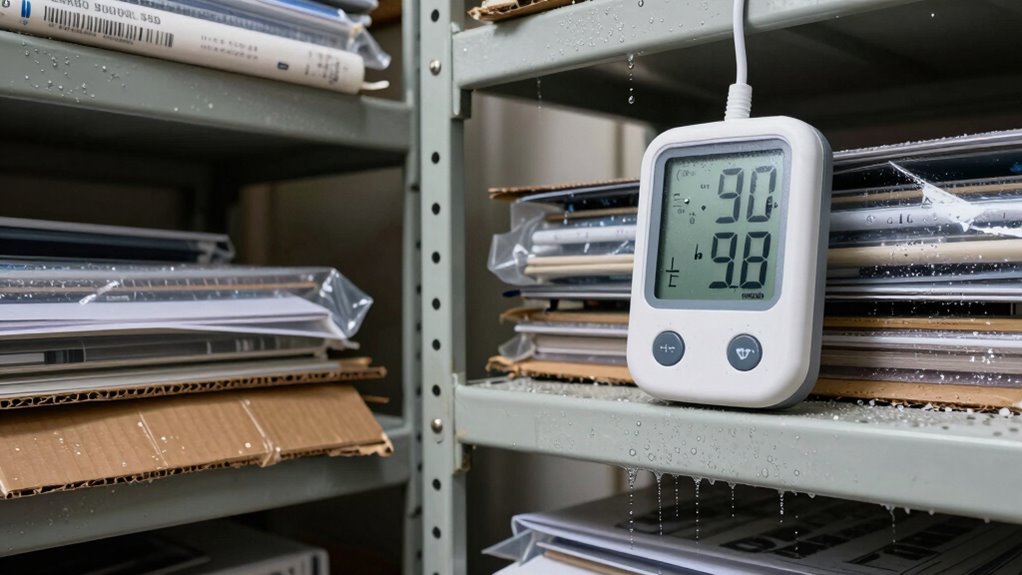
One common mistake is not setting proper storage conditions, which can lead to excess humidity and damage your items. Ignoring humidity levels makes it hard to identify problems early and can worsen over time. To prevent this, regularly monitor your shop’s humidity and adjust storage practices accordingly.
Improper Storage Conditions
Poor storage conditions are a common cause of humidity-related damage to your belongings. When you neglect proper climate control, excess moisture can accumulate, leading to warping, mold, and deterioration. Relying on inadequate storage solutions, like unsealed boxes or cluttered spaces, worsens the problem. To avoid this, make sure your storage area maintains a stable environment with controlled humidity levels. Use climate control devices such as dehumidifiers or air conditioners to keep moisture in check. Invest in proper storage solutions—sealed containers, moisture absorbers, and breathable materials—to protect fragile items. Regularly inspect your storage space for signs of excess humidity or mold growth. Properly managing storage conditions is essential to preserve your belongings and prevent humidity-caused damage.
Ignoring Humidity Levels
Ignoring humidity levels can lead to significant damage to your belongings over time. Climate change has made indoor environments more unpredictable, causing humidity swings that can warp wood, promote mold, or cause corrosion. Many shop owners overlook humidity management, especially when caring for indoor plants, which thrive only within specific moisture ranges. Failing to monitor or control humidity allows moisture to accumulate or evaporate excessively, damaging stored items. High humidity encourages mold and pests, while low humidity causes cracking and brittleness. To avoid these issues, you must regularly check humidity levels and use dehumidifiers or humidifiers as needed. Properly managing indoor humidity ensures your projects stay in top shape, despite changing weather patterns and the presence of indoor plants that can subtly influence moisture levels.
Tools and Devices That Help Keep Your Shop Humidities in Check

Maintaining proper humidity levels in your shop is essential for protecting your projects and tools, and the right tools and devices make this task much easier. A dehumidifier helps remove excess moisture, but it requires regular dehumidifier maintenance to stay effective. Keep filters clean and ensure the unit operates smoothly. A hygrometer is vital for monitoring humidity levels, and calibrating it periodically ensures accurate readings. This simple step prevents misjudging moisture levels, which can lead to warp or mold. Combining a reliable dehumidifier with a calibrated hygrometer gives you precise control over your shop’s environment. Investing in these tools streamlines the process of maintaining ideal humidity, ultimately safeguarding your projects while reducing the risk of damage caused by fluctuating moisture levels.
Frequently Asked Questions
How Does Seasonal Weather Affect Shop Humidity Levels?
Seasonal weather fluctuations directly impact your shop’s humidity levels, as seasonal moisture increases or decreases with weather changes. During humid seasons, moisture rises, risking warped or damaged projects. Conversely, dry seasons lower humidity, which can cause wood to crack or shrink. You need to monitor these fluctuations closely and adjust your humidity control methods accordingly to protect your stored projects from warping or damage caused by weather fluctuations.
Can Dehumidifiers Harm Sensitive Projects or Materials?
A dehumidifier acts as a guardian, but it can sometimes be a double-edged sword. If not used carefully, it may cause moisture absorption issues or accelerate corrosion on sensitive projects. You need to monitor humidity levels closely, ensuring the dehumidifier prevents excess moisture without stripping necessary moisture, safeguarding your materials. Proper use protects your projects from warping and corrosion, keeping your workspace safe and your creations pristine.
What Are the Signs of Humidity Damage on Stored Projects?
You’ll notice signs of humidity damage on your stored projects when moisture indicators show increased levels, and storage conditions become too damp. Look for warping, swelling, or warping of materials, as well as mold or mildew growth. You might also see discoloration or sticky surfaces. These issues stem from excess moisture, so regularly monitoring humidity and maintaining proper storage conditions helps prevent damage and keeps your projects safe.
How Often Should Humidity Levels Be Checked in a Busy Shop?
Think of your shop as a living organism that needs constant care. You should check humidity levels daily in a busy shop by using reliable moisture monitoring tools. Regularly monitoring climate control helps prevent damage from fluctuating moisture, which can warp or ruin your projects. This routine guarantees your storage environment stays stable, protecting your work and maintaining the quality of your projects over time.
Are There Eco-Friendly Methods to Control Shop Humidity Effectively?
Yes, you can control shop humidity eco-friendly by using biodegradable desiccants, which absorb moisture without harming the environment. Additionally, natural ventilation helps regulate humidity levels naturally, reducing the need for energy-intensive systems. You should combine these methods, ensuring proper airflow and moisture absorption, to keep your workspace sustainable and protect your projects from warping. Regular monitoring will optimize their effectiveness and maintain a healthy shop environment.
Conclusion
Maintaining proper humidity isn’t just about comfort—it’s essential to safeguard your projects from warping and damage. Are you regularly checking your shop’s humidity levels? By staying vigilant and using the right tools, you can prevent costly mistakes and ensure your work stays perfect. Don’t let humidity sneak up on you—take control today and keep your projects safe, stable, and true to your vision. Are you ready to master your shop’s environment?