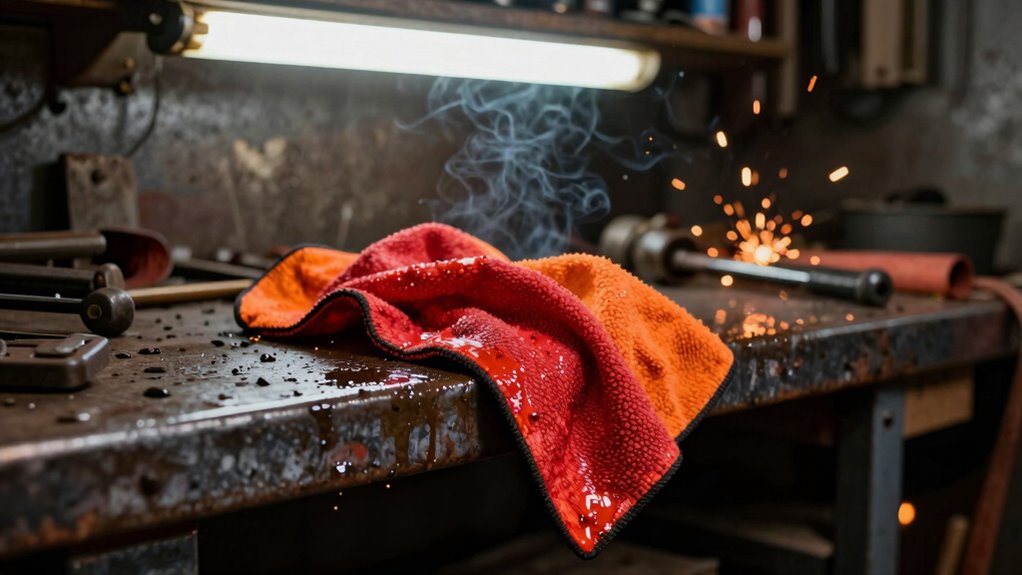

Oily rags in your shop are a serious fire hazard most overlook. They contain flammable oils and solvents that can spontaneously combust if not stored and disposed of properly. Heat generated during oil oxidation can build up silently, especially in improperly stored, open piles or trash bins. To prevent fires, you need to follow safe handling, storage, and disposal practices, and understand how to respond quickly. Keep going to learn how to protect your shop from this hidden risk.
Key Takeaways
- Oily rags can spontaneously combust due to heat generated by oil oxidation during improper storage or disposal.
- Using airtight, non-combustible containers and proper disposal methods significantly reduce fire risks.
- Regular staff training and clear safety protocols are essential to prevent unsafe handling of oily rags.
- Open piles and loose trash disposal facilitate ongoing chemical reactions and heat buildup, increasing fire hazards.
- Emergency measures include designated fire-resistant containers, hazard signage, and fire extinguisher readiness to respond effectively.
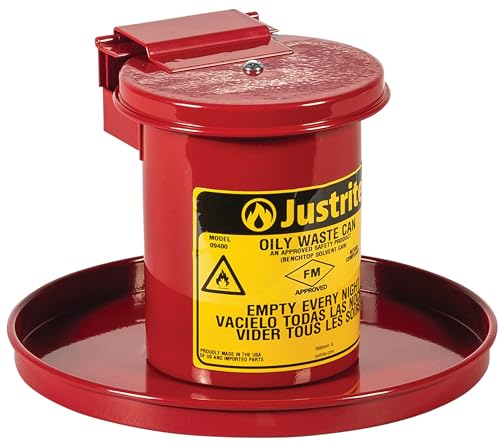
Justrite 0.45 Gallon Galvanized Steel Mini Countertop Oily Waste Can, 10.5" x 7" Metal Oil Rag Safety Can with Hand Operated Self-Closing Lid for Oily Rag Disposal, Made in The USA, Red, 09400
Safe Storage – The Justrite benchtop oily rag safety can is a flammable rag container used for the…
As an affiliate, we earn on qualifying purchases.
As an affiliate, we earn on qualifying purchases.
Why Oily Rags Are a Major Fire Hazard in Auto Shops
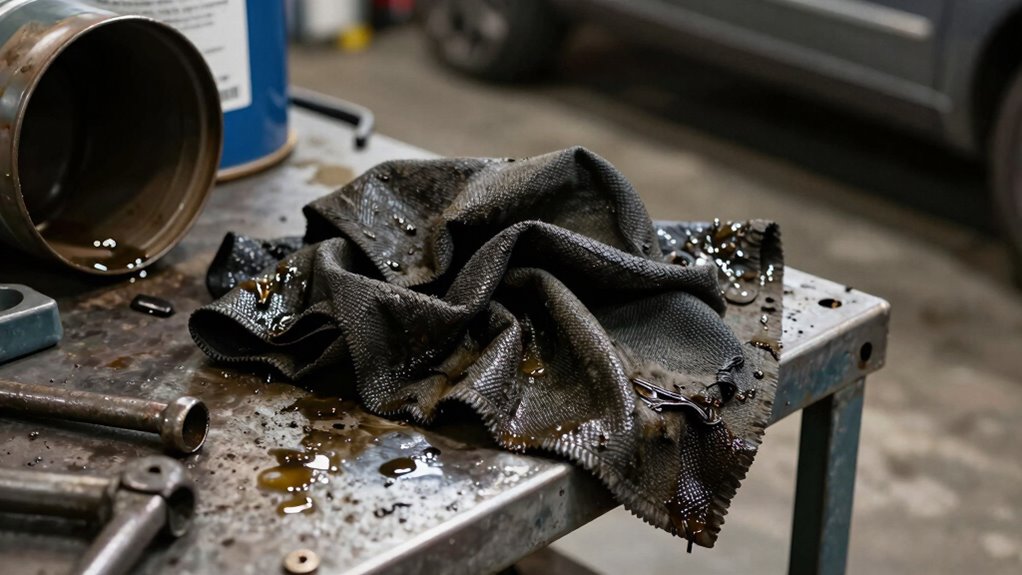
Oily rags pose a serious fire risk in auto shops because the oils and solvents they contain are highly flammable. As these rags dry, the oils undergo chemical reactions that release heat, which can build up silently. When this heat isn’t properly dissipated, it can reach ignition temperatures, causing spontaneous combustion. The risk intensifies if the rags are stored improperly or left in piles, creating an environment where fire suppression efforts become difficult. Understanding the chemical reactions involved helps you realize how quickly a small pile of oily rags can turn into a dangerous blaze. Additionally, the chemical processes occurring within the rags can accelerate if exposed to heat or agitation, increasing the likelihood of ignition. Proper disposal and storage are vital to prevent fires, ensuring that fire suppression systems can effectively control any accidental ignition before it spreads.
auto shop oily rag disposal bin
As an affiliate, we earn on qualifying purchases.
As an affiliate, we earn on qualifying purchases.
How Spontaneous Combustion Happens in Oily Materials

Spontaneous combustion occurs when certain materials, like oily rags, generate enough heat through internal chemical reactions to ignite without an external spark. When oily rags are piled or stored improperly, the oils oxidize, causing heat buildup inside the material. As heat accumulates, it can reach a point where spontaneous ignition occurs. Factors like the type of oil, ambient temperature, and oxygen exposure influence this process. Understanding how spontaneous ignition happens helps you prevent fires. The table below illustrates the key ideas:
| Cause | Process | Result |
|---|---|---|
| Oil oxidation | Releases heat during oxidation | Heat buildup inside rag |
| Poor storage | Limits heat dissipation | Increased risk of ignition |
| Ambient temperature | Accelerates oxidation | Faster heat generation |
| Rag composition | Influences oxidation rate | Higher risk materials |
Additionally, proper disposal methods are crucial in preventing accidental fires caused by oily rags.

VEVOR Flammable Cabinet 18" x 18" x 35", Galvanized Steel Safety Cabinet, Adjustable Shelf Flammable Storage Cabinet, for Commercial Industrial and Home Use, Yellow: Industrial & Scientific
【KEEP-FIRE-AWAY CONSTRUCTION】- This safety cabinet adopts the double-walled cold-rolled steel with 1-1/2" air space for strength to reduce…
As an affiliate, we earn on qualifying purchases.
As an affiliate, we earn on qualifying purchases.
Recognizing the Risks of Improper Oily Rag Disposal

Improper disposal of oily rags considerably increases the risk of fire because residual oils can continue to oxidize and generate heat even after use. When rags are left in piles or thrown into trash bins, chemical reactions keep occurring, releasing heat that can lead to spontaneous combustion. Proper disposal involves placing oily rags in designated, airtight storage containers designed to slow down these reactions. If you neglect this step, the heat from ongoing oxidation can build up unnoticed, creating a dangerous fire hazard. Recognizing these risks is vital; always ensure oily rags are stored safely in approved containers and disposed of according to safety guidelines. Additionally, understanding piercing care and hygiene is essential for maintaining safety and preventing additional hazards. This awareness helps prevent fires caused by overlooked chemical reactions in improperly discarded oily rags.

xydled Fire Resistant Safe Fire Safe Box with Key Lock for Home Office Security Storage for Valuables Documents,12.8 x 8.5 x 4.5 Inch,Black
【FIRE INSULATION】-xydled Fire Safe integrates exterior all-steel panel and fire-resistant insulation material in one, which makes it easily…
As an affiliate, we earn on qualifying purchases.
As an affiliate, we earn on qualifying purchases.
Easy Ways to Store and Handle Oily Rags Safely
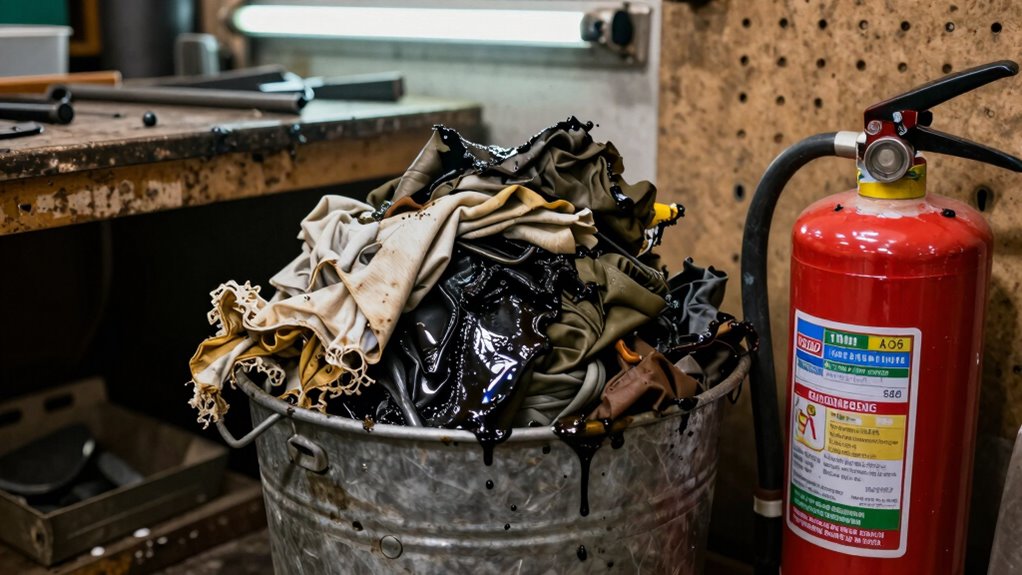
To store and handle oily rags safely, you should start by using designated, airtight containers specifically designed for oily waste. These storage containers prevent oxygen exposure, reducing the risk of chemical reactions that can lead to fires. Make sure the containers are non-combustible and clearly labeled to avoid accidental mishandling. Keep them in a cool, dry, well-ventilated area away from heat sources and open flames. Never store oily rags in open piles or loose in a trash bin, as this increases the chance of spontaneous combustion. Regularly check the containers for signs of deterioration or leaks. Proper storage minimizes fire hazards and ensures that oily rags are contained safely until they can be disposed of or processed properly. Proper storage techniques are essential for maintaining safety and preventing fires in environments where oily materials are handled.
How to Properly Dispose of Oily Rags to Prevent Fires

Proper disposal of oily rags is essential to prevent fires, as these materials can ignite if not handled correctly. When oily rags are stored or discarded improperly, chemical reactions within the absorbed oils can generate heat, increasing the risk of spontaneous combustion. To reduce this danger, never toss oily rags directly into trash bins. Instead, lay them flat to dry in a well-ventilated area, away from heat sources, until they’re completely dry and inert. Once dry, place the rags in a sealed, metal container designed for combustible waste, which helps contain any potential ignition and supports fire suppression efforts. Always follow local regulations regarding oily waste disposal to ensure safety. Proper handling minimizes fire risks and keeps your workspace safe. Navigation and mapping can also help monitor and manage hazardous waste storage areas effectively.
Essential Equipment and Supplies for Oily Rag Fire Prevention

Having the right equipment and supplies on hand is vital for preventing fires caused by oily rags. Fire-resistant containers are indispensable for safely storing oily rags until disposal, reducing the risk of spontaneous combustion. Clear safety signage reminds everyone of proper handling and storage procedures, reinforcing safety habits. You should have these key supplies:
| Equipment/Supply | Purpose | Important Features |
|---|---|---|
| Fire-resistant containers | Store oily rags safely | Non-combustible, sealed lids |
| Safety signage | Communicate safety protocols | Clear, visible, durable |
| Fire extinguishers | Suppress small fires | Appropriate class, easy access |
| Spill containment supplies | Prevent accidental ignition | Absorbent mats, drip trays |
Regular training on oily rag handling can further enhance safety awareness and prevent potential fires. Keep these essentials accessible to minimize fire risks and ensure safety.
How to Develop a Workplace Oily Rag Safety Policy
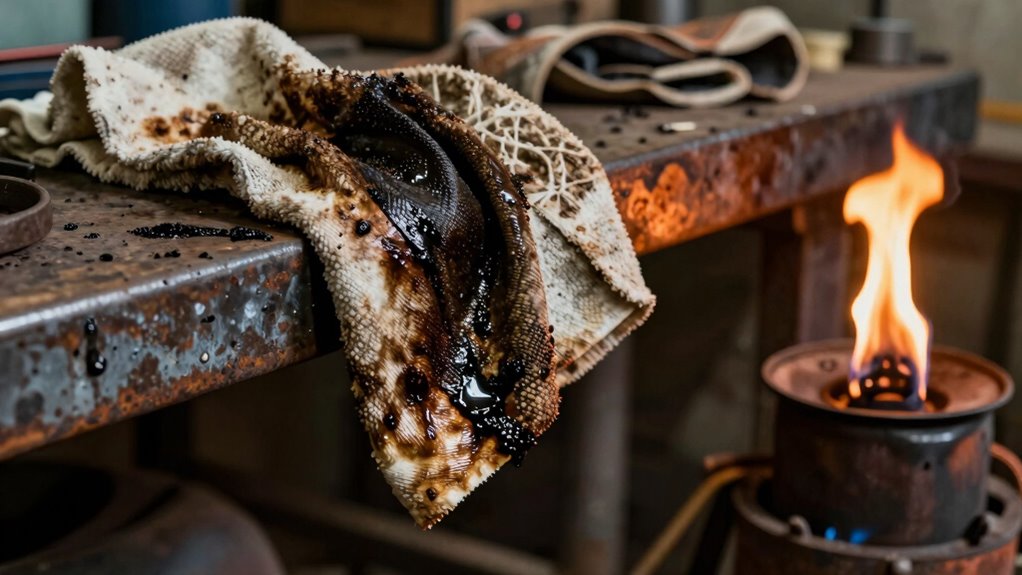
To develop an effective oily rag safety policy, you need to identify all flammable materials in your workplace and set clear procedures for their safe handling. You must also establish proper disposal methods and guarantee everyone understands and follows these rules. Training and consistent enforcement are key to keeping your team safe and preventing fires. Incorporating fire risk awareness into your safety training can further reduce hazards.
Identifying Flammable Materials
Identifying flammable materials is a crucial step in developing an effective oily rag safety policy. You need to recognize which substances pose fire risks, especially flammable liquids and combustible solids. These materials can ignite easily if improperly stored or handled. To help, consider this table:
| Flammable Materials | Examples |
|---|---|
| Flammable liquids | Paint thinners, solvents |
| Combustible solids | Paper, rags contaminated with oil |
Knowing what materials are hazardous allows you to implement proper storage and handling procedures. Keep flammable liquids in approved containers and store combustible solids away from heat sources. Additionally, understanding energy efficiency in your workplace can help reduce the likelihood of accidental fires. This proactive approach minimizes fire risks associated with oily rags and keeps your workplace safe.
Establishing Safe Disposal
Establishing a safe disposal process for oily rags is vital to prevent accidental fires and guarantee workplace safety. When rags are improperly discarded, chemical reactions between residual oils and oxygen can ignite fires. To minimize this risk, set up designated metal containers with secure lids for oily rag collection. Ensure these containers are clearly marked with safety signage that highlights the fire hazard. Regularly empty and inspect the containers to prevent buildup of flammable materials. Educate staff on the importance of never throwing oily rags into regular waste bins. By establishing clear procedures and using appropriate safety signage, you reduce the chances of spontaneous combustion and create a safer work environment. Proper disposal is a pivotal step in managing oily rag risks effectively. Incorporating proper disposal methods based on industry standards can further enhance safety protocols.
Training and Enforcement
Creating a thorough workplace oily rag safety policy is essential to guarantee everyone understands the risks and follows proper procedures. Proper training ensures workers recognize the dangers of spontaneous chemical reactions and know safety protocols to prevent fires. Enforcement keeps policies effective and consistent. To develop an effective program:
- Conduct regular training sessions on chemical reactions and safe handling
- Clearly define responsibilities for all staff
- Use visual reminders to reinforce safety protocols
- Enforce strict discipline for non-compliance to maintain a safety-first culture
Understanding fire chemistry helps staff appreciate the importance of proper oily rag management and safety measures.
Training Your Staff on Oily Rag Fire Prevention
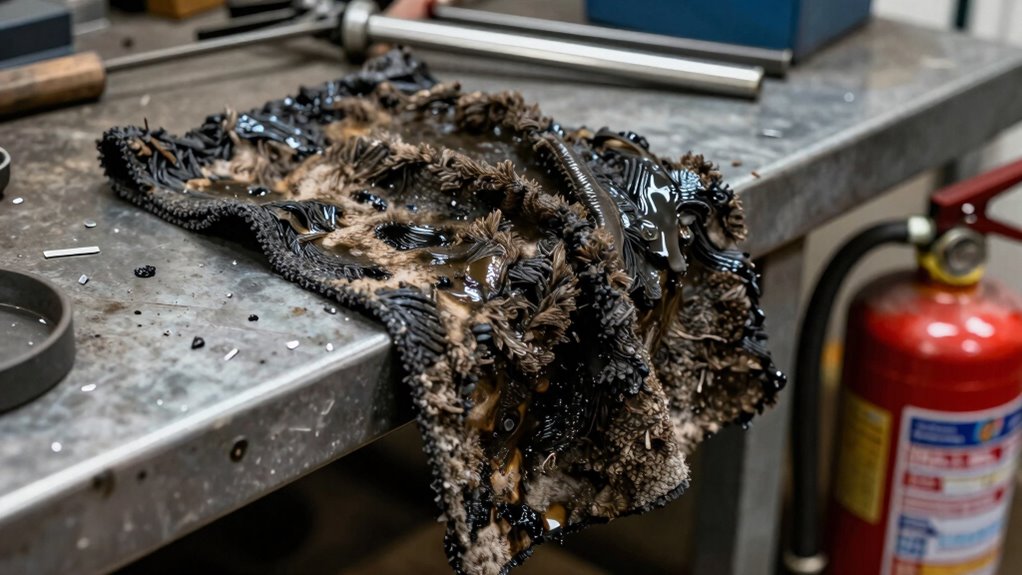
Training your staff on oily rag fire prevention is essential to maintaining a safe work environment. Start by educating them about proper chemical storage, emphasizing that oily rags should be stored in approved containers away from heat sources. Conduct regular fire drills that include scenarios involving oily rags to reinforce quick response actions. Make sure your team understands the importance of removing oily rags from work areas promptly and disposing of them properly. Demonstrate how improper storage or delayed cleanup can lead to a fire, and review the safest handling procedures regularly. By integrating these practices into your training program, you help prevent fires before they start and ensure everyone knows how to respond effectively if a risk arises.
What to Do Immediately if a Fire Starts From Oily Rags

If a fire ignites from oily rags, acting quickly can prevent it from spreading and causing serious damage. Your first step is to alert everyone and activate spill containment measures to control the flames. Confirm hazard signage clearly indicates the fire’s location, helping others stay safe and avoid the area. Use a fire extinguisher suited for chemical or oily fires—never water, which can worsen the blaze. If possible, turn off electrical equipment nearby to eliminate ignition sources. Do not attempt to move burning rags unless it’s safe and practical. Remember, quick response reduces damage and risk. Regularly review your emergency plan so everyone knows their role. Proper spill containment and hazard signage are essential in managing oily rag fires effectively.
Frequently Asked Questions
Are There Specific Types of Rags More Prone to Spontaneous Combustion?
Cotton rags are more prone to spontaneous combustion than synthetic ones because they’re highly flammable fabric choices. Cotton can absorb oils and solvents, which generate heat as they oxidize, increasing fire risk. Synthetic rags, like polyester, are less flammable but still pose some danger. To prevent fires, always choose your rags carefully, avoid storing oily or solvent-soaked fabrics, and dispose of them safely after use.
How Often Should Oily Rags Be Inspected for Fire Hazards?
You should inspect oily rags daily, or even multiple times a day if you’re working in a busy shop. This frequent inspection dramatically reduces fire hazards by catching signs of spontaneous combustion early. Make it part of your hazard assessment routine to guarantee safety. Don’t wait for a disaster—regular checks keep your shop safe, preventing a tiny spark from turning into a destructive blaze.
What Are the Legal Regulations Regarding Oily Rag Disposal?
You must follow waste management regulations to dispose of oily rags properly. Legally, you’re required to store oily rags in fire-resistant containers and make certain they’re disposed of promptly through authorized waste management services. Failing to comply can lead to penalties and increased fire risk. Always stay updated on local laws, and document your disposal procedures to maintain legal compliance and reduce safety hazards in your shop.
Can Certain Materials Reduce the Risk of Oily Rag Fires?
You can reduce oily rag fire risks by using materials treated with fire-retardant chemicals, which slow down ignition. When you store these rags, opt for proper storage containers designed to contain flammable materials safely. Coincidentally, combining chemical treatments with secure containers creates a double layer of protection, minimizing fire hazards. This proactive approach guarantees your workspace stays safer, and accidents become much less likely.
How Can I Train Staff Effectively on Oily Rag Safety Protocols?
You can train staff effectively on oily rag safety protocols by providing hands-on training sessions that demonstrate proper handling and disposal. Use clear safety signage around the shop to reinforce key messages and remind everyone of the risks. Encourage questions and discussions to ensure understanding. Regular refresher courses help maintain awareness, and practical exercises make safety procedures second nature, reducing fire hazards and promoting a safer work environment.
Conclusion
By treating oily rags like ticking time bombs, you can prevent fires before they start. Keep them stored properly, dispose of them safely, and train your team to stay vigilant. Remember, a small spark can ignite a wildfire if you’re not careful. Staying proactive with these safety measures keeps your shop running smoothly and keeps everyone safe — because a fire-free shop is a safe shop. Stay alert, stay protected.