To prevent uneven staining on blotch-prone woods, start by thoroughly preparing your surface with fine sanding and testing your stain on scrap first. Use a pre-stain conditioner or sealer to help wood absorb stain evenly. Apply stain with consistent strokes and consider applying with tools like an airless sprayer for even coverage. Paying attention to moisture content and grain will make a big difference—if you want to master these tips, keep exploring the details below.

Get business pricing on tools and workshop supplies
- Business-only prices and quantity discounts
- Tax-exempt purchasing
- Multiple users, one account, clear invoices
Key Takeaways
- Use a pre-stain conditioner to promote even stain absorption on blotch-prone woods.
- Sand the surface smoothly with fine grit to open pores and reduce uneven absorption.
- Test stain on scrap or hidden areas to predict color and absorption behavior beforehand.
- Apply stain with consistent, overlapping strokes to ensure uniform coverage.
- Consider sealing or conditioning problematic areas before staining to minimize blotchiness.
As an affiliate, we earn on qualifying purchases.
Why Do Some Woods Get Blotchy When Stained?
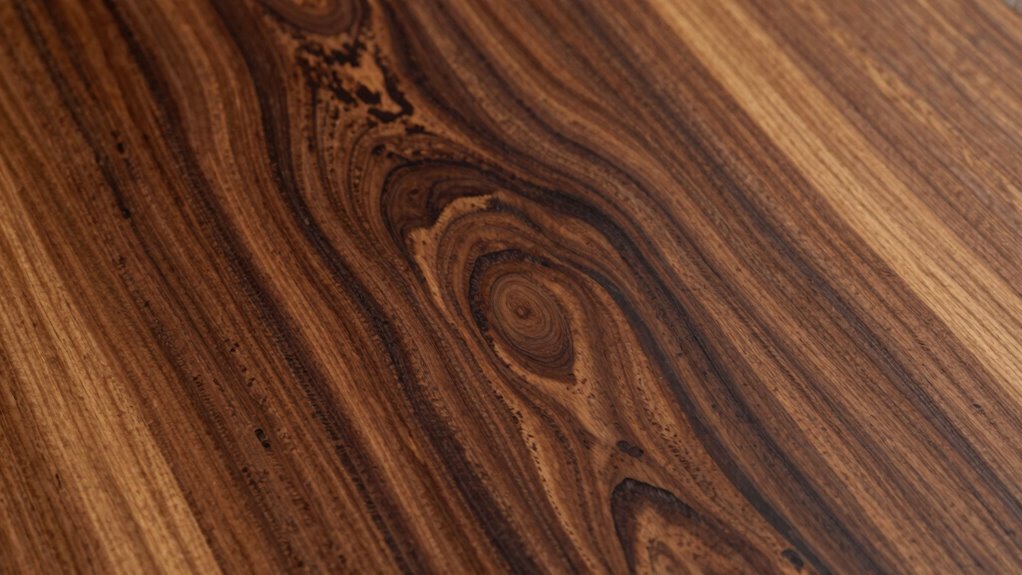
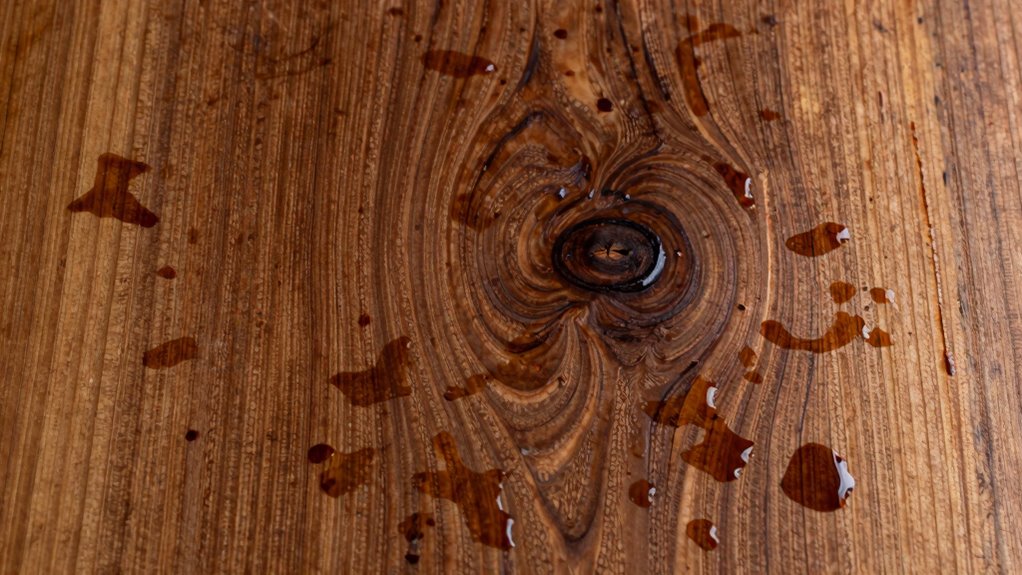
Some woods tend to get blotchy when stained because of their natural composition. You’ll notice that wood grain variation causes uneven absorption of stain, resulting in inconsistent color. Different areas of the wood can take stain differently, highlighting grain patterns or flaws. Natural color differences within the wood also play a role; some parts absorb stain more readily, while others resist it. These variations are inherent, making certain woods more prone to blotching. When you stain such woods, you might see dark spots or uneven patches that don’t match your expectations. Understanding this natural variability helps explain why some woods require special preparation or techniques to achieve an even finish. Recognizing these factors is the first step toward preventing blotchiness in your project. Additionally, using proper stain application techniques can significantly reduce uneven color and enhance the overall appearance.
As an affiliate, we earn on qualifying purchases.
How to Prepare Your Wood Surface to Prevent Blotch
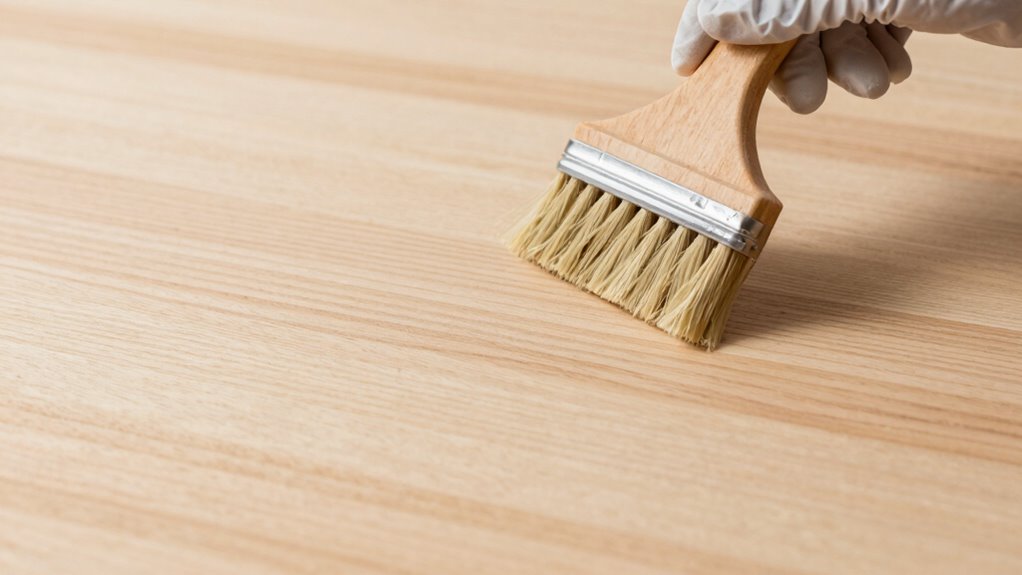
To prevent blotchiness, preparing your wood surface properly before staining is key. Start with effective sanding techniques: always sand with the grain, progressively using finer grits to smooth the surface. This reduces rough spots that can absorb stain unevenly. Before applying stain, test your wood by applying a small amount in an inconspicuous area to observe how it reacts. This helps you decide if a pre-treatment is necessary. Use the table below to guide your preparation:
| Step | Action | Purpose |
|---|---|---|
| 1 | Sand with fine grit | Eliminate roughness and open pores evenly |
| 2 | Test stain on scrap | Predict how your wood will absorb stain |
| 3 | Wipe dust thoroughly | Ensure a clean surface for even stain application |
Understanding wood absorption variations can help you choose the right staining approach for your project. Additionally, knowing how wood type influences stain behavior can further improve your results, leading to a smoother finish. Proper preparation minimizes blotch potential and results in a professional finish. Being aware of wood grain patterns can also assist in achieving even staining. Recognizing how wood moisture content affects stain absorption can further help in achieving consistent results.
airless paint sprayer for staining
As an affiliate, we earn on qualifying purchases.
As an affiliate, we earn on qualifying purchases.
Choosing the Right Stain and Technique to Avoid Blotchiness

Choosing the right stain and technique is essential to avoid blotchiness and achieve a uniform finish. To do this, focus on color matching to ensure the stain complements the wood type and desired look. Proper application techniques can substantially reduce uneven absorption. Consider these points:
- Use a pre-stain conditioner to promote even color absorption.
- Test stain on a hidden area to assess color match and application response.
- Apply stain with consistent, overlapping strokes to avoid streaks and uneven patches.
- Understanding how wood porosity affects stain absorption can further improve outcomes and help prevent blotchiness, especially in woods with varying grain structure. Being aware of piercings-Body considerations can influence your approach to staining and finishing, ensuring the process is safe and suitable for the specific wood type. Additionally, being mindful of the application environment—such as humidity and temperature—can influence stain penetration and drying times, leading to better results. Incorporating knowledge of wood properties can also guide you in selecting appropriate stains and techniques for different projects.
As an affiliate, we earn on qualifying purchases.
Sealers and Conditioners: How They Help Keep Your Finish Even

Sealers and conditioners play a essential role in guaranteeing your wood finish remains smooth and even. They work by sealing the wood grain, reducing uneven absorption that causes blotchiness. Different sealer types, such as shellac, sanding sealers, and pore fillers, serve specific purposes and can help prepare the surface for staining. Conditioners penetrate the wood to even out absorption, especially on woods prone to blotching like pine or cherry. Applying the right sealer or conditioner creates a uniform surface, making your stain look consistent and professional. Proper use of these products prevents uneven color and highlights the wood’s natural beauty. Understanding how wood absorption affects staining can help you choose the best product for your project, especially when working with blotch-prone woods. For example, applying a wood conditioner before staining can significantly reduce blotchiness. Using application techniques and following manufacturer instructions can further improve the results. Additionally, selecting the appropriate sealer type can make a noticeable difference in the final appearance. By choosing the appropriate sealer type, you ensure your finish remains smooth, enhancing the overall appearance of your project.
Troubleshooting and Fixing Blotchiness After Staining
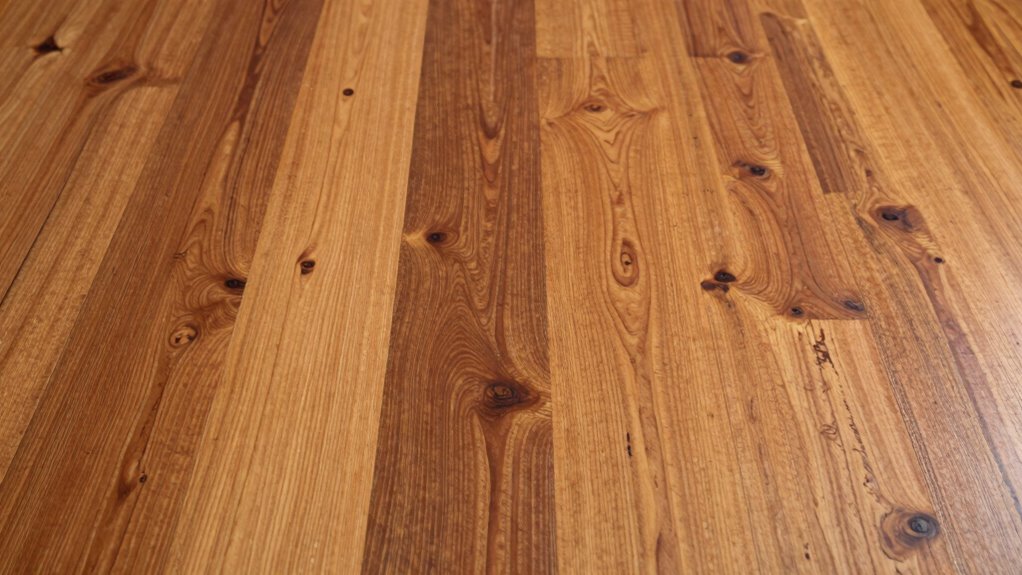
Blotchiness after staining can be frustrating, but it’s a common issue that can often be corrected with the right approach. To fix uneven stain, start by evaluating the grain pattern; areas with open grain tend to absorb more stain, causing blotches. Check the moisture content of your wood, as excessive moisture can lead to inconsistent staining. To correct blotchiness:
Address uneven stain by evaluating grain, moisture, and applying a conditioner for a smooth finish.
- Lightly sand the affected areas to smooth out uneven absorption.
- Apply a wood conditioner or pre-stain sealer to regulate absorption in problematic spots.
- Wipe the surface with a damp cloth to even out moisture levels before restaining.
- Understanding creative storytelling techniques can help you approach troubleshooting with a fresh perspective and creative solutions.
Using a high-quality airless paint sprayer can also aid in achieving a more uniform application and reduce the risk of blotches in future projects.
Frequently Asked Questions
Which Types of Wood Are Most Resistant to Blotching?
You’ll find that softwoods like pine and cedar are more resistant to blotching due to their open grain patterns. Hardwood species such as oak, maple, and cherry tend to blotch more because of their tighter, more uniform grain patterns. To prevent uneven staining, always test your stain on a small area first and consider using pre-stain conditioners, especially on woods prone to blotching, to achieve a more consistent finish.
Can Environmental Factors Influence Wood Blotchiness During Staining?
You might notice that environmental factors like moisture fluctuations and temperature variations can influence wood blotchiness during staining. When humidity rises or falls unexpectedly, it causes moisture levels in the wood to change, leading to uneven absorption of stain. Sudden temperature shifts can also affect how the stain reacts, potentially intensifying blotching. To minimize this, make certain the wood is properly acclimated and stained under stable conditions for a smoother, more even finish.
Are There Specific Stains Better Suited for Blotch-Prone Woods?
You should opt for gel stains or oil-based stains when working with blotch-prone woods. Gel stains sit on the surface, helping prevent uneven absorption and blotchiness. Oil-based stains penetrate more evenly, reducing the risk of blotchiness compared to water-based options. Both types are better suited for these woods, allowing you to achieve a smoother, more consistent finish without uneven discoloration. Just remember to prep your wood properly before staining.
How Long Should I Wait Between Applying Stain Coats?
You should wait at least 4 to 6 hours between applying stain coats, allowing proper stain drying before the next application. This ensures the stain fully penetrates and prevents uneven absorption. Keep an eye on the product instructions, as drying times can vary based on humidity and temperature. Proper application timing helps achieve a consistent finish, especially on blotch-prone woods, by giving each coat enough time to dry thoroughly.
What Are the Long-Term Effects of Blotchiness on Wood Finish Durability?
Think of blotchiness like a weak link in a chain—over time, it can cause long-term finish deterioration and aesthetic degradation. If you ignore blotchiness, the uneven stain may peel or fade faster, compromising your wood’s appearance and protection. This reduces your finish’s lifespan and makes your project look unprofessional. Addressing blotchiness early guarantees your wood retains its beauty and durability for years, avoiding costly repairs or re-staining.
Conclusion
Think of your wood as a canvas—you want it smooth and even before you start painting. By prepping properly, choosing the right stain, and using sealers, you’re laying down a foundation for a flawless finish. When you follow these steps, you’re guiding your project toward perfection, like a skilled artist with a steady hand. With patience and care, you’ll turn blotchy woods into a masterpiece that’s smooth, even, and truly stunning.
Fall yard work Picks
leaf blowers
As an affiliate, we earn on qualifying purchases.