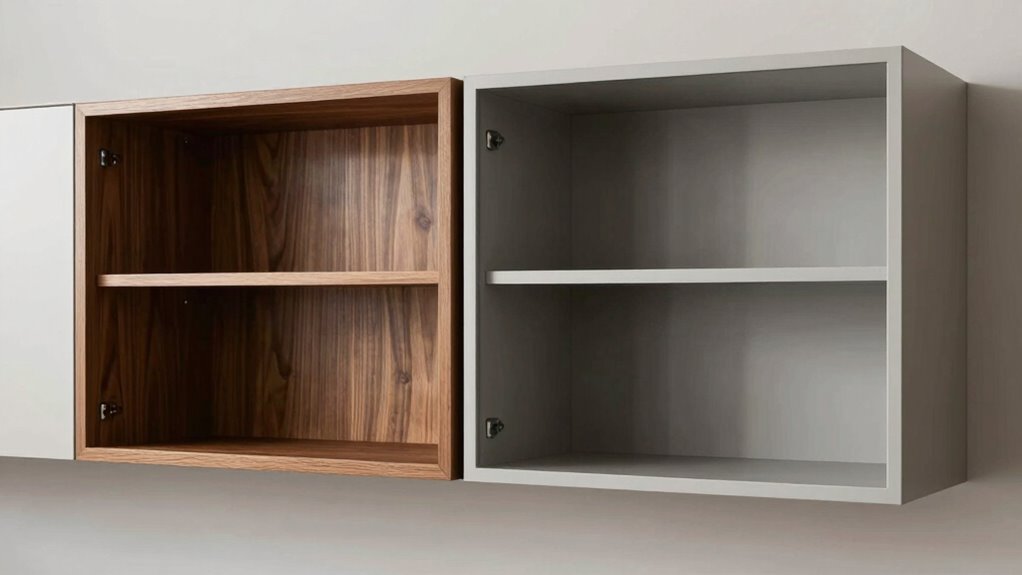
When choosing between face-frame and frameless cabinets, you’ll notice key differences in daily use. Face-frame cabinets offer a classic style, but they can limit storage due to the frame. In contrast, frameless cabinets maximize space with deeper shelves and easier organization. Installation is often simpler with frameless options, thanks to pre-drilled holes. Ultimately, your choice should align with your kitchen needs and aesthetics. Stick around to uncover more insights that could help you decide.
Listen free for 30 days with Audible
Thousands of audiobooks and originals — cancel anytime.
As an affiliate, we earn on qualifying purchases.
Key Takeaways
- Face-frame cabinets offer a traditional look but may limit storage space due to frame intrusion, impacting daily organization.
- Frameless cabinets provide a modern aesthetic with deeper shelves, maximizing storage efficiency for everyday kitchen essentials.
- Installation of face-frame cabinets can be complex, making frameless options more suitable for DIYers seeking simplicity.
- The construction quality of both styles influences durability, with frameless cabinets often providing better long-term storage solutions.
- Daily kitchen activities should guide your choice, weighing aesthetics, ease of installation, and storage efficiency for optimal functionality.
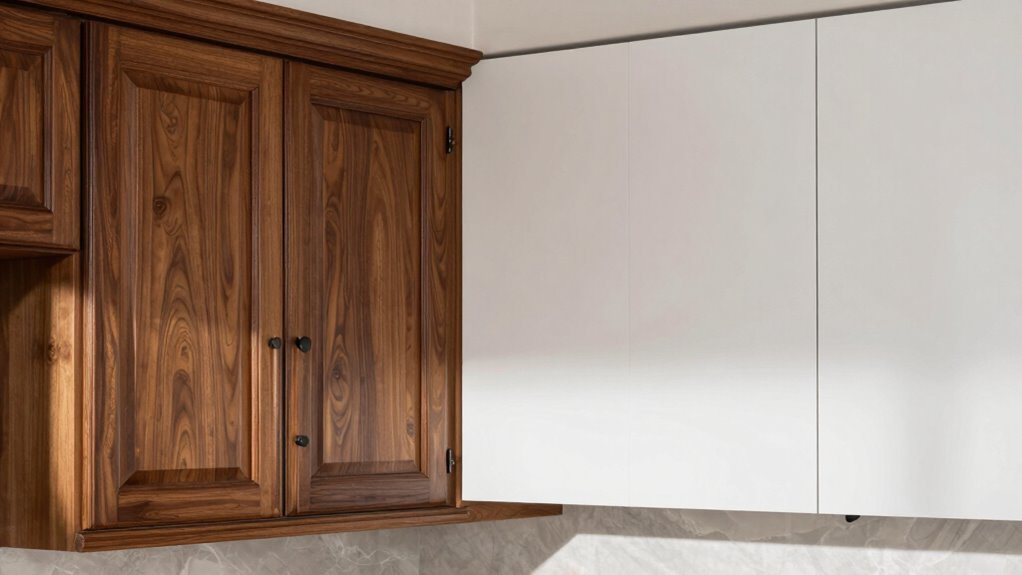
When you’re considering new kitchen cabinets, understanding the difference between face-frame and frameless designs can help you make an informed choice. Face-frame cabinets feature a sturdy frame that surrounds the cabinet’s front, providing structural support and a classic look. On the other hand, frameless cabinets lack this frame, allowing for a more modern, sleek appearance. This distinction not only impacts aesthetics but also plays a role in installation ease and storage efficiency, which are vital when planning your kitchen.
If you’re tackling a DIY project, installation ease can greatly influence your decision. Face-frame cabinets often require a bit more work during installation since you’ll need to align and attach the frames properly. This extra step can be a hassle if you’re not experienced with cabinetry. In contrast, frameless cabinets typically come with pre-drilled holes and adjustable shelving, simplifying the installation process. You can install them quickly and efficiently, making them a great option for those who prefer a straightforward approach.
Now, let’s talk about storage efficiency. If maximizing space is a priority for you, frameless cabinets might be the better choice. Without the face frame taking up room, you’ll get more accessible storage space inside the cabinet. This design allows for deeper shelves and easier access to your kitchen items. You’ll find it simpler to organize pots, pans, and other kitchen essentials, ultimately making your cooking experience smoother. Additionally, cabinet construction can influence the durability and longevity of your cabinets over time. The construction quality is important to consider, especially for long-term use and ensuring your investment lasts. Face-frame cabinets, while offering a traditional charm, can limit your storage capacity due to the frame’s intrusion into the cabinet space.
Both designs have their pros and cons, but it boils down to your specific needs. If you value a contemporary look and efficient use of space, frameless cabinets are likely the way to go. However, if you appreciate a more classic aesthetic and don’t mind a bit of extra work during installation, face-frame cabinets could be your best bet. Whichever style you choose, consider how each will fit into your daily kitchen activities. By weighing installation ease and storage efficiency, you’ll be better equipped to make a choice that meets your cooking and organizational needs, ensuring your kitchen remains functional and stylish for years to come.
As an affiliate, we earn on qualifying purchases.
Frequently Asked Questions
What Are the Best Materials for Face-Frame and Frameless Cabinets?
For face-frame cabinets, plywood and solid wood offer great material durability and a classic look. You’ll appreciate the design flexibility they provide. For frameless cabinets, consider high-quality MDF or particleboard with a durable laminate finish; these materials are sturdy and can be customized easily. Both options can withstand daily use, so choose what suits your style and needs best. Remember, the right materials can elevate your space considerably!
How Do I Clean Face-Frame Vs Frameless Cabinets Effectively?
Did you know that 70% of kitchen bacteria thrive on surfaces? To clean face-frame and frameless cabinets effectively, use gentle cleaning techniques like warm soapy water and a microfiber cloth. Avoid harsh chemicals that can damage finishes. For maintenance tips, wipe spills immediately and regularly check for loose hardware. For frameless cabinets, pay attention to edges, while face-frame cabinets may need extra care around the frame joints. Keep your cabinets looking great!
Can I Retrofit Face-Frame Cabinets to Become Frameless?
Yes, you can retrofit face-frame cabinets to become frameless using various retrofit techniques. Start by removing the face frame and adjusting the cabinet structure for added durability. Reinforce the sides and back to guarantee stability, then install new, frameless doors and hardware. While this process requires some skill, it can give your kitchen a modern look while maintaining the durability of your cabinets. Just be prepared for a bit of extra work!
What Styles Suit Face-Frame or Frameless Cabinets Best?
Modern aesthetics often shine with frameless cabinets, offering sleek lines and a minimalist look that maximizes design flexibility. On the other hand, traditional styles pair beautifully with face-frame cabinets, adding warmth and character. If you’re focusing on space optimization, frameless designs provide more accessible storage, while face-frame options can enhance the vintage charm of your kitchen. Consider your style preference and functionality needs to choose the best fit for your space.
How Do Installation Costs Compare Between the Two Types?
When it comes to installation costs, frameless cabinets can save you around 10-15% compared to face-frame options. This is mainly due to their simpler design, requiring less installation time. In a cost breakdown, you’ll find that labor is a significant part of the overall expense, so the quicker you can install, the better. If you’re on a budget, choosing frameless might be the way to go for both time and money savings.
face-frame cabinet installation kit
As an affiliate, we earn on qualifying purchases.
As an affiliate, we earn on qualifying purchases.
Conclusion
When it comes to choosing between face-frame and frameless cabinets, the decision can feel intimidating. Imagine opening your kitchen doors to a seamless, modern aesthetic or a classic, sturdy frame that stands the test of time. Each style has its allure, but only one will transform your space into the heart of your home. As you stand at the threshold, the choice awaits—will you embrace the sleek lines of frameless or the charm of face-frame? The moment’s yours.
As an affiliate, we earn on qualifying purchases.
adjustable shelving kitchen cabinets
As an affiliate, we earn on qualifying purchases.
As an affiliate, we earn on qualifying purchases.
Flea & tick season Picks
flea and tick prevention
As an affiliate, we earn on qualifying purchases.