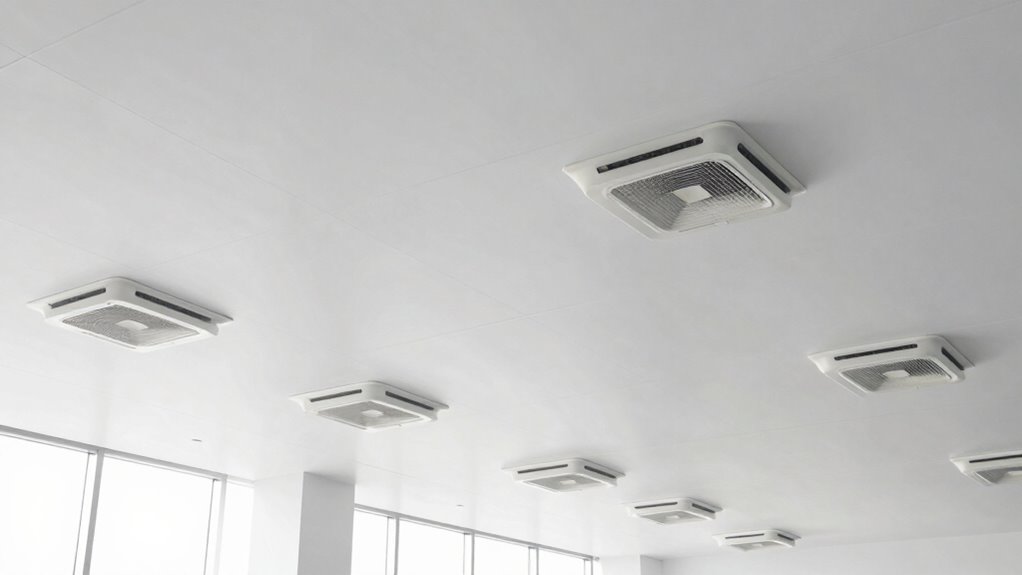

To get the best results from ceiling air filtration units, place them near the center of the room or workspace to guarantee even airflow distribution and avoid dead zones. Keep units clear of obstructions and near air sources like vents or windows for better pollutant capture. Regular maintenance, like replacing filters and cleaning, also boosts efficiency. For more tips on maximizing your system’s performance, keep exploring effective placement strategies and airflow management.
Listen free for 30 days with Audible
Thousands of audiobooks and originals — cancel anytime.
As an affiliate, we earn on qualifying purchases.
Key Takeaways
- Position ceiling units near the center of the room for even airflow distribution.
- Avoid placing units near obstructions to prevent airflow hindrance.
- Consider room shape and airflow sources like vents and windows for optimal placement.
- Regularly maintain and clean units to ensure consistent filtration performance.
- Assess airflow patterns periodically to adjust placement for improved contaminant removal.
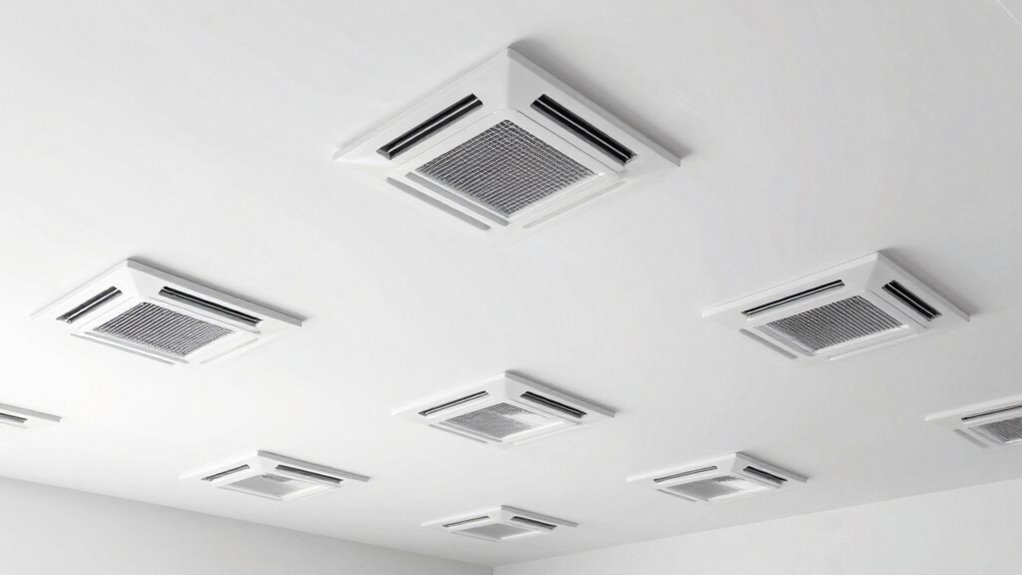
To get the most out of your ceiling air filtration units, focus on airflow optimization. You want the airflow to circulate evenly across the entire space, avoiding dead zones where air may stagnate or pollutants can accumulate. Typically, installing units near the center of a room or workspace promotes better air distribution, but you should also consider the size and shape of the room, as well as the location of air sources like vents, windows, and doors. Proper placement encourages a steady flow of clean air, ensuring pollutants are captured and removed before they settle or recirculate.
Optimal placement near the center ensures even airflow and effective pollutant removal.
In addition to placement, maintaining effective airflow depends heavily on adhering to maintenance protocols. Regular filter changes, system inspections, and cleaning prevent dust buildup and mechanical failures that can diminish airflow and filtration performance. When filters become clogged or dirty, airflow reduces, which diminishes the unit’s ability to capture airborne contaminants efficiently. Implementing a routine maintenance schedule not only prolongs the lifespan of your units but also guarantees that they operate at peak performance, providing consistent indoor air quality.
Understanding the importance of maintenance protocols helps you catch potential issues early, avoiding costly repairs and ensuring continuous operation. Keep track of filter replacement dates, and inspect the units periodically for signs of wear or damage. Clean the vents and surrounding areas to prevent dust and debris from impeding airflow. When maintenance is a priority, airflow remains optimized, and the filtration system works as intended, delivering cleaner air more effectively. Additionally, understanding how airflow dynamics influence filtration efficiency is crucial for optimizing indoor air quality. Recognizing the role of airflow patterns can help in designing a more effective filtration setup tailored to your space. Regularly assessing airflow distribution can identify problem areas that require adjustments for improved performance. Properly managing airflow control is also essential to ensure the filtration system functions efficiently across different zones within a space. Paying attention to airflow velocity can further enhance the system’s ability to capture contaminants effectively, especially in larger or more complex layouts.
In essence, the key to maximizing ceiling air filtration units lies in strategic placement and diligent maintenance. When you position the units correctly, focusing on airflow optimization, and follow recommended maintenance protocols, you create a sustainable system that consistently improves indoor air quality. This approach ensures your investment in air filtration yields the best possible results, providing a healthier, more comfortable environment for everyone inside.
As an affiliate, we earn on qualifying purchases.
Frequently Asked Questions
How Often Should Ceiling Air Filtration Units Be Maintained?
You should maintain your ceiling air filtration units every 3 to 6 months, depending on usage and environment. Follow your manufacturer’s recommended maintenance schedules to guarantee peak performance. Regular filter replacement is essential—typically every 3 months for standard filters and more often if the area is highly polluted. Keep track of these schedules to prevent airflow issues, maintain air quality, and prolong the lifespan of your units.
Are Ceiling Units Suitable for All Types of Indoor Spaces?
You might think ceiling units suit all indoor spaces, but that’s not always true. They work best where ceiling aesthetics and noise levels are manageable, like offices or commercial areas. In spaces demanding quiet or with high aesthetic standards, they might be less ideal. Investigate how ceiling aesthetics and noise levels impact your environment before choosing a ceiling air filtration unit. This guarantees ideal air quality without compromising comfort or appearance.
What Is the Typical Lifespan of a Ceiling Air Filtration Unit?
A ceiling air filtration unit typically lasts about 10 to 15 years, depending on maintenance and usage. You should regularly check its filtration efficiency and replace filters as needed to keep performance ideal. Noise levels may increase over time if filters aren’t changed, so maintaining the unit guarantees it runs quietly and effectively. Proper upkeep extends its lifespan, maintaining clean air and consistent filtration.
Do Ceiling Units Require Professional Installation?
Yes, ceiling units typically require professional installation. You’ll face installation challenges like ensuring proper mounting and alignment, which can be complex. Additionally, aesthetic considerations come into play, as you want the unit to blend seamlessly with your ceiling design. Professionals handle these issues efficiently, ensuring peak performance and a clean look. Attempting DIY installation may lead to issues with safety, effectiveness, or appearance.
How Do Ceiling Units Impact Energy Consumption?
Ceiling units can impact energy consumption by improving energy efficiency through ideal placement, which guarantees better air circulation and reduces the workload on HVAC systems. When installed correctly, they contribute to cost savings by lowering energy bills and promoting a more efficient environment. Properly placed ceiling units help maintain consistent air quality and temperature, making them an energy-efficient choice that benefits your overall energy management and reduces operational costs.
air purifier with replaceable filters
As an affiliate, we earn on qualifying purchases.
As an affiliate, we earn on qualifying purchases.
Conclusion
Now that you know the key placement rule, imagine what could happen if you ignore it. Could your air quality truly reach its potential? Or will overlooked details hold you back from cleaner, safer spaces? The choice is yours—apply this simple rule and unleash the full power of your ceiling air filtration units. But be warned: the true difference might just surprise you. Are you ready to see what’s possible? The next step could change everything.
As an affiliate, we earn on qualifying purchases.
air quality monitor for indoor spaces
As an affiliate, we earn on qualifying purchases.
As an affiliate, we earn on qualifying purchases.
NFL season / tailgating Picks
team gear
As an affiliate, we earn on qualifying purchases.