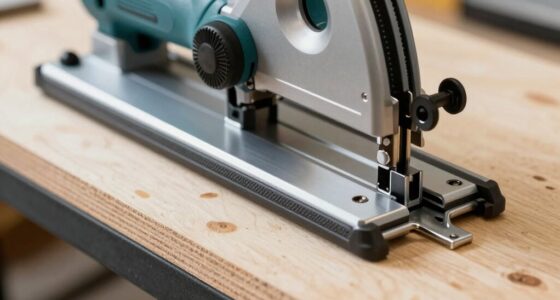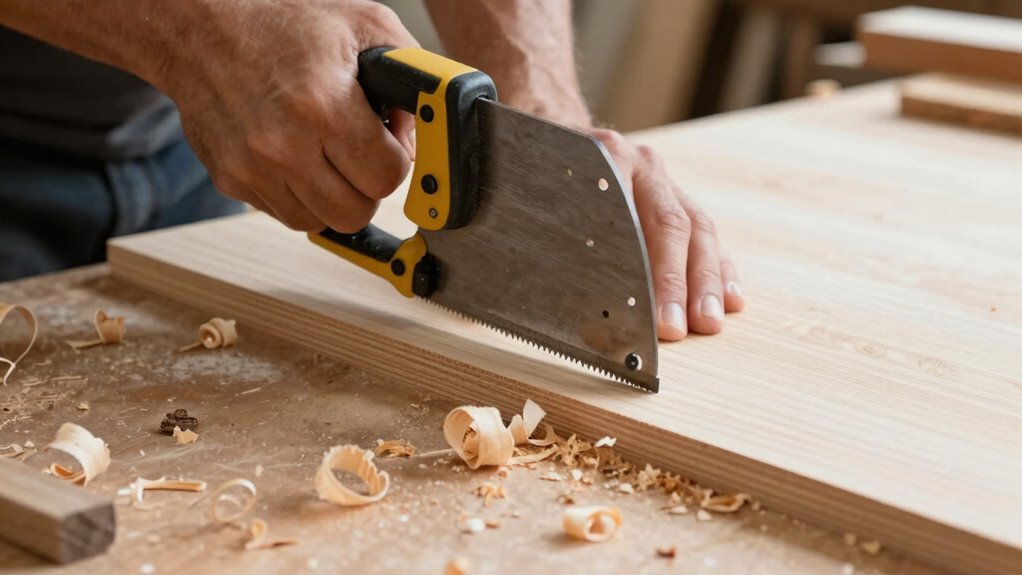

To break down sheet goods accurately, plan your cuts carefully and double-check measurements before starting. Use a straightedge or guide with your circular saw for straight, clean cuts, and clamp everything securely to prevent slipping. Store your materials properly to avoid warping and handle them with care. Staying organized and taking your time guarantees precision and safety. Keep these tips in mind, and you’ll master clean, accurate cuts—discover more strategies to perfect your process.

Get business pricing on tools and workshop supplies
- Business-only prices and quantity discounts
- Tax-exempt purchasing
- Multiple users, one account, clear invoices
Key Takeaways
- Measure and mark cut lines carefully with a straightedge for precise guidance.
- Use clamps and stop blocks to ensure straight, consistent cuts.
- Select a fine-tooth blade on a circular saw for cleaner, more accurate cuts.
- Break down large sheets in alignment with their grain to reduce splintering.
- Maintain an organized workspace to improve focus and avoid mistakes during cutting.
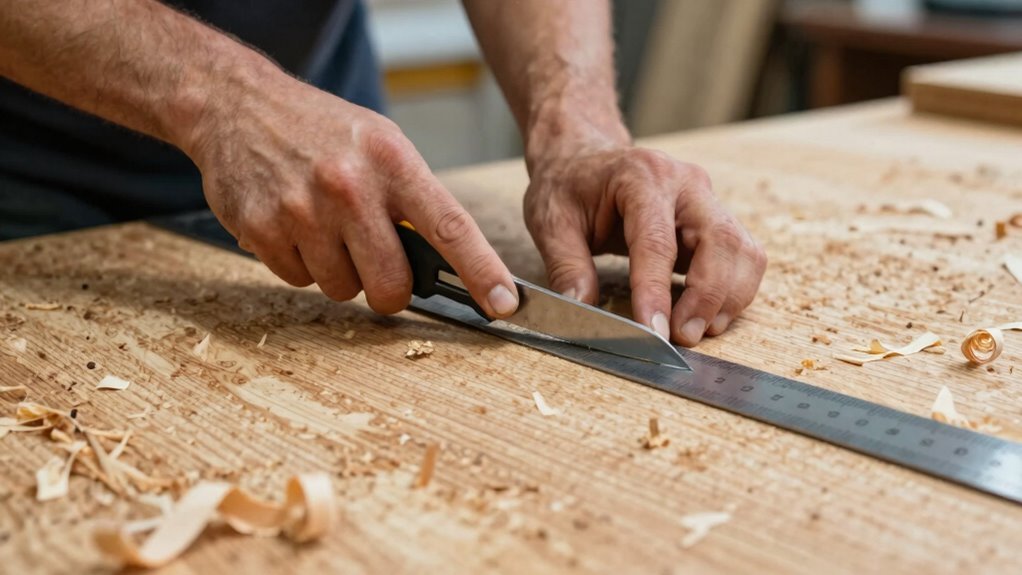
Before you make any cuts, plan your measurements carefully. Use a straightedge or a guide to mark your cut lines clearly and double-check your measurements before proceeding. When you’re ready to cut, consider using a circular saw with a fine-tooth blade for cleaner, more precise cuts. For long, straight cuts, a guide or straightedge clamped securely to the sheet will help you stay on track. Take your time and make steady, controlled cuts—rushing increases the chance of mistakes and can be dangerous. If you’re working with larger sheets, think about storage solutions beforehand. Keep unused sheets in a dry, flat area to prevent warping, and store them upright if space allows. Proper storage not only preserves your materials but also makes them easier to handle when you’re ready to cut. Paying attention to grain direction can also improve the quality of your cuts and reduce splintering on visible edges. When you’re breaking down sheet goods, consider the grain direction and how you’ll use each piece afterward. Cutting with the grain can improve the finish and reduce splintering, especially on visible edges. Use clamps or stop blocks to make repetitive cuts more accurate and efficient. If you’re working on a project that demands multiple pieces of the same size, these tools will save you from measuring each time and help maintain consistency. Keep your workspace organized, and store your tools properly after use to prolong their lifespan and ensure safety for future projects. Additionally, understanding proper material handling techniques can reduce fatigue and increase precision during cutting. Incorporating ergonomic practices can also help prevent strain and improve overall safety when working with power tools. Being mindful of safety precautions can also help prevent accidents and injuries while working with power tools. Remember, taking the time to plan, use the right tools safely, and organize your materials will lead to cleaner cuts and better results. When you pay attention to these details, breaking down sheet goods becomes a manageable, accurate process rather than a frustrating challenge.
circular saw with fine-tooth blade
As an affiliate, we earn on qualifying purchases.
As an affiliate, we earn on qualifying purchases.
Frequently Asked Questions
What Tools Are Best for Breaking Down Sheet Goods?
You should use a fine-tooth saw or a utility knife to break down sheet goods accurately. Make sure you have edge protection to keep the material stable and safe. Dust management is vital, so use a saw with a dust collection system or work in a well-ventilated area. These tools help you make clean cuts while maintaining precision, minimizing waste and guaranteeing your project stays accurate.
How Do I Prevent Splintering During Cutting?
To prevent splintering during cutting, start by choosing a fine-tooth blade suited for your sheet material, which helps make cleaner cuts. Always use edge protection, like masking tape along the cut line, to stabilize the material and reduce splintering. Additionally, cut with a steady, slow motion to minimize stress on the sheet, ensuring a smooth, accurate cut without damaging the surface.
Can I Use a Saw for Thick or Laminated Sheets?
Yes, you can use a saw for thick or laminated sheets, but you need to pay attention to edge jointing and grain direction. Use a fine-tooth blade to reduce splintering, and make certain your cut follows the grain direction for cleaner results. Support the sheet properly to prevent chipping or binding. Adjust your saw’s speed and cutting depth for thicker or laminated materials to guarantee accuracy without damaging the sheet.
How Do I Measure Accurately Before Cutting?
Think of measuring as charting a course through a stormy sea—you need precision to stay on track. You should use measuring techniques like a tape measure or square to get accurate dimensions. Mark your cut lines clearly with a pencil, and double-check your measurements before cutting. Employing effective marking strategies guarantees your cuts are true, preventing costly mistakes and ensuring your project sails smoothly to completion.
What Safety Precautions Should I Take?
You should always wear protective gear like safety glasses, ear protection, and gloves to prevent injuries. Make sure your workspace is well-organized, with plenty of space and a stable surface to prevent slips or accidents. Keep power tools properly maintained and follow the manufacturer’s instructions. Clear the area of debris, and never rush your cuts. Staying alert and using safety precautions helps you work efficiently without risking harm or losing accuracy.
clamp stop block for cutting sheets
As an affiliate, we earn on qualifying purchases.
As an affiliate, we earn on qualifying purchases.
Conclusion
Mastering the art of breaking down sheet goods without losing accuracy is like wielding a precision sword in a chaotic battlefield. With careful measurements, sharp tools, and steady hands, you can conquer even the most intimidating sheets. Remember, every cut you make is a step closer to perfection, turning what seems like a formidable task into a manageable masterpiece. Stick to these tips, and you’ll be slicing through sheet goods with the finesse of a seasoned pro—no mistakes, just flawless results.
straightedge guide for circular saw
As an affiliate, we earn on qualifying purchases.
As an affiliate, we earn on qualifying purchases.
material storage racks for sheet goods
As an affiliate, we earn on qualifying purchases.
As an affiliate, we earn on qualifying purchases.
Fall yard work Picks
leaf blowers
As an affiliate, we earn on qualifying purchases.