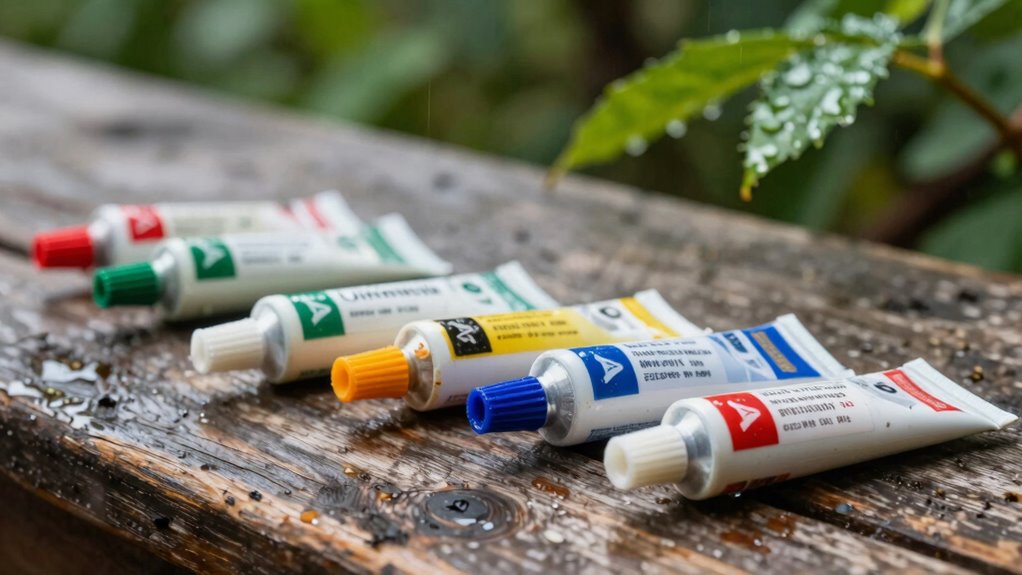
When choosing outdoor glue, look for waterproof adhesives that can withstand rain and humidity. Make sure it’s temperature-resistant too, so it holds up in extreme heat or cold. UV stability is essential; adhesives labeled as UV resistant will last longer in sunlight. Don’t forget surface preparation, as clean and dry surfaces enhance adhesion. Follow application techniques carefully for the best results. Keep exploring to discover even more tips for selecting the perfect outdoor glue.
Key Takeaways
- Choose waterproof adhesives for projects exposed to rain or humidity to ensure durability and prevent moisture-related bond failures.
- Select temperature-resistant adhesives to withstand extreme heat and cold, ensuring bonds remain strong under fluctuating conditions.
- Look for UV-resistant adhesives to maintain bonding strength and prevent degradation from prolonged sunlight exposure.
- Prepare surfaces by cleaning and sanding to enhance adhesive effectiveness and prevent bond failures.
- Follow proper application techniques, including even coverage and clamping, to achieve optimal bond strength.
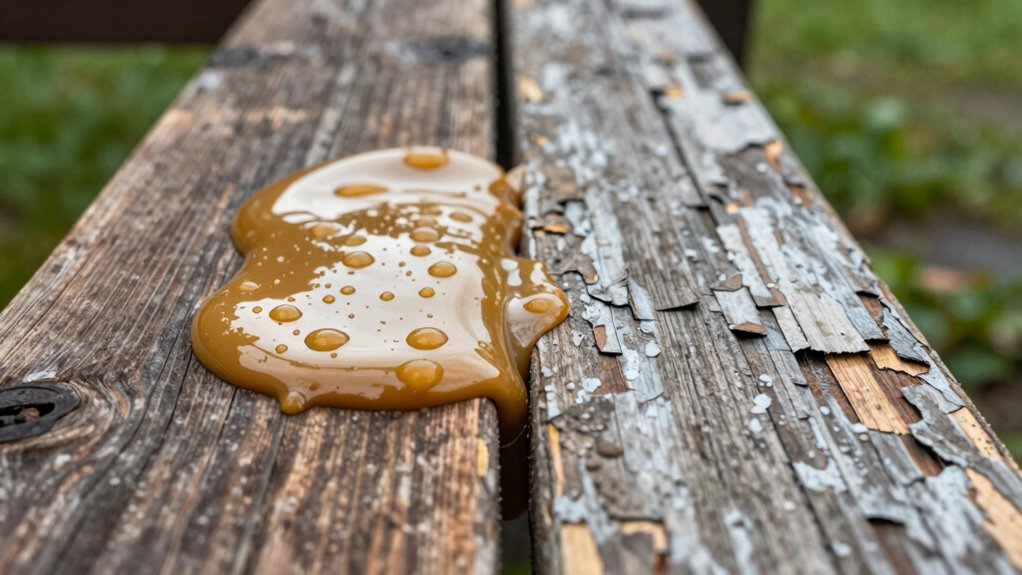
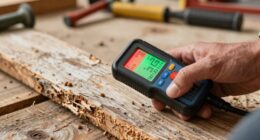
When tackling outdoor projects, choosing the right glue can make all the difference. You want something that can withstand the elements, and that’s where waterproof adhesives come into play. These specialized glues are designed not just to bond materials but to do so in wet conditions. Whether you’re repairing a garden bench or assembling a birdhouse, a waterproof adhesive guarantees your project lasts, even when exposed to rain or humidity. Additionally, considering the temperature resistance of your adhesive ensures it remains effective during extreme weather conditions. Temperature resistance is another vital factor. If you live in an area with extreme heat or cold, you’ll need a glue that can handle those fluctuations without breaking down. Many outdoor adhesives are formulated to remain effective across a wide range of temperatures, so your projects won’t weaken under the sun or shatter during a cold snap. UV stability is equally important. Sunlight can degrade many adhesives over time, causing them to lose their bonding power. When selecting your glue, look for options that specify UV resistance. This way, you can trust that your bond will hold strong, even in direct sunlight. Proper surface preparation can significantly extend the lifespan of your outdoor bonds. Before applying any adhesive, surface preparation is key. Make sure the surfaces you’re bonding are clean, dry, and free of any dust or debris. This simple step can greatly improve the effectiveness of your glue. For porous materials like wood, consider lightly sanding the surface to enhance adhesion, and understanding adhesive compatibility helps ensure you choose the right product for your specific materials, preventing bond failures. Additionally, selecting an adhesive with good water resistance is crucial for outdoor applications where exposure to moisture is inevitable. Applying the right application techniques can also make a noticeable difference, as improper application may weaken the bond or cause uneven curing. For example, applying the adhesive evenly and in the right amount can guarantee thorough coverage, which is especially important for larger surfaces. Some adhesives require clamping or holding the materials together for a specific time to set properly. Be sure to follow the manufacturer’s instructions for the best results. When you’re selecting a glue, think about the materials you’ll be bonding. Different adhesives perform better with certain materials, so it’s worth doing a little research to find the best match. For instance, some glues excel at bonding metal to wood, while others are better suited for plastic.

Gorilla Ultimate Waterproof Wood Glue, Natural Color, 8 oz
Use indoors or outdoors: Give your indoor or outdoor projects a Gorilla Tough bond with waterproof Ultimate Gorilla…
As an affiliate, we earn on qualifying purchases.
As an affiliate, we earn on qualifying purchases.
Frequently Asked Questions
Can I Use Indoor Glue for Outdoor Projects?
You shouldn’t use indoor glue for outdoor projects. Indoor glue durability isn’t designed to withstand the elements, so it can lose its strength when exposed to moisture, heat, or cold. For outdoor project suitability, you need a glue specifically made for outdoor conditions. These glues resist weather changes and provide a strong bond, ensuring your project lasts longer and performs better. Always choose wisely for the best results!
How Do I Remove Dried Outdoor Glue?
To tackle that stubborn dried glue like a superhero, start by scraping off the bulk with a plastic scraper. For adhesive types that cling tighter than a bear hug, saturate a cloth with rubbing alcohol or a commercial adhesive remover. Let it soak for a few minutes, then wipe away the residue like magic. If it’s still stuck, repeat until those pesky remnants vanish. You’ve got this!
Are There Eco-Friendly Outdoor Glue Options?
Yes, there are eco-friendly outdoor glue options available! You can look for biodegradable adhesives, which break down naturally over time, reducing environmental impact. Plant-based glues are another great choice, often made from renewable resources like corn or soy. These options provide strong bonding while being kinder to the earth. When selecting your glue, just check the labels to verify they meet your eco-friendly needs and preferences.
What Is the Shelf Life of Outdoor Glue?
The shelf life of outdoor glue typically ranges from one to three years, depending on the type and storage conditions. You’ll notice adhesive degradation if it’s stored improperly or exposed to extreme temperatures. To maximize its lifespan, keep it in a cool, dry place, tightly sealed. Always check the expiration date on the label before use. If you see changes in consistency or smell, it’s best to discard it.
How Do Temperature Changes Affect Outdoor Glue Performance?
Temperature fluctuations can greatly affect outdoor glue performance. When temperatures rise and fall, the adhesive properties can weaken, causing bonds to break or fail. You might notice that some glues become brittle in cold weather, while others can soften in heat. Always check the manufacturer’s guidelines for temperature ranges to guarantee ideal adhesion. If you’re working in extreme conditions, consider using specialized adhesives designed to withstand these changes.

Aleene's DIY Craft Outdoor Adhesive, Heavy-Duty & Permanent, UV and Weather Resistant, 1.5 Oz
Voted America’s Favorite Crafting Glue by generations of crafters, hobbyists, and households
As an affiliate, we earn on qualifying purchases.
As an affiliate, we earn on qualifying purchases.
Conclusion
When it comes to outdoor glues, choosing the right one can feel like finding a needle in a haystack. But with options like polyurethane and silicone sealants, you can guarantee your projects withstand the fiercest storms and the blazing sun. So, don’t settle for anything less than the best! With the right adhesive, your creations will stick around longer than the oldest tree in your backyard, standing strong against whatever nature throws their way.

Stnkeno High Temp Silicone Sealant, 3.53 Oz High Temperature Adhesive
Exceptional Heat Resistance: Our high temperature silicone adhesive features an advanced heat-resistant formula that maintains exceptional strength and…
As an affiliate, we earn on qualifying purchases.
As an affiliate, we earn on qualifying purchases.
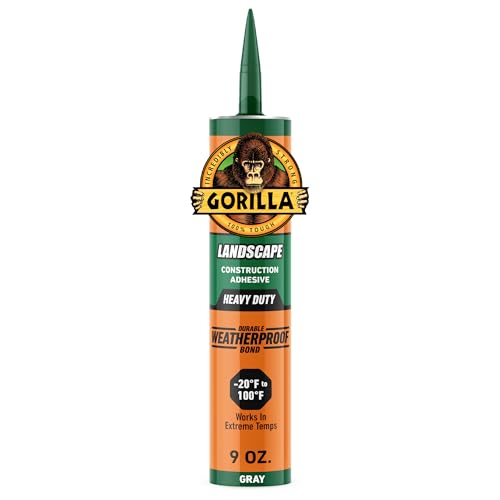
Gorilla Landscape Construction Adhesive, Heavy Duty Weatherproof Bond, Gray, 9 fl. oz. Cartridge
HEAVY DUTY LANDSCAPE ADHESIVE: Built for demanding outdoor and landscaping projects where a strong, reliable bond is required
As an affiliate, we earn on qualifying purchases.
As an affiliate, we earn on qualifying purchases.