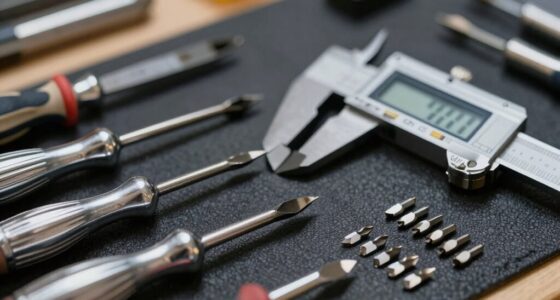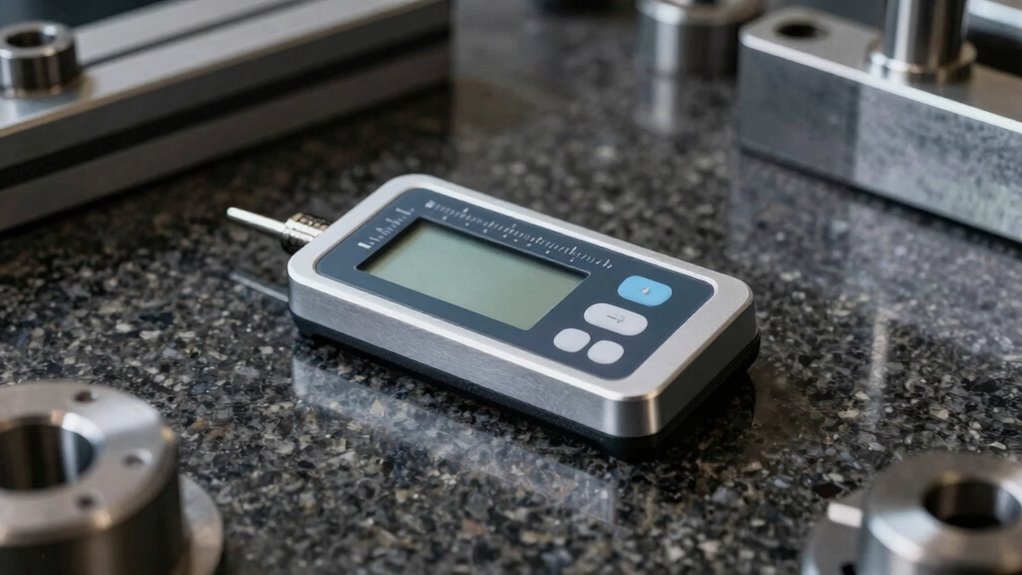

A digital angle gauge helps you achieve precise cuts on big machines by offering accurate, easy-to-read measurements. You simply place the gauge on your work surface and check the angle instantly, ensuring your setup is correct. Regular calibration and proper maintenance keep it functioning reliably. With this tiny tool, you’ll cut with confidence and precision every time. Keep exploring, and you’ll discover even more tips to get the best out of your digital angle gauge.
Listen free for 30 days with Audible
Thousands of audiobooks and originals — cancel anytime.
As an affiliate, we earn on qualifying purchases.
Key Takeaways
- Digital angle gauges provide precise angle measurements, ensuring accurate cuts on large machines.
- Proper calibration and maintenance guarantee consistent performance for high-precision tasks.
- Compact and portable, they are easy to use for quick, on-site angle adjustments.
- Regularly checking batteries and cleaning the display maintain measurement accuracy.
- Using certified reference tools helps verify and enhance the gauge’s accuracy for big projects.
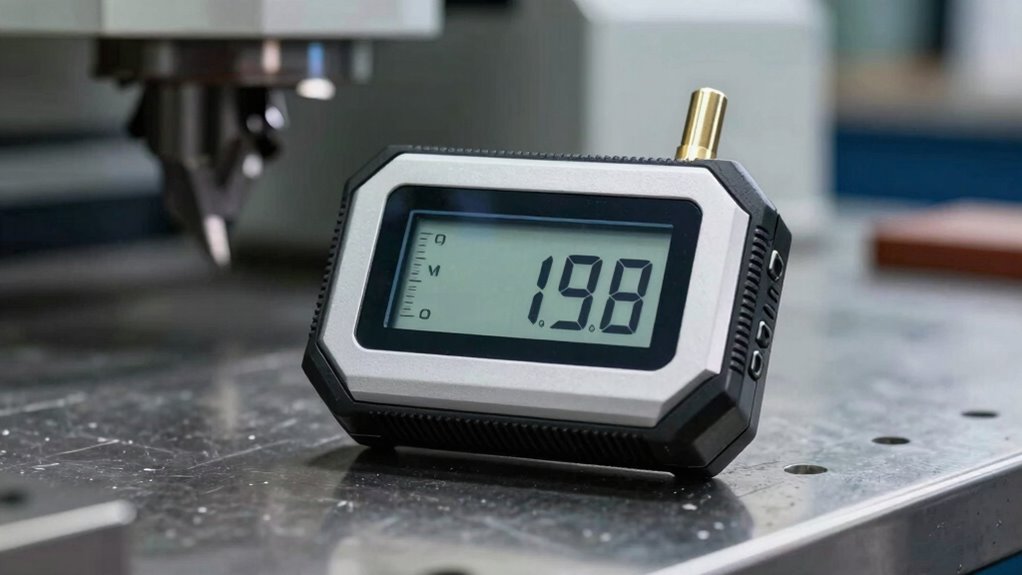
When it comes to calibration procedures, you want to start by setting your digital angle gauge on a flat, stable surface. Many models come with a calibration mode or a zero-setting function. You typically press a button to zero the device, ensuring it reads zero when positioned on a flat surface. For more accurate calibration, you might use a known reference angle, such as a precision square or a certified angle block. Place the gauge against this reference, and if the reading isn’t accurate, follow the manufacturer’s instructions to recalibrate. Regular calibration is especially crucial if you notice inconsistent readings or after accidental drops. Some gauges have built-in calibration features, while others may require external calibration tools or professional servicing. Proper tool calibration ensures your measurements remain precise over time. Tool maintenance is straightforward but vital. Keep the digital display clean and free of dust or debris using a soft, dry cloth. Avoid harsh chemicals that could damage the screen or internal components. Check the battery regularly because a weak or dead battery can cause inaccurate readings or device failure. Replace batteries promptly, and always use the recommended type. When storing your gauge, keep it in a protective case to prevent accidental damage. Periodic inspection of the sensors and moving parts helps ensure longevity. If your gauge has any moving parts or hinges, lubricate them as recommended by the manufacturer to prevent stiffness or malfunction. Additionally, understanding the accuracy specifications of your gauge can help you interpret measurements more reliably. Regularly reviewing manufacturers’ instructions can also help you stay up-to-date with proper care and calibration techniques. Proper tool storage environments can further help preserve the gauge’s precision and extend its lifespan.
digital angle gauge for woodworking
As an affiliate, we earn on qualifying purchases.
As an affiliate, we earn on qualifying purchases.
Frequently Asked Questions
How Accurate Are Digital Angle Gauges Compared to Traditional Tools?
Digital angle gauges are highly accurate, often surpassing traditional tools, especially when properly calibrated. You can trust their precision if you routinely perform angle gauge calibration to maintain reliability. Plus, their digital tool durability ensures they withstand regular use, giving you consistent results over time. Compared to traditional tools, digital gauges provide quick, clear readings, making them a dependable choice for precise measurements in your projects.
Can Digital Angle Gauges Be Used Underwater or in Humid Environments?
Yes, digital angle gauges with waterproof features and humidity resistance are suitable for underwater or humid environments. You can confidently use these gauges in wet conditions without worrying about damage or inaccuracies. Their waterproof design ensures protection against water ingress, while humidity resistance prevents fogging or corrosion. This makes them versatile tools for outdoor construction, marine work, or any setting with high moisture levels, guaranteeing precise measurements even in challenging conditions.
What Is the Typical Battery Life of a Digital Angle Gauge?
You’ll typically get several months of use from a digital angle gauge’s battery before needing a replacement. Battery life depends on its power consumption, which varies with the model and usage frequency. When the display dims or becomes inconsistent, it’s time for a battery replacement. To extend its lifespan, turn off the gauge when not in use and avoid leaving it in extreme temperatures.
Are Digital Angle Gauges Suitable for Measuring Very Small Angles?
You might find digital angle gauges quite suitable for measuring very small angles because they excel at precision measurement. Their high sensitivity allows you to detect tiny changes accurately, making them ideal for detailed work. Plus, their tool durability guarantees consistent performance over time, even with frequent use. So, whether you’re fine-tuning intricate cuts or aligning components, these gauges help you achieve the exactness you need, no matter how small the angle.
How Do I Calibrate a Digital Angle Gauge for Precision?
To calibrate your digital angle gauge for accuracy, start with a flat, stable surface. Perform an angle calibration by placing the gauge on a known reference, like a precision square or a level surface. Use the device’s calibration function to modify for any discrepancies. Then, fine-tune the precision adjustment until the gauge reads accurately. Regular calibration ensures your measurements remain precise and reliable for all your projects.
As an affiliate, we earn on qualifying purchases.
Conclusion
With a digital angle gauge in your toolbox, you’re not just measuring angles—you’re wielding a tiny device that transforms your entire approach to machining. It’s like having a precision wizard in your pocket, ensuring your cuts are so perfect, they could make even the most stubborn machines bow in awe. Say goodbye to guesswork and hello to flawless results—this little tool is your secret weapon for turning everyday projects into masterpieces.
calibrated digital angle measurement tool
As an affiliate, we earn on qualifying purchases.
As an affiliate, we earn on qualifying purchases.
As an affiliate, we earn on qualifying purchases.
Flea & tick season Picks
flea and tick prevention
As an affiliate, we earn on qualifying purchases.