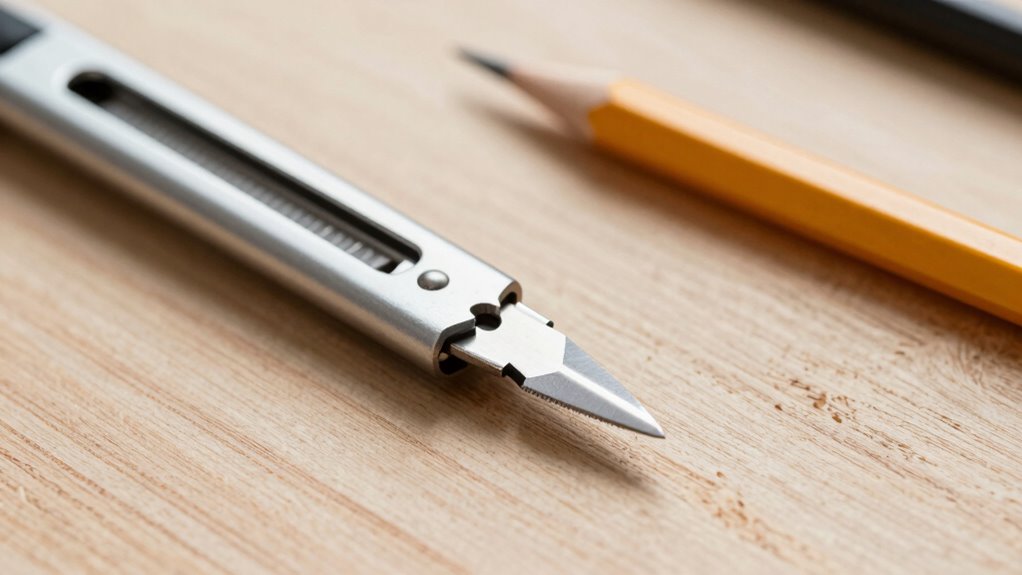
Using a marking knife instead of a pencil sharply boosts your accuracy by creating narrower, crisper lines that are less likely to smudge or fade. The knife’s precise marks help you achieve cleaner cuts and better fitting joints, especially on hard or dense woods. While pencils are convenient for quick notes, switching to a marking knife enhances overall craftsmanship. Keep going, and you’ll discover tips to make this upgrade even more effective.

Get business pricing on tools and workshop supplies
- Business-only prices and quantity discounts
- Tax-exempt purchasing
- Multiple users, one account, clear invoices
Key Takeaways
- Marking knives produce narrower, sharper lines, reducing measurement errors compared to softer, wider pencil marks.
- Sharp marking knives leave indelible, precise lines that are less prone to smudging or fading over time.
- Pencils may create softer, smudging marks, decreasing accuracy, especially on hard or dense materials.
- Properly maintained marking knives ensure consistent, crisp lines that enhance overall cutting and assembly precision.
- Transitioning from pencil to marking knife, with practice and sharp tools, significantly improves marking accuracy and craftsmanship.
As an affiliate, we earn on qualifying purchases.
Why Using a Marking Knife Boosts Your Woodworking Precision
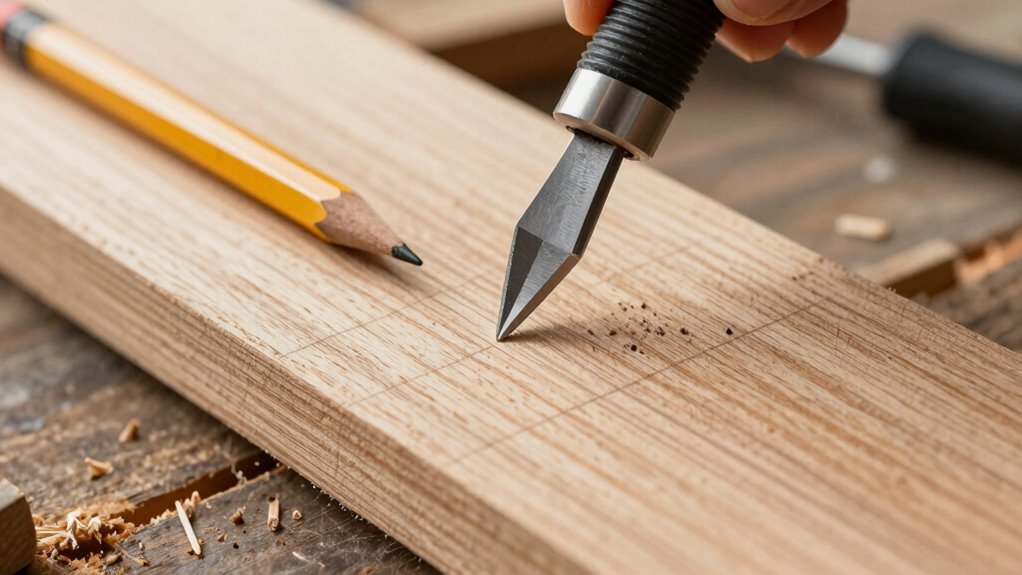
Using a marking knife instead of a pencil considerably enhances your woodworking precision because it creates a narrow, sharp line that’s easy to follow and less likely to smudge or fade. This improves your marking techniques by providing a clear, consistent guideline for cuts or joins. A sharp blade ensures precise lines, so regular tool maintenance becomes essential—dulling tools compromise accuracy. Properly sharpen and clean your marking knife frequently to maintain its effectiveness. Unlike pencils, which can produce faint or uneven marks, a well-maintained marking knife delivers crisp, accurate lines that help you cut and assemble more precisely. Additionally, understanding the importance of precision tools and their proper care can significantly impact the quality of your craftsmanship. Being aware of tool maintenance practices ensures your tools perform at their best, leading to more reliable results. Maintaining a consistent marking technique is also vital for achieving uniformity across your projects. Incorporating proper storage for your tools can prevent damage and ensure they stay sharp and ready for use. This combination of superior marking techniques and diligent tool maintenance ultimately leads to cleaner, more accurate woodworking results.
As an affiliate, we earn on qualifying purchases.
Comparing the Accuracy of Marking Knife and Pencil
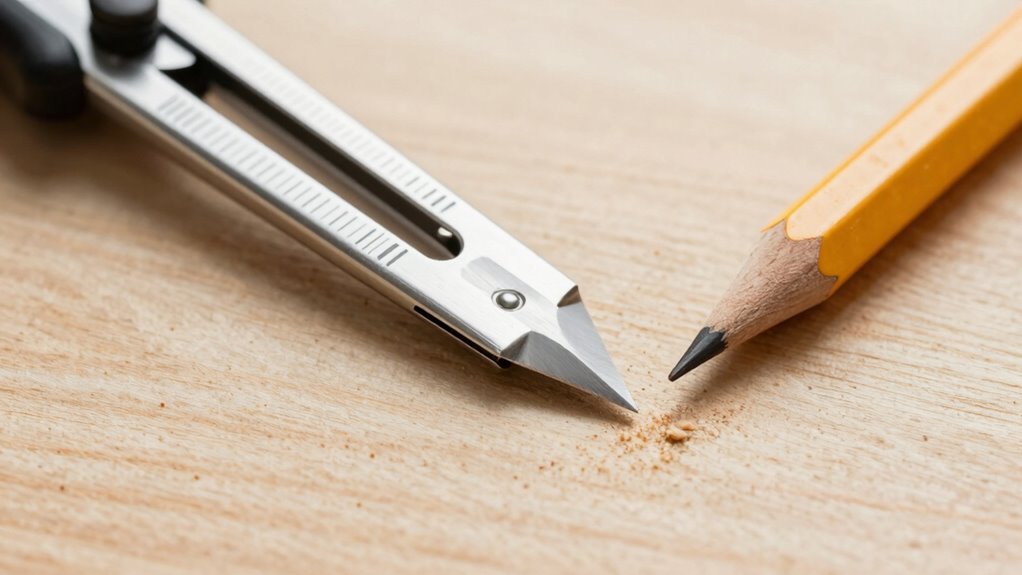
When it comes to accuracy in marking out woodworking projects, a marking knife generally outperforms a pencil because it produces a narrower and more precise line. This enhanced marking accuracy helps you make cleaner, more detailed cuts and joints. In a tool comparison, the marking knife’s crisp line reduces the chances of misinterpretation or measurement errors. Pencils often create wider, softer lines that can smudge or wear away, decreasing overall accuracy. The sharper edge of a marking knife allows you to establish clearer guidelines, especially on hardwoods or fine details. Additionally, measurement precision** is critical in achieving high-quality results, and the use of marking tools can further improve accuracy. Proper tool maintenance ensures that the marking knife maintains its edge and precision over time. Regularly honing and cleaning your marking knife preserves its cutting edge**, which is essential for maintaining consistent marking quality. While pencils are quick and convenient, the precision of a marking knife makes it a superior choice when exactness is critical. Overall, for achieving high marking accuracy, the knife clearly has the edge over a pencil.
As an affiliate, we earn on qualifying purchases.
Choosing the Right Marking Tool: Knife or Pencil?
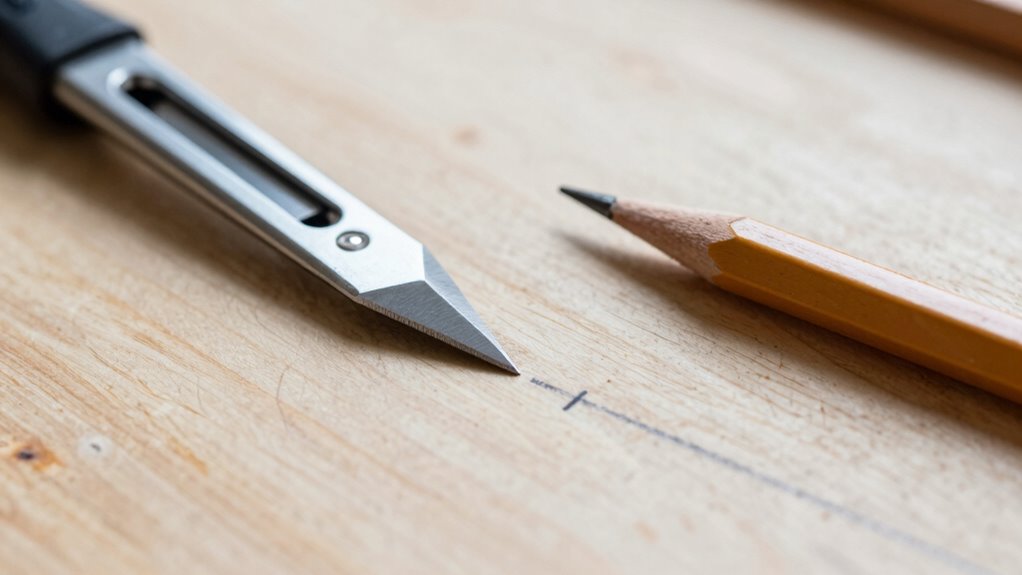
Choosing the Right Marking Tool: Knife or Pencil?
When choosing between a marking knife and a pencil, consider which tool offers the best precision and clarity for your project. Think about how easy each tool is to use and whether it suits the materials you’re working with. Your decision should balance accuracy, convenience, and material compatibility to get the best results. Additionally, selecting a marking tool with proper safety considerations can help prevent accidents during your work. Being aware of safety precautions is especially important when using sharp tools like a marking knife to ensure safe and effective use. Incorporating ergonomic design into your choice can also reduce fatigue during extended use. Using tools with ergonomic features can make a significant difference in comfort and control, especially during prolonged tasks. Considering tool maintenance can also extend the lifespan and maintain the precision of your marking tools over time.
Precision and Clarity
Choosing the right marking tool hinges on achieving the desired level of precision and clarity in your work. A marking knife offers sharp, fine lines that enhance detail and accuracy, making it ideal for precise marking techniques. Pencils, on the other hand, produce softer lines that are easy to erase, providing flexibility for adjustments. The clarity of your markings depends on your tool choice and how well you maintain it. Regular tool maintenance, like sharpening the knife blade or selecting a quality pencil, ensures consistent, clear marks. When precision matters most, a marking knife’s crisp lines give you unmistakable guidance. For less critical projects, a pencil’s softer mark might suffice. Ultimately, selecting the right tool depends on balancing your needs for accuracy and the ability to refine your markings.
Ease of Use
The ease of use is an important factor when selecting between a marking knife and a pencil. An ergonomic design can make a big difference in how comfortable and efficient your marking process feels. If your tool fits well in your hand, you’ll experience better grip comfort, reducing fatigue during extended use. A marking knife with a well-balanced handle allows for precise control with minimal effort. Conversely, a pencil with a comfortable grip can be easier to maneuver for quick, less detailed marks. Consider how each tool feels in your hand and whether it’s designed to reduce strain. Ergonomic features play a crucial role in minimizing discomfort and enhancing accuracy during marking tasks. Additionally, selecting high-quality tools ensures durability and consistent performance over time. Opting for tools with precision engineering can further improve the accuracy of your markings and overall workflow. Incorporating tools with advanced manufacturing techniques can also contribute to better precision and longevity.
Suitability for Materials
Different materials require different marking tools to achieve clear and accurate results. For soft woods or delicate surfaces, pencils provide gentle marks that won’t damage the material or compromise marking durability. Harder woods or dense materials benefit from a marking knife, which creates precise, indelible lines suited for detailed work. The choice depends on material textures and the need for durability. Consider this table:
| Material Type | Best Tool | Notes |
|---|---|---|
| Soft woods | Pencil | Easy to erase, gentle on surface |
| Hard woods | Marking knife | Sharp, durable, precise lines |
| Soft metals | Marking knife | Leaves clear, lasting marks |
Choosing the right tool guarantees your markings stay intact and accurate, tailored to each material’s inherent properties.
As an affiliate, we earn on qualifying purchases.
What Factors Matter When Picking a Marking Knife or Pencil
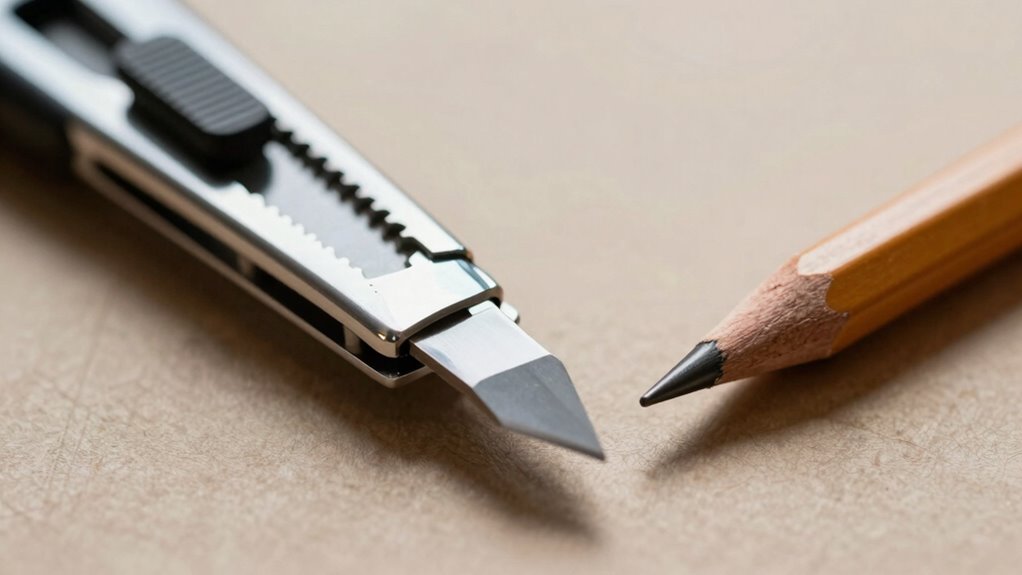
When selecting a marking knife or pencil, several key factors can influence your choice and ultimately impact your work. Blade thickness affects the line’s precision and ease of control; thinner blades offer finer lines, while thicker blades provide durability. Graphite hardness determines the mark’s visibility and ease of erasing, with harder pencils leaving lighter, more precise lines and softer pencils creating darker, bolder marks. Consider your material and project needs to choose accordingly. Additionally, think about ergonomics for comfort during extended use and the overall quality of the tool. A well-chosen marking instrument enhances accuracy and efficiency, making your work cleaner and more precise. For consistent results, understanding tool quality can make a significant difference in your work outcome.
How to Switch From Pencil to a Marking Knife Without Hassle
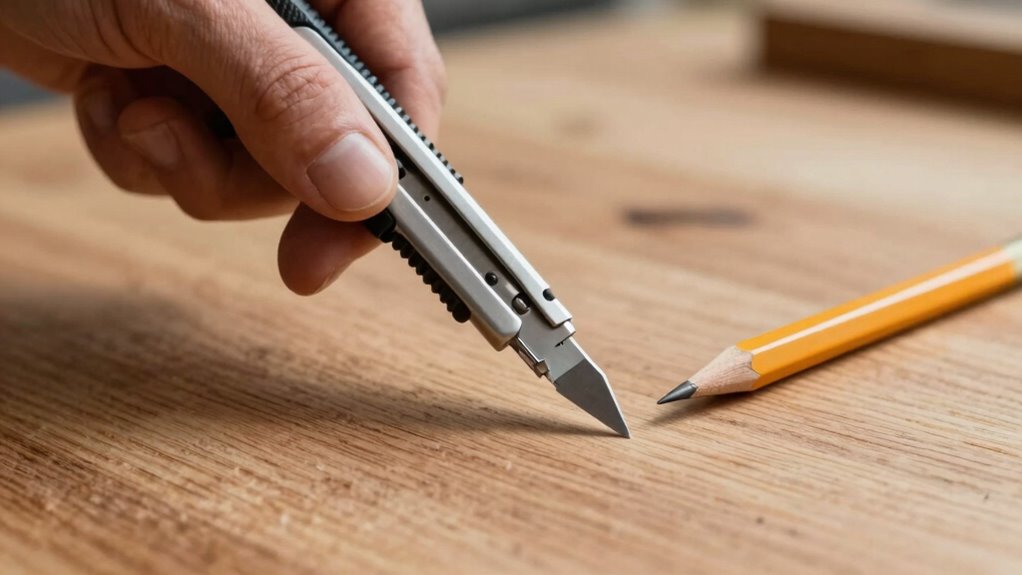
Switching from a pencil to a marking knife can be straightforward if you prepare properly. First, focus on blade maintenance—sharpen the marking knife so it slices cleanly through your material, ensuring precise lines. Practice your marking techniques on scrap wood to get comfortable with the new tool’s control and pressure. When making your marks, use consistent, deliberate strokes, applying even pressure for accuracy. Keep the blade clean and dry to prevent rust and buildup that could affect your lines. Shift gradually by comparing your markings with pencil lines until you’re confident. This way, you’ll develop a feel for the knife’s behavior, making your switch smooth and hassle-free while improving overall marking precision. Additionally, understanding the importance of support networks can help you gain confidence in your new skills as you adapt to the tool.
Troubleshooting Common Marking Knife Problems
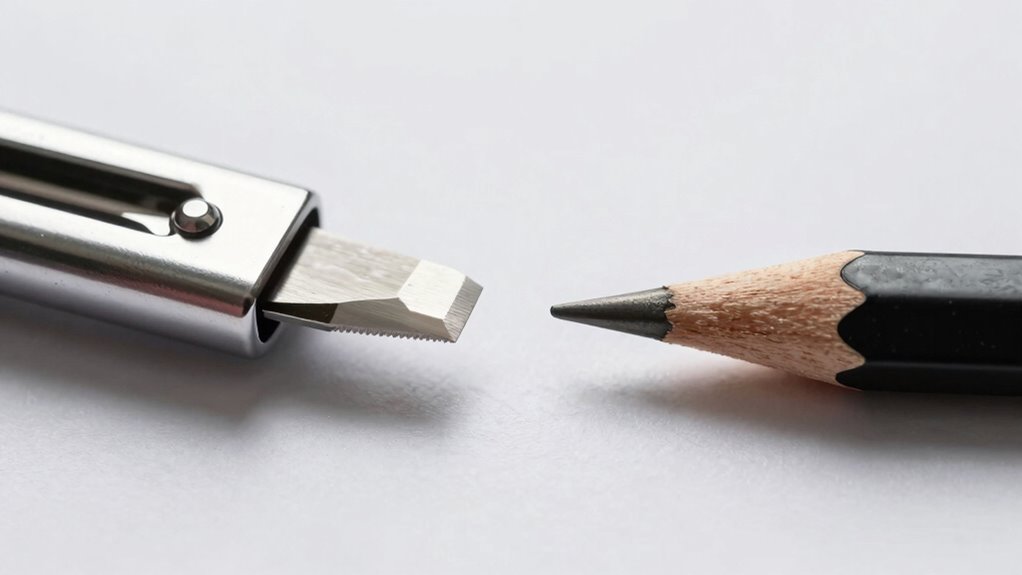
Even the most carefully maintained marking knives can encounter issues that affect their performance. Common problems include inconsistent marking lines, dull blades, or reduced blade durability. These issues can compromise your accuracy and workflow. To troubleshoot, start by checking the blade’s sharpness; a dull blade hampers marking consistency. Ensure the blade is clean and free of debris, which can dull it quickly. If the blade wears out prematurely, consider replacing it with a higher-quality or more durable option. Additionally, verify that the blade is properly aligned, as misalignment affects marking accuracy. Regular maintenance, such as cleaning and sharpening, can extend blade durability and keep your marks precise. Using quality material, which can enhance the longevity and performance of your marking tools, is also beneficial. Proper storage methods can prevent rust and damage, ensuring consistent results. Incorporating proper technique into your workflow can further improve your precision and craftsmanship. Addressing these common problems guarantees consistent results and improves your overall craftsmanship.
How Using the Right Tools Can Improve Your Craftsmanship
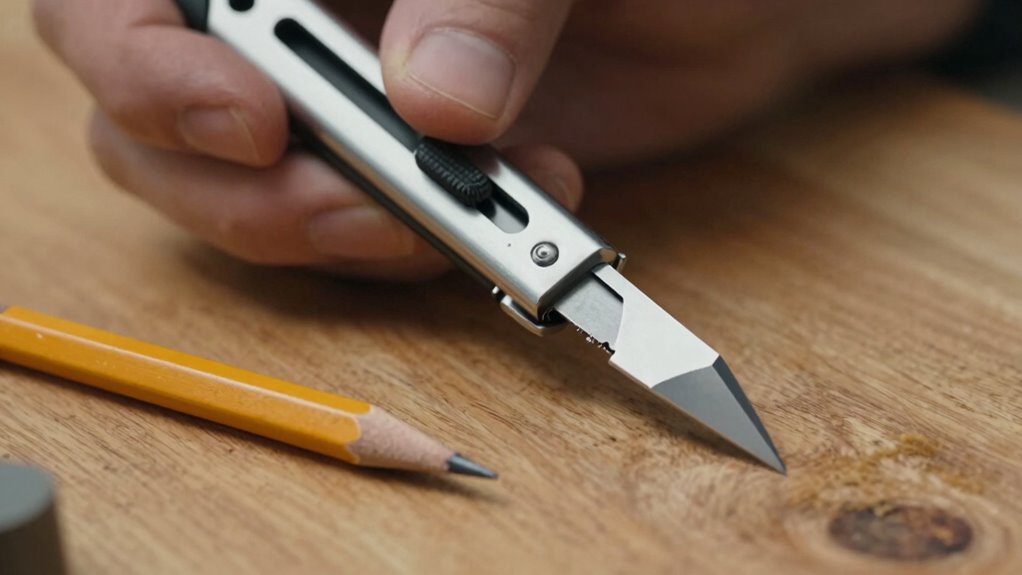
Using the right tools is essential for elevating your craftsmanship because they enable you to work more accurately and efficiently. Proper marking techniques depend heavily on selecting tools that suit your project. A well-maintained marking knife or pencil ensures clean, precise lines, reducing errors. Regular tool maintenance keeps your tools sharp and reliable, directly impacting your accuracy. For example, dull blades can cause slipping, ruining your measurements. The table below highlights key tools and their benefits:
| Tool | Marking Technique | Maintenance Tip |
|---|---|---|
| Marking knife | Precise, fine lines | Keep blades sharp |
| Pencil | Quick, versatile marks | Sharpen regularly |
| Scriber | Deep, visible markings | Clean tips after use |
| Chalk | Temporary, broad markings | Keep dry and clean |
Using these tools correctly enhances your craftsmanship and results.
FAQs: Best Practices for Marking in Woodworking
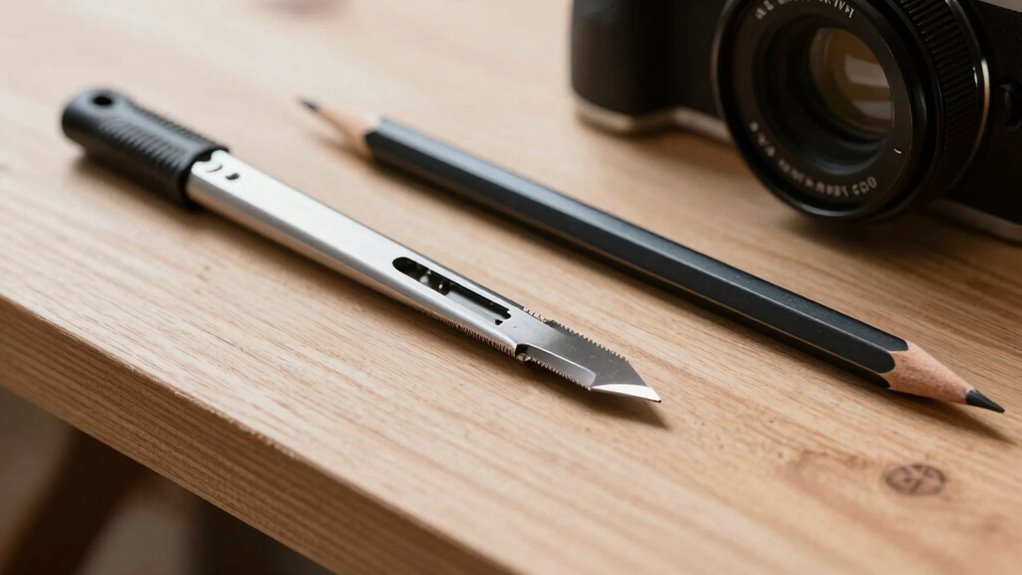
To achieve accurate and clean markings in woodworking, understanding best practices is essential. Proper marking techniques ensure precision and prevent errors during cuts. Always select the right marking tool for the task—whether a marking knife or pencil—and keep it well-maintained. Regular tool maintenance, such as sharpening your marking knife and cleaning your pencil, improves line clarity and consistency. Additionally, verify your workpiece is secure to avoid slips. Use light, controlled strokes rather than pressing hard, which can cause inaccuracies. Double-check your measurements before marking. Consistent technique and proper tool care will notably enhance your craftsmanship and reduce mistakes.
- Use sharp tools for crisp, precise lines
- Keep tools clean and sharp through regular maintenance
- Measure carefully before marking
- Practice consistent marking techniques for best results
Frequently Asked Questions
Can a Marking Knife Be Used on Materials Other Than Wood?
Yes, you can use a marking knife on materials other than wood, but check the metal compatibility of the specific marking knife varieties. Some knives work well on soft metals like aluminum or copper, while others are designed mainly for wood. Be sure to select the right type to avoid damage or ineffective markings. Always test on a small area first to ensure it performs well on your chosen material.
How Durable Are Marking Knives Compared to Pencils?
Marking knives are generally more durable than pencils, offering greater longevity with proper care. You’ll find that a good marking knife can last for years without dulling, thanks to its sharp steel blade. Pencils, on the other hand, tend to wear down quickly and need frequent sharpening. So, if you want consistent, precise marks over time, a marking knife provides superior durability and longevity compared to pencil durability.
Is There a Specific Technique for Sharpening Marking Knives?
Think of sharpening your marking knife like tuning a musical instrument. To do it right, use a fine sharpening technique, maintaining a consistent angle, usually around 20 degrees. Regular blade maintenance keeps it sharp and precise. Use a sharpening stone or honing rod, gently sliding the blade along the abrasive surface, guaranteeing even wear. This careful process ensures your marking knife stays reliable, delivering accurate marks every time.
Are There Safety Concerns When Using a Marking Knife?
Yes, there are safety concerns when using a marking knife. You should always wear safety gear like gloves and eye protection, and follow handling precautions to avoid cuts or injuries. Keep your fingers away from the blade’s edge and work on a stable surface. Use controlled movements and store the knife safely when not in use. Staying alert and cautious helps prevent accidents and keeps you safe during your work.
How Do Weather Conditions Affect Pencil vs. Marking Knife Accuracy?
Imagine your workspace as a stage where weather plays a sneaky role. Humidity effects can cause pencils to smudge or become faint, reducing accuracy. Temperature influence might make the marking knife’s metal expand or contract, affecting precision. In humid or hot conditions, a marking knife often remains sharper and more reliable, while pencils struggle with smudging or breakage. Adjust your tools accordingly to maintain accuracy regardless of the weather.
Conclusion
Switching to a marking knife can truly elevate your woodworking precision, and some believe it even improves your overall craftsmanship. While it might seem like a small change, upgrading your marking tools can make a noticeable difference in accuracy. Trust the evidence—many seasoned woodworkers swear by the precision of a marking knife. Give it a try, and you might find your projects come together more seamlessly, making you a more confident, skilled craftsperson.
Fall yard work Picks
leaf blowers
As an affiliate, we earn on qualifying purchases.