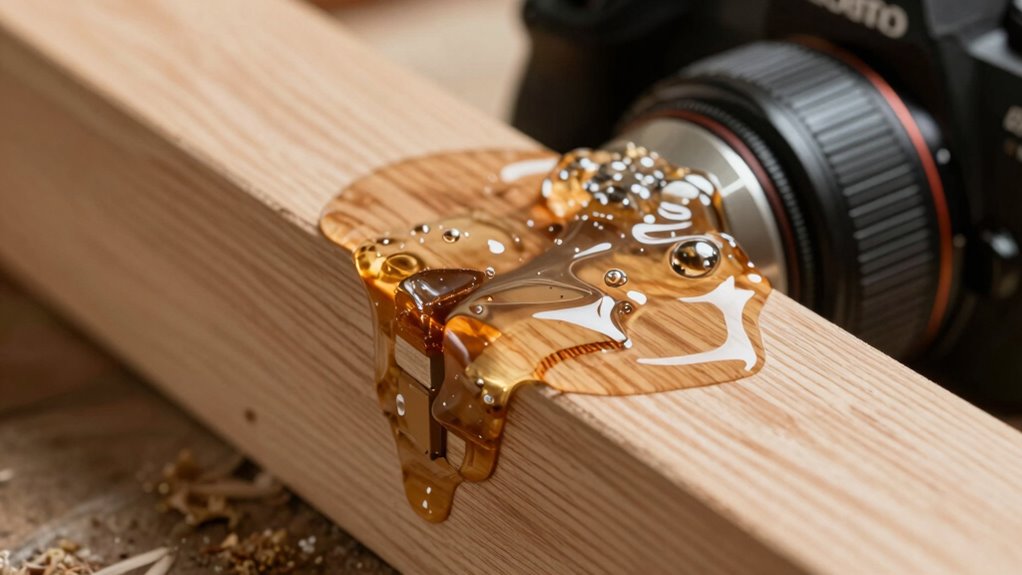

The biggest mistake that weakens epoxy joints in woodworking is not mixing the resin and hardener in the correct ratio. Even small deviations can prevent the epoxy from curing properly, leading to sticky or brittle bonds. To avoid this, use precise measuring tools and follow manufacturer instructions carefully. Proper mixing guarantees a strong, durable bond. If you keep these tips in mind, you’ll discover how to avoid common pitfalls and improve your epoxy results.

Get business pricing on tools and workshop supplies
- Business-only prices and quantity discounts
- Tax-exempt purchasing
- Multiple users, one account, clear invoices
Key Takeaways
- Using incorrect resin-to-hardener ratios leads to incomplete chemical reactions, weakening the epoxy bond.
- Rushing or inadequate mixing prevents uniform curing, resulting in sticky or brittle joints.
- Skipping thorough surface cleaning and preparation compromises adhesion strength.
- Improper measurement tools, like uncalibrated cups or scales, cause ratio inaccuracies.
- Failing to mix thoroughly until the color and texture are consistent can leave weak spots in the epoxy.
As an affiliate, we earn on qualifying purchases.
Why Mixing Ratios Are Critical for Strong Wood Epoxy Joints
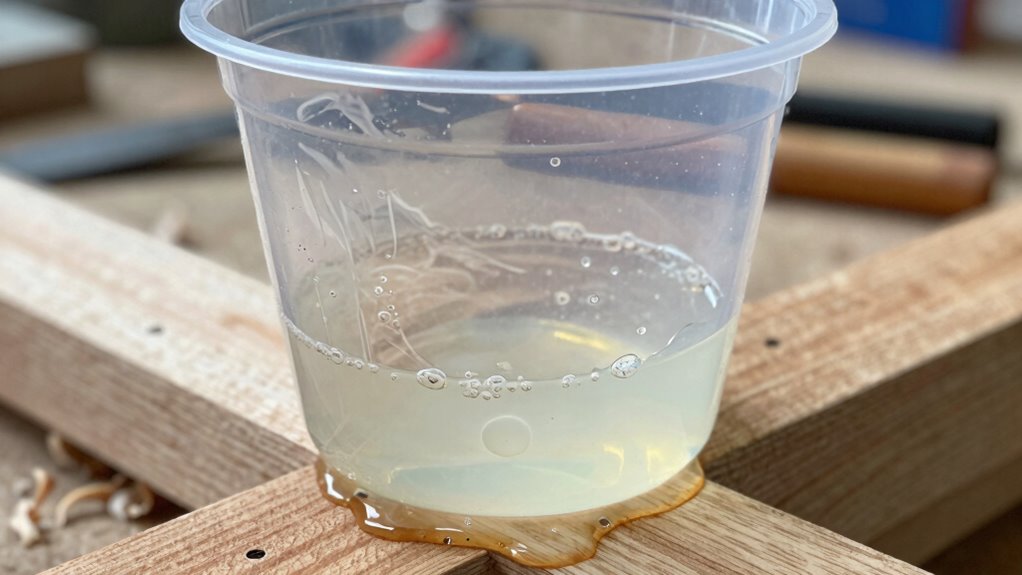
Proper mixing ratios are essential because even small deviations can substantially weaken your wood epoxy joints. Understanding epoxy chemistry helps you grasp why precise measurements matter; the chemical reaction depends on the correct proportions of resin and hardener. When you measure inaccurately, the epoxy may not cure properly, leading to brittle or weak bonds. Using the right mixing tools, like graduated cups or digital scales, ensures accuracy and consistency. Properly combined epoxy creates a strong, durable joint; mismeasured components can result in a compromised bond. Always follow the manufacturer’s instructions closely for the recommended ratio. Accurate measurement techniques and taking the time to measure precisely and use appropriate mixing tools guarantees your epoxy will perform as intended, providing the robust wood joints you need. Additionally, understanding epoxy chemistry can help you troubleshoot problems if your joints don’t set correctly.
As an affiliate, we earn on qualifying purchases.
Common Mistakes That Weaken Your Epoxy Bond
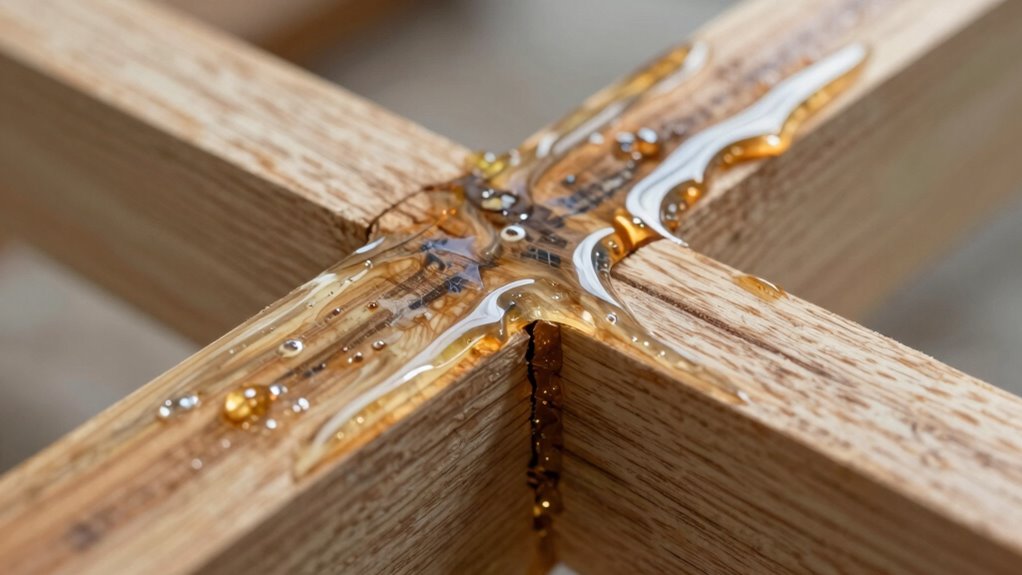
One of the most common mistakes that weaken your epoxy bond is rushing the mixing process or skipping thorough blending. Proper surface preparation is essential—any dirt, oil, or loose wood fibers can prevent the epoxy from adhering properly. Additionally, neglecting the curing environment, such as applying epoxy in high humidity or extreme temperatures, can compromise its strength. If the surface isn’t clean and dry or if the curing conditions aren’t ideal, the epoxy won’t bond as intended. Always take your time to prepare the wood surface correctly and ensure the environment is suitable for curing. Rushing these steps leads to weak joints, reducing the epoxy’s effectiveness and durability over time. Paying attention to surface prep and curing conditions is key for a strong, lasting bond. Ensuring the right curing environment is just as important as proper mixing and surface prep to achieve maximum epoxy strength. Proper environmental conditions support the chemical curing process, reinforcing the bond. Remember, mixing technique can also influence the epoxy’s final strength and adhesion.
As an affiliate, we earn on qualifying purchases.
How to Measure and Mix Epoxy Correctly for Best Results
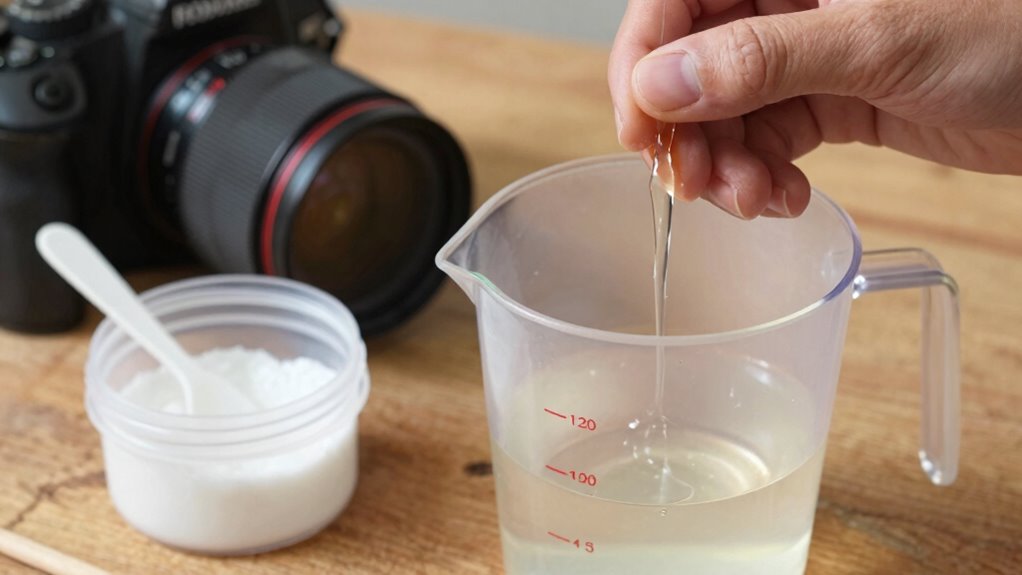
To achieve the strongest bond, you need to measure and mix epoxy accurately. Use precise measurements, ideally with a scale or measuring cups, to guarantee the correct ratio of resin to hardener. This consistency is key for proper curing times and maximum strength. When mixing, stir thoroughly but avoid whipping air into the mixture, which can weaken joints. If color matching is important, mix small batches first to check the hue before combining larger quantities. Proper measurement and mixing prevent issues like sticky or uneven surfaces, ensuring the epoxy cures correctly. Remember, even small deviations from the recommended ratio can compromise the bond’s strength and durability. Taking the time to measure carefully and follow the instructions precisely will lead to better results. Proper techniques are essential for achieving reliable and durable wood joints. Additionally, understanding the lifecycle and performance metrics of epoxy can help in selecting the right product for your project. Always verify that your epoxy is properly registered with relevant authorities to ensure quality and safety. Being aware of cleaning and maintenance practices can further extend the lifespan of your epoxy tools and ensure optimal performance.
precision measuring tools for epoxy
As an affiliate, we earn on qualifying purchases.
As an affiliate, we earn on qualifying purchases.
How Can You Tell if Your Epoxy Is Weak Because of Bad Mixing?
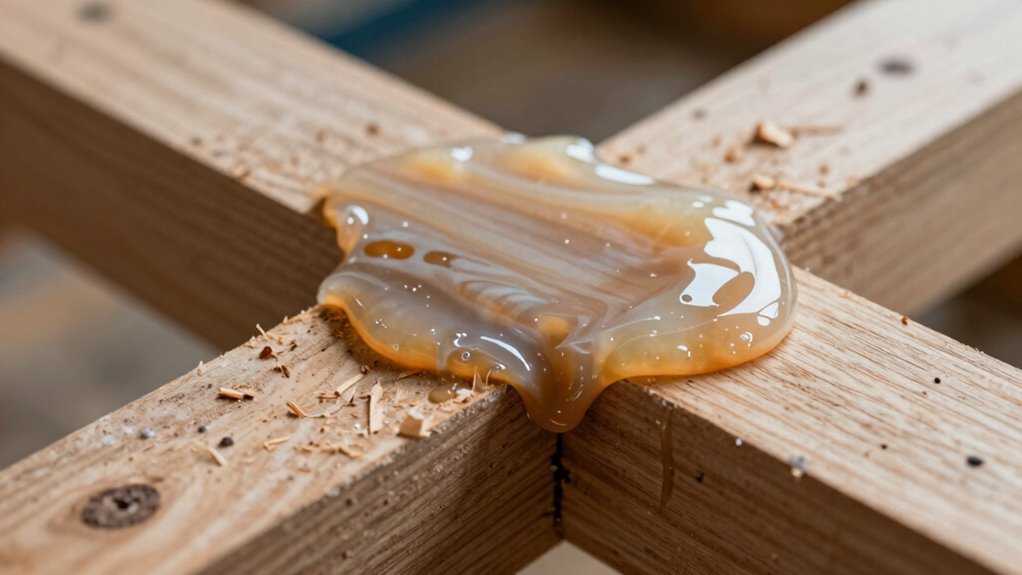
If your epoxy isn’t curing properly or remains sticky after the recommended time, bad mixing is likely to be the cause. One sign of poor mixing is epoxy discoloration, such as uneven color changes or cloudiness, which indicates incomplete chemical reactions. Additionally, inconsistent curing—where parts of the joint harden normally while others stay soft or tacky—points to improper mixing. You might also notice that the epoxy’s surface feels rough or uneven, rather than smooth and solid. These issues suggest the epoxy wasn’t mixed thoroughly, leading to weak joints. To avoid this, always ensure a uniform color and texture during mixing, and double-check that all components are fully combined. Proper mixing is key to strong, durable bonds.
Tips for Consistent, Reliable Epoxy Mixing Every Time
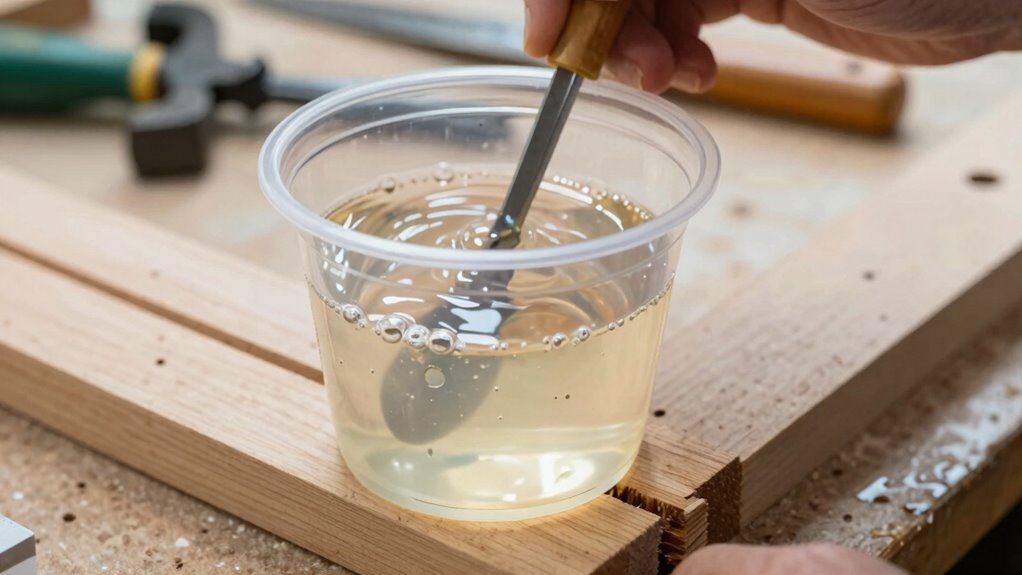
Ensuring your epoxy mixes thoroughly each time prevents weak bonds caused by incomplete chemical reactions. Start by carefully measuring equal parts of resin and hardener to maintain proper color consistency, which indicates proper mixing. Use clean, dry containers and stir slowly, scraping the sides and bottom of your mixing cup to guarantee no unmixed material remains. Avoid rushing; thorough mixing extends curing time, resulting in stronger, more reliable joints. Maintain a consistent mixing technique to prevent variations in color and curing performance. If your epoxy begins to change color or shows streaks, remix gently until uniform. Proper mixing techniques are essential for optimal curing and bond strength. Using thorough mixing methods ensures a complete chemical reaction, leading to a more durable bond. Consistent mixing methods help prevent common mistakes that weaken joints and compromise the final strength of your project. Additionally, paying attention to proper measurement of components can significantly improve the overall quality of your epoxy bonds. By following these tips, you promote complete chemical reactions, reliable curing time, and ultimately, stronger, more durable wood joints. Incorporating quality control measures during mixing can further ensure consistency and strength in your epoxy bonds.
Frequently Asked Questions
How Does Temperature Affect Epoxy Curing and Joint Strength?
Temperature control plays a vital role in epoxy curing and joint strength. If you work in too cold or hot conditions, curing time can slow down or speed up unexpectedly, leading to weak bonds. By maintaining a consistent, moderate temperature, you guarantee proper curing time and ideal strength. Ignoring temperature effects risks incomplete curing, which weakens your joints and compromises your project’s durability.
Can Using Expired Epoxy Compromise Joint Durability?
Think of epoxy shelf life like a fruit’s freshness—once expired, it’s no longer trustworthy. Using expired epoxy can jeopardize your project’s durability because the hazards of expired epoxy include weakened joints and unpredictable curing. Over time, the chemical properties degrade, making your bond less strong. Always check the epoxy’s date and avoid using outdated product to ensure your joints stay secure and long-lasting.
What Are Signs of Incomplete Epoxy Curing in Wood Joints?
You’ll notice incomplete epoxy curing in wood joints if the epoxy shows a color change, like becoming cloudy or uneven, and the surface remains tacky or sticky. These signs indicate the epoxy hasn’t fully hardened. If you touch the joint and it feels soft or leaves a fingerprint, it’s a clear sign it needs more curing time. Proper mixing and environmental conditions help guarantee complete curing and strong joints.
Does the Type of Wood Influence Epoxy Adhesion?
Ever wonder if your wood type affects epoxy adhesion? It definitely does. The wood grain and epoxy compatibility play vital roles in bonding strength. Hardwoods often provide better surfaces for epoxy, while softwoods might need extra preparation. Choosing the right epoxy for your specific wood guarantees a stronger bond. So, consider your wood’s grain and compatibility to achieve maximum adhesion and durable joints. Wouldn’t you want the best possible results?
How Long Should Epoxy Cure Before Applying Load or Stress?
You should wait at least 24 hours before applying load or stress to properly cured epoxy. During this time, guarantee the mixing ratios are precise, as improper ratios can extend curing time or weaken the bond. Keep the surface undisturbed and maintain consistent temperature to achieve ideal curing time. Rushing this process risks compromising the joint strength, so patience pays off for a durable, lasting bond.
Conclusion
If you ignore proper mixing, your epoxy joints could crumble like brittle cookies in a hurricane, turning your beautiful woodwork into a disaster zone. A tiny mistake in ratios or mixing technique can weaken bonds so drastically, they might as well be made of paper. Don’t let your craftsmanship fall apart at the slightest stress — master the mix, follow the steps, and guarantee your epoxy holds stronger than steel for years to come.
Fall yard work Picks
leaf blowers
As an affiliate, we earn on qualifying purchases.