To set your hand plane for whisper-thin shavings, start by ensuring the blade is at about a 45° angle and perfectly aligned with the sole. Sharpen the blade to a fine, razor-sharp edge with a consistent bevel, and adjust the tension to prevent chatter. Fine-tune the depth so it only removes a thin layer of wood, then tighten the mouth for cleaner cuts. Adjust and test until you get the smooth, ultra-fine shavings you want—more tips will help you master the technique.
Key Takeaways
- Set the blade angle around 45° to lift fibers for thin, smooth shavings.
- Align the blade parallel to the sole, centering the cutting edge for even cuts.
- Adjust the blade depth just enough to remove a whisper-thin layer of wood.
- Fine-tune the blade tension and hone regularly to maintain a sharp, precise edge.
- Tightly close the mouth opening for cleaner, tear-out-free ultra-thin shavings.
Why Your Blade Angle Matters for Ultra-Thin Shavings

Your blade angle plays a crucial role when you’re aiming for ultra-thin shavings. The right blade angle determines how easily the wood curls into thin, delicate shavings. A steeper angle, around 45 degrees, helps lift the wood fibers, producing shavings thin and smooth. Conversely, a lower angle might struggle to achieve those fine curls, resulting in thicker shavings. Adjusting the blade angle influences the cutting action, making it easier to control the thickness of each pass. For ultra-thin shavings, a precise blade angle not only improves quality but also reduces splintering. Taking the time to set your blade angle correctly is essential, as it directly impacts your ability to create those whisper-thin shavings with ease and consistency. Understanding blade geometry can help you optimize your setup for the best results, especially when considering blade sharpness and its effect on cutting performance. Properly aligning the blade can also minimize tear-out, ensuring cleaner, more delicate shavings. Additionally, ensuring your blade alignment is accurate can further enhance the quality of your ultra-thin shavings.
How to Sharpen Your Blade for a Smooth, Fine Cut
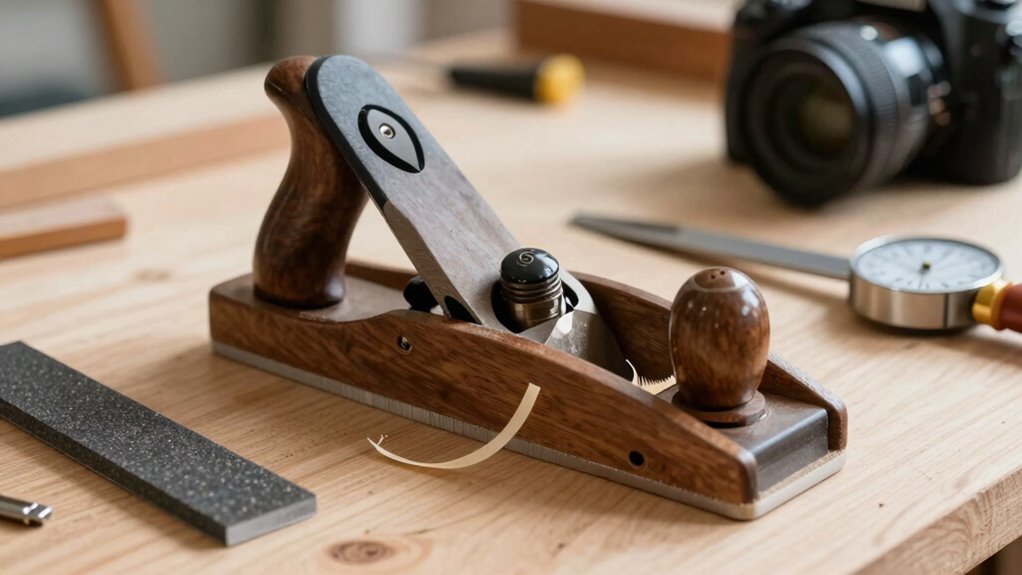
A sharp blade is indispensable for achieving a smooth, fine cut with your hand plane, as dull blades tend to tear the wood rather than slice it cleanly. To sharpen effectively, focus on proper honing techniques that maintain ideal blade geometry. Consistent honing ensures a burr-free edge and a keen cutting surface, critical for whisper-thin shavings. Use a sharpening stone or strop to refine the edge, paying attention to the bevel angle. Keep your tools at the correct angle to preserve blade geometry. Here’s a quick overview:
| Step | Focus |
|---|---|
| Honing Technique | Use consistent, gentle strokes |
| Blade Geometry | Maintain the bevel angle at 25°–30° |
| Sharpening Surface | Keep stones flat and clean |
| Finishing Touch | Strop for a polished, super-sharp edge |
Mastering these steps guarantees a finely tuned blade for perfect shavings.
Adjusting the Mouth Opening for Perfect Thin Shavings
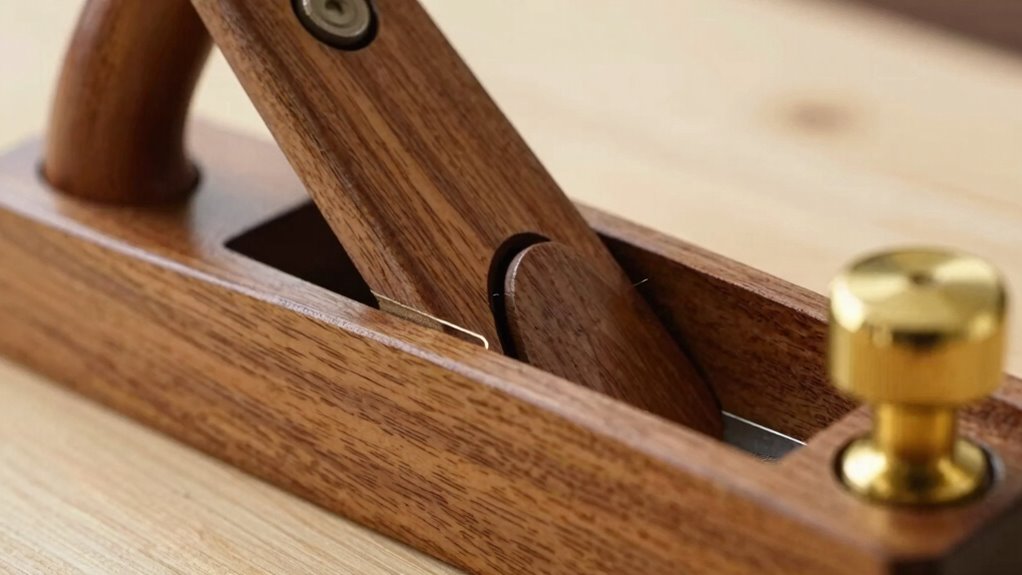
Adjusting the mouth opening on your hand plane is essential for achieving perfect thin shavings. When working with grain direction, a slightly tighter mouth helps prevent tear-out and produces cleaner, finer shavings. If you’re planing against the grain, open the mouth slightly to reduce resistance and minimize tear-out. Proper mouth adjustment also improves dust collection, as a smaller opening traps dust and debris more effectively, keeping your workpiece cleaner. Use a small tool or screwdriver to carefully tighten or loosen the mouth screw, ensuring the opening matches the desired shaving thickness. Regularly check and tweak the mouth as you work, especially when switching grain directions or working on delicate, whisper-thin surfaces. This fine-tuning is key to consistent, high-quality results. Regular maintenance of your hand plane ensures optimal performance and precision for your woodworking projects. Additionally, understanding and adjusting the mismatch between blade and mouth can further refine your shaving quality, especially for ultra-thin finishes. To achieve the finest shavings, consider adjusting blade alignment to optimize contact with the mouth opening. Maintaining a sharp cutting edge also plays a crucial role in producing thinner, cleaner shavings and achieving smoother finishes.
How to Align and Tension Your Blade for Best Results
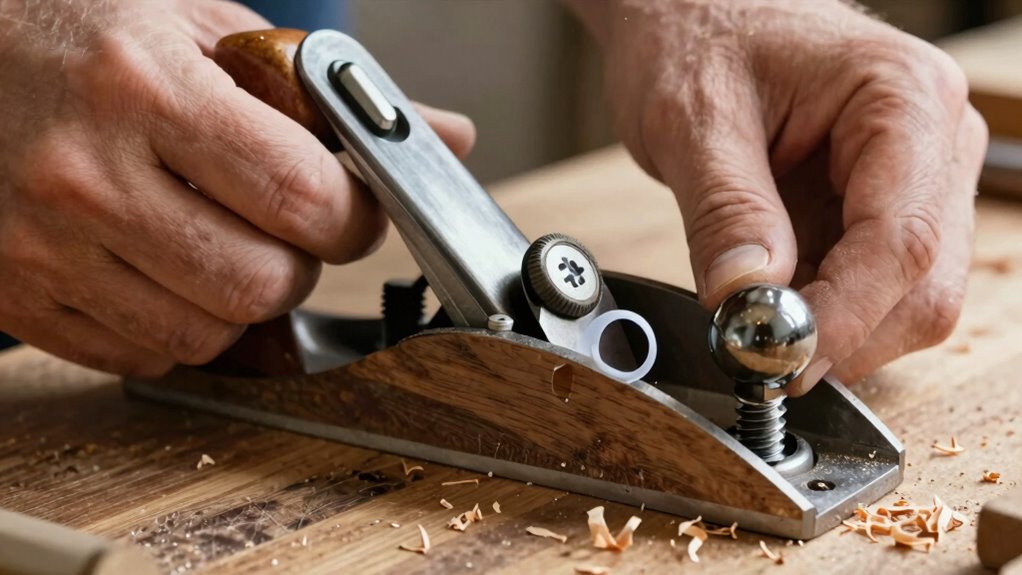
Ensuring your blade is properly aligned and tensioned is key to achieving smooth, even shavings. First, check the blade alignment by ensuring the cutting edge is parallel to the sole of the plane. Adjust the lateral adjustment until the edge is centered and straight. Next, focus on tension adjustment: tighten the cap iron screw so the blade is firmly held, but not too tight to restrict movement. The blade should sit snugly against the mouth opening, with a slight gap for easy adjustment. Proper tension prevents chatter and maintains a consistent cutting angle. Regularly verify these settings as you work, especially when switching to whisper-thin shavings. Proper blade tension is essential for delicate, controlled cuts, and understanding blade geometry can help optimize your setup even further. Additionally, being familiar with blade sharpening techniques ensures your edge remains keen for the finest shavings. For best results, consider regular maintenance to keep your hand plane performing at its peak.
Testing and Fine-Tuning Your Plane Before Working
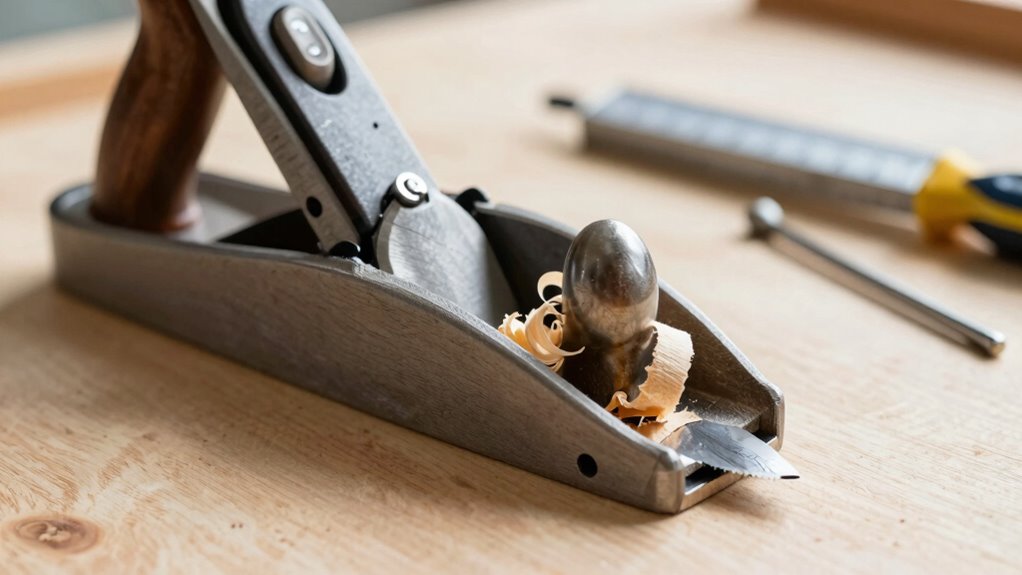
Before you start working on your project, it’s important to test your plane to guarantee it’s cutting properly. Check how the blade interacts with the wood grain; a slight tilt can impact shaving thickness. Ensure the blade tension is consistent and firm—too loose, and it won’t cut; too tight, and it could crack. Test on scrap wood, adjusting as needed. Use this table to guide your fine-tuning:
| Aspect | Adjustment Tip |
|---|---|
| Wood Grain | Cut with or against for smoothness |
| Blade Tension | Tighten or loosen to achieve clean shavings |
| Blade Sharpness | Keep it razor-sharp for thin shavings |
| Testing Surface | Use a flat, stable piece for accurate results |
This process ensures your plane produces whisper-thin shavings before tackling your project. Remember, a well-maintained cutting edge is essential for achieving the finest shavings possible. Additionally, understanding how wood grain affects your cut can greatly improve your results. Paying attention to blade alignment can help maintain consistent shaving thickness and prevent uneven cuts. Proper tool maintenance also plays a critical role in achieving optimal results.
Common Mistakes That Keep You From Getting Thin Shavings

One common mistake that prevents you from achieving thin shavings is neglecting proper blade alignment. If the blade isn’t set precisely parallel to the sole, you’ll struggle to produce the delicate, whisper-thin shavings you desire. Many woodworkers overlook the importance of referencing historical techniques, which emphasize meticulous blade positioning for fine work like decorative inlays. Failing to fine-tune your plane’s blade can lead to uneven shavings or tear-out, especially when working with delicate or figured woods. To avoid this, double-check the blade’s alignment, ensuring it’s square and evenly protruding. Proper setup allows the plane to glide smoothly and produce consistent, thin shavings, essential for detailed work and achieving that flawless finish.
Tips for Maintaining Blade Sharpness and Setup Over Time
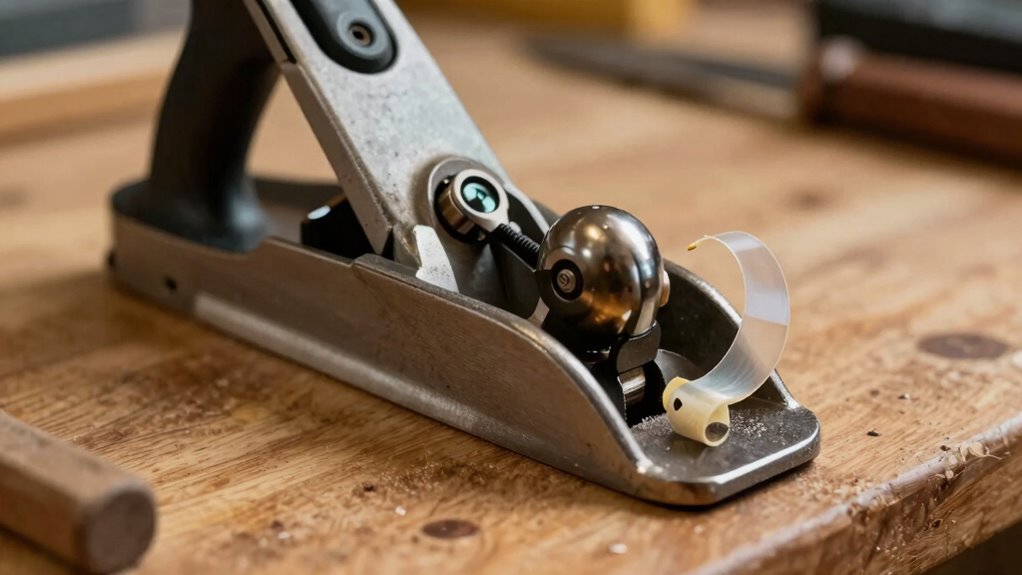
To keep your hand plane working smoothly, you need to stay on top of blade maintenance. Regularly hone the blade to keep it sharp, and check and adjust the depth for consistent cuts. Don’t forget to clean and lubricate the components to prevent rust and guarantee smooth operation. Additionally, understanding wood movement can help you set up your plane more effectively by accounting for seasonal changes in wood behavior. Being aware of weather conditions can also help you anticipate how your wood might respond during planing sessions, ensuring more precise results. Proper storage in a vetted environment when not in use can further extend the lifespan of your tools and materials. Recognizing the importance of climate factors can also influence how you prepare your tools for different working conditions.
Regularly Hone the Blade
Maintaining a sharp hand plane blade is essential for smooth, accurate cuts, and regular honing keeps it in top condition. Over time, the wood grain can dull the edge, especially if you work with different moisture content woods. Regular honing restores the cutting edge without removing much material, ensuring clean, whisper-thin shavings. Use a fine sharpening stone or strop to refine the blade’s bevel, focusing on a consistent angle. Check the grain direction and moisture content before honing, as these factors influence how quickly the edge dulls. Keeping the blade sharp minimizes tearing and grain lift, resulting in smoother, more precise cuts. Make honing part of your routine to extend the life of your blade and maintain best performance for delicate, thin shavings. Additionally, properly cleaning and maintaining your tools and understanding the importance of filter maintenance can help preserve your equipment’s effectiveness and longevity.
Check and Adjust Depth
After honing your blade regularly, it’s important to verify and fine-tune the depth setting to guarantee peak cutting performance. Check the grain direction first; cutting with the grain produces cleaner, thinner shavings, while against it can cause tear-out. Adjust the depth accordingly—set it just enough to remove a whisper-thin layer of wood. Keep humidity control in mind, as seasonal changes can affect wood moisture content and blade sharpness. Warmer, humid conditions may cause swelling, requiring a slight adjustment to prevent the blade from digging in too deeply. Regularly test your shavings and make incremental adjustments to the depth until you achieve consistent, whisper-thin results. Proper setup ensures smooth, controlled planing and maintains your hand plane’s effectiveness over time.
Clean and Lubricate Components
Regularly cleaning and lubricating your hand plane’s components is essential for ideal performance and longevity. Dust, debris, and resin can build up, affecting how smoothly the blade moves through the wood grain. Use a soft brush and a mild solvent to remove dirt from the body and sole. Lubricate moving parts with light oil to prevent rust and ensure smooth adjustments. Pay special attention to the blade material, as steel and other alloys can corrode if neglected. Proper lubrication helps maintain a sharp, clean cut and prevents rust that dulls blades over time. Regular upkeep guarantees consistent shavings and prolongs the life of your hand plane, helping you achieve whisper-thin shavings with ease and precision. Additionally, understanding Gold IRA Rollovers can enhance your long-term financial planning, just as proper maintenance ensures optimal tool performance.
Tricks for Consistent Thin Shavings on Different Woods

To get consistent thin shavings, start by adjusting your blade sharpness to guarantee a clean cut. Calibrate the cutting depth carefully for each type of wood you work with, since thicker cuts can cause tearing. Choosing the right wood for your project also makes a significant difference in achieving smooth, even shavings.
Adjust Blade Sharpness
Ensuring your hand plane blade is sharp is crucial for producing consistent, thin shavings across different wood types. A sharp blade cuts smoothly, reducing tear-out caused by grain orientation or uneven moisture content. When working with wood whose grain runs against your cut, a keen edge helps slice cleanly without tearing fibers. Similarly, drier wood tends to be harder and can dull your blade quickly, so sharpening more frequently ensures smooth operation. Regularly honing or honing and strop the blade maintains its edge and prevents uneven cutting. Check the sharpness by slicing through scrap; if the plane struggles or tears fibers, it’s time to sharpen. Keeping your blade sharp is essential for achieving the whisper-thin shavings you desire, regardless of the wood’s grain or moisture level.
Calibrate Cutting Depth
How you set the cutting depth directly influences the thickness of your shavings and their consistency across different woods. To calibrate effectively, focus on these key points:
- Adjust the blade depth incrementally, testing with each pass to find a fine, whisper-thin shaving.
- Consider the blade angle; a steeper angle produces finer shavings, especially on hardwoods.
- Use a consistent sharpening technique to maintain a sharp, even edge—dull blades require more depth, disrupting thinness.
- Fine-tune the blade’s projection carefully, ensuring it’s just enough to cut cleanly without taking too much material at once.
Choose Suitable Wood
Choosing the right type of wood is vital for achieving consistent, thin shavings. Grain selection plays a key role; woods with straight, tight grain produce cleaner, more uniform shavings, making it easier to set your plane accurately. Avoid woods with irregular grain or significant knots, which can cause tearing or uneven cuts. Wood density also impacts your results—softer woods like pine or cedar respond well to fine shavings, while denser woods like maple or oak require more precise adjustments. Testing small sections first helps you gauge how the wood reacts to your plane. By selecting the appropriate grain and considering wood density, you can guarantee smoother cuts and achieve those whisper-thin shavings with greater consistency.
Troubleshooting: Why Your Plane Won’t Produce Whisper-Thin Shavings
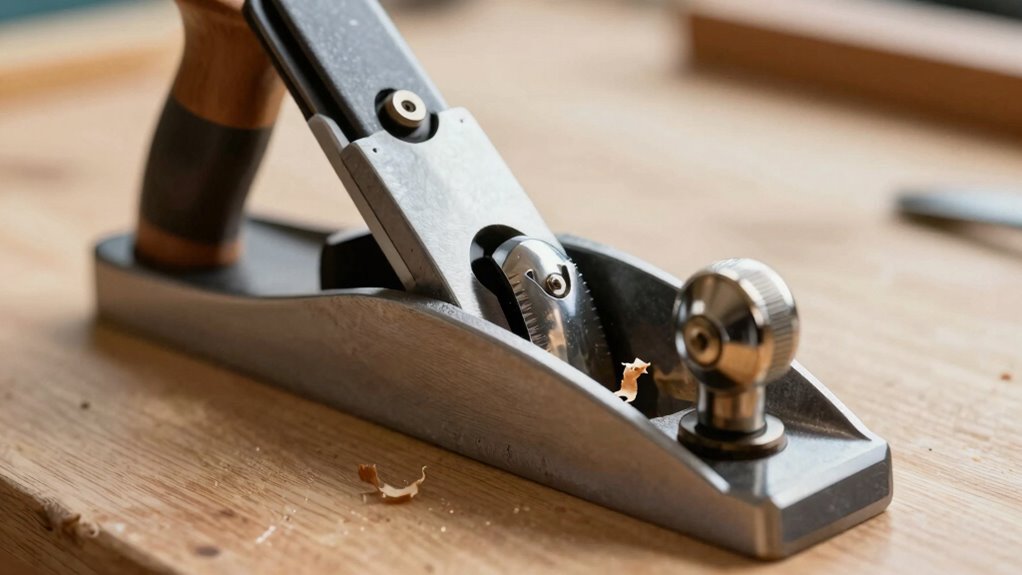
If your hand plane isn’t producing whisper-thin shavings, the problem often lies in the blade’s sharpness or alignment. Poor blade material or dullness can prevent fine cuts, while incorrect alignment causes uneven shavings. Additionally, the plane’s weight impacts control and pressure, affecting shaving thinness. To troubleshoot:
- Check if your blade material is appropriate—high-quality steel stays sharper longer.
- Sharpen the blade thoroughly, ensuring a keen edge.
- Verify the blade’s alignment—properly set at the right angle and depth.
- Consider the plane’s weight—using a lighter or properly balanced plane improves control for delicate shavings.
Addressing these points helps you produce whisper-thin shavings consistently and improves your overall planing results.
Frequently Asked Questions
How Does Wood Type Affect Setting My Hand Plane for Thin Shavings?
Wood type notably influences your hand plane settings because of wood density and grain orientation. Denser woods like maple or oak require a finer adjustment to avoid tearing, while softer woods like pine need a lighter cut for thin shavings. Grain orientation also matters; cutting against the grain can cause tearing, so you adjust your plane to match the grain for smooth, whisper-thin shavings.
What Are the Signs of an Improperly Tuned Hand Plane?
If your hand plane isn’t properly tuned, you’ll notice uneven or thick shavings, indicating poor blade alignment. You might also see tear-out or rough surfaces, showing inconsistency in shaving thickness. When you run your hand over the wood, it should feel smooth, not bumpy. If it doesn’t, your plane needs fine adjustments to guarantee consistent shavings and proper blade alignment for maximum results.
Can I Use a Power Tool to Achieve Whisper-Thin Shavings?
You can’t really use electric shapers or power planers to achieve whisper-thin shavings, as they’re designed for removing larger amounts of material quickly. Imagine trying to carve delicate lace with a chainsaw—you’ll ruin the fine detail. Power tools lack the finesse needed for ultra-thin shavings, which require the control and precision of a well-tuned hand plane. Stick with manual tools for that delicate, whisper-thin finish.
How Often Should I Re-Sharpen My Plane Blade for Delicate Work?
You should re-sharpen your plane blade whenever you notice it’s no longer producing smooth, whisper-thin shavings. For delicate work, frequent blade maintenance is key—typically after every few uses or when you see a decline in performance. Regular sharpening extends the blade’s sharpness and ensures precise cuts. Keep an eye on your blade’s edge, and don’t wait too long before honing again, especially when working on fine, detailed projects.
What Safety Precautions Are Recommended When Working With Ultra-Thin Shavings?
When working with ultra-thin shavings, you should wear eye protection to guard against flying debris and guarantee proper ventilation to avoid inhaling fine dust. Always keep your hands clear of the blade’s path and work in a well-lit, clean area. Use a push stick if needed, and handle your tools carefully. Staying attentive and following these safety tips helps prevent injuries and makes your delicate woodworking safer and more enjoyable.
Conclusion
So there you have it—your foolproof guide to turning plain wood into delicate, whisper-thin shavings. Follow these tips, and soon you’ll be the envy of every woodworker who’s ever battled a stubborn blade. Just remember, patience and precision are your best friends; impatience will turn those perfect shavings into splinters faster than you can say “oops.” Now go on, impress everyone with your razor-sharp skills—because who doesn’t love a tiny, perfect curl?