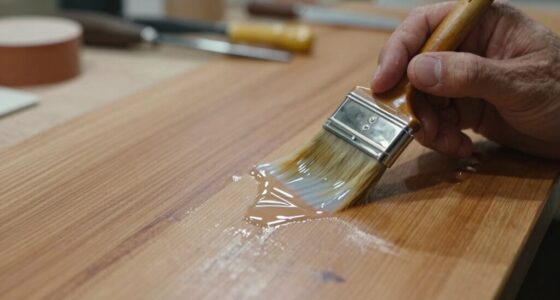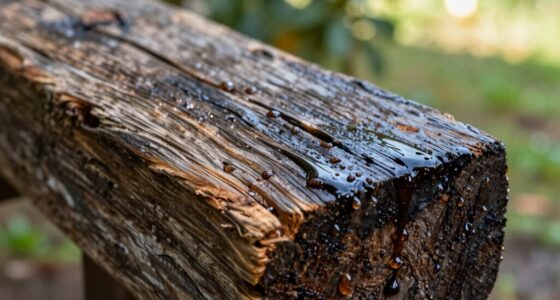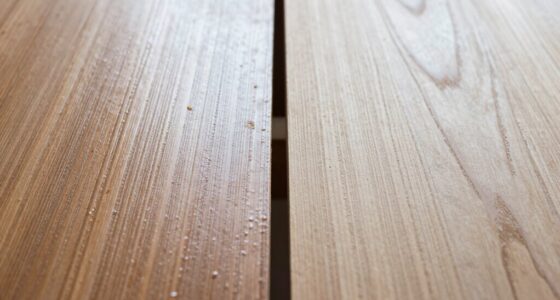

When choosing between water-based and oil-based finishes, consider application ease, drying times, appearance, durability, and environmental impact. Water-based options are easier to apply, dry faster, and are safer for health and the environment, but may need frequent touch-ups. Oil-based finishes last longer, resist wear better, and give a richer look, but they emit stronger fumes and take longer to dry. To discover which finish suits your project, explore the differences in more detail.
Key Takeaways
- Water-based finishes dry faster, are eco-friendly, and easier to clean, but may require more coats for durability.
- Oil-based finishes offer superior durability, UV resistance, and richer appearance, though they emit higher VOCs and take longer to dry.
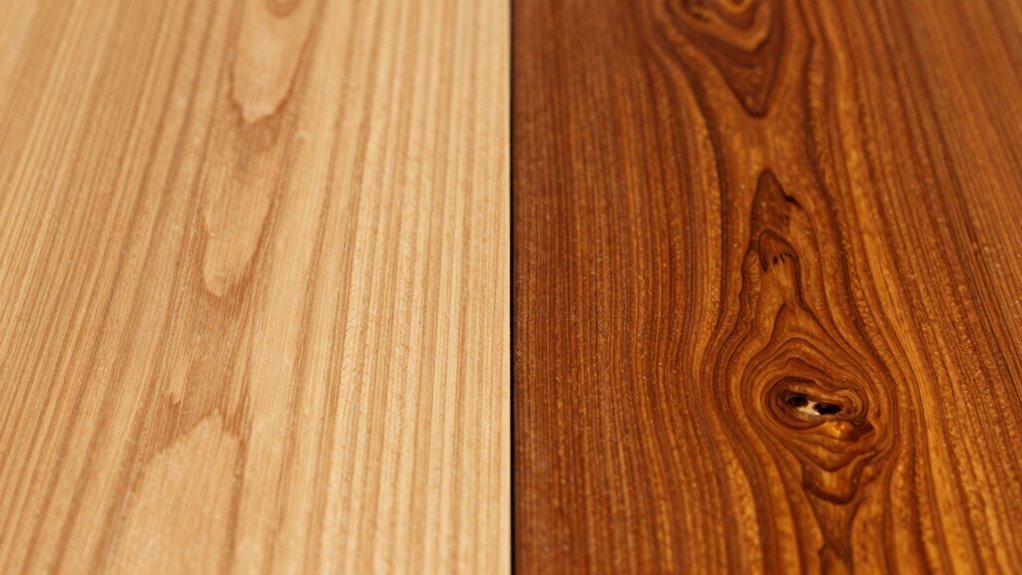
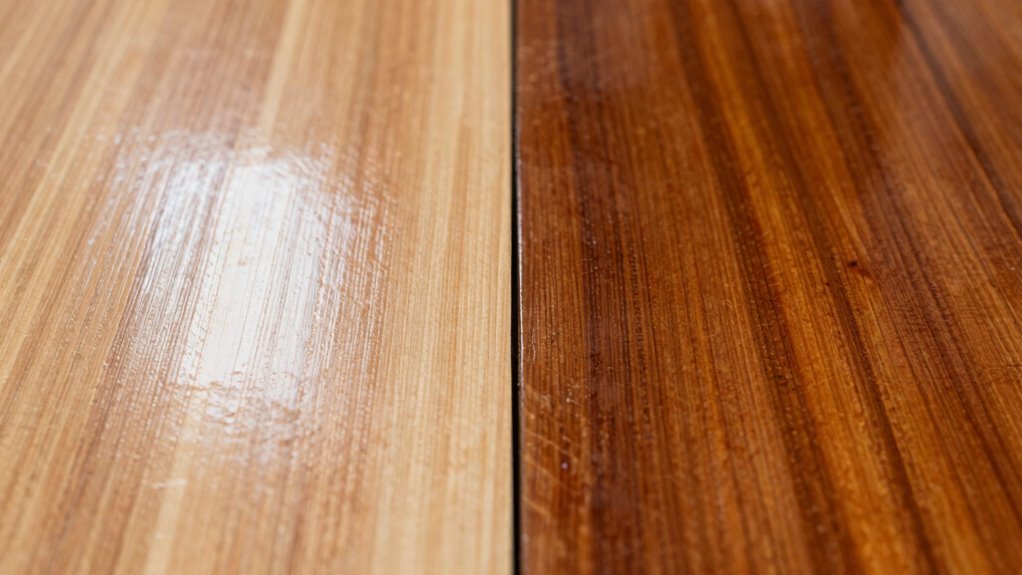
- Water finishes are clearer, with minimal color change, ideal for showcasing wood grain; oil finishes deepen color with a warm amber tint.
- Oil-based options typically last longer and resist wear better, but come with higher initial costs and more challenging cleanup.
- The choice depends on priorities: water-based for safety and ease, oil-based for longevity and enhanced appearance.

Varathane Water-Based Crystal-Clear Ultimate Polyurethane | Interior Wood Protection | Fast Dry Time | Easy Clean Up | Matte | Quart
Protects indoor wood surfaces such as furniture, windows, cabinets, trim and more
As an affiliate, we earn on qualifying purchases.
As an affiliate, we earn on qualifying purchases.
Which Finish Is Best for Your Woodworking Project?
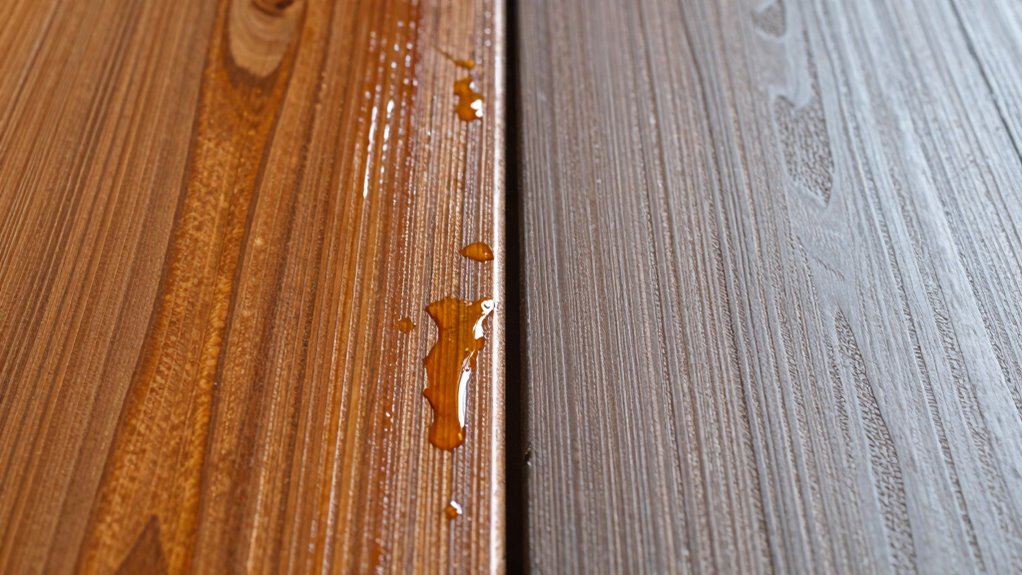
Choosing the right finish can considerably impact the appearance, durability, and safety of your woodworking project. To decide which finish suits your needs, consider application techniques and maintenance requirements. Water-based finishes are easy to apply, dry quickly, and clean up with soap and water, making them ideal for beginners or projects needing frequent touch-ups. They typically require minimal maintenance and resist yellowing over time. Oil-based finishes, on the other hand, often demand more careful application and longer drying times but provide a richer, more durable coating. Maintenance involves periodic reapplication to uphold protection and appearance. Your choice depends on your project’s specific needs, how much time you want to spend on application, and how much upkeep you’re willing to perform. Material selection plays a crucial role in ensuring the longevity and performance of your chosen finish. Additionally, understanding the safety considerations associated with each type can help prevent health risks during application and over time. Moreover, selecting the appropriate application techniques can enhance the finish’s effectiveness and lifespan. Proper filter maintenance is also essential to ensure that any equipment used during application remains effective and safe, especially when dealing with dust and chemical fumes. Being aware of environmental factors can also influence your choice of finish, especially if the project is outdoors or in a high-humidity area.

Varathane Oil-Based Ultimate Polyurethane, Half Pint, Satin Finish
Fastest dry times of any oil-based polyurethane
As an affiliate, we earn on qualifying purchases.
As an affiliate, we earn on qualifying purchases.
How Do Water-Based and Oil-Based Finishes Dry and Cure?

Water-based finishes dry faster because they evaporate water quickly, while oil-based finishes take longer due to slower solvent evaporation. The curing process involves chemical changes that strengthen the finish over time, with water-based finishes curing more rapidly. Understanding these mechanics helps you choose the right finish for your project’s timeline and durability needs. Additionally, application methods can influence drying and curing times, making proper technique an important factor in achieving the desired results. For example, proper surface preparation can significantly impact drying efficiency and final finish quality.
Drying Time Differences
While both water-based and oil-based finishes undergo a drying process, they do so through different mechanisms that affect how quickly they become ready for use. Water-based finishes typically dry faster because they evaporate moisture quickly, often within a few hours. Oil-based finishes, on the other hand, rely on solvent evaporation and absorption, making their drying time longer—sometimes up to 24 hours or more. Understanding the drying mechanisms is essential for choosing the right finish for your project and ensuring optimal results. Key differences include:
- Water-based finishes require good ventilation to speed evaporation and reduce lingering odors.
- Oil-based finishes often emit stronger odors, demanding proper odor considerations and ventilation.
- The drying environment’s temperature and humidity substantially influence both types’ drying times. Additionally, application thickness can significantly impact drying duration, particularly with oil-based products. Considering environmental conditions helps you plan application and ensure a safe, efficient drying process, as humidity levels can also affect the curing process and final finish quality.
Curing Process Mechanics
The drying and curing processes of finishes involve complex chemical and physical changes that determine their final hardness and durability. For water-based finishes, curing often relies on a polymerization reaction where water evaporates, leaving behind polymers that cross-link to form a hard, protective film. Oil-based finishes, however, cure primarily through a slow oxidation process, where the oils react with oxygen, creating a cross linking process that results in a durable, resistant coating. This chemical reaction strengthens the film over time, improving its durability. Both methods involve a progression from liquid to solid, but water-based finishes rely more on evaporation and polymerization, while oil-based finishes depend on oxidation and cross linking. Understanding these mechanisms helps you choose the right finish for your project’s durability needs.
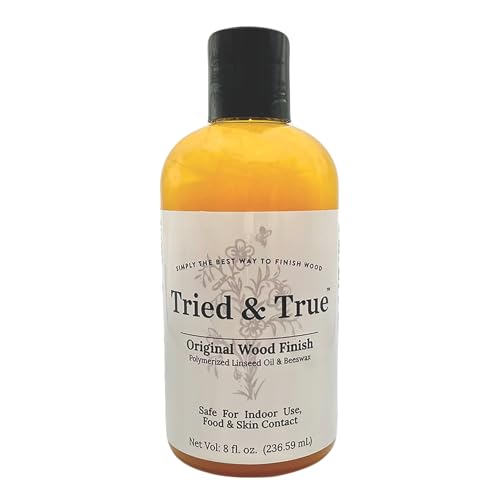
Tried & True Original Wood Finish, 8 oz. – Linseed Oil & Beeswax Blend, Ideal for All Woodwork, Long-Lasting Durability, Food Safe Sealer, Non-Toxic Wood Finish
SUPERIOR BLEND OF LINSEED OIL & BEESWAX: Tried and True wood finish is a superior blend of linseed…
As an affiliate, we earn on qualifying purchases.
As an affiliate, we earn on qualifying purchases.
How Do Water and Oil Finishes Compare in Appearance?
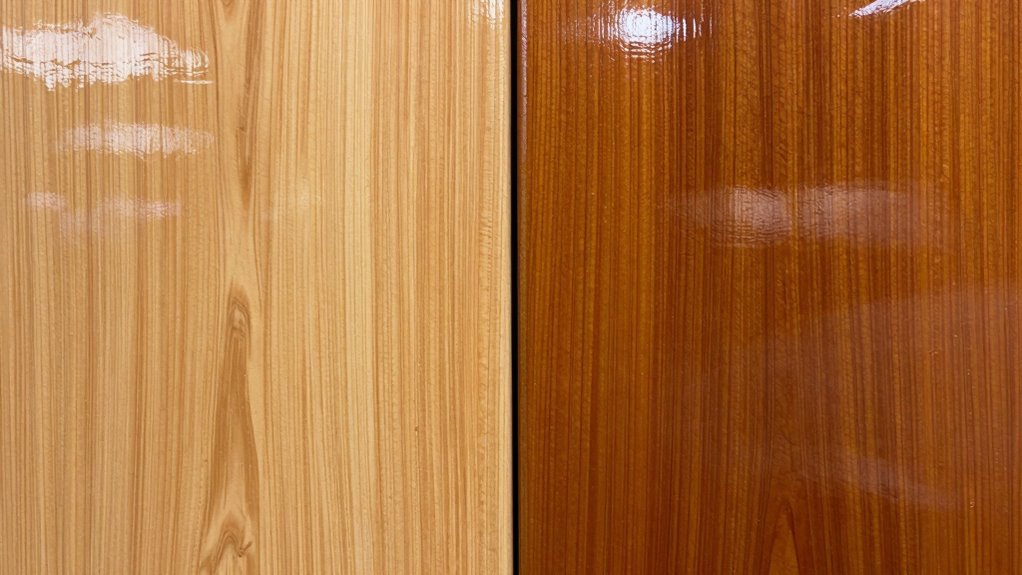
Water-based and oil-based finishes differ markedly in appearance, affecting your project’s final look. You’ll notice variations in clarity and transparency, which influence how the wood grain shows through. Additionally, each type offers different levels of gloss and sheen, impacting the overall aesthetic. Finish transparency can help identify how much of the wood’s natural character will be visible through the coating. The choice between them also impacts appearance durability, which can alter the long-term look of your project.
Clarity and Transparency
When comparing water-based and oil-based finishes, their clarity and transparency markedly impact your final look. Water finishes tend to be clearer and more transparent, allowing the natural beauty of the wood to shine through. They also dry quickly, making application easier and cleanup simpler. Oil finishes, on the other hand, often add a slight amber tint that can deepen over time, altering the wood’s appearance. Consider these points:
- Water finishes offer high clarity and minimal color change
- Oil finishes may add warmth but reduce transparency
- Application ease and cleanup simplicity are generally better with water-based options
Your choice depends on whether you prioritize a natural, transparent look or a warmer tone with easier maintenance.
Color Enhancement Capabilities
While clarity and transparency influence how natural your wood looks, the choice of finish also affects its color and warmth. Oil-based finishes typically enhance color saturation, making wood appear richer and deeper. They often provide better tinting options, allowing you to subtly alter or deepen the wood’s hue. Water-based finishes, on the other hand, tend to preserve the wood’s original color more accurately, offering a clearer, more neutral appearance. If you want to intensify the natural tones, oil finishes are usually the better choice. However, if you prefer a finish that minimally alters the color, water-based options give you more control. Ultimately, your decision depends on whether you prioritize vibrant, enhanced color or a more natural, true-to-life appearance.
Gloss and Sheen Levels
Gloss and sheen levels markedly influence the final look of your wood finish, with oil-based products typically offering a richer, more pronounced sheen and water-based options providing a more subdued, matte appearance. Sheen level differences can dramatically affect your project’s aesthetic, from high-gloss reflections to low-sheen finishes. To enhance gloss, you might use gloss enhancement techniques like multiple coats or polishing. Water-based finishes tend to have lower sheen levels, giving a more natural, subtle look, while oil-based finishes often produce a warm, glossy finish. Consider these points:
- Oil finishes naturally enhance gloss more effectively
- Water finishes usually require additional coats for sheen
- Proper application techniques can maximize desired sheen levels
- Finishing techniques can influence the final appearance and durability of your wood surface.
Achieving the desired sheen may also involve choosing the right application method, which can impact the overall look and longevity of the finish.

Varathane Water-Based Crystal-Clear Ultimate Polyurethane | Interior Wood Protection | Fast Dry Time | Easy Clean Up | Satin | Half Pint
Protects indoor wood surfaces such as furniture, windows, cabinets, trim and more
As an affiliate, we earn on qualifying purchases.
As an affiliate, we earn on qualifying purchases.
Which Finish Lasts Longer: Water or Oil? Durability and Wear

Oil-based finishes generally last longer and resist wear better than water-based options, making them a popular choice for high-traffic or heavily used surfaces. They typically offer superior abrasion resistance and UV stability, helping them withstand daily wear and sunlight exposure. This chemical composition of oil-based finishes contributes to their durability, making them more suitable for demanding environments. The moisture resistance of oil-based finishes also plays a crucial role in their longevity, especially in humid or wet conditions. Understanding the water chemistry and environmental factors is essential for optimal performance, as these elements can influence the finish’s wear resistance over time.
Is Application and Cleanup Easy With Water or Oil Finishes?
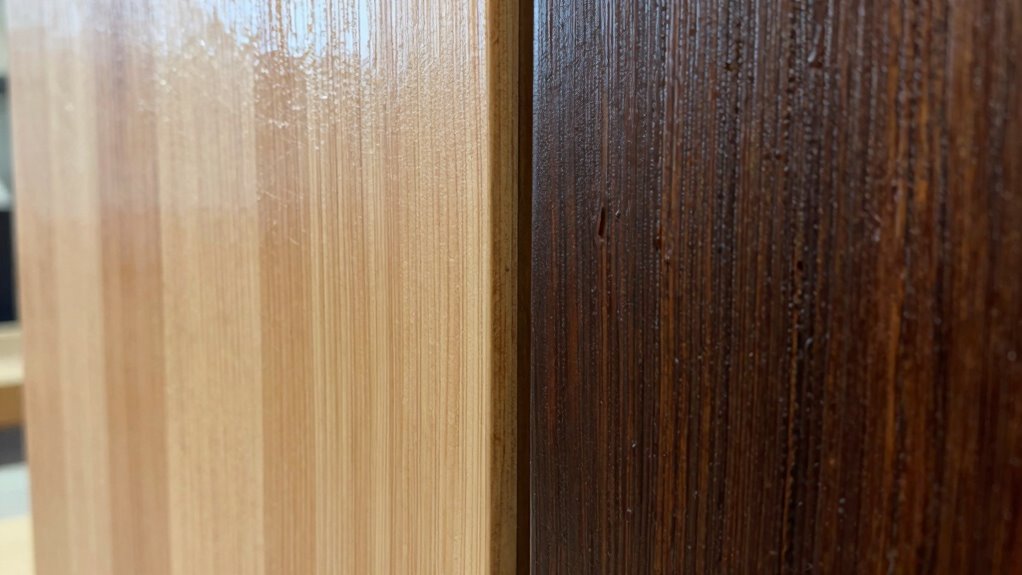
Applying water-based finishes is generally easier and less messy than oil-based options because they dry quickly, emit fewer fumes, and are easier to clean up with just soap and water. This means you can complete your project faster and with less hassle. The application ease of water-based finishes allows for smooth, even coats without the need for special equipment or prolonged drying times. Cleanup simplicity is a major advantage—they wash out of brushes and tools easily and don’t require harsh solvents. Additionally, connected equipment such as sprayers and applicators designed for water-based finishes can further streamline the process. Since water-based finishes are more environmentally friendly, they also contribute to a safer workspace environment. Their low VOC emissions make them a healthier choice for both DIYers and professionals. Furthermore, choosing water-based options can help minimize air quality concerns during and after application.
What Are the Environmental and Health Impacts of Each Finish?
Water-based finishes are generally considered more environmentally friendly and safer for your health compared to oil-based options. They produce fewer chemical emissions during application and drying, reducing indoor air pollution and health risks. This makes them a preferable eco-friendly option if you’re concerned about air quality or environmental impact. Oil-based finishes, on the other hand, tend to release higher levels of volatile organic compounds (VOCs), which can contribute to smog formation and respiratory issues. While oil finishes may last longer, they pose greater health risks due to their chemical emissions. Choosing water-based options helps minimize your exposure to harmful chemicals and lessens your ecological footprint, making them a responsible choice for both your health and the environment.
Which Finish Offers the Best Value Over Time? Cost and Longevity

- Water-based finishes may require more frequent touch-ups.
- Oil-based finishes tend to last longer, saving you money over time.
- The initial investment might be higher for oil-based options, but their longevity can offset this cost.
Ultimately, your choice depends on balancing initial costs with long-term durability to get the best value.
Frequently Asked Questions
Can Water-Based Finishes Be Used on Outdoor Furniture?
Yes, you can use water-based finishes on outdoor furniture. They’re eco-friendly options that dry quickly and emit fewer fumes. Look for finishes with UV protection to prevent sun damage and fading. Make sure to properly prepare your furniture surface and choose a high-quality water-based finish designed for outdoor use. This way, you’ll enjoy a durable, eco-conscious finish that keeps your furniture looking great longer.
Are Oil-Based Finishes More Resistant to Water Damage?
You might think oil-based finishes are more resistant to water damage, but the irony is they often face more application challenges and can peel or crack over time. While they offer durability comparisons that seem promising, water-based finishes actually excel outdoors with easier application and better adherence to weather changes. So, if water resistance is your goal, don’t assume oil-based options are always the better choice.
How Do Finishes Affect Wood’s Natural Color Over Time?
Finishes influence your wood’s natural color over time by affecting color retention and aging effects. Oil-based finishes tend to deepen and warm the wood’s hue, creating a richer look as they age, but they can also darken unevenly. Water-based finishes preserve the wood’s original color longer, offering better color retention, though they may show wear faster. Consider your desired aging effects and long-term appearance when choosing a finish.
Are There Health Risks Associated With Fumes From Oil Finishes?
Imagine working on your favorite wood project and noticing a strong smell. Oil finishes can emit toxic fumes, which pose respiratory concerns if inhaled frequently or in poorly ventilated areas. These fumes may cause headaches, dizziness, or more serious health issues over time. To protect yourself, always work in well-ventilated spaces, wear masks, and choose low-VOC or natural oil options to minimize health risks.
Can Water-Based Finishes Be Repaired Easily After Scratches?
Yes, water-based finishes are easier to repair after scratches. You can usually do scratch repair and finish touch-ups simply by applying a thin layer of the same finish over the damaged area. Light sanding and cleaning help blend the repair seamlessly. This ease of touch-up makes water-based finishes a practical choice if you want quick, simple maintenance without needing extensive refinishing.
Conclusion
Choosing between water-based and oil-based finishes is like selecting the perfect coat for a journey—each offers unique protection and beauty. Imagine your wood gleaming with a rich, long-lasting shine or shimmering with a fresh, clear glow. By weighing durability, appearance, and environmental impact, you can make a confident choice. Ultimately, your finish will become part of your project’s story, guarding and enhancing your craftsmanship for years to come.