Wedged through tenons blend strength and beauty, turning your woodworking projects into striking pieces of art. With their snug fit and secure bond, these joints enhance durability while adding unique design elements. You can use them in everything from rustic farmhouse tables to sleek modern chairs, showcasing your craftsmanship skills. Choosing the right wood species can elevate the aesthetic appeal even further. Stick around to explore how this traditional technique can inspire your next creation.

Get business pricing on tools and workshop supplies
- Business-only prices and quantity discounts
- Tax-exempt purchasing
- Multiple users, one account, clear invoices
Key Takeaways
- Wedged through tenons combine structural strength with aesthetic appeal, enhancing both durability and design in woodworking projects.
- Their adaptability allows for seamless integration into various styles, from rustic farmhouse tables to modern furniture.
- Precision in execution is essential, ensuring tight fits that showcase craftsmanship and elevate design quality.
- The choice of wood species affects both the strength and visual impact of the joint, influencing overall aesthetics.
- Embracing traditional joinery techniques like wedged through tenons can inspire innovative and functional furniture designs.

When you think about woodworking, it’s easy to overlook the strength hidden in simple joints like wedged through tenons. These joints might seem basic, but they embody a fascinating blend of structural integrity and aesthetic appeal. By using this joinery technique, you not only enhance the durability of your projects but also infuse them with a unique design element that stands out.
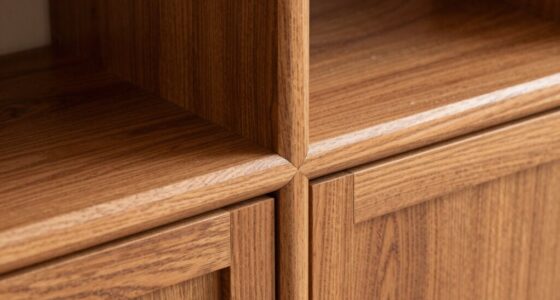
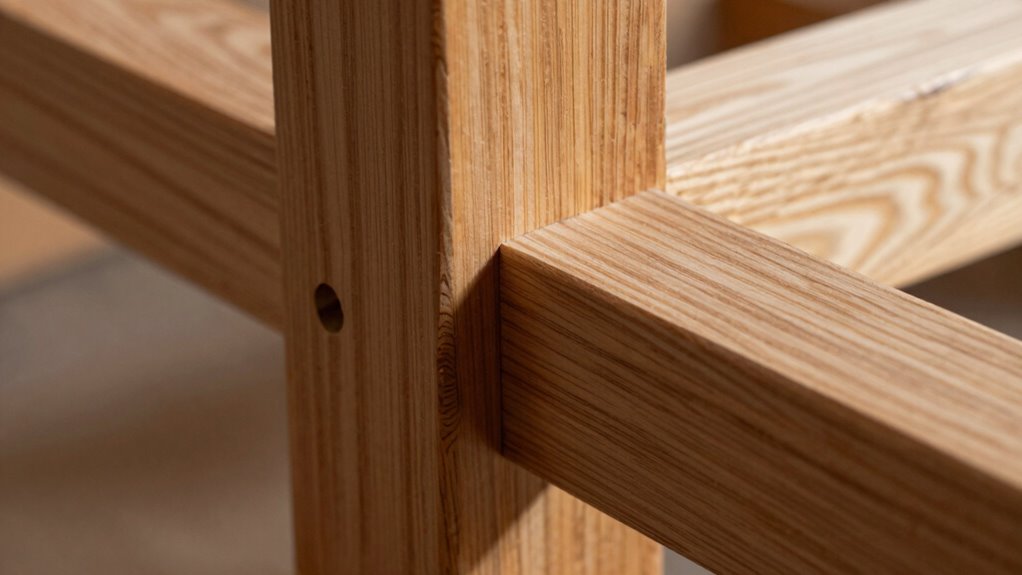
Wedged through tenons offer remarkable design versatility. Whether you’re building a rustic farmhouse table or a sleek modern chair, these joints can adapt to your vision. The tenon, which fits snugly into a mortise, is secured further by a wedge, creating a strong bond that withstands stress. This combination of function and form is what makes wedged through tenons so appealing. They’re not just a way to connect two pieces of wood; they’re an expression of craftsmanship skills that can elevate your work. Understanding woodworking joints can help you select the best technique for your project.
Wedged through tenons blend function and form, adapting beautifully to various designs while showcasing craftsmanship and strength.
Craftsmanship skills play an essential role in executing wedged through tenons effectively. Precision is key. You’ll need to verify your cuts are clean and accurate to create a tight fit. When done correctly, this joint not only supports the structure but also serves as a visible reminder of your skill. The wedge itself can be shaped or finished to complement the overall design, allowing you to incorporate your personal touch. Proper technique and tools are crucial to achieving a flawless fit and finish. Additionally, selecting the right wood species can influence the joint’s strength and appearance. Developing a keen understanding of these elements can significantly impact the longevity and aesthetic of your finished piece.
One of the most rewarding aspects of using wedged through tenons is seeing the final product come together. As you fit the pieces and drive in the wedge, you’ll appreciate how this simple joint can reveal the beauty and strength of your work. It’s a reflection of the idea that sometimes, the most straightforward techniques yield the most stunning results. Embracing wedged through tenons in your projects means you’re not just building furniture; you’re crafting pieces that resonate with both functionality and artistry. Recognizing traditional joinery techniques can inspire you to explore new design possibilities and refine your craftsmanship skills.
wedged through tenon woodworking joints
As an affiliate, we earn on qualifying purchases.
As an affiliate, we earn on qualifying purchases.
Frequently Asked Questions
What Materials Are Best for Wedged Through Tenons?
For wedged through tenons, hardwoods like oak, maple, or cherry work best. These wood species offer strength and durability, ensuring your joint holds up over time. Plus, they enhance joint aesthetics with their rich colors and grain patterns. If you’re aiming for a beautiful finish, consider how each wood species will complement your overall design. Don’t forget to choose a contrasting wedge for added visual interest in your project!
How Do Wedged Through Tenons Improve Joint Strength?
Think of wedged through tenons like a sturdy anchor in a stormy sea. They enhance joint durability by distributing stress evenly across the joint, making it less likely to fail under pressure. By using effective woodworking techniques, you create a tight fit that secures the pieces together. This clever design not only strengthens the connection but also adds an aesthetic appeal, ensuring your projects withstand the test of time and use.
Can This Technique Be Used in Metalwork?
Yes, you can definitely use wedged through tenons in metalwork. This technique enhances metal joinery, providing both strength and stability. When you incorporate it, you not only improve structural integrity but also elevate the design aesthetics of your project. It allows for seamless changes and clean lines, making your work visually appealing. By combining functionality with beauty, you’ll create pieces that stand out and last. Embrace this method for impressive results!
What Tools Are Required for Creating Wedged Through Tenons?
To create wedged through tenons, you’ll need a few key tools. Start with a tenon saw for precise cuts and mortise chisels to shape the joint accurately. Depending on your design, consider different wedge types—wooden or metal—each offering unique benefits. Tool selection is vital; guarantee you have high-quality options to achieve strong, durable joints. With the right tools, you’ll make the process smoother and your results more professional.
Are There Historical Examples of Wedged Through Tenons?
Oh, you thought wedged through tenons were just a modern fad? Think again! Historically, they’ve played a significant role in architecture, showcasing both strength and aesthetic appeal. Ancient Egyptians used them in their monumental structures, while medieval craftsmen perfected the technique in timber framing. These tenons aren’t just for show; their historical significance lies in how they’ve shaped durable, beautiful buildings. So, next time you admire a structure, remember those clever joints!
As an affiliate, we earn on qualifying purchases.
Conclusion
Incorporating wedged through tenons into your design is like adding the final brushstroke to a masterpiece; it elevates mere structure into art. This technique not only enhances stability but also infuses character into your work. By embracing this detail, you transform functional elements into aesthetic features, creating a harmonious blend of strength and beauty. So, don’t overlook these small yet impactful details—let them guide your journey from construction to enchanting design.
woodworking clamps and measuring tools
As an affiliate, we earn on qualifying purchases.
As an affiliate, we earn on qualifying purchases.
traditional joinery tools for furniture
As an affiliate, we earn on qualifying purchases.
As an affiliate, we earn on qualifying purchases.
Halloween Picks
halloween
As an affiliate, we earn on qualifying purchases.