
When choosing a portable miter saw, you need to balance weight for easy transport with the capacity to handle thicker materials. Heavier models are more stable and better for deep cuts, but they can be harder to move around. Lighter saws are easy to carry and set up quickly, yet might struggle with tougher jobs. Understanding how weight affects cutting capacity helps you pick the right saw for your projects—continue on to find out more.

Get business pricing on tools and workshop supplies
- Business-only prices and quantity discounts
- Tax-exempt purchasing
- Multiple users, one account, clear invoices
Key Takeaways
- Heavier portable miter saws offer greater stability and deeper cutting capacity but are less maneuverable and harder to transport.
- Lighter models enhance portability and quick setup, but may have limited blade depth and cutting power.
- The weight-to-capacity ratio influences ease of use during extended or intricate projects.
- Larger, heavier saws excel in stability and precision for demanding cuts but reduce portability.
- Balancing weight and capacity ensures optimal performance aligned with project complexity and mobility needs.
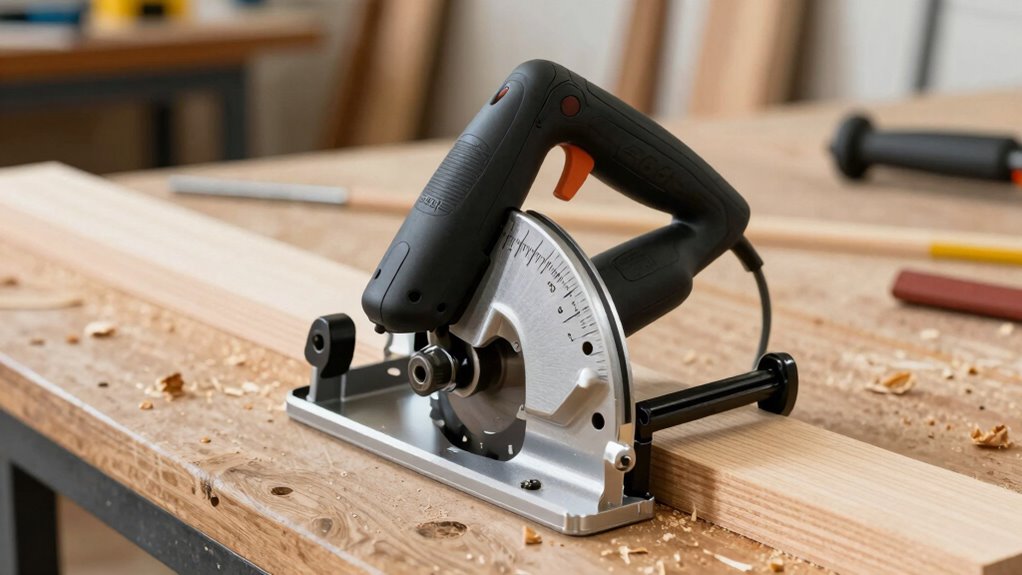
One important factor that influences this weight-to-capacity tradeoff is the blade depth. Heavier miter saws usually have larger motor housings and more robust frames, which allow for deeper cuts into thicker materials. If you frequently work with hardwoods or thick molding, you’ll benefit from a saw with a greater blade depth, even if it means carrying a bit more weight. Conversely, if your projects mostly involve lighter materials or quick, repetitive cuts, a lighter saw with a shallower blade depth might be sufficient. The blade depth also affects the saw’s versatility—more depth means you can handle a wider range of materials and more complex cuts. Additionally, the weight of the saw can impact how easily you can maneuver and position it during intricate cuts. Portability considerations play a significant role in determining the ideal balance between weight and capacity for your specific needs. Understanding the impact of weight on usability can help you choose the most suitable model for your projects. For example, heavier saws often come with enhanced stability, which can improve cutting precision. A balanced weight-to-capacity ratio is essential for maintaining both efficiency and ease of use during extended work sessions. Ultimately, choosing a portable miter saw involves weighing these factors carefully. If portability and easy transport are your top priorities, a lighter model with decent blade depth and moderate battery life will serve you well. But if you need to make deeper cuts or work for extended periods without interruptions, you might prefer a heavier saw with a more powerful motor, greater blade depth, and longer-lasting batteries. Recognizing how the weight influences the saw’s capacity helps you make an informed decision, ensuring you select a tool that matches your workflow without sacrificing too much in either category.
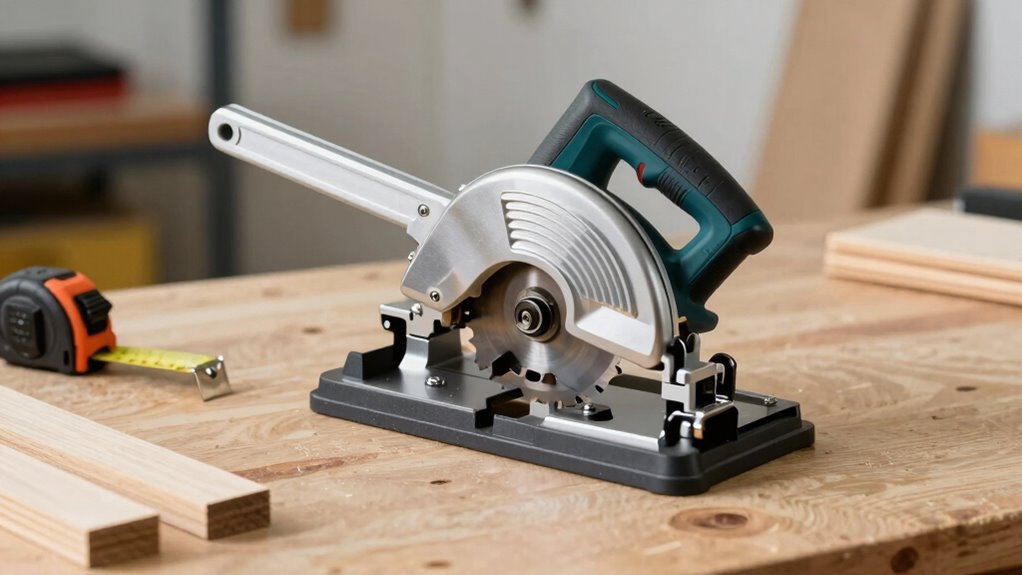
portable miter saw with deep cut capacity
As an affiliate, we earn on qualifying purchases.
As an affiliate, we earn on qualifying purchases.
Frequently Asked Questions
How Does Battery Life Affect Portable Miter Saw Performance?
Battery life directly impacts your portable miter saw’s performance because better battery efficiency means longer usage without needing a recharge. If the battery doesn’t hold a charge well, you might experience inconsistent power, which affects cut quality and precision. To guarantee smooth operation, choose a saw with reliable battery performance, so you maintain power consistency throughout your projects and avoid interruptions that can compromise your work.
Are Lightweight Miter Saws Suitable for Professional Use?
You might find lightweight miter saws are suitable for professional use if you value portability, but only if they match your material needs. Surprisingly, some models handle materials like hardwoods effectively, with noise reduction features making long hours more bearable. Keep in mind, their smaller size may limit capacity, so assess whether their material compatibility aligns with your projects before choosing a lightweight option for professional tasks.
What Safety Features Are Common in Portable Miter Saws?
You’ll find that common safety features in portable miter saws include safety mechanisms like blade guards and electric brakes. Protective guards cover the blade to prevent accidental contact, while safety switches guarantee the saw only operates when intentionally activated. These features work together to keep you safe during cuts, reducing risks of injury. Always check for these safety features before using a portable miter saw to ensure proper protection.
Can Portable Miter Saws Cut Through Dense Hardwoods?
You can cut through dense hardwoods with a portable miter saw, but note that hardwood durability varies, and tougher woods may require a more powerful model. About 60% of users report difficulty with softer blades on hardwoods, so blade sharpening becomes essential. To guarantee clean, precise cuts through dense woods, choose a saw with a robust motor and regularly sharpen your blades, maintaining efficiency and prolonging your tool’s lifespan.
How Do Blade Sizes Impact Portability and Cutting Capacity?
Blade sizes considerably impact portability and cutting capacity. Larger blades, like 12-inch ones, cut through thicker materials but add weight, making your saw less portable and tougher to handle. Smaller blades are lightweight, easier to carry, and ideal for quick, precise cuts. Remember, regular blade sharpening guarantees smooth cuts, while an efficient dust collection system keeps your workspace clean and safe, especially when working with dense hardwoods.
lightweight portable miter saw for quick cuts
As an affiliate, we earn on qualifying purchases.
As an affiliate, we earn on qualifying purchases.
Conclusion
Choosing the right portable miter saw is like walking a tightrope—you balance weight with capacity to find your perfect fit. Remember, a lighter saw offers ease of transport but may limit cutting power, while a heavier one provides more strength but can weigh you down. By understanding this tradeoff, you’ll navigate your project needs with the finesse of a seasoned acrobat, ensuring your work is both efficient and precise.
battery-powered miter saw with long battery life
As an affiliate, we earn on qualifying purchases.
As an affiliate, we earn on qualifying purchases.
heavy-duty portable miter saw for hardwoods
As an affiliate, we earn on qualifying purchases.
As an affiliate, we earn on qualifying purchases.
Fall yard work Picks
leaf blowers
As an affiliate, we earn on qualifying purchases.