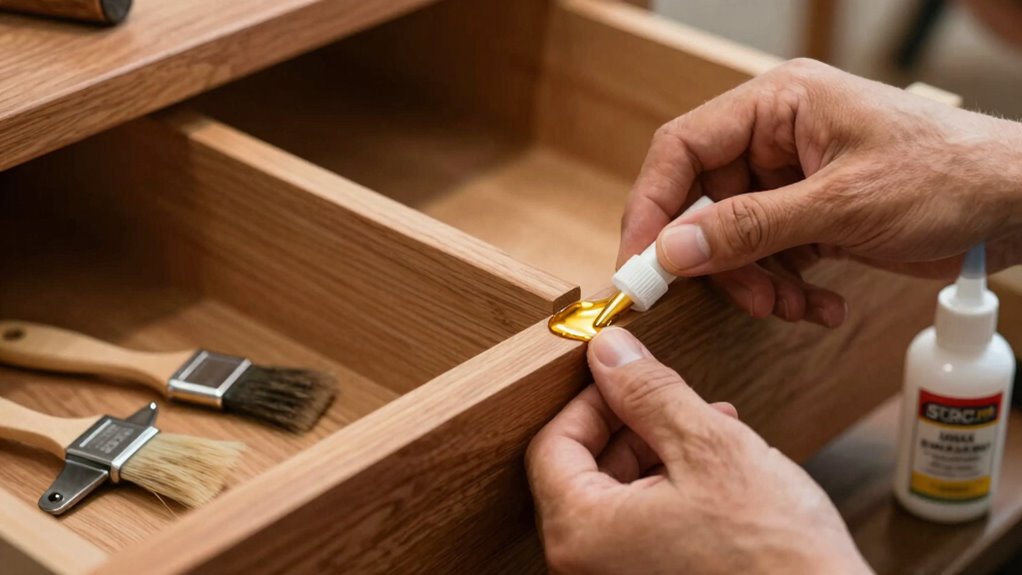
To re-glue dovetailed drawers, first evaluate the damage and disassemble carefully. Use a small chisel to gently pry apart joints. Clean out old glue and debris, then do a dry fit to guarantee alignment. Apply PVA or polyurethane glue generously, and clamp the joints for even pressure while it cures, usually 24 hours. After curing, remove excess glue and reattach any hardware. Follow these steps closely, and you’ll discover even more tips for a tight, durable repair.

Get tools and workshop supplies delivered free — and shop member deals
- Fast, free delivery on millions of items
- Access to Prime Big Deal Days deals on October 6–7
- Prime Video, Amazon Music and more included
Key Takeaways
- Evaluate damage and carefully disassemble the drawer, noting all connection points for accurate reassembly.
- Choose the right adhesive, like PVA or polyurethane, based on wood type and repair strength needed.
- Conduct a dry fit to ensure proper alignment before applying glue to both surfaces of the joint.
- Use clamps to hold parts tightly together while the adhesive cures, typically for at least 24 hours.
- Remove excess glue promptly and reattach any hardware, ensuring a clean and functional finish.
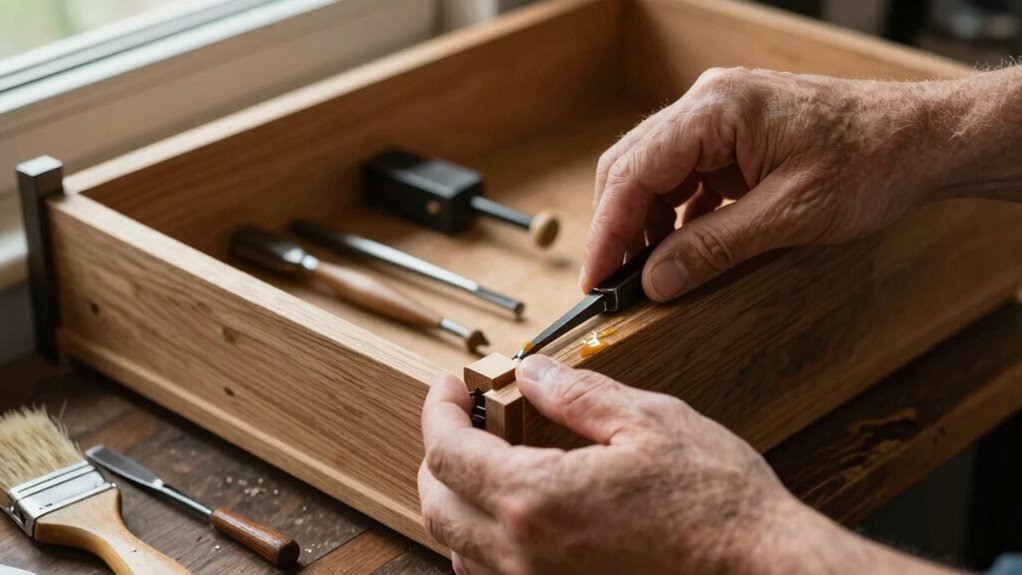
Start by evaluating the damage. Carefully disassemble the drawer, noting where each part connects. You’ll want to gently pry apart the dovetail joints without damaging the wood. A small chisel or a flat-head screwdriver can help here. Once you’ve got the pieces apart, clean out any old glue and debris. A clean surface is essential for a strong bond.
Next, consider your choice of wood adhesive types. PVA glue is a popular option, but if you’re working with a high-end piece or need extra strength, you might want to opt for a polyurethane adhesive. This type expands slightly as it cures, filling in gaps and creating a robust bond. Regardless of the glue you choose, make certain it’s suitable for the type of wood you’re working with. Understanding glue compatibility can help ensure the longevity of your repair. Additionally, selecting the right adhesive for woodworking can significantly impact the durability of your repair. It’s also helpful to ensure proper surface preparation, such as sanding or roughening the surfaces slightly, to improve adhesion.
Choosing the right adhesive is crucial; PVA works well, but polyurethane offers extra strength for high-end pieces.
Before applying the adhesive, make a dry fit of the joints. This step helps you understand how the parts align and guarantees they fit snugly. Once you’re satisfied with the fit, apply the wood glue generously to both surfaces of the joint. Don’t skimp here; a little extra glue can go a long way in preventing future issues. Using clamps properly is crucial to ensure even pressure and proper curing, reducing the chance of misalignment.
After applying the glue, assemble the drawer again, confirming everything aligns properly. Use clamps to hold everything in place while the glue dries. This is where those drawer assembly techniques come into play. You want to guarantee that all parts are tightly fitted and aligned, as misalignment can lead to further problems down the line.
Allow the adhesive to cure fully according to the manufacturer’s instructions, usually at least 24 hours. Once the glue has set, remove any excess with a damp cloth before it hardens. Finally, reassemble any hardware or components that you removed.
With patience and the right techniques, you’ll have a sturdy, functional drawer that serves you well for years to come. Re-gluing dovetailed drawers may seem overwhelming, but with these steps, you’ll find it’s a rewarding DIY project that enhances both your furniture and your skills. Proper surface preparation and attention to detail can make all the difference in achieving a durable repair.
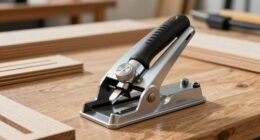
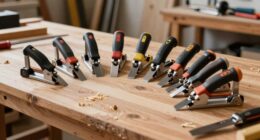
woodworking clamps for furniture repair
As an affiliate, we earn on qualifying purchases.
As an affiliate, we earn on qualifying purchases.
Frequently Asked Questions
How Can I Tell if My Drawers Need Re-Gluing?
You can tell if your drawers need re-gluing by performing a quick drawer inspection. Look for gaps at the joints or any wobbling when you pull them out. If you notice cracks in the wood or the drawers seem loose, those are clear repair signs. Pay attention to any sticking or difficulty in opening and closing, as it often indicates structural issues. Addressing these problems early can prolong the life of your furniture.
What Type of Glue Is Best for Woodworking Repairs?
When you’re fixing a wobbly chair, you’ll want to choose the right glue. PVA wood glue, like Titebond III, is perfect for woodworking repairs due to its strong adhesive properties and water resistance. It bonds well with various wood types, ensuring durability. For outdoor projects, consider polyurethane glue for its expansion ability and moisture resistance. Remember, picking the right wood glue types can make your repairs last longer and perform better.
Can I Use Clamps for Dovetailed Drawer Repairs?
Yes, you can use clamps for dovetailed drawer repairs. After applying glue, position your clamps to guarantee even clamp pressure across the joints. This helps the glue bond effectively and keeps everything aligned while curing. Just be careful not to overtighten, as that can squeeze out too much glue. Check the alignment before securing the clamps, confirming your drawer remains square and tight for a durable repair.
How Long Should I Wait Before Using the Repaired Drawer?
You wouldn’t want to risk a wobbly drawer, right? After re-gluing, it’s best to wait at least 24 hours before using the repaired drawer. This allows the glue to cure properly, ensuring maximum drawer durability. If you can, leave it clamped for up to 30 minutes before letting it sit undisturbed. Patience pays off, and you’ll have a sturdy drawer ready for years of use!
Are There Any Tools Specifically Recommended for This Repair?
For this repair, you’ll want a few key tools. A good quality wood glue, like PVA or hide glue, works best for most drawer materials. You should also have clamps to hold everything together while the glue dries. A small brush can help you apply the glue evenly, and a putty knife is handy for cleaning excess glue. Don’t forget sandpaper to smooth any rough edges afterward!
PVA wood glue for dovetailed drawers
As an affiliate, we earn on qualifying purchases.
As an affiliate, we earn on qualifying purchases.
Conclusion
To sum up, re-gluing dovetailed drawers is a straightforward process if you follow the right steps. Remember, “a stitch in time saves nine.” By carefully disassembling, cleaning, and applying glue in the correct order, you’ll restore your drawers to their former strength. Take your time, be patient, and soon enough, you’ll have a tight repair that lasts. With these tips, you can keep your furniture in great shape for years to come!
As an affiliate, we earn on qualifying purchases.
As an affiliate, we earn on qualifying purchases.
Halloween Picks
halloween
As an affiliate, we earn on qualifying purchases.