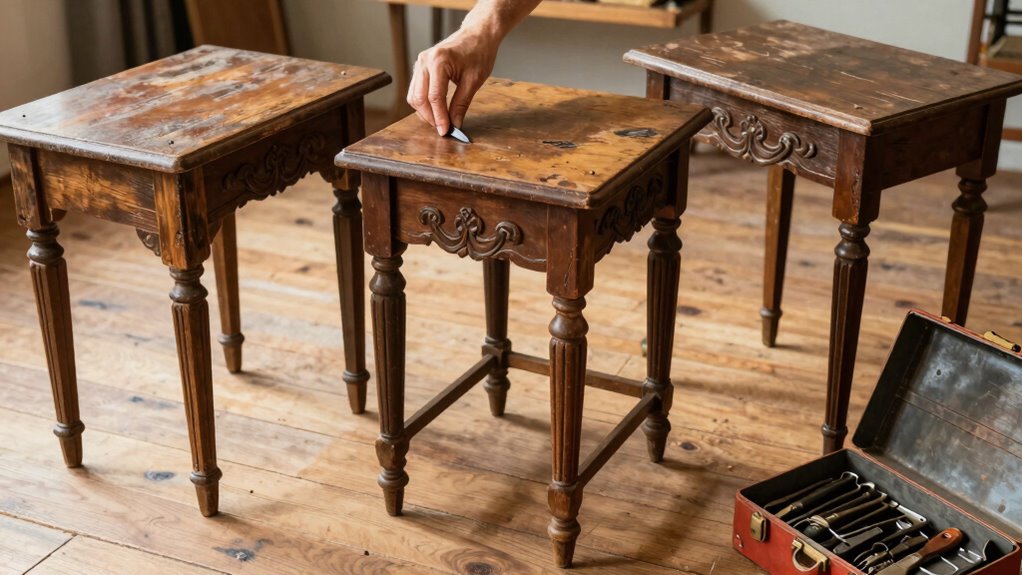
If your antique table’s wobbling, start by checking for uneven legs and adjust shorter ones with felt pads. Inspect the joints for loose screws or gaps, applying wood glue as needed. Next, assess the tabletop for warping; heat and moisture can help reshape it. Finally, examine the entire frame and consider adding corner braces for extra support. By following this diagnostic order, you’ll save time and enhance stability. There’s more to explore for maintaining your treasured piece.

Get business pricing on tools and workshop supplies
- Business-only prices and quantity discounts
- Tax-exempt purchasing
- Multiple users, one account, clear invoices
Key Takeaways
- Start by placing the table on a flat surface to identify any wobbling and leg height discrepancies.
- Inspect and reinforce joints, applying glue where needed to address looseness or gaps.
- Assess the tabletop for warping; heat and moisture can help reshape minor warps.
- Check the overall frame for stability; consider adding corner braces for additional support.
- Regularly inspect joints and legs to prevent future instability and ensure long-lasting durability.
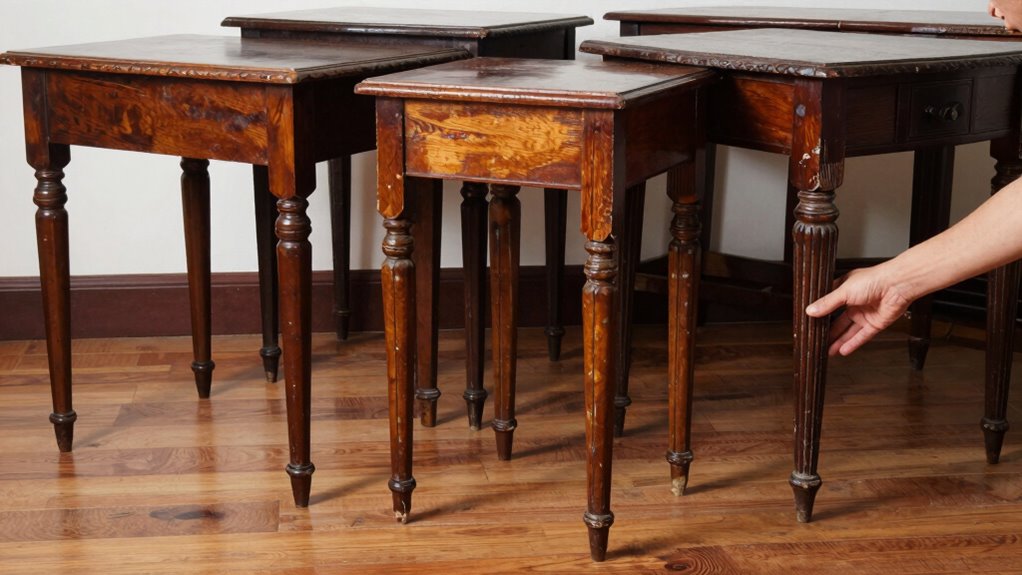
If you’ve ever inherited or stumbled upon a charming antique table, you know the allure they bring to your space. These pieces often tell a story, but a wobbly table can quickly turn admiration into frustration. Before you decide to toss it or call in a professional, there are some practical steps you can take to diagnose the problem and implement effective restoration techniques.
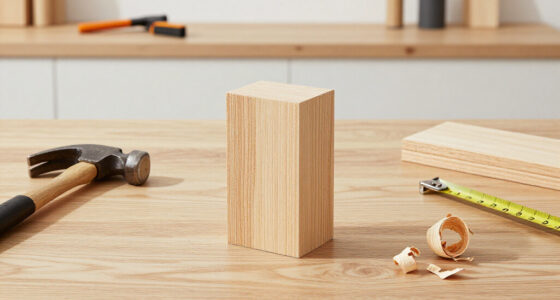
First, check the legs. Antique tables can develop instability due to uneven legs or loose joinery. You can easily identify this by placing the table on a flat surface and rocking it gently. If it wobbles, take a closer look at each leg. Sometimes, all you need is to adjust the leg lengths. If one leg is shorter, you can add a small felt pad to even it out. This simple stability solution can often make a significant difference.
Check the legs of your antique table for unevenness; a simple felt pad can work wonders for stability.
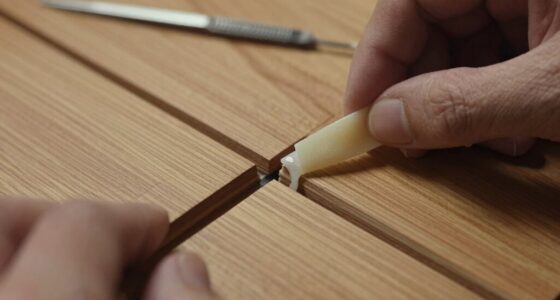
Next, examine the joints. Over time, glue can weaken, and screws can loosen. If you notice any movement or gaps, it’s crucial to address these issues. A classic restoration technique involves applying wood glue to the joints and clamping them until they set. This method reinforces the table’s stability and guarantees that it can withstand daily use without wobbling. Incorporating proper woodworking techniques can further ensure long-lasting repairs.
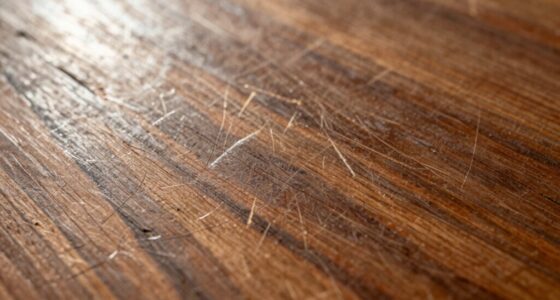
Don’t overlook the tabletop itself. Warping can occur, especially in older tables. If the surface isn’t level, it might be worth considering a few more advanced restoration techniques. Depending on the severity of the warping, you could try applying heat and moisture to reshape the wood. Alternatively, if it’s beyond repair, you might need to refinish the top or even replace it entirely.
Additionally, understanding the importance of wood joint integrity can help identify underlying issues that compromise stability. Lastly, consider the overall construction. Sometimes, the problem lies deeper than just the legs or joints. If you find that the frame is compromised or the table is poorly constructed, you might need to reinforce it with additional bracing. Adding corner braces or an apron can enhance stability and prolong the life of your antique table.
In the end, addressing a wobbly antique table doesn’t have to be an intimidating task. With some basic tools and a little patience, you can implement these restoration techniques and stability solutions. Your charming table can once again be the centerpiece of your space, offering both beauty and functionality. So, roll up your sleeves and give that table the care it deserves!
Frequently Asked Questions
What Types of Wood Are Common in Antique Tables?
Common types of wood in antique tables include oak, walnut, cherry, and mahogany. Each wood has unique characteristics; for instance, oak is durable and features prominent grain patterns, while walnut offers rich colors and intricate designs. These woods also hold historical significance, reflecting the craftsmanship and styles of their time. When you explore antique tables, you’ll appreciate how these materials contribute to their beauty and longevity, making them treasured pieces of history.
How Can I Identify the Age of My Antique Table?
To identify the age of your antique table, start by examining its style and construction. Different antique table styles, like Federal or Victorian, can indicate specific time periods. Use age determination methods such as checking wood types, joinery techniques, and hardware. Look for signs of wear and patina, which can also reveal its history. Consulting an expert or using reference books can further help you pinpoint its age accurately.
Are There Specific Cleaning Products for Antique Furniture?
Imagine your antique furniture basking in sunlight, its beauty revealed. For cleaning, stick to gentle products. Use a mix of warm water and mild soap for routine care. Avoid harsh chemicals that could strip its charm. Consider product recommendations like beeswax polish to enhance the wood’s luster. Employ soft cloths for application, embracing delicate cleaning techniques. This way, you’ll keep your treasured pieces looking timeless without compromising their integrity.
What Is the Best Way to Store Antique Tables?
To store your antique tables properly, keep them in a climate-controlled environment. Avoid extreme temperatures and humidity, as they can damage the wood. Use soft, breathable covers to protect against dust, and elevate the tables off the ground to prevent moisture absorption. Make certain they’re stored upright, never stacked, to maintain their shape. Regularly check on them for any signs of wear, guaranteeing your antique table care is first-rate in these storage conditions.
Can I Refinish an Antique Table Without Losing Value?
You’ve got to strike while the iron’s hot! Yes, you can refinish an antique table without losing value, but it’s all about the refinishing techniques you use. Opt for gentle methods like hand sanding and natural finishes to preserve its character. Always prioritize value preservation by avoiding drastic changes; keep the original charm intact. If you’re unsure, consult an expert to guarantee you’re making the right choices for your piece.
Conclusion
So, there you have it! Fixing those wobbly antique tables isn’t just a task; it’s a thrilling adventure in the domain of furniture restoration! With your newfound diagnostic order, you’ll be the hero of every dinner party, saving your guests from the terror of teetering tableware. Who knew a little wobble could lead to such glory? Embrace your inner craftsman, and soon, your tables will be as steady as a rock—well, maybe a really, really sturdy rock!
Fall yard work Picks
leaf blowers
As an affiliate, we earn on qualifying purchases.