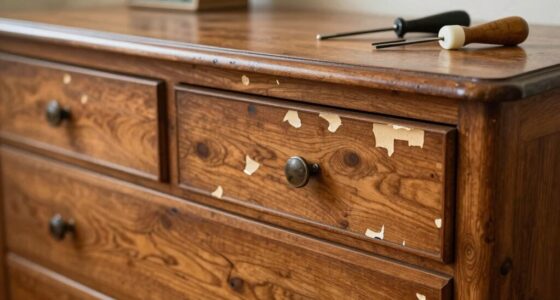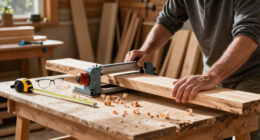
To recreate broken moldings and trim, start by closely examining existing profiles for unique details. Use a sharp utility knife and miter saw for precise cuts, and consider a coping saw for intricate shapes. Choose materials that match the original’s texture, like wood or MDF. Make accurate measurements and dry fit your pieces before securing them with adhesive and finishing nails. Finally, fill any gaps and paint or stain to match. There’s more helpful guidance to guarantee a flawless finish.

Get business pricing on tools and workshop supplies
- Business-only prices and quantity discounts
- Tax-exempt purchasing
- Multiple users, one account, clear invoices
Key Takeaways
- Examine existing moldings closely to understand their unique profiles for accurate recreation.
- Utilize a coping saw for intricate details and a miter saw for precise angle cuts.
- Select materials that match the original in texture and appearance for aesthetic continuity.
- Employ dry fitting techniques to ensure proper alignment before securing the trim.
- Finish with paint or stain to blend the new piece seamlessly with existing moldings.
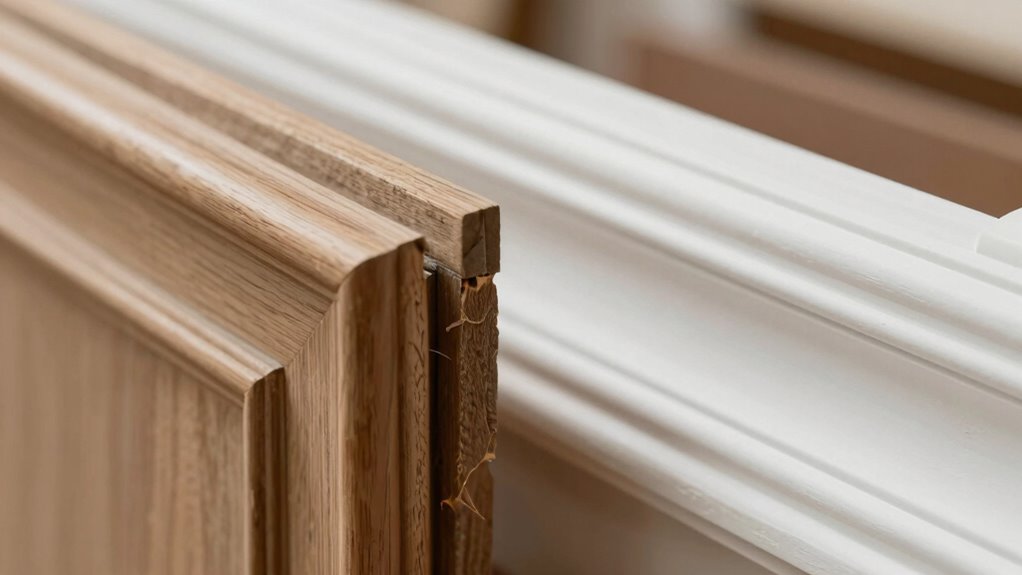
When you’re looking to recreate small profiles cleanly, it’s important to focus on the details that make a difference. Broken moldings and trim can disrupt the aesthetic of any space, but with the right approach, you can restore them without compromising on quality. Understanding the mold profile you’re working with is essential. Each profile has unique characteristics that define its shape and style, so take the time to examine the existing moldings closely.
Restoring broken moldings requires attention to detail and a deep understanding of mold profiles for a seamless finish.
Start by gathering the right tools. You’ll need a sharp utility knife, a miter saw, and a coping saw, among others. These tools are crucial for precise cuts and clean edges. If you’re working with an intricate mold profile, consider investing in a router with a molding bit. This can help you recreate the same details that give the trim its character.
Next, measure the broken section carefully. Accurate measurements are key to making sure your new piece fits seamlessly with the existing moldings. Once you’ve got your measurements, it’s time to select the right material. Whether you choose wood, MDF, or polyurethane, make sure it matches the original in texture and appearance. If you’re using wood, consider priming and painting it to match the existing trim after installation.
When you’re ready to cut the new piece, use trim techniques that will yield a clean finish. For inside corners, a coping joint can be more effective than a simple miter cut. This method allows you to create a snug fit that aligns with the existing profile. For outside corners, precise miter cuts will help maintain the continuity of the mold profile.
After cutting, dry fit the new piece in place. This step is critical to confirm everything aligns properly before you secure it. If you notice any gaps or misalignment, now’s the time to make adjustments. Once you’re satisfied with the fit, apply adhesive and secure the trim with finishing nails. Fill any nail holes with wood filler and sand them down for a smooth surface.
Finally, paint or stain the new section to match the rest of the trim. This step ties everything together and guarantees your repair is nearly invisible. Paying close attention to mold profile details will help you achieve a more authentic and professional look. By focusing on the mold profile and using the right trim techniques, you can restore broken moldings with a professional touch. With attention to detail, you’ll have your space looking polished and cohesive in no time.
As an affiliate, we earn on qualifying purchases.
Frequently Asked Questions
What Tools Are Essential for Recreating Small Moldings?
To recreate small moldings, you’ll need a few essential tools. Start with a miter saw for accurate cuts on your molding profiles. A coping saw is great for intricate trim styles, allowing you to achieve those clean edges. A router with a molding bit can help shape the profiles you want. Finally, a good set of measuring tools guarantees precision throughout your project. With these, you’ll achieve professional results in no time!
How Do I Match the Existing Wood Finish?
To match the existing wood finish, start by identifying the wood stain used. You can do this by testing samples on an inconspicuous area. Once you’ve found a match, apply the stain evenly with a brush or cloth. Let it dry and compare it again. If needed, adjust the stain mixture until it blends seamlessly. For the finish application, use a compatible topcoat to guarantee a consistent sheen.
Can I Use Alternative Materials for Moldings?
Yes, you can definitely use alternative molding materials! Consider options like PVC, MDF, or even flexible polyurethane, which can provide creative molding solutions that mimic traditional wood. These materials are often more cost-effective and easier to work with. Just verify they match your style and finish. With the right paint or stain, you can achieve a seamless look that blends beautifully with your existing decor. Get creative and transform your space!
What Are Common Mistakes to Avoid During This Process?
You’ll want to avoid common mistakes like rushing the molding techniques and skimping on preparation. Measure twice and cut once to guarantee accuracy. Don’t forget to account for any gaps when fitting your moldings; they can ruin the aesthetics. Also, pay attention to your finishing touches—sanding and painting can make a huge difference. Finally, always use the right adhesive; a weak bond can lead to future issues.
How Do I Maintain Newly Created Moldings?
Maintaining your newly created moldings isn’t as intimidating as it seems. Start with regular dusting using a microfiber cloth to avoid buildup. For tougher stains, use gentle cleaning techniques, like a mixture of mild soap and water. Avoid harsh chemicals that can damage the finish. To protect your moldings, consider applying a clear sealant. These molding maintenance tips will help keep your work looking fresh and beautiful for years!
woodworking molding profile router bit
As an affiliate, we earn on qualifying purchases.
As an affiliate, we earn on qualifying purchases.
Conclusion
Recreating small profiles can seem challenging, but with the right tools and techniques, you can achieve professional results. Don’t let the fear of imperfection hold you back; remember, even the pros make mistakes. Embrace the process, and use those missteps as learning opportunities. With practice, you’ll develop the skill to replicate moldings and trim with precision. So, roll up your sleeves, and let your creativity flow—you’ve got this!
As an affiliate, we earn on qualifying purchases.
As an affiliate, we earn on qualifying purchases.
Halloween Picks
halloween
As an affiliate, we earn on qualifying purchases.