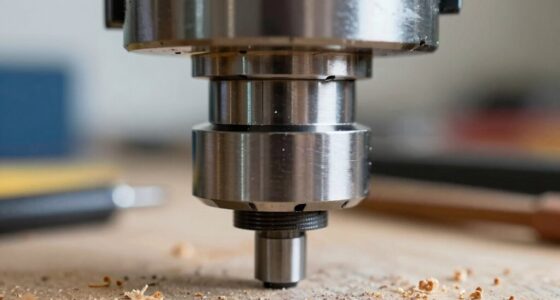
Addressing nicks in your planer knives is essential for smooth, high-quality cuts. Inspect the blade carefully using a magnifying glass to identify any damage. Minor nicks can be fixed easily with a few swipes on a sharpening stone while maintaining the bevel angle. Regular maintenance and cleaning after each use can prevent future issues and keep your tools performing at their best. You’ll find more tips and techniques to guarantee your woodworking projects shine.

Get business pricing on tools and workshop supplies
- Business-only prices and quantity discounts
- Tax-exempt purchasing
- Multiple users, one account, clear invoices
Key Takeaways
- Regularly inspect planer knives for nicks to maintain quality and prevent rough surfaces in woodworking projects.
- Use a magnifying glass to accurately assess the severity of nicks and determine appropriate repair methods.
- Sharpen minor nicks with a few swipes on a sharpening stone, maintaining the original bevel angle for effective results.
- Incorporate polishing techniques after sharpening to enhance blade performance and prolong tool life.
- Clean blades post-use with mineral spirits to prevent buildup that can lead to dullness and more nicks.

When you notice nicks in your planer knives, it’s essential to address them promptly to maintain the quality of your woodworking projects. Ignoring these small imperfections can lead to rough surfaces and inconsistent cuts, making your hard work feel less than satisfactory. You might be surprised at how a tiny fix can save an entire board from a lackluster finish. By following some simple blade maintenance tips, you can guarantee your tools perform at their best.
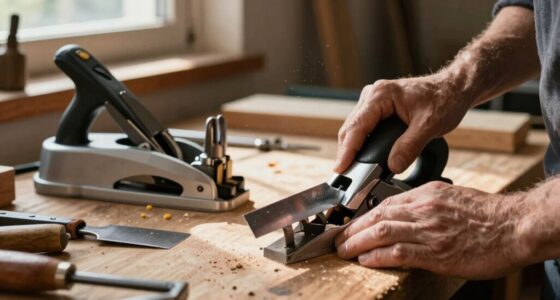
First, inspect the nicks closely. Use a magnifying glass or a bright light to get a clear view of the damage. This helps you determine whether the nick is superficial or if it’s affecting the blade’s overall integrity. If it’s minor, you may be able to remove the nick with just a few swipes on a sharpening stone. Choose a fine-grit stone for this task; it’ll allow you to smooth out the edge without removing too much material. As you work, keep the blade at the original bevel angle to maintain its cutting efficiency.
Inspect nicks closely with a magnifying glass; minor damage can often be fixed with a few swipes on a fine-grit sharpening stone.
Next, if the damage is more significant, consider using a honing guide. This tool helps you maintain the correct angle while sharpening, guaranteeing your blade remains sharp and effective. Apply light pressure as you move the blade across the stone. You want to focus on the nick but be careful not to overdo it, as you could inadvertently create a new problem. After a few strokes, check your progress and continue until the nick is gone. Maintaining proper blade alignment is crucial to prevent future damage and ensure smooth operation. Regularly inspecting your blades for signs of wear can also help you catch issues early and avoid more extensive repairs.
In addition, understanding the different workshop tools that help in blade maintenance can make the process more efficient and less prone to error. After addressing the nicks, it’s wise to polish the blade. Use a fine abrasive pad or a leather strop to give the edge a final touch. This step not only enhances cutting performance but also prolongs the life of your blades. Remember, regular maintenance is key, so incorporate these practices into your woodworking techniques routinely. Regular blade maintenance can prevent future issues and extend the lifespan of your tools.
Finally, don’t forget to clean your blades after each use. Dust and resin can build up and contribute to dullness or nicks in the future. A quick wipe-down with a cloth soaked in mineral spirits can go a long way in keeping your tools in top shape. By taking these small but effective steps, you can guarantee your planer knives remain sharp and ready for any project, allowing you to focus on creating beautiful woodworking pieces without the frustration of subpar cuts.
Products Worth Considering

Dyson Ball Animal Total Clean Upright Vacuum

Sonos Era 100 Wireless Smart Speaker, Black

Ring Battery Doorbell Plus (2nd Gen) and Indoor Cam Plus Bundle, Nickel Silver and White
As an affiliate, we earn on qualifying purchases.
Frequently Asked Questions
How Often Should I Sharpen My Planer Knives?
You should sharpen your planer knives every 20 to 50 board feet, depending on the type of wood and your desired finish. A good frequency guide helps you stay on track. When you notice a decrease in cut quality or hear unusual sounds, it’s time to sharpen. Use techniques like honing or grinding to maintain sharpness. Keeping your knives in top shape guarantees clean cuts and a better overall woodworking experience.
What Materials Can I Use for Planer Knives?
When you think of a knight’s sword, you realize the importance of quality materials. For your planer knives, you typically use high-speed steel (HSS) or carbide. Both blade types offer durability and sharpness, but carbide holds an edge longer. To keep them effective, mastering sharpening techniques like honing or grinding is crucial. Regular maintenance guarantees your knives perform at their best, making those smooth cuts you crave in your woodworking projects.
Can I Replace Just One Knife in a Set?
You can replace just one knife in a set, but it might affect your machine’s performance. If the new knife isn’t identical in brand and wear to the others, you could notice uneven cuts. It’s often best to replace all knives at once to maintain consistent performance. This way, you’ll guarantee smooth operation and avoid potential issues down the line. So, consider replacing the entire set for peak results.
How Do I Maintain My Planer for Longevity?
To maintain your planer for longevity, focus on three key practices: guarantee proper blade alignment, clean the dust collection system regularly, and lubricate moving parts. Check the blades for sharpness and replace them as needed to avoid strain on the motor. Keep the machine free of debris to enhance performance and extend its life. By prioritizing these steps, you’ll not only improve efficiency but also enjoy smoother, more consistent results in your woodworking projects.
What Signs Indicate My Planer Needs Adjustment?
You’ll notice your planer needs adjustment when you see knife alignment issues or blade wear indicators. If your cuts become uneven or you hear unusual noises, it’s time to check. Look for signs like tear-out on the wood surface or a significant reduction in cut quality. Regularly inspecting the blades and ensuring proper alignment can help maintain performance and extend the tool’s life. Don’t wait too long; address these signs promptly!
Conclusion
Removing nicks from your planer knife can feel like performing a miracle on a whole board. With just a bit of patience and the right technique, you can revive your tool and keep your projects running smoothly. Don’t let those tiny imperfections derail your woodworking dreams; tackling them head-on can save you time, money, and frustration. So grab your tools and get to work—your boards (and sanity) will thank you for it!