
Exterior trim joints open up easily due to factors like improper caulking techniques and weather fluctuations. If you’re using low-quality materials, you’re more likely to experience gaps that let moisture and pests in. Neglecting surface preparation can also lead to seal failure. Regular inspections and maintenance are essential for preventing these issues. By understanding these factors, you can take steps to protect your home better. There’s more to learn about ensuring your trim stays secure and effective.
Key Takeaways
- Moisture intrusion and pest access can cause trim joints to deteriorate if not properly sealed and maintained.
- Poor caulking techniques, such as inadequate surface preparation, lead to premature seal failure.
- Temperature fluctuations can cause low-quality caulk to crack and lose adhesion over time.
- Low-grade materials, such as warped wood, create gaps that allow joints to open up.
- Regular inspections and proactive maintenance help identify and address joint issues before they escalate.
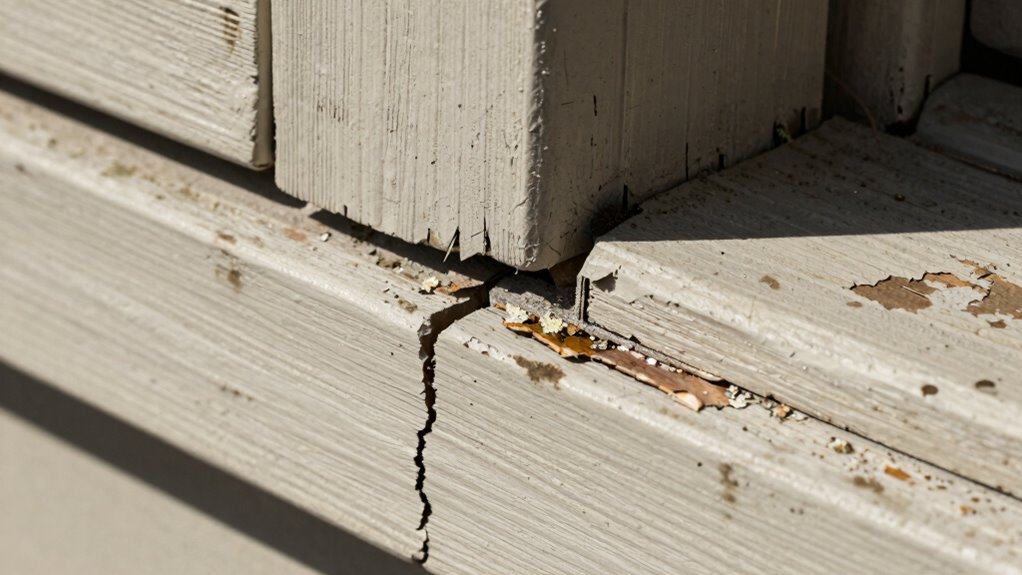
When you think about maintaining your home’s exterior, the joints in your trim often get overlooked, yet they play an essential role in protecting your house from moisture and pests. If you ignore these joints, they can easily open up over time, leading to costly repairs and damage. One of the main reasons this happens is due to improper caulking techniques. Using the right caulk and applying it correctly can help seal those gaps and prevent water intrusion.
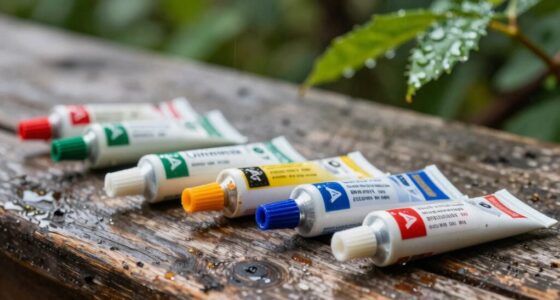
Most homeowners don’t realize that not all caulk is created equal. Material selection is key. For instance, if you opt for a paintable latex caulk over a high-performance silicone, you might end up disappointed. Silicone offers superior flexibility and longevity, which is critical for areas that experience temperature fluctuations. When the weather changes, materials expand and contract; if your caulk can’t keep up, those joints will crack and open.
You also need to prep the surface properly before applying any caulk. If the trim isn’t clean or dry, the caulk won’t adhere properly. This means you’ll need to scrape away old caulk and clean the area thoroughly. A well-prepared surface not only improves adhesion but also extends the life of your seal. It’s often a step that gets skipped, but it’s essential if you want your exterior trim to hold up against the elements. Proper surface preparation can significantly improve the durability of your seal and prevent issues from recurring, especially in climate-sensitive areas. Additionally, understanding how material properties such as expansion and contraction affect your sealant choice can further enhance the longevity of your repair. Recognizing the importance of proper installation techniques is equally vital to ensure a long-lasting seal.
Another factor contributing to open joints is the quality of the materials used in your trim itself. If you’ve chosen a low-grade wood, for example, it may warp or crack, creating gaps where moisture can enter. Investing in higher-quality materials can save you headaches down the road. Composite materials often provide a good alternative; they resist rot and moisture better than traditional wood, which helps maintain a tighter seal over time.
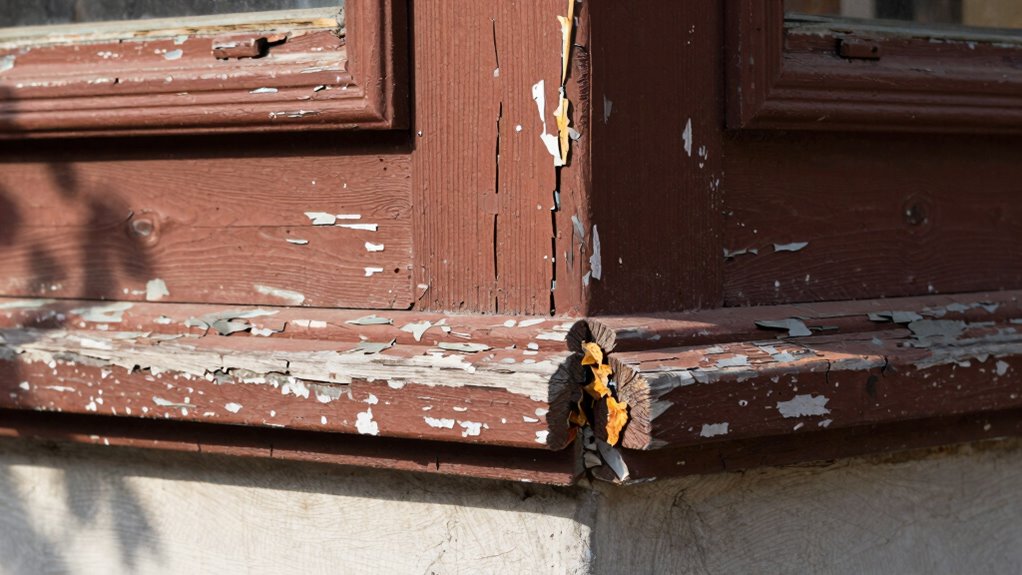
Lastly, consider the seasonal maintenance your trim requires. Regular inspections can help you catch issues before they escalate. Look for signs of wear, peeling paint, or any visible gaps. By staying proactive and using the right caulking techniques along with quality material selection, you can keep your exterior trim joints intact. Proper caulking techniques and maintenance are essential to prevent these issues from recurring and to ensure your home remains protected from moisture and pests. This not only protects your home from moisture and pests but also helps maintain its curb appeal. Taking these steps seriously will go a long way in preserving the integrity of your home’s exterior.
As an affiliate, we earn on qualifying purchases.
Frequently Asked Questions
How Can I Prevent Trim Joint Issues in New Constructions?
To prevent trim joint issues in new constructions, focus on proper installation techniques and effective moisture management. Make certain you use quality materials that are resistant to warping and swelling. Seal joints with caulk to block moisture from penetrating, and consider installing a vapor barrier. Additionally, maintain good ventilation around the trim to reduce humidity levels. Regular inspections can help you catch any early signs of wear or damage before they escalate.
What Materials Are Best for Exterior Trim to Minimize Joint Problems?
You know what they say, “A stitch in time saves nine.” For exterior trim, choose composite materials that offer excellent moisture resistance. They stand up to the elements better than traditional wood. Use flexible caulking to seal joints effectively, allowing for natural movement without cracking. Finally, opt for high-quality paint adhesion to protect against peeling and damage. By using these materials, you’ll minimize joint problems and keep your trim looking sharp for years.
When Is the Best Time to Repair Exterior Trim Joints?
The best time to repair exterior trim joints is during seasonal maintenance, ideally in spring or early fall. This timing allows you to address any damage before harsh weather sets in, ensuring the repairs last longer. Make sure to inspect the joints after winter and before summer, as temperature changes can exacerbate issues. By staying proactive with your repairs, you’ll protect your home and maintain its appearance effectively.
Can Paint Help Seal and Protect Exterior Trim Joints?
Think of your exterior trim joints as a fortress; paint acts as its armor. Yes, paint can help seal and protect these joints. When you apply paint properly, it enhances joint flexibility, allowing them to expand and contract without cracking. This protective layer keeps moisture at bay, prolonging the life of your trim. So, don’t skip that paint application—consider it an essential step in safeguarding your home’s exterior.
Are Certain Climates More Prone to Trim Joint Issues?
Yes, certain climates are definitely more prone to trim joint issues. When you’re in areas with high moisture levels, like coastal regions or places with heavy rainfall, the constant exposure can cause joints to swell and crack. Similarly, extreme temperatures can exacerbate these problems, leading to expansion and contraction. You’ve got to take into account the climate impact on your exterior trim to guarantee it holds up well over time. Regular maintenance can help mitigate these issues.
As an affiliate, we earn on qualifying purchases.
Conclusion
In the dance of seasons, your exterior trim joints face the relentless pull of weather, like a ship battling waves. As moisture swells and sunlight shrinks, those once snug joints can crack, revealing the wood beneath. But don’t let this discourage you! With a little vigilance and timely maintenance, you can keep your home’s exterior looking sharp and intact, like a sturdy fortress standing tall against the storm. Embrace the rhythm of care, and your trim will thrive.
As an affiliate, we earn on qualifying purchases.
exterior sealant for weatherproofing
As an affiliate, we earn on qualifying purchases.
As an affiliate, we earn on qualifying purchases.