When deciding between cedar, redwood, and pressure-treated wood for your outdoor builds, consider durability, cost, and maintenance. Cedar’s lifelong beauty lasts 15-20 years, while redwood can hold up for 20-30 years. Pressure-treated wood is more budget-friendly but requires more upkeep to maintain its look. Cedar and redwood offer rich colors, whereas pressure-treated wood often needs staining. Each option has its pros and cons, so take a closer look at how they compare for your project.

Get business pricing on tools and workshop supplies
- Business-only prices and quantity discounts
- Tax-exempt purchasing
- Multiple users, one account, clear invoices
Key Takeaways
- Durability: Redwood lasts longer (20-30 years) than cedar (15-20 years) and pressure-treated wood (20-30 years), depending on treatment quality.
- Cost: Pressure-treated wood is the most budget-friendly option ($2-$5 per linear foot), while cedar and redwood are pricier ($3-$7 and over $7, respectively).
- Maintenance: Cedar and redwood require regular sealing, while pressure-treated wood needs staining or painting for longevity and appearance.
- Environmental Impact: Cedar and redwood are eco-friendly choices from sustainable forests; pressure-treated wood raises concerns due to chemical treatments.
- Aesthetic Appeal: Cedar has a warm tone, redwood boasts rich hues, whereas pressure-treated wood often requires paint or stain for visual appeal.
When you’re choosing materials for outdoor projects, understanding the differences between cedar, redwood, and pressure-treated wood can make all the difference. Each option has its unique qualities, and knowing these can steer you toward the best choice for your specific needs.
Let’s start with durability factors. Cedar is naturally resistant to decay and insect damage, making it a solid choice for outdoor use. It can last around 15 to 20 years with proper care. Redwood is similar but offers a slightly longer lifespan, around 20 to 30 years, thanks to its high natural oils. On the other hand, pressure-treated wood, which is typically pine infused with preservatives, can last about 20 to 30 years as well, but its durability largely depends on the quality of treatment and usage conditions. Sustainable forestry practices also play a role in the longevity and environmental impact of these woods. Additionally, the type of treatment and harvesting methods can influence the overall sustainability of pressure-treated options.
Cedar’s decay resistance ensures 15-20 years of durability, while redwood offers 20-30 years, aided by its natural oils and treatment quality.
Next, there’s the cost analysis. Cedar tends to be the most expensive of the three options, typically ranging from $3 to $7 per linear foot. Redwood can be even pricier, often exceeding $7 per linear foot, especially for high-quality grades. Pressure-treated wood is the budget-friendly choice, usually costing between $2 to $5 per linear foot, making it appealing for large projects where cost is a significant concern.
Maintenance tips should also factor into your decision. Cedar and redwood require regular sealing to maintain their appearance and longevity. You’ll want to re-seal every couple of years to protect against fading and weather damage. Pressure-treated wood, while more durable in some aspects, still needs maintenance. You should stain or paint it to enhance its lifespan and improve its appearance. Proper maintenance can significantly extend the lifespan of any of these woods. This maintenance helps protect the woods from environmental factors and preserves their aesthetic appeal over time.
When considering environmental impact, cedar and redwood come from sustainably managed forests, making them a greener choice. Pressure-treated wood, while functional, can contain chemicals that raise environmental concerns, especially if you’re planning to use it for garden beds or areas with soil contact. Additionally, choosing sustainable wood options can help reduce environmental impact. Being aware of wood sourcing practices can ensure you select environmentally responsible materials.
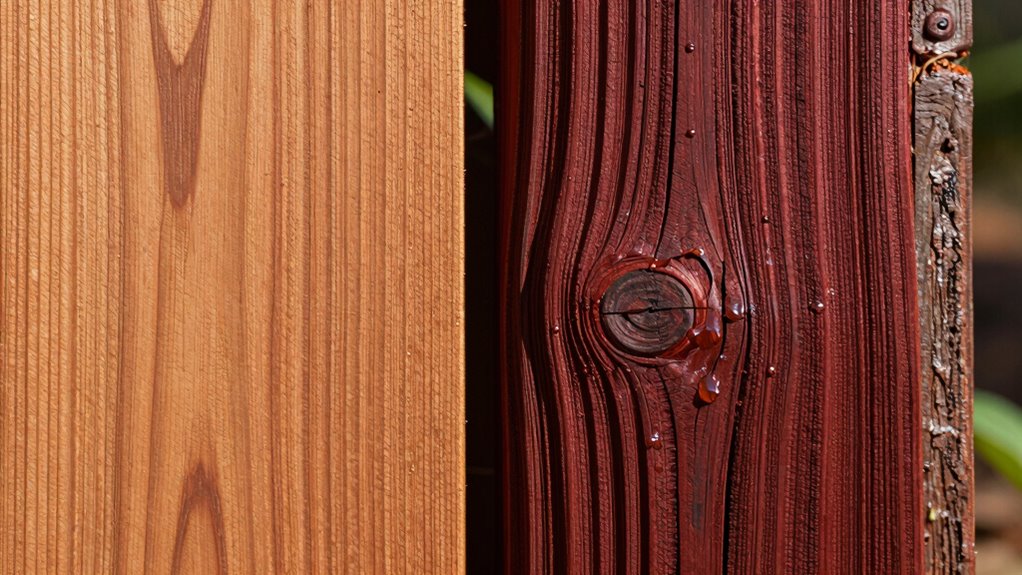
Finally, think about your aesthetic choices. Cedar has a warm, rich tone, while redwood offers deep, vibrant hues. Pressure-treated wood, however, tends to have a less appealing appearance, often requiring paint or stain to enhance its look.
In the lifespan comparison, while all three types have their strengths, your final decision should consider how their durability factors, costs, maintenance, and environmental impacts align with your project’s specific needs. By weighing these factors, you’ll find the best material for your outdoor project.
As an affiliate, we earn on qualifying purchases.
Frequently Asked Questions
How Do I Maintain Cedar, Redwood, and Pressure-Treated Wood?
To maintain cedar, redwood, and pressure-treated wood, focus on regular cleaning and sealing. For cedar and redwood, use a wood cleaner annually and apply a protective sealant every few years to enhance wood longevity. Pressure-treated wood benefits from cleaning and a stain to prevent moisture damage. Inspect for signs of wear or rot, and address issues quickly. Following these maintenance tips keeps your outdoor builds looking great and lasting longer.
What Are the Environmental Impacts of Each Wood Type?
When you picture a lush forest, think about the environmental impacts of wood choices. Cedar and redwood often come from sustainably managed forests, promoting biodiversity. However, pressure-treated wood usually involves chemicals that can leach into the soil, harming local ecosystems. By opting for sustainably sourced cedar or redwood, you support responsible forest management. Remember, your choices shape the environment, so choose wisely and embrace practices that nurture our planet.
Can I Paint or Stain These Woods?
Yes, you can paint or stain cedar, redwood, and pressure-treated wood. When it comes to painting techniques, guarantee the surface is clean and dry for better adhesion. For staining options, opt for a high-quality stain that enhances the wood’s natural beauty while providing protection. Each wood type responds differently, so test a small area first. With the right prep, your outdoor project will look great and last longer!
How Do These Woods Fare in Extreme Weather Conditions?
You wouldn’t want your deck to feel like a sauna, right? When it comes to extreme weather, cedar, redwood, and pressure-treated wood each have their quirks. Cedar boasts excellent weather resistance, while redwood handles thermal expansion well without warping. Pressure-treated wood is sturdy but can crack under severe conditions. So, if you’re building outdoors, consider how these woods will react to heat, moisture, and cold to guarantee longevity and durability.
What Is the Cost Difference Between Cedar, Redwood, and Pressure-Treated Wood?
When you’re considering the cost difference, cedar usually runs higher than pressure-treated wood, while redwood often costs even more due to its beauty and durability. You should factor in maintenance and longevity comparison, too; cedar and redwood can last longer with proper care, which might save you money in the long run. Pressure-treated wood is more affordable upfront but may require replacement sooner, impacting overall cost factors over time.
As an affiliate, we earn on qualifying purchases.
Conclusion
In the showdown of cedar, redwood, and pressure-treated wood, each offers unique advantages. Cedar captivates with its charming scent and natural resistance, while redwood radiates resilience and rich beauty. Pressure-treated wood, though practical, presents potential concerns. Ultimately, your choice should align with your project and personal preference. So, whether you favor fragrant cedar, radiant redwood, or practical pressure-treated wood, make a decision that delivers durability and delight for your outdoor build!
pressure-treated lumber for decks
As an affiliate, we earn on qualifying purchases.
As an affiliate, we earn on qualifying purchases.
As an affiliate, we earn on qualifying purchases.
Fall yard work Picks
leaf blowers
As an affiliate, we earn on qualifying purchases.