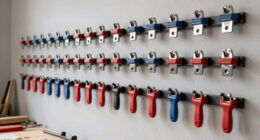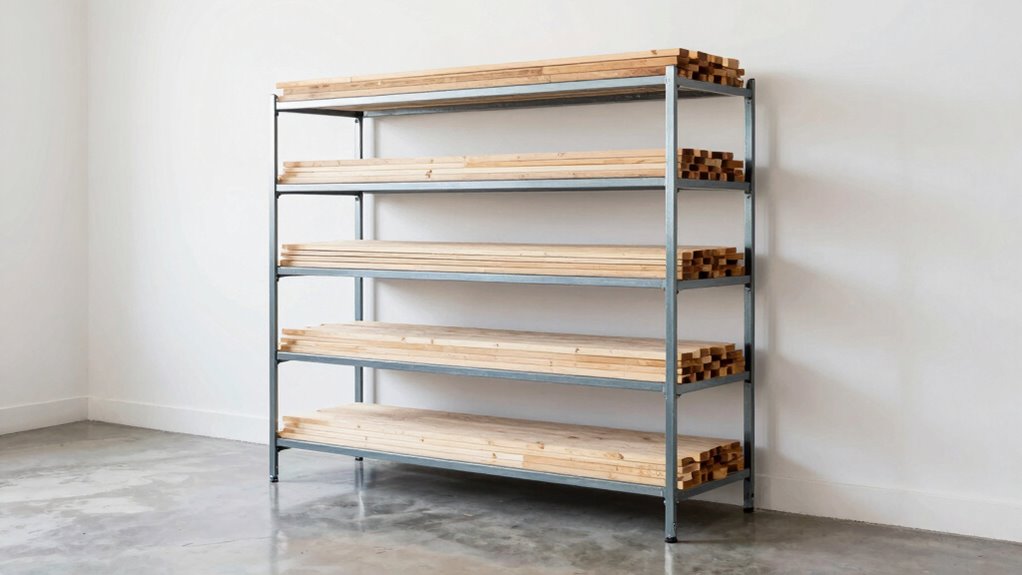

To design a lumber rack that protects your materials and saves space, focus on vertical and horizontal organization with labeled sections for easy access. Use sturdy, reinforced materials and anchor the rack securely to prevent tipping. Add barriers, non-slip coatings, and appropriate spacing for different lumber sizes to enhance safety and stability. Regularly inspect for wear and use proper handling techniques. Keep your workspace organized, and you’ll maximize capacity and safety—if you keep exploring, you’ll learn more about creating the perfect storage solution.
Key Takeaways
- Utilize vertical racks with adjustable shelves to maximize storage and minimize floor space usage.
- Incorporate safety features like lip edges and barriers to prevent lumber from falling and damaging the floor.
- Securely anchor racks to walls or floors to enhance stability and prevent tipping or shifting.
- Organize lumber by size and type, using labels to streamline access and reduce clutter.
- Use protective coatings and proper handling techniques to prevent material damage and ensure safety.
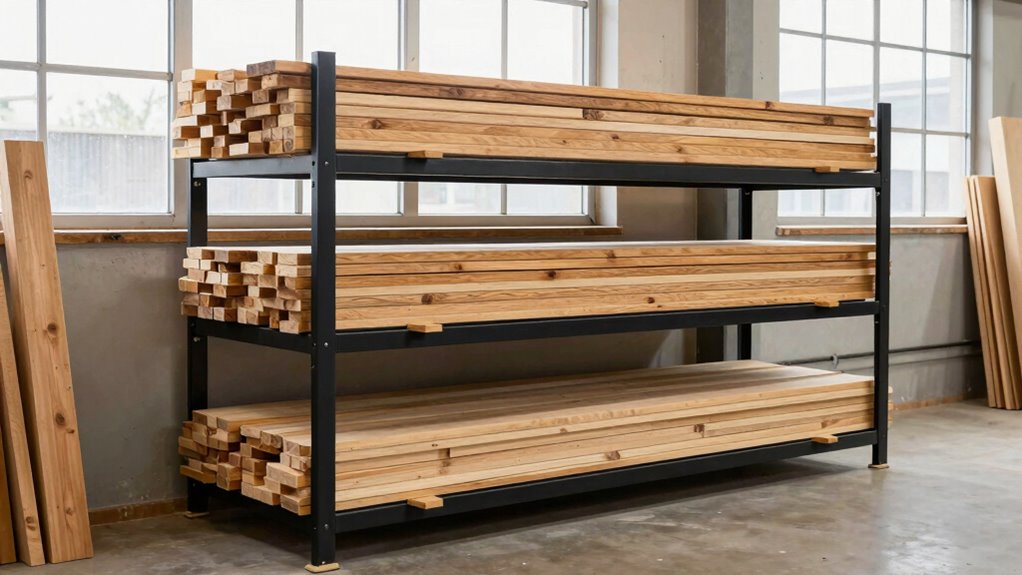
Designing a lumber rack that’s both sturdy and efficient can considerably improve your workspace organization. When you focus on material organization, you ensure that your lumber is easy to access, neatly stored, and protected from damage. A well-designed rack minimizes clutter, reduces the risk of accidents, and helps you work more efficiently. To achieve this, you need to contemplate how the materials are stored—vertical racks, horizontal shelves, or a combination of both—so you can quickly find what you need without rummaging through piles. Proper material organization also involves labeling sections and organizing different types or sizes of lumber to prevent confusion and save time. Incorporating safety features such as reinforced joints and secure anchoring further enhances the durability and stability of your rack. Safety considerations are essential when designing your lumber rack. You want to build a structure that’s stable and capable of supporting the weight of your materials without tipping or collapsing. Use quality materials like steel or heavy-duty wood and ensure all joints are reinforced. Anchoring the rack securely to the wall or floor prevents tipping, especially when managing long or heavy lumber. Avoid overloading any single section, and keep heavier pieces on lower shelves for stability. Regularly inspect your rack for signs of wear or damage, and perform maintenance as needed to prevent accidents. Remember, a sturdy rack not only protects your stored materials but also safeguards you and anyone else working in the area. Proper material handling techniques can further reduce the risk of injury and improve workflow.
Additionally, safety considerations extend to the design features of the rack itself. Incorporate lip edges or barriers to prevent lumber from sliding off, especially on inclined or open shelves. These small details can greatly reduce the risk of materials falling and causing injury or damage. Space between shelves should be adequate to accommodate different sizes of lumber, but not so wide that smaller pieces fall through or become unstable. Consider using non-slip coatings or rubber pads on shelves to keep the material in place and prevent shifting during work. Proper lighting around the rack also enhances visibility, helping you handle materials safely and efficiently. Maintaining a well-organized storage system can further optimize your workspace and ensure long-term safety and productivity.
As an affiliate, we earn on qualifying purchases.
Frequently Asked Questions
What Materials Are Best for Building Durable Lumber Racks?
You should choose heavy-duty steel or pressure-treated wood for building durable lumber racks, as these materials offer strength and longevity. Steel is cost-effective over time and has a lower environmental impact due to its recyclability. Pressure-treated wood is affordable and readily available, but consider its environmental impact. Both materials protect your lumber and maximize floor space, ensuring your rack holds up under heavy loads and resists wear.
How Do I Customize a Lumber Rack for Different Wood Sizes?
You can easily customize your lumber rack with adjustable supports and a modular design, making it versatile for different wood sizes. If you worry about stability, rest assured that sturdy brackets lock into place securely. By adding or removing sections, you adapt the rack to your project needs, saving space and protecting your materials. This flexible setup guarantees you’ve got a tailored storage solution that grows with your woodworking projects.
What Safety Precautions Should I Consider During Installation?
During installation, you should wear personal protective equipment like gloves and safety glasses to prevent injuries. Make sure to follow electrical safety protocols by disconnecting power sources and avoiding contact with live wires. Secure the rack firmly to the floor or wall to prevent tipping. Keep the workspace clean and free of debris, and use proper tools to avoid accidents. Always read manufacturer instructions thoroughly before starting.
How Can I Prevent Lumber From Warping on the Rack?
Think of your lumber as delicate sails catching every breeze. To prevent warping on the rack, you should implement weatherproofing techniques like sealing edges and avoiding direct sunlight, which can cause uneven drying. Also, make certain the rack’s weight capacity isn’t exceeded, distributing weight evenly to avoid bending or sagging. Proper airflow is essential, so leave space between boards, keeping your lumber flat, dry, and warp-free over time.
What Maintenance Is Required for Long-Term Durability?
To guarantee long-term durability, you should regularly perform cleaning routines on your lumber rack to remove dust, debris, and moisture that can cause deterioration. Additionally, inspect for pests and take preventive measures like sealing gaps or applying pest control treatments. By maintaining a clean environment and preventing pest infestations, you protect both your materials and the rack itself, extending its lifespan and keeping your storage organized and safe.
heavy-duty steel lumber storage rack
As an affiliate, we earn on qualifying purchases.
As an affiliate, we earn on qualifying purchases.
Conclusion
A well-designed lumber rack not only keeps your materials organized but also maximizes your storage space and protects your floors. Did you know that properly stored lumber can last up to 30% longer, saving you money and effort? By choosing the right design, you guarantee safety, efficiency, and durability in your workspace. Investing in smart storage solutions today means you’ll enjoy a cleaner, more productive environment tomorrow. So, prioritize your rack design and see the difference it makes!
As an affiliate, we earn on qualifying purchases.
wall-mounted lumber storage system
As an affiliate, we earn on qualifying purchases.
As an affiliate, we earn on qualifying purchases.