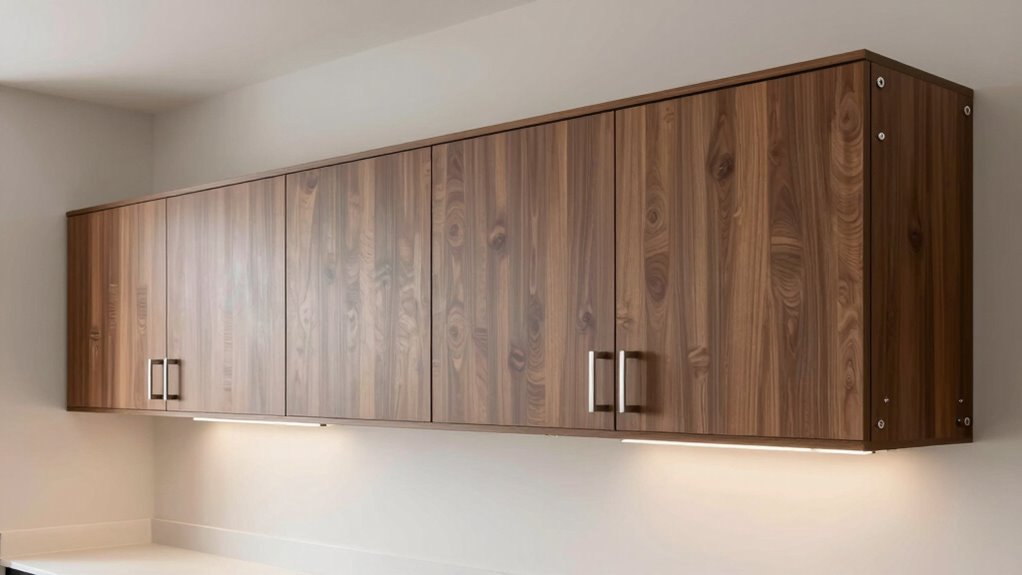

When hanging wall cabinets, you should prioritize safety by understanding load paths and weight distribution. Always locate studs using a stud finder, as skipping this vital step could lead to cabinets collapsing. Use heavy-duty screws anchored into these studs for secure installation. Also, consider the total weight of items you’ll store, placing heavier items lower to enhance stability. If you’re curious about additional tips to guarantee a safe and effective installation, there’s more to explore.

Get business pricing on tools and workshop supplies
- Business-only prices and quantity discounts
- Tax-exempt purchasing
- Multiple users, one account, clear invoices
Key Takeaways
- Ensure cabinets are anchored securely into wall studs to prevent accidents and ensure stability.
- Assess the wall and locate studs accurately using a stud finder before installation.
- Distribute weight evenly within cabinets, placing heavier items lower to reduce the risk of tipping.
- Use heavy-duty screws and a level mounting rail to enhance structural integrity and weight distribution.
- Double-check alignment and weight distribution after installation to confirm safety and stability.
When you decide to hang wall cabinets, safety should be your top priority. The last thing you want is for your carefully chosen cabinets to come crashing down, causing damage or injury. Understanding the load path is essential for effective cabinet installation. This means you need to know how weight distribution works and how to secure your cabinets properly to guarantee they can bear the load you’ll place on them.
First, assess the wall where you’ll hang the cabinets. You need to locate the studs, as they provide the necessary support for weight distribution. Use a stud finder to identify these key points. If you skip this step, you’re risking your cabinets hanging from drywall alone, which won’t hold up over time. Once you’ve located the studs, mark their positions clearly. This will guide you as you install the cabinets, making certain you’re anchoring them to something sturdy.
Assess the wall and locate the studs for secure cabinet installation—essential for proper weight distribution and safety.
Next, consider the weight of the items you plan to store in your cabinets. You might think it’s just a few dishes or some canned goods, but over time, these can add up. Calculate the total weight and verify that your cabinets can support it. Different materials have varying weight tolerances, so if you’ve chosen heavy, solid wood cabinets, you’ll want to pay extra attention to how they’re mounted. Proper weight distribution also helps prevent stress on any single point, which can compromise the stability of your installation.
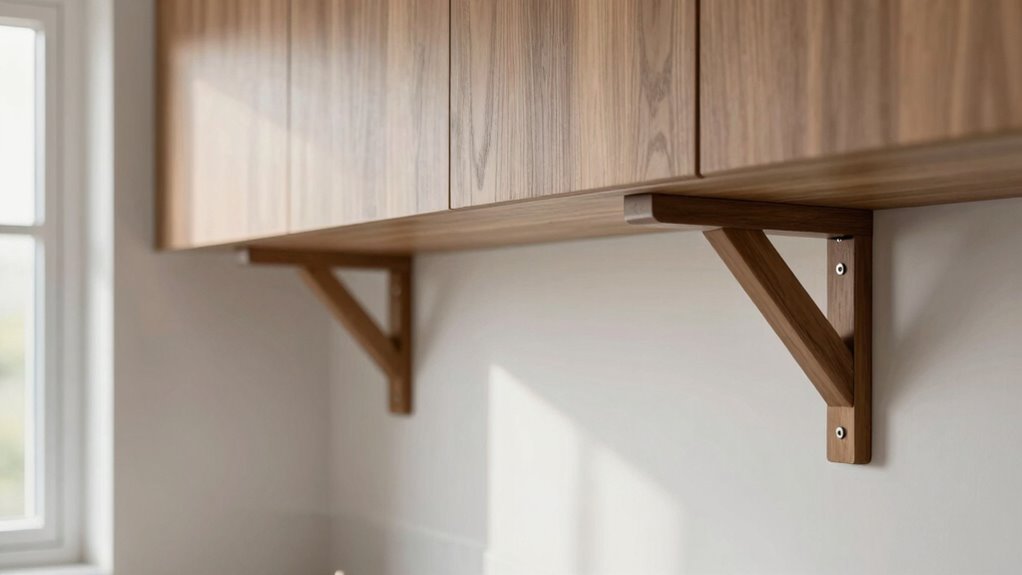
When you begin the actual cabinet installation, use the right hardware designed for the job. Don’t just grab any screws you have lying around. Use heavy-duty screws that can handle the load, and confirm you’re anchoring them into the studs. If you’re using a mounting rail, make sure it’s level and secured properly. This will help distribute the weight evenly across the cabinets. Additionally, understanding the load path is crucial to ensure your cabinets bear the weight safely.
As you lift the cabinets into place, it’s helpful to have a partner. Not only does this make the job easier, but it also allows you to focus on aligning the cabinets accurately while your companion holds them steady. Once secured, double-check that everything is level before tightening the screws completely.
Lastly, once your cabinets are installed, take a moment to review the weight distribution. Make sure heavier items are placed lower in the cabinets, which lowers the center of gravity and adds stability. This simple step can prevent tipping and guarantee your cabinets remain securely in place for years to come. By taking these precautions, you’ll hang your wall cabinets safely and confidently.
As an affiliate, we earn on qualifying purchases.
Frequently Asked Questions
What Tools Are Essential for Hanging Wall Cabinets?
To hang wall cabinets, you’ll need a few essential tools. Grab a power drill for quick installation, a level to guarantee straightness, and a stud finder for accurate weight distribution. A measuring tape helps you mark precise locations, while screws and anchors provide stability. Don’t forget safety glasses for protection! Using these tools with proper installation techniques guarantees your cabinets are secure and can handle the weight of your items.
How Do I Choose the Right Wall Cabinet Size?
To choose the right wall cabinet size, first measure your available wall space. Consider the cabinet dimensions in relation to your room’s layout and functionality. You want cabinets that fit comfortably without overwhelming the area. Don’t forget to account for any appliances or fixtures nearby. It’s also smart to think about what you’ll store inside; larger items may require deeper or taller cabinets. Prioritize both style and practicality to make the best choice.
Can I Install Cabinets Without Professional Help?
Yes, you can install cabinets without professional help. With the right DIY tips, a bit of patience, and some basic tools, you’ll be fine. Start by measuring your space correctly, ensuring you’ve got all materials ready. Use safety measures like wearing goggles and gloves while working. Secure the cabinets properly to avoid any accidents. Trust your skills, take your time, and enjoy the satisfaction of completing the project yourself!
What Materials Are Best for Wall Cabinets?
For wall cabinets, solid wood types like oak, maple, or cherry offer durability and a timeless look. Plywood is also a great choice due to its strength and resistance to warping. When it comes to cabinet finishes, consider using polyurethane for a protective layer that enhances the wood grain, or opt for a painted finish for a modern touch. Whichever you choose, make sure it complements your overall design style!
How Do I Maintain My Hanging Wall Cabinets?
To maintain your hanging wall cabinets, focus on proper cabinet organization and weight distribution. Regularly check for loose screws and hinges, tightening them as needed. Avoid overloading shelves; distribute weight evenly to prevent sagging. Clean surfaces with a gentle cleaner to avoid damage. If you notice any signs of wear, address them quickly to extend the life of your cabinets. Keeping everything organized will also make it easier to spot potential issues.
heavy-duty cabinet mounting screws
As an affiliate, we earn on qualifying purchases.
As an affiliate, we earn on qualifying purchases.
Conclusion
In the grand design of your kitchen, hanging wall cabinets aren’t just fixtures; they’re the unsung heroes that hold your culinary dreams. By understanding the load path, you’re not just securing cabinets—you’re ensuring your space stands strong like a well-crafted castle. So, as you commence on this journey, remember: safety isn’t just a guideline; it’s the foundation upon which your kitchen’s harmony is built. Embrace the art of installation, and let your cabinets shine!
wall cabinet level mounting rail
As an affiliate, we earn on qualifying purchases.
As an affiliate, we earn on qualifying purchases.
As an affiliate, we earn on qualifying purchases.
Fall yard work Picks
leaf blowers
As an affiliate, we earn on qualifying purchases.