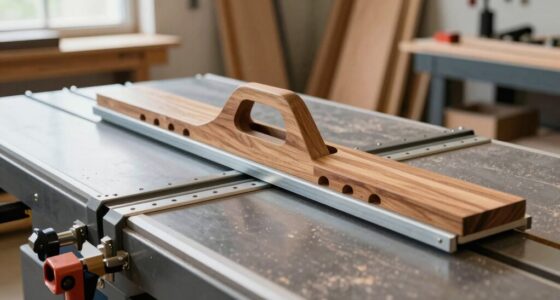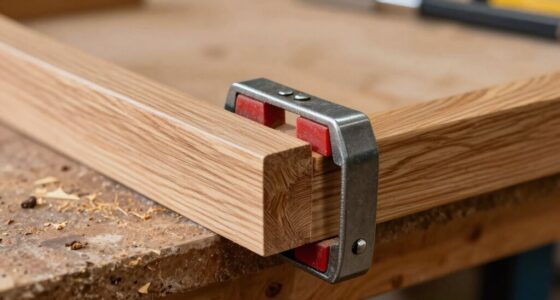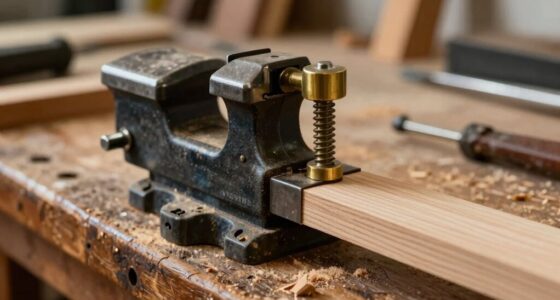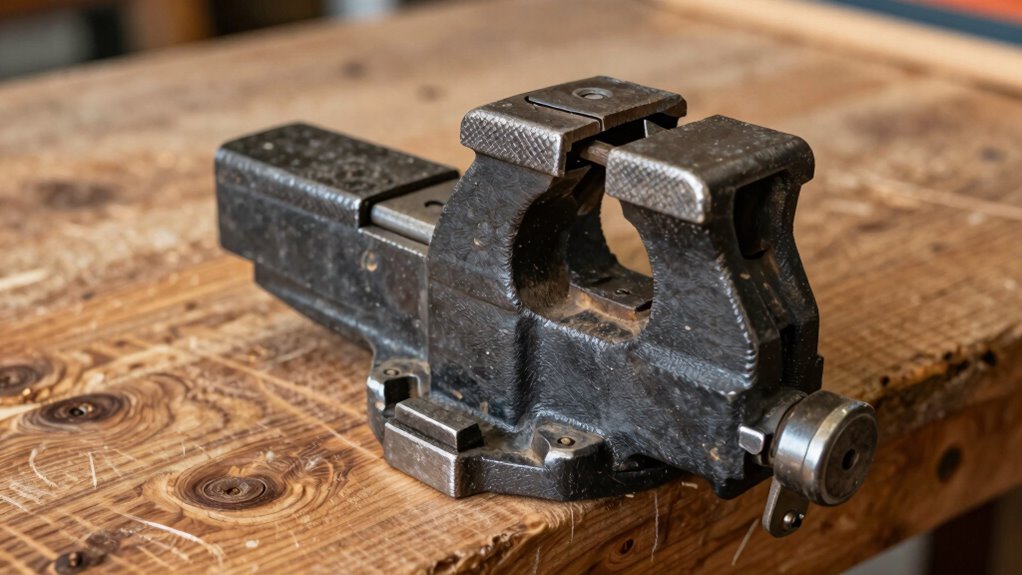

When choosing a bench vise, placement is more important than brand because it directly affects safety, control, and workflow. Proper positioning near the work edge and aligning with your project type allows you to clamp firmly and work efficiently. Correct placement also makes tasks easier and safer. By focusing on where you install your vise and how you clamp, you’ll improve your craftsmanship and durability. Keep exploring to discover how to optimize your vise setup even further.

Get business pricing on tools and workshop supplies
- Business-only prices and quantity discounts
- Tax-exempt purchasing
- Multiple users, one account, clear invoices
Key Takeaways
- Proper vise placement enhances control, safety, and workflow efficiency regardless of brand.
- Positioning near edges allows easier access and better stability during woodworking tasks.
- Correct placement aligns with project type, improving clamping effectiveness and work quality.
- Consistent maintenance and proper positioning extend vise lifespan and ensure reliable grip.
- Optimal placement reduces frustration and boosts productivity more than brand choice alone.

When choosing a bench vise, many woodworkers discover that placement on their workbench matters more than the brand they pick. It’s easy to assume that a top-tier brand guarantees better performance, but the real key to effective use lies in how and where you position the vise. Proper placement allows for ideal clamping techniques, giving you better control over your workpiece and the risk of slips or damage. Positioning the vise close to the edge of your workbench often makes tasks more manageable, providing easier access and more stability. Think about the types of projects you typically undertake and place the vise accordingly—whether that’s for carving, drilling, or assembly—to maximize efficiency. Additionally, understanding the fundamentals of vise operation can help you make better placement decisions that enhance your workflow. Regularly practicing these techniques ensures you get the most out of your tool, no matter its brand. Once you’ve got the placement sorted, focus on mastering clamping techniques. The way you tighten and secure your workpiece directly impacts the quality of your work and the safety of your operation. Use the entire jaw surface for even pressure, avoiding over-tightening, which can deform or damage delicate materials. Adjust the angle of your clamp to prevent slipping, and always check that your workpiece is held firmly without excessive force. Proper clamping techniques not only improve your work’s precision but also extend the life of your vise. Proper clamping techniques can also help prevent damage to your workpiece and increase efficiency. Remember that understanding proper maintenance practices can significantly prolong the lifespan and effectiveness of your vise. Implementing correct lubrication routines can prevent unnecessary wear and help maintain smooth operation over time. Well-maintained vises stay aligned and operate more efficiently, making your work safer and less frustrating. Additionally, ensuring proper alignment can prevent uneven wear and maintain the vise’s gripping power over time. Proper upkeep also prevents rust and corrosion, which can compromise the vise’s gripping power over time.
As an affiliate, we earn on qualifying purchases.
Frequently Asked Questions
How Do I Determine the Best Placement for My Bench Vise?
To determine the best placement for your bench vise, focus on proper vise positioning for ideal workshop ergonomics. Position it so you can work comfortably without overreaching or straining your back. Typically, mounting it near the edge of your workbench allows easy access and stability. Adjust height so your work aligns with your natural posture, ensuring efficiency and comfort during projects. Prioritize functionality over brand for a better woodworking experience.
What Safety Considerations Are Important When Installing a Bench Vise?
Before installing your bench vise, prioritize safety to avoid accidents. Make sure you use proper clamping techniques, securing the vise firmly to prevent shifting during use. Double-check that the mounting surface is sturdy and free of debris. Regular vise maintenance, like lubricating the screw and checking for wear, keeps it safe and functional. Always wear safety goggles and keep your hands clear during installation to protect yourself from unexpected slips or movements.
Can I Upgrade My Existing Bench Vise Easily?
Yes, upgrading your existing bench vise is straightforward. Start with regular vise maintenance, like cleaning and tightening bolts, to guarantee it functions well. You can also add vise accessories, such as jaw pads or swivel bases, to improve usability. Upgrading might involve replacing worn parts or upgrading to a model with better features, making your work safer and more efficient without needing a full replacement.
What Are Common Mistakes to Avoid When Installing a Bench Vise?
When installing a bench vise, avoid common mistakes like uneven drilling or improper alignment, as these can affect vise durability. Make certain you use the correct clamping techniques to secure it firmly, preventing movement during use. Double-check that the vise is level and tightly fastened to avoid stress on the mounting points. Proper installation ensures your vise stays durable and provides reliable grip, making your woodworking projects safer and more efficient.
How Does Bench Vise Placement Affect Workflow Efficiency?
Proper bench vise placement boosts your workflow efficiency by ensuring easy access and stability, reducing hand fatigue. Position the vise where you can work comfortably and see your project clearly. This placement also affects vise durability by minimizing unnecessary stress, especially if you consider material compatibility with your work surface. When your vise is well-placed, you work faster, safer, and with less wear on your tools and equipment.
As an affiliate, we earn on qualifying purchases.
Conclusion
Ultimately, understanding the importance of proper placement over brand preference empowers you to perfect your projects. By prioritizing position, you position yourself for precision, productivity, and professional results. Remember, the right location leverages leverage, lengthens lifespan, and leads to lasting satisfaction. So, select your spot with care, consider your workspace’s needs, and let your craftsmanship flourish. Because, in woodworking, wise placement works wonders—more than the brand ever could.
clamping techniques for woodworking
As an affiliate, we earn on qualifying purchases.
As an affiliate, we earn on qualifying purchases.
As an affiliate, we earn on qualifying purchases.
Fall yard work Picks
leaf blowers
As an affiliate, we earn on qualifying purchases.