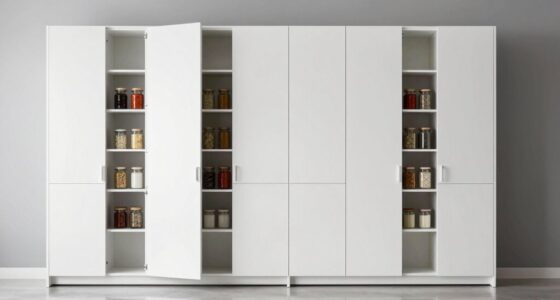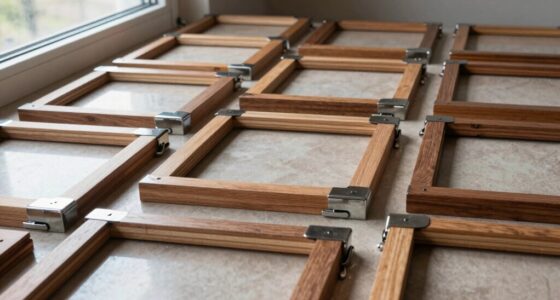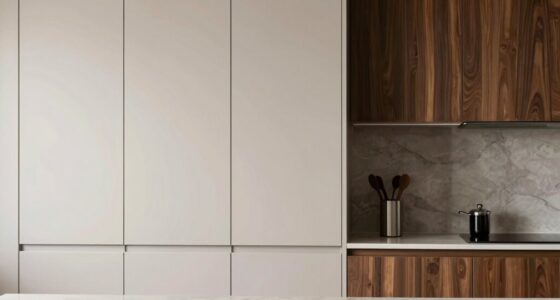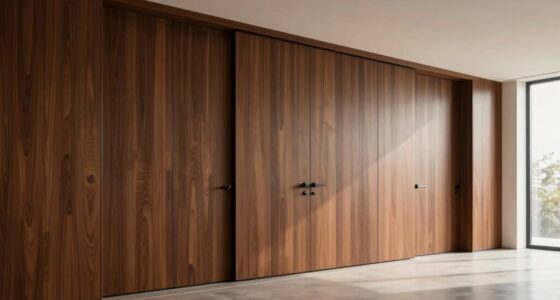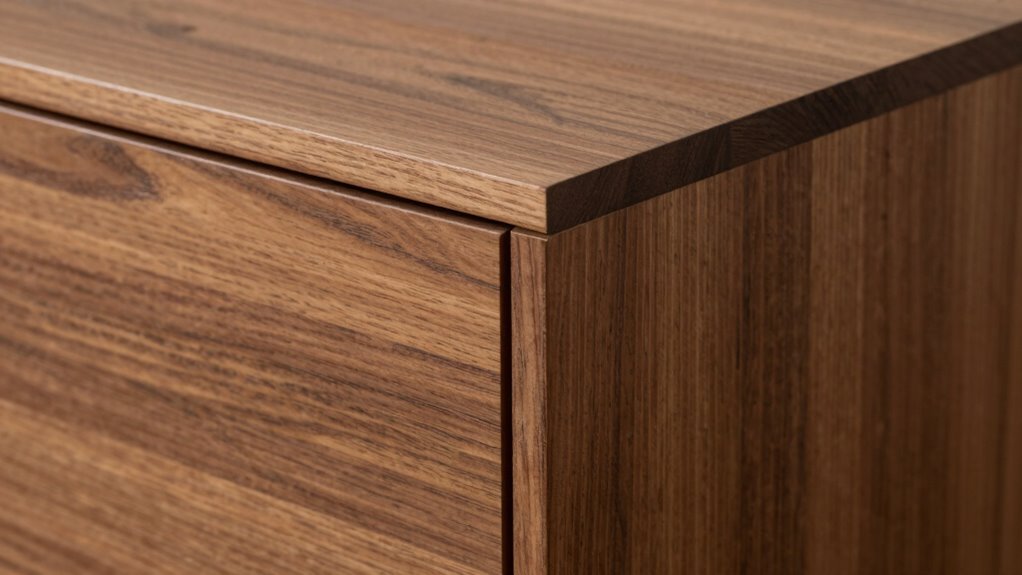

The thickness of cabinet back panels greatly impacts your entire build. Thicker panels provide better structural integrity, preventing issues like sagging or warping. They also enhance your cabinet’s overall aesthetic, giving a more substantial feel. While thinner panels can create a sleek look, they might compromise durability. You’ll need to reflect on how thickness affects installation, costs, and design coherence. If you’re curious about the specific benefits of each thickness, there’s more to uncover here.

Get business pricing on tools and workshop supplies
- Business-only prices and quantity discounts
- Tax-exempt purchasing
- Multiple users, one account, clear invoices
Key Takeaways
- Structural Integrity: Thicker back panels enhance overall cabinet strength, reducing the risk of sagging or warping over time.
- Installation Considerations: Thickness affects handling and may require adjustments in installation techniques for a secure fit.
- Cost-Benefit Analysis: While thicker materials may increase initial costs, their durability can justify the investment in the long run.
- Aesthetic Impact: Thicker panels offer a more substantial look, contributing to a professional finish that aligns with design goals.
- Design Cohesion: Proper thickness ensures alignment with side panels and shelves, enhancing the overall visual coherence of the cabinetry system.
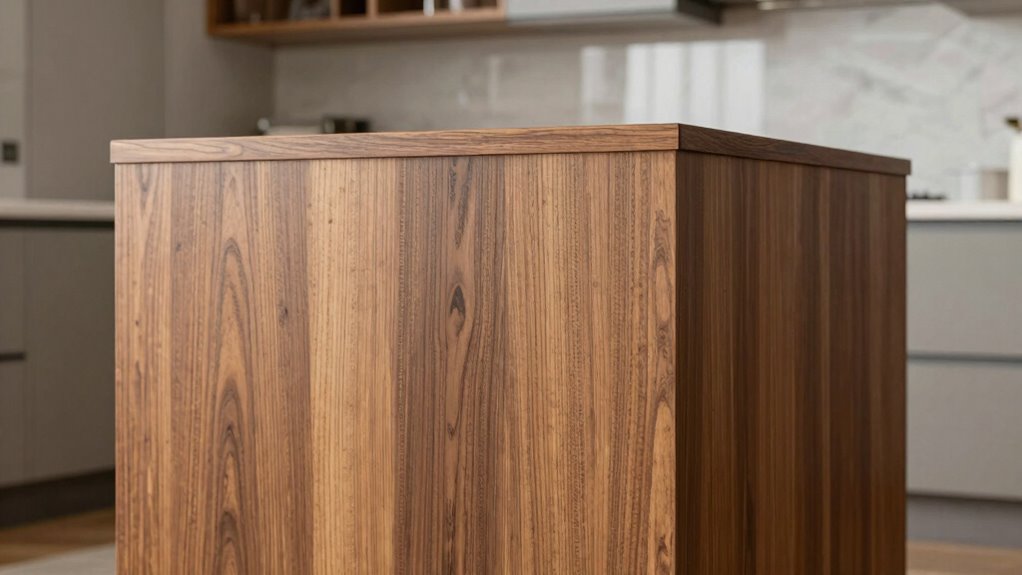
You’ll often find back panels made from a variety of materials, including plywood, MDF, and particleboard. Each of these options comes with its own set of advantages and disadvantages. For instance, plywood is known for its strength and resistance to warping, making it a solid choice for those who want a long-lasting cabinet. On the other hand, MDF is smoother and easier to paint, but it may not hold up as well under heavy loads. When it comes to panel installation, the thickness of the material you choose will dictate how easy or challenging the process is. Thinner panels might be easier to handle but could compromise the cabinet’s overall integrity. Additionally, the material properties of the back panel will influence its durability and suitability for your specific needs. Understanding how material thickness impacts the cabinet’s structural stability can help you make more informed decisions during your project. Moreover, considering the impact of thickness on overall cabinet strength can help prevent future issues such as sagging or warping. It’s also worth noting that the cost implications of thicker panels can influence your overall budget, especially for larger projects. You should also consider how the thickness affects the cabinet’s aesthetic appeal. A thicker back panel can create a more substantial look, giving your cabinets a professional finish. Meanwhile, thinner panels might give a sleeker appearance but could also make the cabinets feel less robust. If you’re aiming for a high-end look, investing in thicker back panel materials can make a noticeable difference. While you’re weighing your options, think about how the back panel integrates with the rest of your cabinetry. The thickness can influence how the back panel aligns with side panels and shelves, impacting the overall design. If you opt for a thicker material, you may need to adjust your panel installation techniques to guarantee everything fits seamlessly. In the end, paying attention to the thickness of cabinet back panels is more than just a minor detail; it’s a fundamental aspect of your kitchen’s functionality and style. By choosing the right back panel materials and understanding how thickness affects installation, you’ll create a sturdy, attractive cabinetry system that meets your needs and enhances your space. So don’t overlook this essential component—make certain you get it right!
As an affiliate, we earn on qualifying purchases.
Frequently Asked Questions
What Materials Are Commonly Used for Cabinet Back Panels?
You’ll commonly find plywood options, which offer strength and durability for cabinet back panels. MDF benefits include a smooth surface and ease of painting, making it a popular choice. If you’re looking for affordability, particleboard choices are lightweight and cost-effective, though less sturdy. For a modern touch, consider metal uses; they provide a sleek look and enhanced durability. Each material has its perks, so choose based on your project’s needs.
How Do Cabinet Back Panels Affect Overall Cabinet Weight?
Think of cabinet back panels like the spine in a body; they play an essential role in weight distribution and structural integrity. Thicker panels add weight, which can enhance stability but may also make the cabinet harder to move. Conversely, thinner panels lighten the load, but might compromise sturdiness. So, when you choose your back panel, you’re not just considering aesthetics; you’re also affecting how your entire cabinet performs regarding weight.
Can Back Panel Thickness Influence Cabinet Assembly Time?
Yes, back panel thickness can definitely influence cabinet assembly time. Thicker panels usually require more precise measurements and adjustments, which can slow you down. You’ll face installation challenges, like ensuring proper alignment and support. On the flip side, thinner panels might speed up the process, but they could compromise stability. So, balancing thickness with your assembly efficiency is key to a successful and timely cabinet build.
Are Thicker Back Panels More Resistant to Moisture?
Think of thicker back panels as a sturdy shield against moisture. They’re generally more resistant, offering better durability compared to their thinner counterparts. When you compare durability, thicker panels often withstand humidity and spills more effectively, reducing the risk of warping or damage over time. So, if you’re considering moisture resistance in your cabinet build, opting for thicker back panels is a smart choice that pays off in the long run.
Do Cabinet Back Panels Come in Standard Sizes?
Yes, cabinet back panels do come in standard sizes, but you’ll find panel variations depending on the manufacturer and style. Common dimensions include ¼-inch and ½-inch thicknesses, typically sized to fit standard cabinet frames. However, if you’re customizing your cabinets, you might encounter different sizes that suit specific needs. Always double-check the dimensions to confirm a proper fit for your project and maintain the overall integrity of your cabinet design.
As an affiliate, we earn on qualifying purchases.
Conclusion
In the grand scheme of cabinetry, the thickness of back panels isn’t just a minor detail—it’s the unsung hero of your entire build! Choosing the right thickness can transform your cabinets from flimsy to fortress-like, making them a robust centerpiece in your home. Don’t underestimate this critical aspect; it’s the difference between a wobbly mess and a stunning masterpiece. So, next time you’re designing, remember: thickness is the powerhouse that holds everything together!
As an affiliate, we earn on qualifying purchases.
As an affiliate, we earn on qualifying purchases.
Fall Picks
fall essentials
As an affiliate, we earn on qualifying purchases.