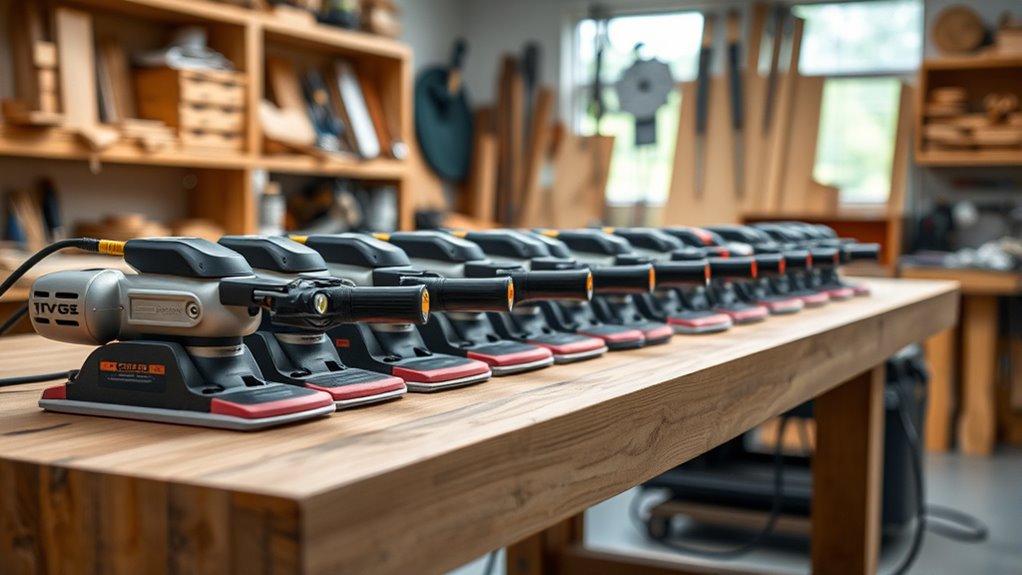
Choosing an edge sander for professional woodworking means balancing power, versatility, and precision. The Milescraft 1621 Edge Sander stands out for its ability to sand both edges simultaneously, saving time on repetitive tasks. The Makita BO3710 offers a smooth finish with high speed and dust collection, perfect for detailed finishing. Meanwhile, the Woodskil Variable Speed Oscillating Sander provides adjustable speed and dual modes for complex projects. Each has its tradeoffs: manual operation versus motorized power, size and workspace needs, and specific use cases. Let’s explore how they compare for your woodworking needs.

Get business pricing on tools and workshop supplies
- Business-only prices and quantity discounts
- Tax-exempt purchasing
- Multiple users, one account, clear invoices
Complete the kit


Key Takeaways
- The Milescraft excels at quick, simultaneous edge sanding but is manual and limited in thickness.
- The Makita offers high-speed finishing with effective dust collection, ideal for detailed work but less versatile.
- The Woodskil provides adjustable speed and dual modes, suited for complex and detailed projects, though it requires ample space.
- The JET oscillating sander shines in precision bevel and angle work but is heavy and needs a larger workspace.
- Choosing depends on whether you prioritize speed, versatility, or precision in your woodworking projects.
| Milescraft 1621 Edge Sander |  | Best for Time-Saving Dual Edge Sanding | Grit Type: Rough | Power Source: Hand Powered | Amperage Capacity: 2 A | VIEW ON AMAZON | See Our Full Breakdown |
| Makita Sheet Finishing Sander, 1/3 In, 1.7 A, Teal (BO3710) |  | Best for High-Speed Finishing and Dust Control | Size: 1/3 inch | Current: 1.7 A | Speed: 11,000 OPM | VIEW ON AMAZON | See Our Full Breakdown |
| Woodskil Variable Speed Oscillating Belt and Spindle Sander |  | Best for Versatile, Detailed Projects | Grit Type: Fine | Voltage: 120 volts | Power Source: Corded Electric | VIEW ON AMAZON | See Our Full Breakdown |
| JET Black 6″ x 89″ Oscillating Edge Sander |  | Best for Precision and Bevels | Surface Material: Cast iron | Size: 6″ x 89″ | Motor Power: 1-3/4 HP | VIEW ON AMAZON | See Our Full Breakdown |
| edge sander for professional woodworking | Grit Type | Power Source | Amperage Capacity | Size |
|---|---|---|---|---|
| Milescraft 1621 Edge Sander | Rough | Hand Powered | 2 A | — |
| Makita Sheet Finishing Sander | — | — | — | 1/3 inch |
| Woodskil Variable Speed Oscill | Fine | Corded Electric | 5 A | — |
| JET Black 6" x 89" Oscillating | — | — | — | 6" x 89" |
More Details on Our Top Picks
Milescraft 1621 Edge Sander
The Milescraft 1621 Edge Sander stands out for its ability to sand both edges of a board simultaneously, significantly reducing finishing time. Its ergonomic design ensures comfortable handling over extended periods, and compatibility with standard 5-inch sanding discs adds versatility. However, its manual operation means it requires more physical effort and is limited to boards ¼ to 1-1/2 inches thick. Compared to motorized options, it’s less suited for high-volume or heavily repetitive tasks, but it excels in small to medium projects where speed and precision are less critical.
Pros:- Saves time by sanding both edges simultaneously
- Ergonomic and comfortable to use
- Compatible with standard 5-inch discs
- Versatile for various projects
Cons:- Limited to boards ¼ to 1-1/2 inches thick
- Requires manual effort, no motorized power
Best for: Woodworkers who need quick, efficient edge finishing without motorized features
Not ideal for: Professionals handling large-scale production or requiring motorized operation
- Grit Type:Rough
- Power Source:Hand Powered
- Amperage Capacity:2 A
- Grit Number:150
- Shape:Handheld Tool
Our verdict“A solid choice for small workshops that value manual efficiency over motorized speed.”
Makita Sheet Finishing Sander, 1/3 In, 1.7 A, Teal (BO3710)
The Makita BO3710 is designed for smooth, high-quality finishing with an 11,000 OPM motor and an ergonomic rubberized grip. Its built-in dust collection keeps your workspace cleaner, and the lightweight design reduces fatigue during extended use. While it’s excellent for detailed finishing work, it’s less suitable for heavy material removal or shaping tasks. The absence of variable speed control limits its flexibility, making it ideal for consistent, finish-level sanding rather than aggressive material removal.
Pros:- Ergonomic grip for comfort
- High sanding speed for efficient finishing
- Effective dust collection system
- Lightweight and easy to maneuver
Cons:- Limited to finishing tasks
- No variable speed control
Best for: Finish carpenters and woodworkers focused on high-quality surface prep
Not ideal for: Heavy stock removal or complex shaping tasks
- Size:1/3 inch
- Current:1.7 A
- Speed:11,000 OPM
- Color:Teal
Our verdict“An excellent choice for those prioritizing smooth finishes and dust management in tight, detailed spaces.”
Woodskil Variable Speed Oscillating Belt and Spindle Sander
The Woodskil Oscillating Sander offers adjustable speeds from 1000-1800 RPM, making it adaptable to various materials and detailed shaping. Its dual sanding modes—belt and spindle—allow for complex curves, flat surfaces, and finishing tasks. The large 4×24-inch belt and multiple drum sleeves expand its versatility, but its size and 120V power limit its use in smaller shops or those with higher voltage supplies. This model is better suited for shops requiring a flexible tool for multiple project types, though it demands more space and setup time.
Pros:- Versatile dual sanding modes
- Adjustable speed for various materials
- Includes multiple drum sleeves and large belt
- Efficient dust collection
Cons:- Relatively large footprint
- Limited to 120V outlets
- No mention of additional accessories
Best for: Woodworkers who need adjustable, multi-mode sanding for complex projects
Not ideal for: Limited workspace environments or those needing compact tools
- Grit Type:Fine
- Voltage:120 volts
- Power Source:Corded Electric
- Amperage Capacity:5 A
- Maximum Rotational Speed:1800 rpm
- Item Dimensions:13.8″L x 17.3″W x 18.5″H
Our verdict“Ideal for detailed, complex projects where flexibility and adjustable speed are priorities.”
JET Black 6″ x 89″ Oscillating Edge Sander
The JET Black Oscillating Edge Sander combines a durable cast iron surface with a tilting head for bevels and angles, making it excellent for precise, detailed edging. Its adjustable support table offers high accuracy for contour sanding, and the 4-inch dust port helps keep your workspace clear. However, its weight and size demand a spacious workshop, and its 115/230V compatibility means it’s less flexible in some locations. This model is best for professionals needing fine control and angle versatility, but it’s less suited for smaller shops or quick tasks.
Pros:- Cast iron surface reduces friction
- Tilting head for bevels and angles
- Adjustable support table for precision
- Easy belt tracking and adjustments
Cons:- Heavy and requires ample space
- Limited to 115/230V power supply
Best for: Precision edging and bevel work in larger professional workshops
Not ideal for: Limited space environments or portable use
- Surface Material:Cast iron
- Size:6″ x 89″
- Motor Power:1-3/4 HP
- Voltage:115/230V
- Phase:1Ph
- Tilting Head:90 degrees
- Dust Port:4-inch
Our verdict“Best suited for detailed, angle-specific sanding in well-equipped, larger workshops.”

How We Picked
Our selection process focused on key factors relevant to professional woodworking: power and performance, versatility, ease of use, build quality, and dust management. We prioritized tools with features that enhance efficiency for detailed and repetitive tasks, such as dual sanding modes or high-speed motors. We also considered the balance between manual and motorized options, ensuring each product offers distinct advantages for different types of professional workflows. Finally, we evaluated user reviews, durability, and value to recommend tools that truly enhance a woodworking shop’s capabilities.
| edge sander for professional woodworking | Grit Type | Power Source |
|---|---|---|
| Milescraft 1621 Edge Sander | Rough | Hand Powered |
| Makita Sheet Finishing Sander | — | — |
| Woodskil Variable Speed Oscill | Fine | Corded Electric |
| JET Black 6" x 89" Oscillating | — | — |
Factors to Consider When Choosing Edge Sander For Professional Woodworking
When selecting an edge sander for professional woodworking, consider how you plan to use the tool. Are you looking for speed and efficiency, versatility for complex projects, or precision for detailed finishing? Your workspace size, power requirements, and project scope will influence the best choice. The right sander should balance performance with ease of use, durability, and dust management to keep your workshop productive and clean.
Type of Sander
Manual edge sanders like the Milescraft are ideal for small shops or occasional use, offering simplicity and portability. Motorized options, such as the Makita or JET, excel in speed, finish quality, and versatility, especially for larger or more detailed projects. Oscillating belt and spindle sanders provide multi-mode functionality for complex shaping, making them suitable for professional shops needing flexibility.
Power and Speed
For high-speed finishing, look for tools like the Makita with OPM ratings above 10,000. If you need adjustable speeds for delicate work, models like the Woodskil with variable RPM are better suited. Manual sanders rely on your effort but can be effective for quick edge work, especially in small batches.
Size and Workspace
Compact models suit smaller workshops or portable setups. Larger, heavier machines like the JET are better for dedicated workshop stations but require more space and setup time. Ensure your workspace can accommodate the tool’s size, especially for models with large tables or oscillating features.
Dust Collection and Maintenance
Effective dust collection is vital for maintaining a clean shop and health safety. Many models include built-in systems or ports for vacuum attachment. Durability and ease of maintenance, such as cast iron surfaces or simple belt tracking, also influence long-term performance.
Frequently Asked Questions
What is the main advantage of manual edge sanders?
Manual edge sanders like the Milescraft 1621 excel in simplicity, portability, and cost-effectiveness, making them suitable for quick, light-duty tasks or small-scale projects without the need for power sources. They are also less maintenance-intensive, but require more physical effort and are limited to lighter work within specific thicknesses.
How important is dust collection on an edge sander?
Dust collection plays a significant role in maintaining a clean and safe workshop environment. Efficient systems reduce airborne dust, improve visibility, and prolong tool life. Many professional models come with built-in dust ports or systems, which are highly recommended for sustained work and health reasons.
Should I prioritize speed or versatility in an edge sander?
If your work involves finishing large batches or requires quick turnaround, high-speed models like the Makita are preferable. For shops doing complex shaping or detailed work, a versatile tool like the Woodskil with adjustable speed and dual modes offers the flexibility needed to handle different materials and projects efficiently.
Are oscillating edge sanders worth the investment?
Oscillating edge sanders, such as the JET or Woodskil, deliver precise, consistent results for bevels, angles, and detailed shaping. Their ability to oscillate and tilt provides control that’s hard to match with simpler tools. However, they tend to be larger and more expensive, making them best suited for professional shops with dedicated space and specific project needs.
What should I consider regarding power supply and workspace?
Ensure your workshop’s voltage matches the tool’s requirements, especially for larger, motorized sanders. Also, consider the footprint—larger machines need ample space for setup, operation, and safety. For smaller workshops, compact models or manual options may be more practical, even if they lack some features.
Conclusion
For small shops or occasional use, the Milescraft manual sander offers a budget-friendly, efficient solution. Professional finishers focusing on surface quality should consider the Makita BO3710 for its speed and dust control. Those needing complex shaping and precision angles will find the JET oscillating sander indispensable. Ultimately, your choice depends on your specific project demands, workspace size, and whether speed, versatility, or precision takes priority.
Fall Picks

Philips Hue Essential Starter Kit – Bridge and 4 E26 Smart Bulbs
As an affiliate, we earn on qualifying purchases.