When designing with frame-and-panel construction, you should allow for the natural expansion and contraction of wood by leaving space between the panel and frame or using flexible joinery. Grain orientation and material choice are key to controlling movement. Properly designed expansion joints help prevent warping or cracking over time. If you follow these principles, your furniture will stay durable and stable longer. To discover more about applying these rules effectively, keep exploring the details.
Key Takeaways
- Use a flexible frame that allows the panel to expand and contract without causing stress or damage.
- Incorporate expansion joints or gaps in the frame to accommodate wood movement over time.
- Ensure proper grain orientation, with panels running perpendicular to the frame to minimize warping.
- Design with floating or inset panels that are not rigidly fixed, enabling natural movement.
- Apply breathable, flexible finishes to help regulate moisture exchange and reduce internal stress.
As an affiliate, we earn on qualifying purchases.
What Is Wood Movement and Why Does It Matter?
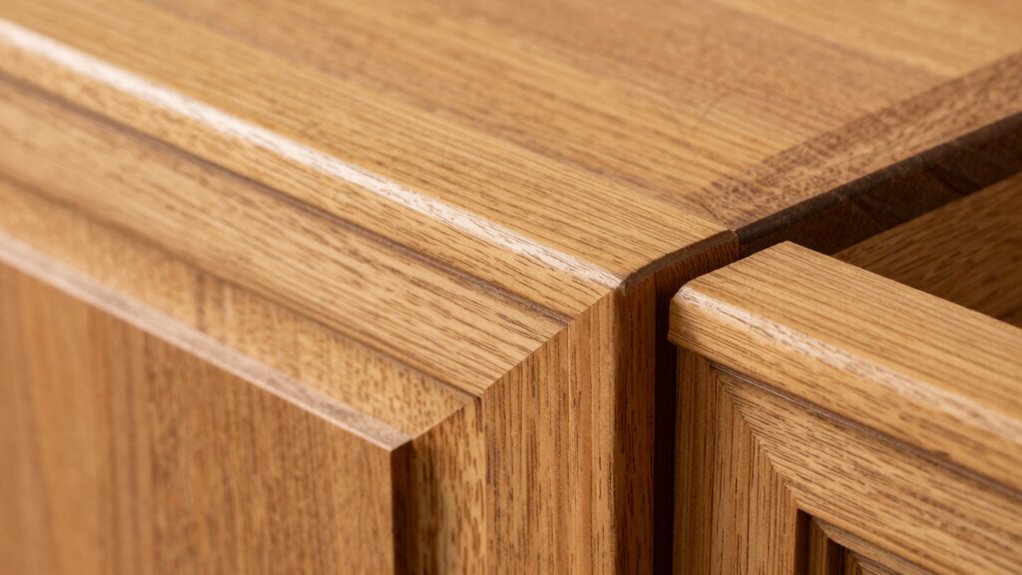
Understanding wood movement is essential because wood naturally expands and contracts with changes in humidity and temperature. This movement depends heavily on grain orientation, which determines whether the wood shrinks or swells across or along its surface. When moisture content rises, wood absorbs water, causing it to swell; when it drops, the wood releases water and contracts. If you don’t account for these shifts, your projects could develop gaps, warping, or cracks over time. Recognizing how grain orientation affects movement helps you anticipate and manage these changes. By understanding that moisture content drives expansion and contraction, you can design with wood’s natural tendencies in mind, ensuring your finished work remains stable and durable despite environmental fluctuations. Proper grain alignment plays a crucial role in minimizing movement-related issues in woodworking projects. Additionally, understanding wood movement enables craftsmen to select appropriate joinery techniques that accommodate expansion and contraction effectively.
flexible frame and panel construction kit
As an affiliate, we earn on qualifying purchases.
As an affiliate, we earn on qualifying purchases.
How Frame-and-Panel Construction Controls Wood Expansion and Contraction
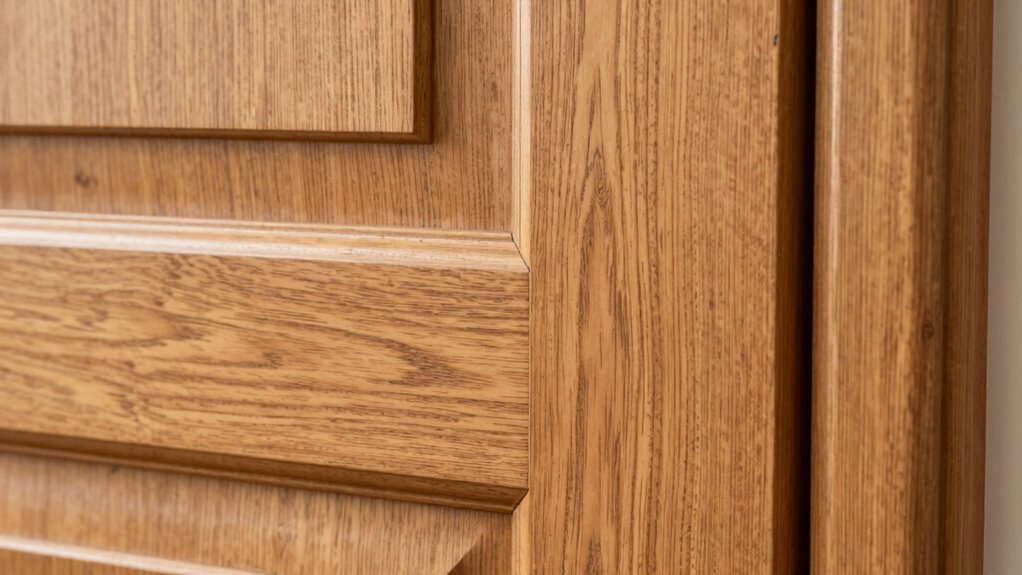
Frame-and-panel construction manages wood movement by allowing the panel to expand and contract within a flexible frame. Expansion joints improve this system’s effectiveness, preventing warping or cracking. To guarantee durability, you need to contemplate material compatibility and design the frame to accommodate natural wood behavior. Incorporating proper joint design enhances the system’s ability to handle wood movement effectively. Additionally, understanding wood behavior in different environments can help in selecting appropriate materials and construction methods for long-lasting results. Recognizing moisture content variation is essential for predicting how wood will respond over time and adjusting design accordingly, ensuring stability across seasons. Being aware of climate influence on wood can further optimize the design to adapt to seasonal changes.
Expansion Joints Effectiveness
Have you ever wondered how traditional frame-and-panel construction manages wood’s natural expansion and contraction? Expansion joints play a vital role in this process by providing necessary movement allowances. Their effectiveness depends on properly designed joint gaps that accommodate wood’s shifts without causing stress. Incorporating Free Floating techniques can further enhance the movement management by allowing panels to shift independently. To guarantee ideal performance: 1. Maintain consistent joint gaps aligned with expected seasonal movement. 2. Use flexible materials or design features that absorb expansion and contraction. 3. Regularly check for tightness or gaps that might have shifted over time. Additionally, understanding wood movement characteristics can help in designing more durable and stable structures. Recognizing timber properties is essential for predicting how wood responds to environmental changes and ensuring long-term stability. Being aware of moisture content fluctuations helps in planning effective joint placement and material choice for longevity. Moreover, selecting appropriate expansion joint materials can significantly improve the longevity and performance of wood structures.
Panel Frame Flexibility
Panel frame adaptability is a key factor in managing wood’s natural movements within traditional construction. By allowing the frame to adapt to expansion and contraction, you prevent warping or splitting. Grain orientation plays a vital role: aligning the grain vertically or horizontally influences how the panel moves. Thicker panels tend to resist movement, so adjusting panel thickness helps control flexibility. The table below shows how grain orientation and panel thickness affect flexibility:
| Grain Orientation | Panel Thickness | Flexibility Effect |
|---|---|---|
| Vertical | Thin | More movement |
| Horizontal | Thick | Less movement |
| Mixed | Varies | Balanced expansion/contraction |
Material Compatibility Considerations
To effectively manage wood’s natural expansion and contraction, selecting compatible materials for the frame and panel is essential. Proper material compatibility minimizes stresses caused by differing movement rates. First, consider grain orientation; aligning grains in the same direction helps ensure uniform expansion. Second, verify adhesive compatibility, as some glues can cause uneven movement or induce stress if incompatible. Third, choose materials with similar moisture content and stability to prevent warping or gaps. Using consistent grain orientation reduces differential movement, while compatible adhesives allow for flexible bonding that accommodates expansion. By carefully matching these factors, you create a stable, durable frame-and-panel assembly that gracefully adapts to seasonal changes without compromising integrity.
wood movement expansion gap tools
As an affiliate, we earn on qualifying purchases.
As an affiliate, we earn on qualifying purchases.
What Factors Affect How Wood Moves in Your Projects
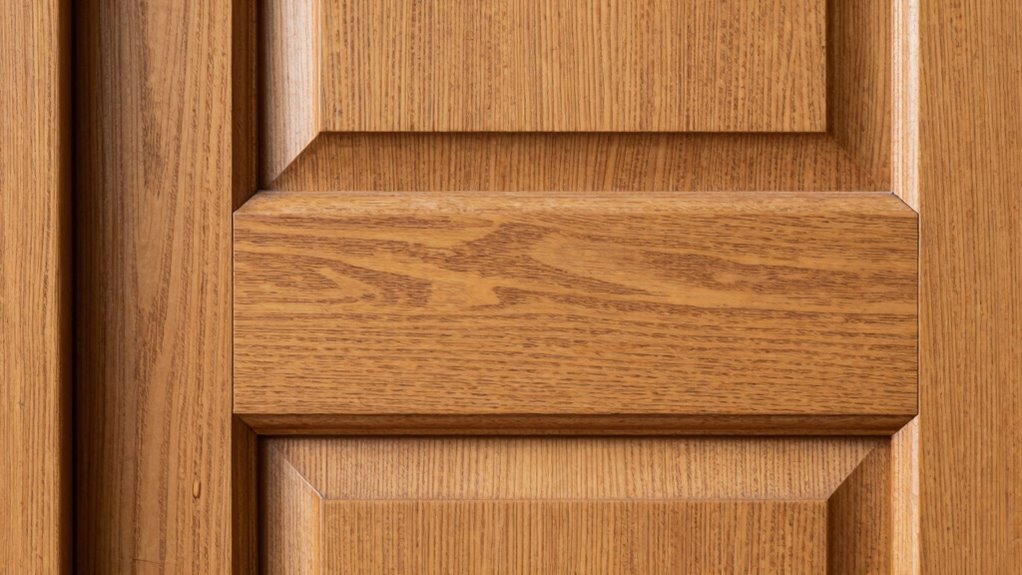
Understanding what influences wood movement helps you make smarter design choices. Your project’s results depend on the wood species you select and the environmental conditions it faces. Recognizing these factors lets you plan for expansion and contraction effectively. Additionally, wood grain orientation plays a significant role in how wood responds to moisture changes. Being aware of quality assessment can help you select wood with better stability and less tendency to warp over time. Considering moisture content during storage and installation is also crucial for minimizing movement after construction. Properly managing wood acclimation can significantly reduce issues related to moisture fluctuations. Incorporating eco-friendly accommodations in your project design can further enhance sustainability and reduce environmental impact.
Wood Species Characteristics
Have you ever wondered why different types of wood react differently to changes in humidity and temperature? It all comes down to wood species characteristics. Some species have tighter grain patterns, which reduce movement, while others with more open grains expand and contract more noticeably. Additionally, the natural color variations within a species can indicate differences in density and moisture content, affecting how the wood responds over time.
Consider these factors:
- Grain patterns—tight or open influence movement and stability.
- Density—denser woods tend to move less.
- Color variations—may signal differences in moisture absorption and expansion.
Knowing these traits helps you select the right wood for your project, minimizing warping, cracking, or other issues caused by wood movement.
Environmental Conditions Factors
The environment surrounding your project plays a significant role in how wood responds over time. Humidity fluctuations cause wood to expand or contract as moisture levels change, leading to potential warping or cracking. Sunlight exposure also impacts wood movement; prolonged direct sunlight can raise surface temperatures and cause uneven expansion. These environmental factors can create stress within your project if not properly managed. To minimize issues, maintain stable indoor humidity levels and limit direct sunlight exposure whenever possible. Using protective finishes or coverings can also help regulate moisture exchange and shield wood from sunlight. Understanding how humidity fluctuations and sunlight exposure influence wood movement allows you to design more durable, stable furniture and structures that resist the effects of environmental changes. Additionally, selecting wood species with favorable dimensional stability can reduce sensitivity to these environmental factors.

General Tools MMD4E Moisture Meter for Wood, Walls & Water Leak Detection
- Humidity Sensor: Detects moisture levels for mold prevention
- Water Leak Detection: Identifies moisture in wood and drywall
- Moisture Reader: Backlit LCD with large digits for easy reading
As an affiliate, we earn on qualifying purchases.
As an affiliate, we earn on qualifying purchases.
Best Practices for Designing Durable Frame-and-Panel Furniture
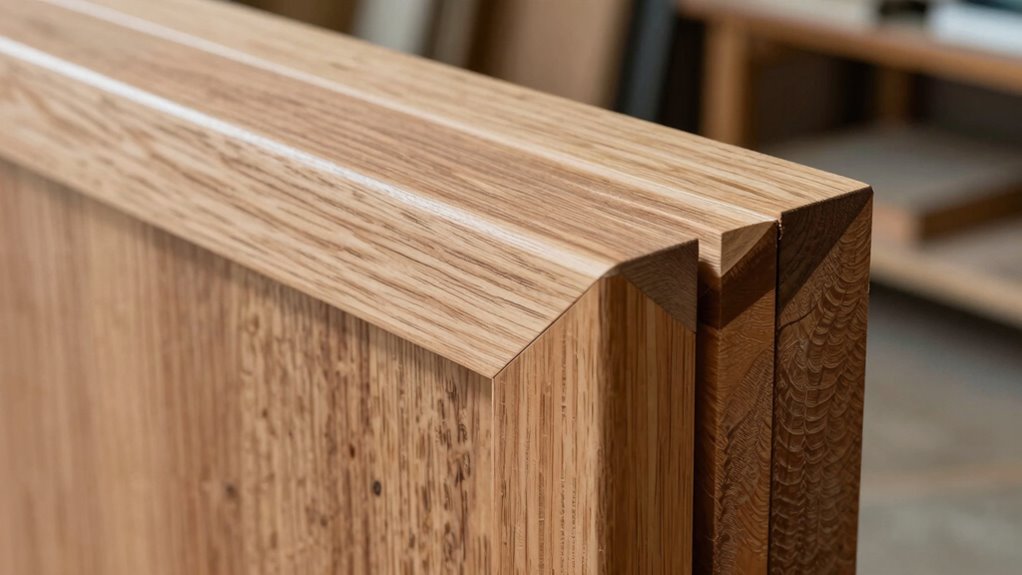
Designing durable frame-and-panel furniture requires careful attention to how wood naturally moves with changes in humidity and temperature. To guarantee longevity, focus on grain orientation, which influences how the wood expands and contracts. Properly aligned grain minimizes warping and cracking over time. Additionally, prioritize finish compatibility; select finishes that can accommodate wood movement without cracking or peeling. Here are best practices to follow:
- Orient the grain so it runs parallel to the longest dimension, reducing stress from expansion.
- Use flexible, breathable finishes that permit movement and prevent cracking.
- Incorporate proper joinery techniques, like floating panels, to allow natural movement without damage.
- Consider wood behavior and ambient-light conditions to ensure your furniture complements your living space’s adaptability and durability.
- Understanding environmental factors helps in selecting the right materials and finishes for your furniture, ensuring it withstands environmental changes over time.
Implementing these strategies will result in furniture that withstands environmental changes while maintaining its aesthetic integrity.
Common Mistakes That Lead to Warping and How to Avoid Them
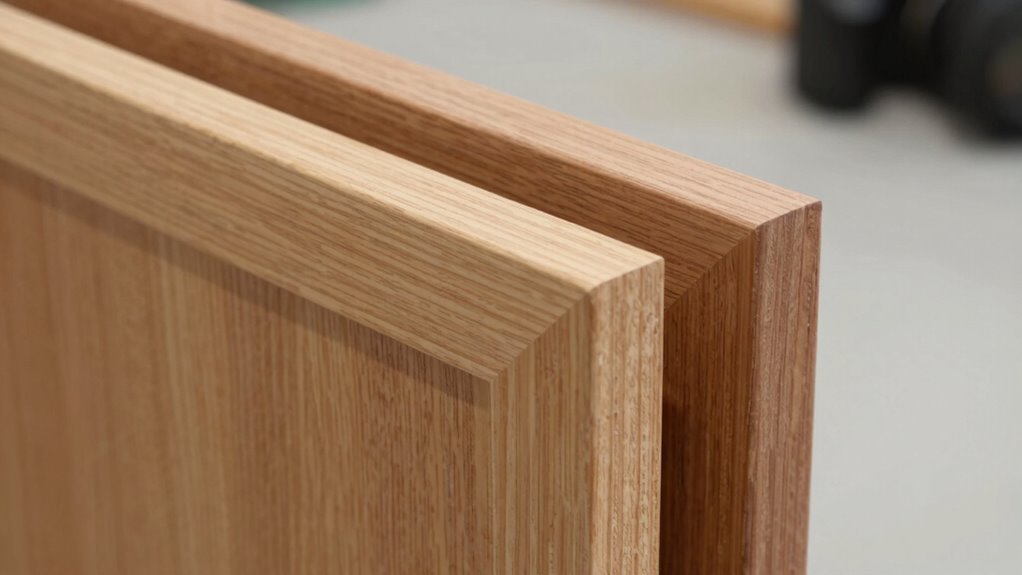
Many common mistakes in woodworking can cause furniture to warp over time, often resulting from neglecting how wood reacts to environmental changes. One mistake is misaligning grain orientation, which can lead to uneven expansion and contraction. When the grain runs improperly, wood panels may warp as they respond differently to moisture shifts. Additionally, improper finish application can trap moisture or inhibit wood movement, increasing warping risk. Applying finish unevenly or sealing all sides without allowing for natural expansion restricts the wood’s ability to breathe. To avoid these issues, pay close attention to grain orientation during assembly and ensure your finish is applied evenly and appropriately. Proper planning and application help your furniture handle environmental fluctuations and reduce warping over time. Understanding wood movement is essential for creating durable, stable furniture that maintains its shape despite changing conditions. Being aware of moisture content and its fluctuations can further aid in preventing warping and maintaining long-term stability. Moreover, incorporating indigenous wellness principles such as respecting natural materials and processes can inspire more sustainable and harmonious woodworking practices that enhance the longevity of your furniture.
Tips for Maintaining and Adjusting Wood Furniture Over Time
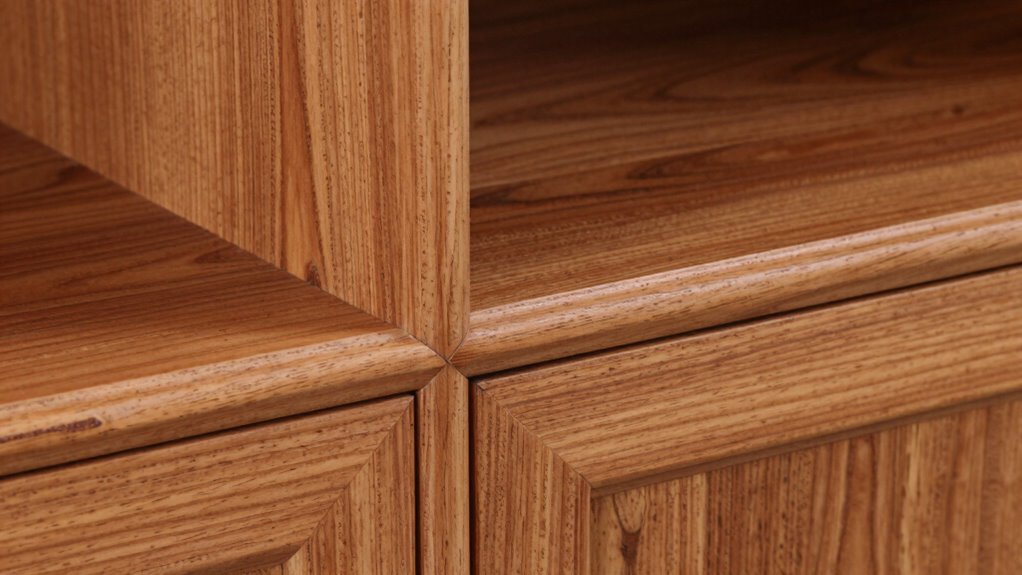
Regular maintenance and adjustments can keep your wood furniture looking great and functioning properly for years. To manage wood movement effectively, perform routine inspections and address issues promptly. When adjusting your furniture, consider these tips:
- Check for loose joints or hardware and tighten as needed to accommodate seasonal wood movement.
- Adjust doors and drawers to ensure smooth operation, especially after significant humidity changes.
- Use gentle, even pressure when making furniture adjustments to prevent stressing the wood and causing damage.
Frequently Asked Questions
How Can I Predict Wood Movement in My Specific Climate?
To predict wood movement in your climate, you should monitor climate variation and humidity fluctuations regularly. Use a hygrometer to track humidity levels and note seasonal changes. Consider your local weather patterns, as higher humidity causes expansion while lower humidity leads to contraction. By understanding these fluctuations, you can adjust your woodworking techniques, such as allowing for expansion gaps, ensuring your projects withstand seasonal shifts without warping or cracking.
Which Wood Species Are Most Stable for Frame-And-Panel Designs?
Aren’t you looking for wood that resists warping over time? Hardwoods like quartersawn oak, cherry, and maple are your best bets because they offer excellent grain stability and consistent movement. These species are less prone to expansion and contraction, making them ideal for frame-and-panel designs. When you emphasize species selection, you guarantee your project remains durable and beautiful, even as environmental conditions change.
How Do Finish Types Influence Wood Movement and Stability?
Finish types and surface treatments considerably influence wood movement and stability. You should choose finishes that allow the wood to breathe, like oil or wax, which help minimize cracking and warping. Avoid thick or plastic-based finishes that trap moisture. Properly applied surface treatments protect the wood from moisture fluctuations, maintaining stability. Always consider how your selected finish interacts with the wood’s natural movement to ensure your piece remains durable and beautiful over time.
Can Engineered Wood Products Reduce Issues Related to Movement?
Imagine a sturdy bridge spanning unpredictable waters—that’s what engineered wood products do for your projects. They reduce issues related to movement by offering enhanced stability. Using laminate alternatives and veneer stability, engineered woods resist expansion and contraction better than solid wood, making your furniture more durable and consistent. You gain peace of mind knowing that your designs remain beautiful and functional, even with seasonal changes and environmental shifts.
What Tools Are Best for Measuring Wood Expansion During Construction?
You should use a high-quality caliper for precise measurement of wood expansion, ensuring accuracy in small variations. A moisture meter is essential for evaluating wood moisture content, which directly influences expansion. Regularly check your measurements during construction to monitor movement, and trust caliper accuracy for detailed readings. Combining these tools helps you effectively track wood movement, allowing for adjustments and better craftsmanship throughout your project.
Conclusion
By understanding wood movement and applying proper frame-and-panel techniques, you set your projects up for a long life. It’s funny how a simple design choice can prevent warping or cracking—almost like the wood and your craftsmanship are in sync. Keep these tips in mind, and you’ll notice your furniture aging gracefully, just like a good story that gets better with time. After all, when you respect nature’s rhythm, your work becomes truly timeless.