To make your chisel feel “new,” focus on establishing the right sharpening angle. Generally, angles between 25-30° work well for most tasks, balancing sharpness and durability. Use a honing guide to keep the angle consistent during sharpening, and regularly check for nicks or dull spots. Proper technique and tool maintenance help preserve that keen edge. Keep going, and you’ll discover how to fine-tune this angle for peak performance and long-lasting results.
Key Takeaways
- The optimal sharpening angle varies: 15-20° for fine carving, 25-30° for general tasks, and 30-35° for heavy-duty work.
- Maintaining a consistent angle during sharpening ensures a sharp, durable edge that feels “new” and effective.
- Using a honing guide helps preserve the correct bevel angle, improving edge precision and longevity.
- Proper angle setting reduces dullness and nicks, restoring the chisel’s cutting performance to near-new condition.
- Regular, consistent sharpening at the correct angle keeps your chisel feeling sharp and performing like new.

Chisel Sharpening Jig, Wood Honing Guide for Chisels and Planes Width 0.1" to 2.8" with Sharpening Angle Fixture, Angle Gauge from 10° to 45°(With 2 Sharpening Stones)
For Accurate Honing: This chisel sharpening kit consists of a sharpening guide, a sharpening stone, a sharpening angle…
As an affiliate, we earn on qualifying purchases.
As an affiliate, we earn on qualifying purchases.
Why Your Chisel’s Sharpening Angle Matters
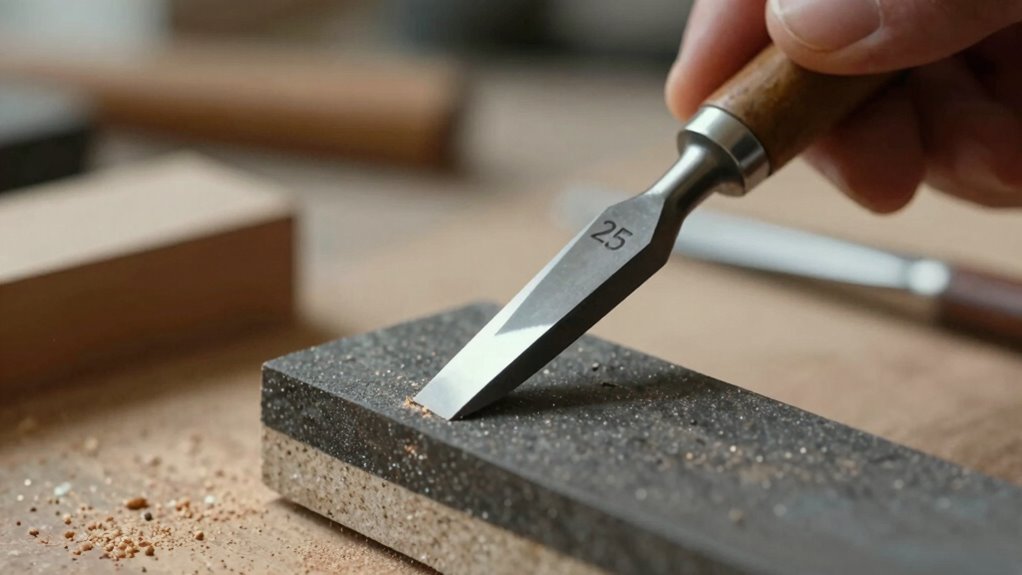
The sharpening angle of your chisel directly affects its cutting performance and durability. When you choose the right angle, you optimize blade geometry, ensuring the edge slices cleanly without excessive force. A steeper angle creates a more durable edge, reducing dulling from heavy use, but may require more effort to cut soft wood. Conversely, a shallower angle offers a sharper edge for fine detail work but wears down quickly, decreasing edge durability. Knowing how to balance these factors is key to maintaining your chisel’s effectiveness. The correct angle enhances overall performance, helping you achieve cleaner cuts and longer-lasting sharpness. Additionally, understanding energy-efficient sharpening methods can reduce your tools’ environmental impact and improve overall sustainability. For example, selecting the appropriate sharpening technique can also influence the precision of your edge, ensuring optimal results. Ultimately, understanding the importance of sharpening angle allows you to tailor your approach based on the specific tasks and wood types you work with. Proper angle selection is also supported by the availability of precision sharpening tools, which can help achieve consistent results.
Chisel Sharpening Jig, Wood Honing Guide for Chisels and Planes Width 0.1" to 2.8" with Sharpening Angle Fixture, Angle Gauge from 10° to 45°(With 2 Sharpening Stones)
For Accurate Honing: This chisel sharpening kit consists of a sharpening guide, a sharpening stone, a sharpening angle…
As an affiliate, we earn on qualifying purchases.
As an affiliate, we earn on qualifying purchases.
How to Choose the Right Sharpening Tools and Grits

Choosing the right sharpening tools and grits guarantees your chisel stays sharp and performs well. Start by considering blade materials, as high-carbon steel or laminated blades require specific grits for ideal sharpening. For coarse sharpening, use a lower grit (around 100-220) to reshape the edge quickly. Fine grits (400-1000) refine the edge for a razor-sharp finish. When selecting tools, ceramic stones are durable, while water stones offer versatility. Don’t forget sharpening lubricants—water or oil—to reduce friction and debris buildup, extending tool life. Here are some key points to help you choose:
- Match grit size to your sharpening stage
- Select suitable blade materials
- Use appropriate sharpening lubricants
- Pick durable, high-quality sharpening stones

Intelitopia Complete Knife Sharpening Stone Set – Dual Grit Whetstone 400/1000 3000/8000 Knife Sharpener with Leather Strop, Flattening Stone, Bamboo Base, 3 Non-slip Rubber Bases & Angle Guide
【Complete Knife Sharpening Stone Kit】You don't need to be a Pro to sharpen your blades, all you need…
As an affiliate, we earn on qualifying purchases.
As an affiliate, we earn on qualifying purchases.
How to Find and Set the Perfect Sharpening Angle
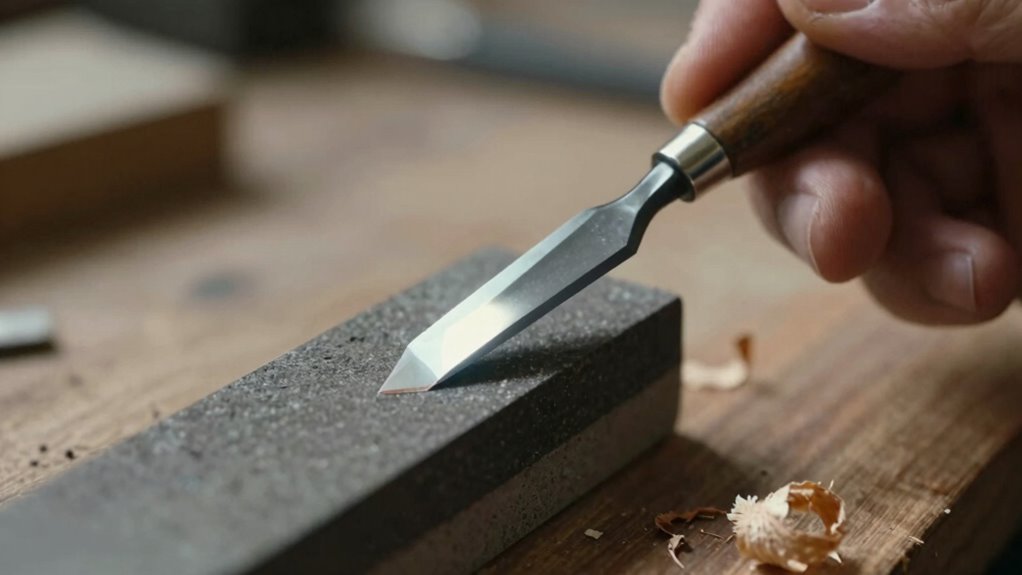
Finding the right sharpening angle is essential for achieving a keen edge on your chisel, and it starts with understanding the factory bevel or the edge you want to recreate. To set this angle accurately, focus on blade alignment—ensuring the bevel sits evenly against your sharpening stone. The correct angle varies by use, but consistency is key for sharpening frequency and maintaining sharpness. Use a guide or angle jig to keep the bevel steady. Remember, a steeper angle provides durability, while a shallower angle offers a finer edge. Here’s a quick comparison:
| Use Case | Recommended Angle | Blade Alignment Tips |
|---|---|---|
| General woodworking | 25-30° | Ensure even contact across edge |
| Fine carving | 15-20° | Use guides for precision |
| Heavy-duty tasks | 30-35° | Sharpen more frequently |
| Frequent use | Maintain consistent angle | Regular check for alignment |

Work Sharp Precision Adjust Elite Knife Sharpener – Fixed Angle Sharpening System for Kitchen & Pocket Knives – Professional Guided Knife Sharpening Tool
PERFECT FOR HOME COOKS, HUNTERS & KNIFE ENTHUSIASTS – Delivers razor-sharp, professional-quality edges on kitchen knives, hunting blades,…
As an affiliate, we earn on qualifying purchases.
As an affiliate, we earn on qualifying purchases.
Step-by-Step: Maintaining a Sharp, Precise Chisel Edge
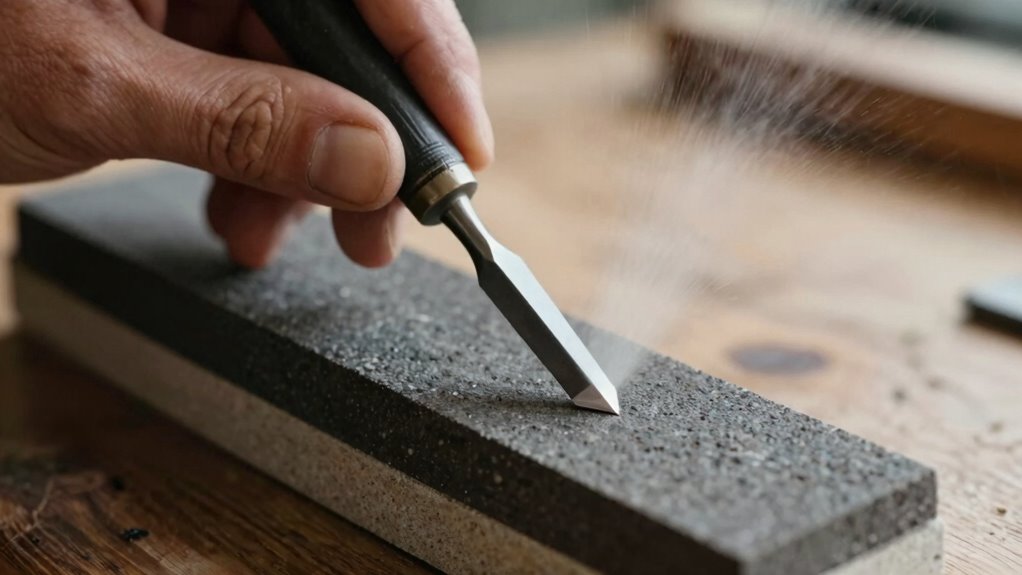
Maintaining a sharp, precise chisel edge requires regular attention and careful technique. Proper blade maintenance ensures your tool stays effective and safe for woodworking safety. Follow these steps:
- Clean the blade after each use to remove debris and resin buildup.
- Check the edge regularly for dullness or nicks, and re-sharpen as needed.
- Use a honing guide to maintain the correct sharpening angle, preventing unnecessary blade damage.
- Store your chisel in a protective sheath or rack to avoid accidental dulling or damage.
- Regularly assess your tool maintenance practices to ensure optimal performance and safety. Incorporating proper sharpening techniques helps preserve the integrity of your blade and extends its lifespan.
- Being aware of pinball machine weights can help you choose the right space and equipment for your workspace, especially if you are installing or moving tools in a home workshop. Additionally, understanding the correct sharpening angle can significantly improve your results and prolong the life of your chisel.
- Using the appropriate whetstone or sharpening stone can greatly enhance your ability to maintain a keen edge on your chisel.
Consistent blade maintenance keeps the edge sharp and precise, reducing the risk of accidents and improving your work quality. Remember, a well-maintained chisel is safer and more efficient for all your woodworking projects.
Troubleshooting Common Sharpening Angle Problems
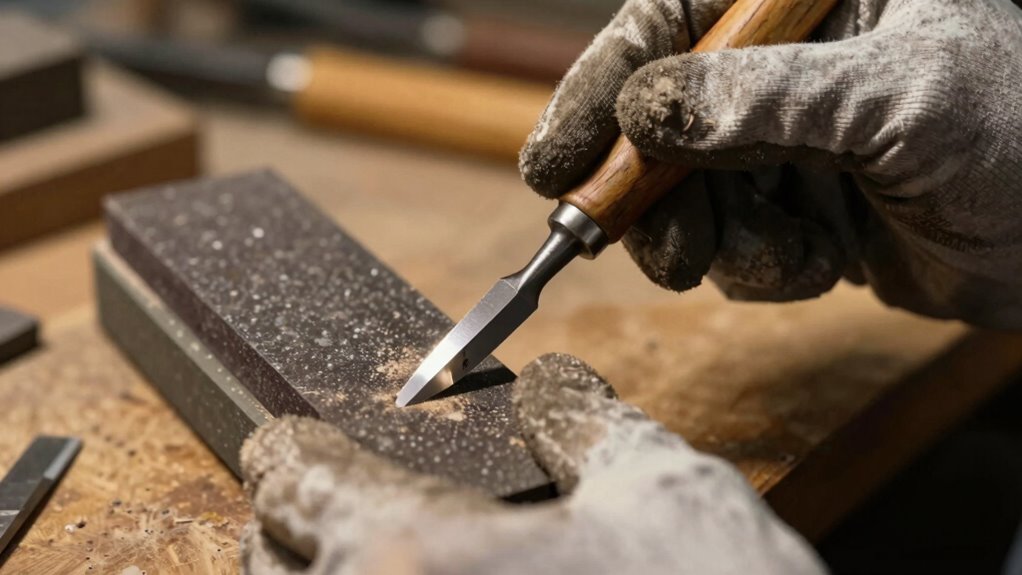
If your chisel isn’t maintaining the correct sharpening angle, you might be making common errors that affect your results. These mistakes often stem from improper technique or inconsistent angle setting. Let’s look at how to identify and correct these issues to achieve a precise, lasting edge. Paying attention to art care and living principles can help ensure your tools are kept in optimal condition for precise sharpening. Understanding the importance of proper tool maintenance can also prevent common issues and prolong the life of your tools. Additionally, maintaining a consistent sharpening angle is crucial for achieving a clean, effective edge and avoiding uneven wear. Practicing proper technique and regularly checking your angle with a guide can make a significant difference in your sharpening results. Using proper tools and accessories designed for sharpening can also enhance accuracy and consistency.
Common Angle Errors
One common mistake when sharpening a chisel is setting the wrong angle, which can lead to a dull edge or damage to the tool. Misjudging this angle often results in issues like uneven blade curvature or compromised handle ergonomics. To avoid these errors:
- Maintain a consistent angle throughout sharpening to prevent uneven blade curvature.
- Use a jig or guide to ensure precise, repeatable angles.
- Be mindful of the handle ergonomics, ensuring your grip and posture don’t cause skewed angles.
- Regularly check your angle setup to prevent drifting, which can dull the edge or cause blade instability.
Correcting Sharpening Technique
When you notice your chisel’s edge is dull or uneven after sharpening, it’s often a sign that the angle has drifted from the ideal setting. To correct this, revisit your honing techniques and focus on maintaining consistent blade geometry. Confirm your sharpening angle stays true by using a guide or jig, preventing unwanted angle changes. Check your blade’s contact with the stone regularly to avoid uneven honing. If the edge remains uneven, adjust your technique by applying even pressure and maintaining a steady angle throughout. Remember, consistent honing techniques preserve blade geometry and produce a sharper edge. Use the table below to identify common issues and their solutions:
| Issue | Cause | Solution |
|---|---|---|
| Uneven edge | Inconsistent angle | Use a guide |
| Dull edge | Poor technique | Maintain steady pressure |
| Chips or nicks | Too much force | Gentle honing |
| Worn bevel | Incorrect angle | Re-establish correct angle |
Tips to Keep Your Chisel Sharp Longer and Maintain the Correct Angle
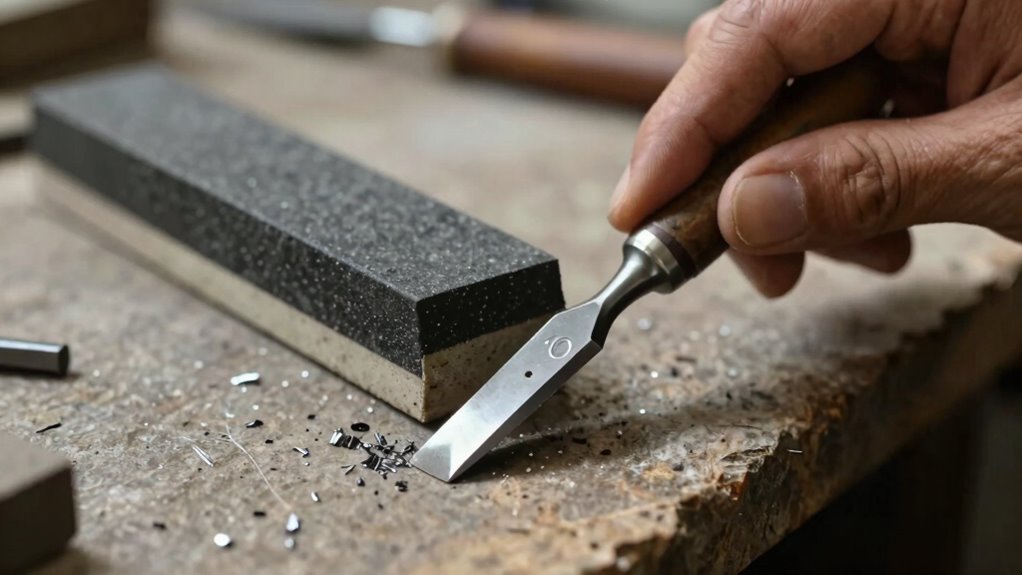
To keep your chisel sharp longer and guarantee it maintains the correct angle, you need to develop a consistent sharpening routine and pay close attention to the bevel angle. Proper chisel maintenance involves regular honing and avoiding unnecessary use of the edge. Here are some tips:
- Use a honing guide to preserve the correct bevel angle during each sharpening session.
- Keep your sharpening stones clean and flat for consistent results.
- Regularly inspect your chisel for damage or dullness, and address issues immediately.
- Stick to a routine, sharpening before the edge becomes visibly dull, to maintain ideal sharpness and prolong the life of your tool. Applying a proper sharpening technique ensures your chisel stays sharp longer and performs efficiently. Additionally, understanding wood movement can help you select the best techniques for maintaining your tools and ensuring precise, long-lasting cuts. Incorporating proper tool maintenance into your woodworking practices can further enhance the longevity and performance of your chisels.
Frequently Asked Questions
Can I Sharpen My Chisel Without Specialized Tools?
Yes, you can do DIY sharpening of your chisel without specialized tools. Use alternative tools like a honing stone, a piece of fine-grit sandpaper, or a ceramic mug’s bottom to create a sharp edge. Just be sure to maintain the proper angle, about 25-30 degrees, and use consistent strokes. These methods are effective and budget-friendly, helping you keep your chisel sharp without investing in expensive equipment.
How Often Should I Re-Sharpen My Chisel for Optimal Performance?
Think of your chisel as a trusted friend who needs regular care to stay sharp. You should re-sharpen it when it begins to feel dull—usually after every few projects or when you notice a decrease in performance. Consistent maintenance tips, like honing it regularly, help preserve tool longevity and ensure smooth cuts. Don’t wait until it’s painfully obvious; frequent touch-ups sustain precision and keep your work feeling fresh and effective.
What Signs Indicate My Chisel’s Sharpening Angle Is Incorrect?
If your chisel’s edge feels duller quickly or you notice uneven bevels, the sharpening angle might be mistaken. An incorrect angle causes the edge to lose sharpness faster and creates inconsistent bevels. You’ll also see more chips or nicks, and it may require more frequent honing. Check your angle regularly and make certain it’s consistent; this keeps your chisel sharp, smooth, and easier to work with.
Does the Type of Wood Affect the Sharpening Angle I Should Use?
Yes, the type of wood influences your sharpening angle. For dense woods with tight grain orientation, you’ll want a more acute angle to guarantee clean cuts without dulling quickly. Softer woods with open grain may require a slightly steeper angle for durability. Adjust your angle based on wood density and grain orientation to achieve the best results, helping your chisel stay sharp longer and perform smoothly.
Are There Safety Precautions to Consider During Sharpening?
When sharpening your chisel, always wear personal protective equipment like safety glasses to avoid chips or sparks. For example, a woodworker once injured his eye because he didn’t use safety glasses. Maintain workspace safety by keeping your area clean and free of distractions. Use a stable surface and proper tools, and never rush the process. These precautions help prevent accidents and ensure a safe, effective sharpening experience.
Conclusion
Think of your chisel like a finely tuned instrument—when the angle is just right, it sings smoothly through wood. I once struggled with dull edges until I found the perfect angle; now, every cut feels effortless, like gliding on ice. Keep experimenting and maintaining that sharp edge, and you’ll find woodworking becomes a joy again. A sharp chisel isn’t just tool maintenance—it’s your secret to crafting with confidence and precision.