
TL;DR

Get business pricing on tools and workshop supplies
- Business-only prices and quantity discounts
- Tax-exempt purchasing
- Multiple users, one account, clear invoices
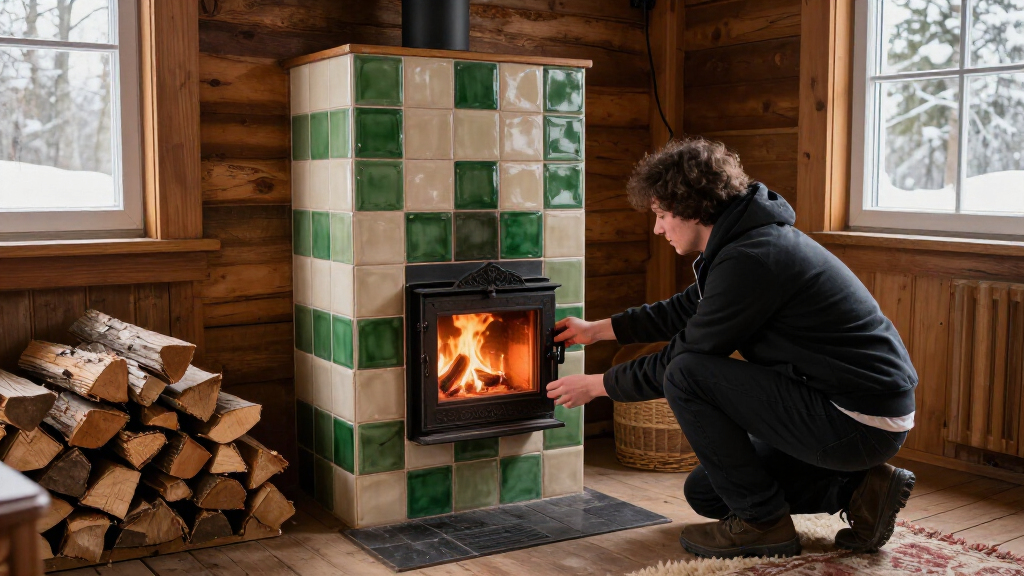
A Livingetc report describes renewed interest among British designers in Swedish kakelugn and other ceramic stoves, which store heat and release it for hours after a fire. Designers value their sculptural appearance, while installation costs, building requirements and local air-quality rules remain practical considerations.
Livingetc has reported growing interest among British interior designers in traditional ceramic stoves, including Swedish kakelugn, as an alternative to conventional open fires and wood burners. The stoves can store heat from a fire and release it over many hours, while their tiled towers serve as prominent design features; the report does not provide independent efficiency or emissions measurements.
The report describes ceramic stoves as a long-established northern European heating design that is receiving fresh attention in British interiors. Known in German as a kachelofen and in Swedish as a kakelugn, these stoves use ceramic tilework around a heat-storing structure. Alan Hills, director of The Ceramic Stove Company, told Livingetc that one hot burn can provide heat for 12 to 24 hours, using fewer logs than a conventional wood burner.
Hills also said the stoves burn hotter, which he said helps combust particulates in the firebox and produces fewer emissions. Those are claims attributed to the company director: the article supplies no emissions data, testing method or direct comparison with other heating systems. The report also does not establish that every model or installation delivers the same performance.
Designers cited in the article use the stoves as focal points as well as heat sources. In an east London home, designer Olivia Outred selected a gas-fitted model, saying the project needed heat and a sculptural feature that would not obstruct the windows. The report says the gas installation was chosen to comply with London air-quality controls. Other examples include a custom pink stove in a Finnish home designed by AOR Architects and a tiled stove in a London, Milan and Dubai studio’s apartment project.
Heat Storage Meets Interior Design
The report points to a practical and aesthetic reason for the renewed attention: ceramic stoves are designed to retain and radiate heat after the fire has burned, while their scale and crafted tile surfaces can give a room a distinct center. For households weighing heating options, that combination may be appealing, particularly where an open hearth is inefficient or where a visible design feature is part of a renovation.
But the article does not establish that ceramic stoves are a universally cleaner or cheaper choice. It gives no independently verified fuel-use figures, operating-cost comparison or emissions results. The distinction matters because local rules, fuel type, installation quality and the home itself affect whether a particular stove is suitable. Consumers should treat efficiency and bill-saving claims as product-specific until supported by relevant evidence.
Cost and construction also shape who can install one. Livingetc says prices start at several thousand pounds, and notes that a stove can be assembled on site from modular parts or built around a masonry structure. The article presents the purchase as a long-term investment, but does not quantify expected lifespan, maintenance costs or payback time.
As an affiliate, we earn on qualifying purchases.
A Northern European Heating Tradition
Ceramic stoves have been used for centuries in northern Europe, according to the Livingetc report, but the article describes them as a relatively new area of interest for British design studios. The stoves’ appearance can range from elaborate historic tilework to custom colors and more restrained contemporary forms. Examples featured in the report include a pink bespoke design by Gabriel Kakelugnar and a terracotta stove created by ceramicist Jessica Steinhäuser for designer Colette van den Thillart.
Installation differs from placing a freestanding appliance in a room. Hills advised Livingetc that the work is best scheduled after wet trades such as plastering are complete, and said some homes may need a reinforced base. Designer Olivia Outred described a project in which a brick tower was built first and tiles were then applied. The report says modular models may be assembled in a couple of days, but that is not a general installation timetable for every property or design.
“They are much more efficient.”
— Alan Hills, director of The Ceramic Stove Company, speaking to Livingetc
As an affiliate, we earn on qualifying purchases.
Performance Depends on the Installation
The Livingetc report does not identify independent tests supporting its statements about heat duration, wood consumption or emissions. It is not clear how those results vary by model, fuel, operating practice or building conditions, and the article provides no measured comparison with conventional wood burners or open fires. Its description of 12 to 24 hours of heat comes from Hills, who works for a stove company.
Several practical details are also absent: the full installed cost, any typical maintenance schedule, applicable planning or building requirements, and whether a particular stove will meet local rules. The east London example used gas, but that does not establish that every ceramic stove is gas-fired or suitable for every location. Readers considering an installation would need advice specific to their home and local regulations.
traditional European ceramic stove
As an affiliate, we earn on qualifying purchases.
As an affiliate, we earn on qualifying purchases.
Check Local Rules Before Choosing
The report announces no product launch, policy change or scheduled follow-up. Its immediate takeaway for homeowners is to treat the stoves as an option to investigate rather than a guaranteed route to lower bills or emissions. Before buying, they would need to compare the model’s documented performance, fuel requirements, total installation cost and servicing needs with alternatives.
Any next steps will depend on the property and location. Homeowners should confirm local air-quality and building requirements, ask whether the floor or base needs reinforcement, and coordinate installation with other renovation work. The source does not say whether more British design studios or manufacturers plan to adopt the stoves, so the scale and pace of the trend remain unknown.
As an affiliate, we earn on qualifying purchases.
Key Questions
What is a Swedish kakelugn?
A kakelugn is a Swedish ceramic stove. The Livingetc report describes it as a tiled, heat-storing structure that can act as both a heating appliance and a decorative feature.
How long can a ceramic stove give off heat?
Alan Hills of The Ceramic Stove Company told Livingetc that a single hot burn can provide heat for 12 to 24 hours. The article does not include independent tests or explain how performance varies among models and homes.
Are ceramic stoves proven to produce fewer emissions?
Hills told Livingetc that hotter combustion burns particulates in the firebox and produces fewer emissions. The report supplies no independent emissions measurements, so it does not establish the results for all stoves or installations.
How much does a ceramic stove cost?
Livingetc says prices start at several thousand pounds. It does not provide a full installed-cost range; the final price may depend on the stove, construction work and the property.
What should homeowners check before installing one?
Homeowners should check local air-quality and building rules, whether a reinforced base is needed, the stove’s fuel and performance specifications, and the full installation and maintenance costs. The Livingetc report notes that installation is often best planned after plastering and other wet trades are complete.
Source: rss
Halloween Picks
halloween
As an affiliate, we earn on qualifying purchases.