A job site rarely loses information in one dramatic event. It disappears a little at a time. A defect is photographed, but the photograph cannot be found when the issue returns. An instruction is given beside the work, yet nobody records it. A daywork report is reconstructed three weeks later from memory, messages and whatever notes survived.

Get business pricing on tools and workshop supplies
- Business-only prices and quantity discounts
- Tax-exempt purchasing
- Multiple users, one account, clear invoices
The job-site record that does not go missing
Capture the record while the work is still in front of you.
Gewerkton’s proposition is not simply voice instead of typing. It is on-site capture instead of reconstructing photographs, instructions and daywork from scattered fragments later.
The reconstruction gap
3 weeksLater is already too late
A delayed daywork report forces the site manager to rebuild events from memory, messages and surviving notes—after hundreds of newer decisions have intervened.
Evidence that can move work
A photograph is only the beginning
The useful record keeps the image or dictation attached to its trade, deadline and responsible person. Evidence gains ownership, programme relevance and a next step.
The Field sequence
From spoken observation to signed record
Global working context
27Content languages
Cross-border teams can work in their own languages while the original evidence remains attached to the project record.
BYO-AI choice
13AI providers
Organisations can bring their own keys and choose providers across the EU, US or Asia, including mainland China.
One platform · three connected roles
The field record belongs to a wider project record
From a site manager’s perspective, these are not abstract information-management problems. They are the daily gap between what happened and what can still be demonstrated later. The work may have been completed, the conversation may have been clear and the photograph may exist somewhere. But if the record is scattered or incomplete, the practical value of that information has already been reduced.
Gewerkton starts with a blunt line: “On site, what counts is what’s proven.” Its answer is a voice-first construction documentation and defect management platform designed for global markets. The central idea is straightforward: record information where the work happens, turn spoken input into structured evidence and keep responsibility, trade and deadline attached to the record.
The product is in beta now, with a public beta planned for fall 2026. That status matters. Site teams should understand that they are looking at a platform still moving towards its public beta, not a finished product being presented as if every part of the construction workflow has already been settled.
construction site digital record device
As an affiliate, we earn on qualifying purchases.
As an affiliate, we earn on qualifying purchases.
The problem is not taking the photograph
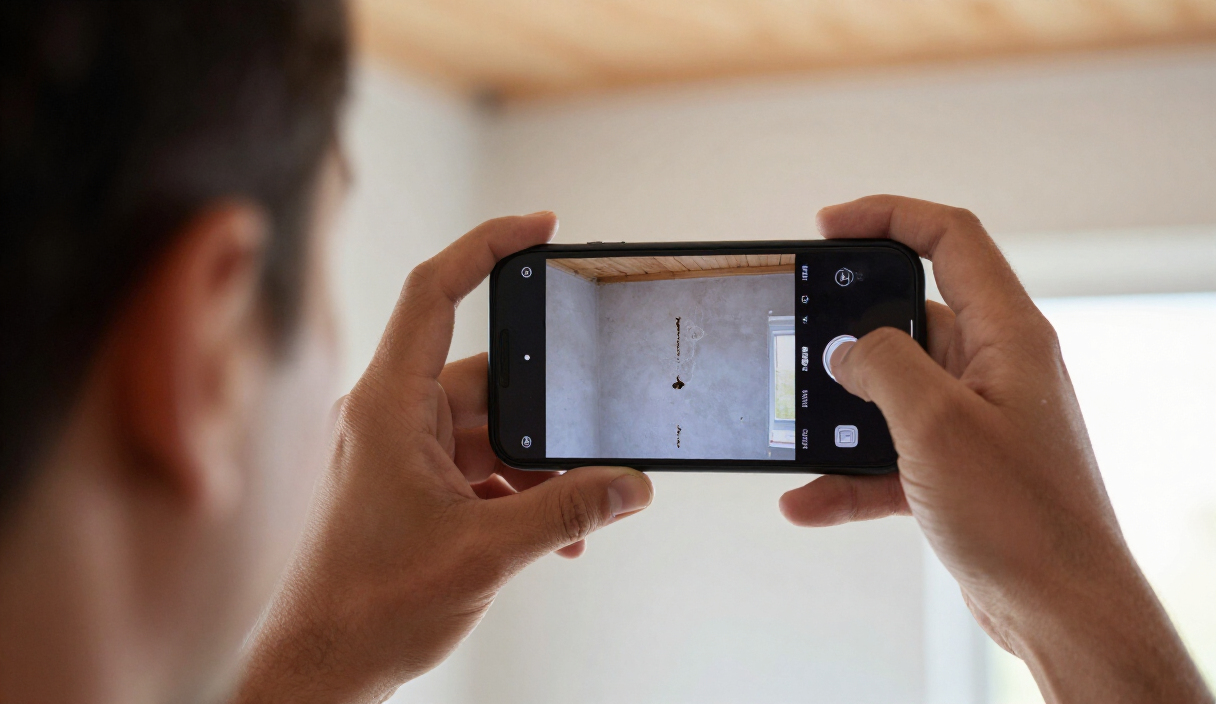
Photographing a defect is easy. Preserving the photograph as useful project evidence is the harder part. A picture without a clear trade, deadline or responsible person may prove that somebody saw something, but it does not necessarily help the site manager move the issue towards resolution.
The same weakness affects verbal instructions. Construction depends on conversations made under pressure: beside an unfinished wall, during an inspection, between crews or while several trades are moving through the same area. The instruction may be understood in the moment. Later, however, the project needs more than a shared memory of what was said.
Daywork exposes the problem particularly well. If the report is written long after the work, its author must reconstruct events rather than document them. Three weeks later, the details compete with hundreds of newer decisions. Even a conscientious site manager is then trying to rebuild a record from fragments.
The better moment to capture that information is while it is still close to the work. That is the role assigned to Gewerkton Field, the platform’s voice-first construction-site app. Field covers dictation to evidence, defects, daywork reports, takt and a portal. For the site manager, the speakable daywork report is the part that brings the proposition into focus.
on-site voice dictation tool for construction
As an affiliate, we earn on qualifying purchases.
As an affiliate, we earn on qualifying purchases.
A daywork report spoken where the work happened
The useful distinction is not simply voice instead of typing. It is capture on site instead of reconstruction later. The site manager dictates the daywork report while the work and its context are still present. Gewerkton Field turns that dictation into structured evidence containing the trade, deadline and responsible person. At handover, the signature is added on the device in use.
That sequence keeps the record close to the event: dictate on site, organise the evidence and obtain the signature on the device at handover. It addresses the familiar gap between knowing what occurred and producing a report that carries enough structure to remain useful.
This matters because a daywork report is not merely prose. A loose paragraph can describe activity without making clear who owns the next step or when it is due. Connecting spoken capture with trade, deadline and responsibility makes the report more actionable for the people coordinating the site.
Voice also suits the physical reality of construction work. The important information often emerges away from a desk, precisely when opening a browser workspace and composing a polished report would interrupt the task at hand. Dictation makes the act of recording part of the site visit rather than a separate administrative session postponed until later.
That does not remove the need for judgement. A site manager still decides what must be recorded and whether the report reflects the work. Nor does a voice-first workflow make every disagreement disappear. Its value lies in giving the team a more direct route from an event on site to structured evidence and a signature at handover.
As an affiliate, we earn on qualifying purchases.
Defects need ownership, not just an image
Housing and building construction provide the clearest everyday example. Gewerkton’s stated workflow connects defects with a photograph and deadline, while daywork reports are dictated and signed on the device at handover. For the person running the site, that brings two commonly fragmented activities into the same field-oriented approach.
A defect photograph becomes more useful when it belongs to a defined record rather than an anonymous camera roll. A deadline gives the item a point in the programme. A responsible person and trade show where it belongs. The point is not to accumulate more media; it is to keep the evidence tied to the work it describes.
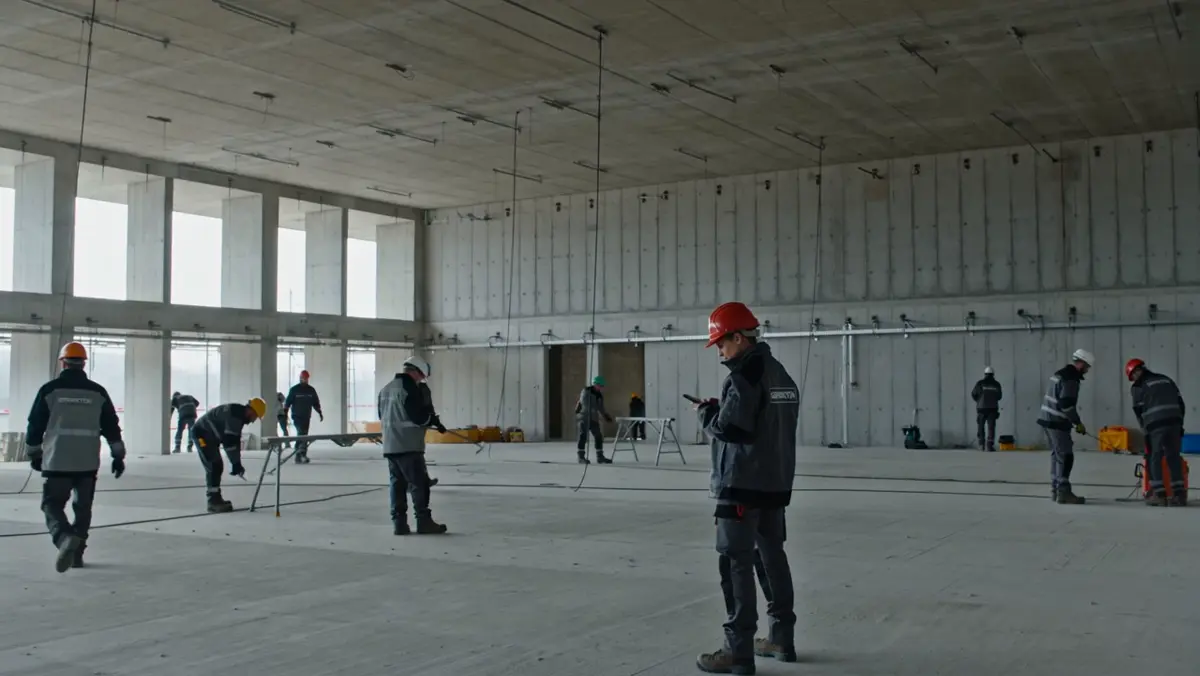
The same discipline scales down. A tinyhouse43-style self-builder may not be coordinating a data centre or a tunnel project, but the underlying problem is unchanged. A small build still generates photographs, decisions, defects and work that needs to be recorded. Fewer trades and a smaller footprint do not make memory more dependable.
For a self-builder, disciplined capture can be modest: record the issue when it is visible, connect it with responsibility and a deadline, and complete the handover record while everyone still has the same work in front of them. The scale changes; the principle does not.
portable signature pad for construction handover
As an affiliate, we earn on qualifying purchases.
As an affiliate, we earn on qualifying purchases.
One platform, three connected roles
Field carries the job-site story, but it is one of three product lines under the Gewerkton brand. The distinction between them is useful because a site record does not remain isolated from plans, models or wider project operations.
Gewerkton Studio is the browser workspace for plans and models. Where no model exists, the site team can create one in the browser. That gives the project a model-oriented workspace without assuming that every job begins with a model already available.
Gewerkton Cloud handles operations and model or data coordination between Field, Studio and third parties. Together, the three lines define distinct parts of the same house: site capture in Field, plan and model work in Studio, and coordination through Cloud.
For the site manager, that structure matters because information captured in the field is part of a wider project record. The value of the daywork report does not end when the signature is collected. It belongs within the project’s plans, models, operations and exchanges with other participants.
Different projects lose evidence in different ways
The underlying problem appears across several deployment settings, although the working conditions vary sharply.
- On wind farms and renewable-energy projects, sites are distributed, crews rotate and field acceptance may happen in locations with dead zones. Offline capture is part of the stated approach.
- In data centres and industrial plants, many trades work in parallel against tight deadlines. Decisions from meetings can become trade-sorted task lists.
- In housing and building construction, defects are recorded with a photograph and deadline, while daywork reports are dictated and signed on the device at handover.
- On infrastructure and tunnel projects, long durations and numerous change orders increase the importance of backing instructions with the original audio.
- For cross-border teams, EU, US and APAC participants can work on the same project in their own languages while the evidence original remains unambiguous.
- On projects in Asia, Chinese, Korean and Vietnamese crews can work multilingually from capture through to report, with data residency selected by the organisation.
These are not identical workflows, but they share a common pressure: the farther a record travels from its original moment, the easier it is for context to fall away. Rotating crews, long programmes, parallel trades and multiple languages all increase the cost of an unclear instruction or an incomplete report.
Language, region and provider choice
Gewerkton was born in the German market and has its deepest German commercial integration in GAEB, REB, XRechnung and DATEV. Its stated scope, however, is global. The platform supports 27 content languages and offers regional AI-provider choice across EU, US and Asian providers, including providers in mainland China.
Its BYO-AI approach covers 13 AI providers. Organisations can bring their own keys and select a region covering the EU, US or Asia, including mainland China. The purpose is to avoid vendor lock-in while allowing provider and regional choices to match the project’s requirements.
Data residency follows a similarly direct choice: an EU cloud or the organisation’s own infrastructure. For cross-border work, that choice sits alongside multilingual capture and reporting rather than treating language as the only regional concern.

The multilingual capability is particularly relevant to the evidence problem. If people can capture and work with information in their own languages, the site manager does not have to pretend that every crew communicates most accurately in a single project language. At the same time, Gewerkton’s stated aim is that the evidence original remains unambiguous.
A technically unusual build
Gewerkton is being built by a solo founder directing a fleet of coding agents using Codex and Claude. In one night, that fleet shipped 21 software packages, verified with negative controls and mutation tests. It is an unusual development model, and it helps explain the breadth of the platform being assembled by a single founder.
That fact should not obscure the beta label. Fast output and verification methods are part of the development story, but the practical judgement for site teams remains the same: the product is currently in beta, and the public beta is planned for fall 2026.
The wider presentation is also deliberately controlled. Gewerkton’s marketing site is available in 27 languages, uses zero trackers, has no cookie banner and is built on a fully egress-free architecture. Its media bank contains more than 51 self-produced clips and posters.
Those details sit outside the daily act of dictating a report, but they reflect the same attempt to make regional and data choices explicit. The core site-management test is still more grounded: can the information from today’s work be captured with enough structure that the team does not have to rediscover or reconstruct it later?
The record should begin on site
Site managers do not need another reminder that documentation matters. They need a workable point at which documentation can happen. If the only realistic opportunity comes after the shift, after the meeting or weeks after the daywork, the record is already competing with time and memory.
The speakable daywork report offers a different starting point. Dictate beside the work. Turn the account into structured evidence with a trade, deadline and responsible person. Add the signature on the available device at handover. The result is not valuable merely because voice was involved; it is valuable because the record was created when the evidence was still close.
The same principle applies to a photographed defect, an instruction in a tunnel, an acceptance task at a wind farm or a decision affecting several trades in an industrial plant. Capture alone is insufficient if nobody can place the evidence later. Structure alone is insufficient if the underlying event was never recorded.
Gewerkton Field places those two needs together: voice-first capture and an organised site record. For large cross-border projects, that sits within a multilingual platform with regional provider and data-residency choices. For a small self-build, it offers the same basic lesson without the enterprise scale: write down what happened while it is still possible to prove it.
That is the real loss on a job site—not the fact that nobody took a photograph, heard the instruction or knew about the daywork, but that the record could not be recovered when it mattered. Gewerkton is still in beta, with its public beta planned for fall 2026. Its proposition is nevertheless clear: the strongest project record begins where the work happens.
Fall yard work Picks
leaf blowers
As an affiliate, we earn on qualifying purchases.