
Understanding chuck jaws is key to successful machining. If you use the wrong set, you can quickly face misalignment and slippage, leading to poor results. Each type of jaw—whether three or four—has its purpose, and improper selection can compromise clamping force and efficiency. You might end up wasting time on adjustments or even damaging your workpieces. Get to know the different types and their impacts, and you’ll see how easily frustration can be avoided.

Get business pricing on tools and workshop supplies
- Business-only prices and quantity discounts
- Tax-exempt purchasing
- Multiple users, one account, clear invoices
Key Takeaways
- Choosing the wrong chuck jaws can lead to misalignment, resulting in poor machining accuracy and quality.
- Insufficient clamping force from incorrect jaws causes workpiece slippage and vibration during operations.
- Excessive clamping force can deform softer materials, damaging both the workpiece and tools.
- Incorrect jaw types waste time on setup adjustments and increase frustration in machining tasks.
- Understanding jaw material and type is essential for effective clamping and optimal machining performance.
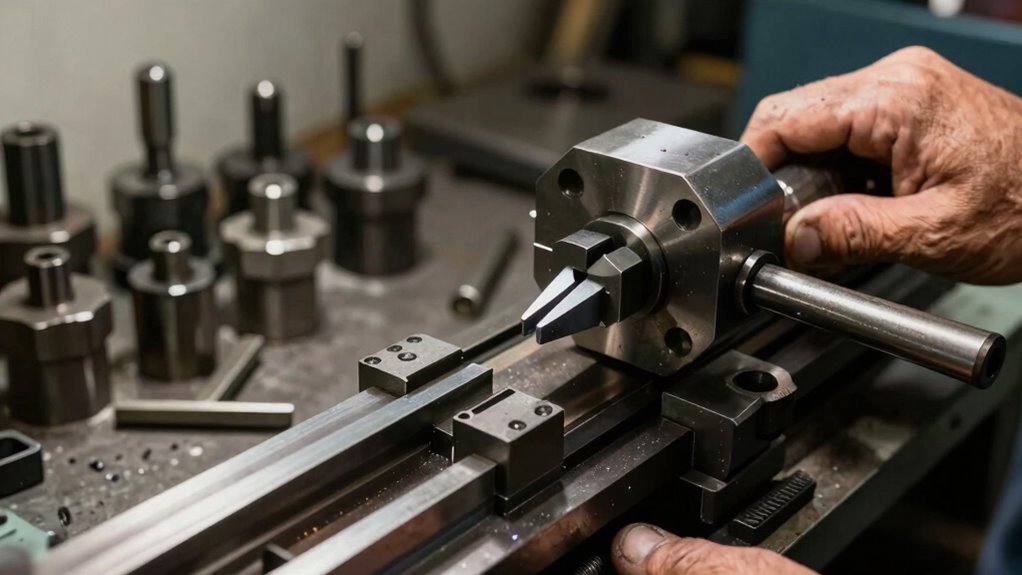
Chuck jaws are indispensable components in machining, gripping workpieces securely during operations. When you choose the wrong set of jaws, it can lead to frustration and a host of problems. Understanding the various jaw types and how they affect clamping force is essential for efficient machining.
Different jaw types serve different purposes. For instance, you might encounter three-jaw chucks that provide self-centering capabilities, making them ideal for round or hexagonal workpieces. On the other hand, if you’re working with irregularly shaped items, you might need a four-jaw chuck, which allows for independent adjustment of each jaw. This flexibility is great, but it requires more skill and time to set up correctly. If you grab the wrong jaw type for your specific workpiece, you’ll likely struggle to achieve the proper clamping force, leading to misalignment and poor machining results.
Different jaw types serve unique purposes, impacting clamping force and machining accuracy. Choosing the right one is essential for optimal results.
Clamping force is another significant factor. If the clamping force isn’t enough, your workpiece can slip or vibrate during machining, compromising accuracy and potentially damaging the piece or your tools. Conversely, too much clamping force can deform softer materials, causing irreparable harm. It’s a balancing act, and having the right jaw type is crucial to achieving that balance. You’ll want to make sure that the jaws you choose are rated for the specific loads and materials you’re working with. Additionally, considering the material of the jaws can influence their performance and suitability for delicate or heavy-duty tasks.
Products Worth Considering

Roborock Robot Vacuum and Mop with LiDAR Navigation and Self-Empty Dock

Bose TV Speaker Compact Soundbar with Bluetooth and HDMI-ARC, Black

eufy E25 Robot Vacuum and Mop
As an affiliate, we earn on qualifying purchases.
Frequently Asked Questions
What Materials Are Chuck Jaws Typically Made From?
Chuck jaws are typically made from steel, aluminum, or composite materials. Steel jaws offer durability and strength, making them ideal for heavy-duty tasks. Aluminum jaws are lighter and often used for precision work due to their reduced weight. Composite materials provide a blend of lightweight and strength, suitable for various applications. Depending on your needs, choosing the right jaw type and material can greatly enhance your machining experience and efficiency.
How Do I Know My Chuck Jaws Are Compatible?
To guarantee your chuck jaws are compatible, check the jaw alignment and grip pressure. If they don’t line up like peas in a pod, you’ll run into issues. Look for manufacturer specifications that match your chuck model. Also, consider the material and size of the jaws; they should fit snugly without excessive pressure. If they’re not the right match, it’s time to rethink your setup to avoid frustration down the line.
Can I Use Different Brands of Chuck Jaws Interchangeably?
You can’t always use different brands of chuck jaws interchangeably. Chuck jaw types differ in design, which affects jaw alignment and how they fit on your chuck. Mixing brands might lead to uneven gripping and poor performance, causing frustration during your work. Always check compatibility and specifications from the manufacturer to guarantee peak results. Keeping to the same brand helps maintain reliable alignment and performance, giving you the best results on your projects.
What Maintenance Do Chuck Jaws Require?
You might think chuck jaws need no maintenance—after all, they just sit there, right? Wrong! Regularly check for jaws alignment and inspect wear indicators to guarantee they work effectively. Clean them thoroughly to remove debris, and lubricate any moving parts to prevent wear. It’s essential to replace worn jaws promptly; ignoring this can lead to poor performance and costly mistakes. So, treat your jaws with care, and they’ll serve you well!
How Can I Improve My Chuck Jaw Grip?
To improve your chuck jaw grip, start with proper jaw alignment techniques. Make certain the jaws are clean and free from debris, as this can hinder grip. Next, use grip tightening methods, like adjusting the torque on your lathe. Regularly check for wear and tear on the jaws, and replace them if necessary. Taking these steps will enhance your grip, allowing for more precise and reliable machining results in your projects.
Conclusion
Choosing the right chuck jaws is like finding the perfect key for a lock; the wrong fit only leads to frustration and wasted time. When you understand the nuances of each type, you can guarantee a smooth machining process, transforming challenges into seamless solutions. Don’t let the wrong jaws hold you back—equip yourself with the right knowledge and tools, and access the full potential of your projects with confidence and ease.