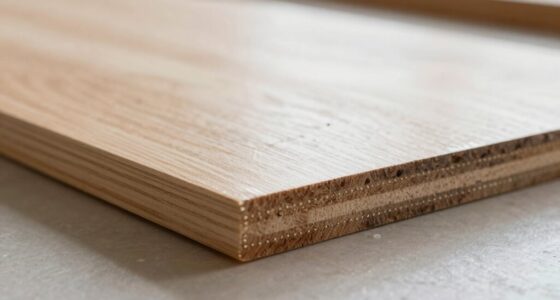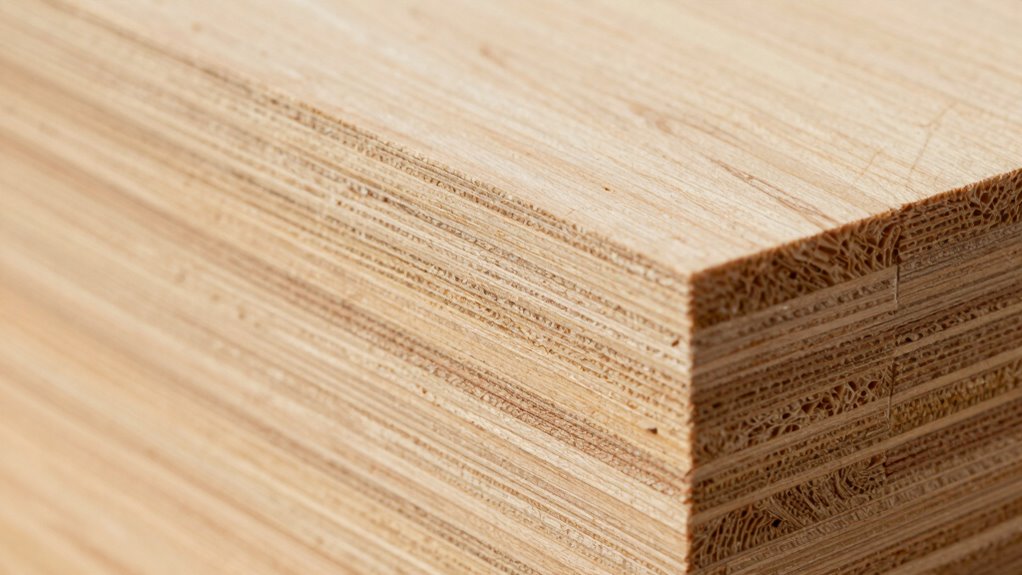

Void-free plywood means the layers inside the panel have no gaps or air pockets, ensuring consistent strength and durability. It’s crafted with precise lamination and high-quality adhesive to prevent internal voids that can weaken the panel or cause issues over time. Different core types, like cross-grain or aligned grain, affect stability and load capacity. To choose the best plywood for your needs, understanding what “void-free” truly entails will make your decision easier.
Key Takeaways
- Void-free plywood has no internal gaps or air pockets, ensuring a continuous, uniform bond throughout the layers.
- It indicates high manufacturing standards, with precise lamination and adhesive application to prevent internal voids.
- Eliminating voids enhances strength, durability, and moisture resistance, making the plywood more reliable for demanding applications.
- Visual and tactile inspections can help verify void-free construction by checking surface smoothness and internal stability.
- While void-free status improves quality, other factors like veneer quality and core grain orientation also influence overall performance.
Types of Plywood Cores and What They Mean

Understanding the different types of plywood cores is essential because they directly affect the panel’s strength, stability, and suitability for various projects. The grain orientation of the core layers influences how the plywood responds to stress and load. For example, a core with aligned grain offers increased strength along specific directions, while cross-grain cores provide better dimensional stability. Moisture resistance varies among core types; some cores, like phenolic or waterproof plywood, enhance resistance to water damage, making them ideal for outdoor use. Additionally, the core structure can impact the overall weight and ease of handling during installation. Choosing the right core depends on your project’s needs, whether you require enhanced moisture resistance or specific grain orientation for load-bearing. By understanding these core differences, you guarantee your plywood performs at its best in your application.
What Does Void-Free Plywood Really Mean?

Void-free plywood means there are no gaps or air pockets within the layers, ensuring a solid, continuous surface. Manufacturing standards set strict criteria to achieve this quality, often involving advanced press and adhesive techniques. As a result, void-free plywood provides greater strength and durability for your projects. Additionally, high-quality manufacturing processes help maintain consistent performance and reliability in the final product.
Definition of Void-Free
When evaluating plywood, the term “void-free” indicates that the sheet contains no hidden gaps or air pockets within its layers. This means the plywood has been manufactured to guarantee continuous, uniform bonding, minimizing internal voids. Grain orientation plays a role because proper alignment helps achieve a dense, stable core, reducing the chance of voids forming. Additionally, moisture content is critical—if the wood isn’t properly dried, it can cause expansion or contraction, leading to gaps over time. Void-free plywood is meticulously crafted to have tight, consistent layers, providing strength and stability. It’s essential for applications where surface quality and structural integrity matter, ensuring you get a reliable, durable product with no hidden flaws that could compromise performance.
Manufacturing Standards Explained
Manufacturing standards for void-free plywood set strict criteria to guarantee consistent quality and performance. These standards ensure that each sheet meets specific criteria for void content, glue quality, and overall integrity. By adhering to rigorous quality assurance processes, manufacturers minimize gaps or air pockets within the core. This results in a more durable, stable product suitable for demanding applications. Key aspects of these standards include:
- Precise lamination techniques
- Strict control of adhesive application
- Regular inspection for void presence
- Compliance with industry certifications
Following these manufacturing standards helps ensure that void-free plywood maintains its promised strength and durability. It also provides peace of mind that the product has undergone thorough quality assurance, making it reliable for your projects.
Impact on Plywood Strength
The presence of voids within plywood can considerably weaken its structural integrity, but achieving a void-free core ensures maximum strength. When the core is free of voids, the plywood’s core durability improves, making it more resistant to cracking and breaking under load. Void-free cores also enhance moisture resistance, preventing water from infiltrating and compromising the layers. This is especially important in environments exposed to humidity or direct moisture, as voids can trap water and accelerate deterioration. By eliminating voids, you guarantee that the plywood maintains its strength over time, providing reliable support for construction or furniture projects. Additionally, understanding floating on water concepts can help in designing and selecting suitable materials for environments where moisture exposure is frequent. Overall, a void-free core boosts the plywood’s ability to withstand stress, moisture, and long-term wear, making it a superior choice for demanding applications.
How Do Core Types Affect Plywood Strength and Stability?
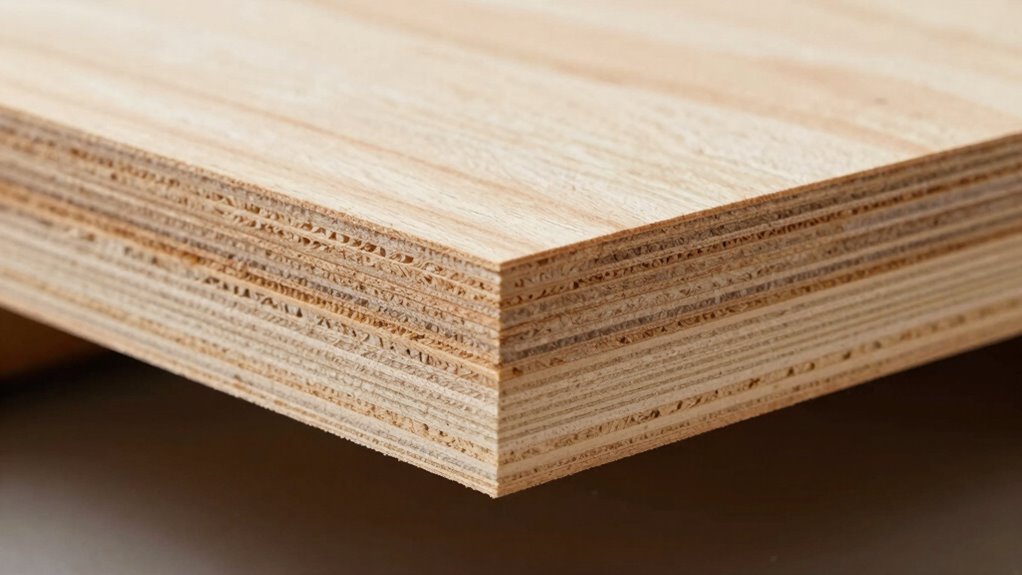
Your choice of core type directly influences plywood’s strength and stability, as different core compositions provide varying support levels. Void-free cores offer consistent quality, reducing weak points and enhancing overall durability. By understanding these differences, you can select plywood that better meets your project’s structural and stability needs. Additionally, knowledge of core quality can help you identify the most reliable options for long-term performance.
Core Composition Impact
Have you ever wondered how the core composition influences plywood’s strength and stability? The type of core impacts how well the plywood holds together and resists warping. For example, a dense, uniform core provides better load-bearing capacity and stability, while a mixed or inconsistent core can weaken the panel. The core also affects the grain pattern, which influences the overall aesthetic appeal—smooth, consistent cores create a more attractive surface. Additionally, heat distribution within the core can affect how the panel responds to environmental changes, further impacting its durability.
Void‑Free Benefits
Void-free cores markedly enhance plywood’s strength and stability by eliminating gaps that can weaken the panel. Without voids, the grain pattern remains consistent, ensuring better load distribution and resistance to cracking or warping. This uniformity also improves the panel’s ability to handle moisture and environmental changes, reducing the risk of delamination. Additionally, void-free cores often require less adhesive, minimizing their environmental impact during manufacturing. The absence of voids means fewer weak spots, resulting in a more durable and reliable product that maintains its shape and structural integrity over time. For projects demanding high strength and stability, choosing void-free plywood guarantees top performance while supporting eco-friendly construction practices. Well-sourced coverage helps ensure the reliability and quality of these core types.
Choosing the Best Plywood Core for Your Project
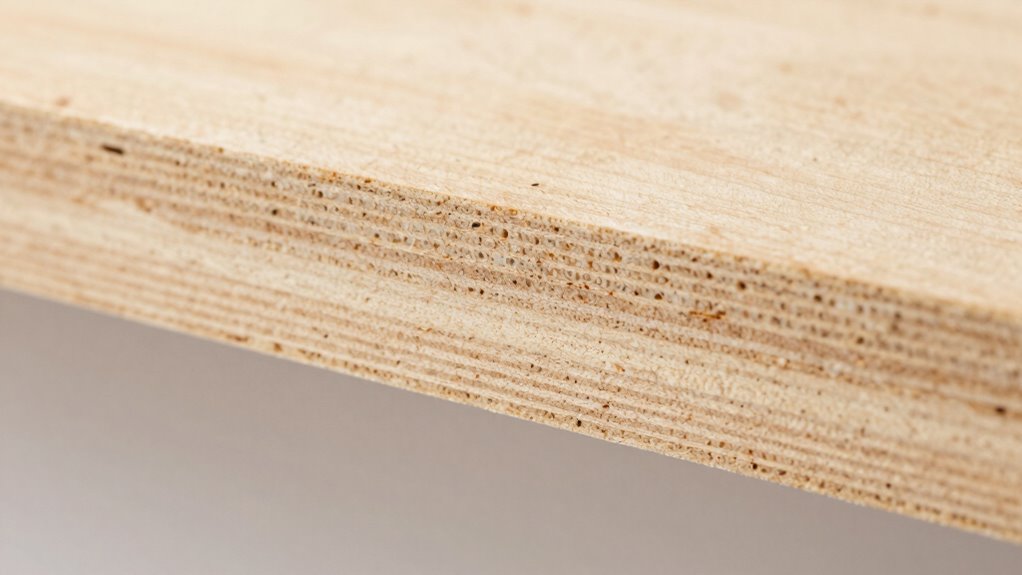
Choosing the right plywood core for your project depends on understanding the different options available and how each one performs under specific conditions. Your choice affects grain patterns, finish quality, weight, and durability. For projects requiring a smooth, consistent surface, veneer cores with tight grain patterns are ideal. If weight is a concern, consider lightweight plywood such as composite cores. For high moisture environments, marine-grade plywood with waterproof adhesives is best. Additionally, the core type influences how well the finish adheres and looks. It’s essential to match the core to your project’s needs for stability and appearance. Void‑free plywood cores are designed to eliminate internal gaps, providing more consistent strength and appearance.
How to Spot Genuine Void-Free Plywood at the Store
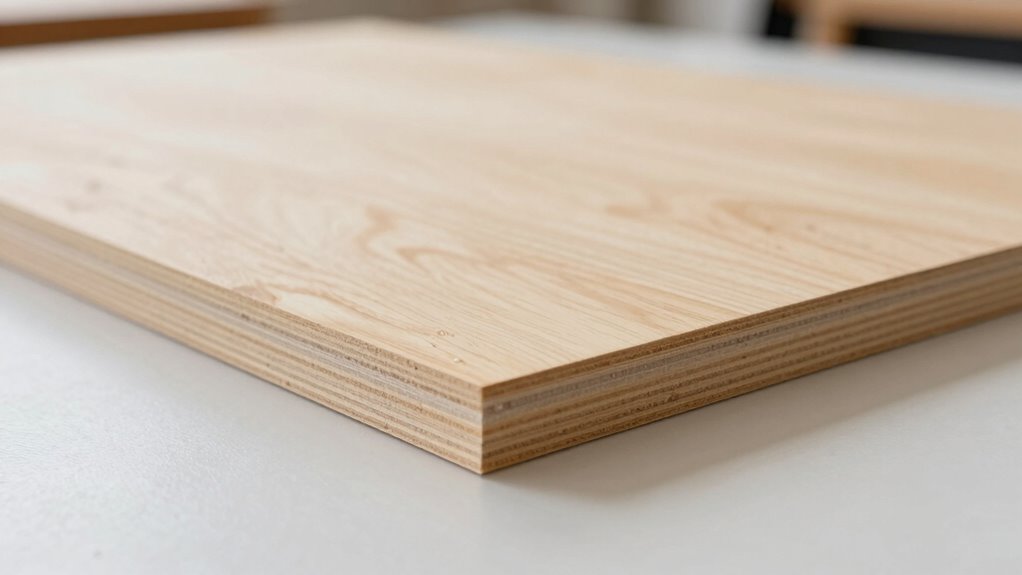
When shopping for plywood, spotting genuine void-free sheets can make a significant difference in your project’s quality and durability. Look closely at the grain pattern—void-free plywood tends to have a uniform, consistent appearance without gaps or irregularities. Check both sides for a smooth, even surface, as voids often cause visible holes or weak spots. Run your fingers over the surface to feel for any rough patches or indentations. Moisture resistance is another key indicator; genuine void-free plywood is less prone to swelling or warping caused by moisture, so it should feel solid and stable. Additionally, understanding the Free Floating construction method can help you identify sheets that are less likely to develop internal voids over time. Always ask for certification or detailed product labels that specify void-free construction. A careful visual and tactile inspection guarantees you select plywood that truly meets the void-free standard.
Debunking Myths About Plywood Cores and Void-Free Claims

Many consumers fall for myths that claim all plywood cores are equally strong or that void-free labels guarantee perfect quality. In reality, the strength depends on grain orientation and veneer quality. Void-free doesn’t mean there are no imperfections; it just indicates fewer voids, but other issues can still impact durability. Poor veneer quality or inconsistent grain orientation can weaken the plywood regardless of the void-free label. Don’t assume a product is superior solely because it’s labeled void-free. Instead, check the veneer quality and how the grain is aligned, as these factors influence structural integrity. Additionally, biography of Ziva David highlights how complex factors can affect overall performance and perception.
Frequently Asked Questions
How Does Void-Free Plywood Impact Environmental Sustainability?
Void-free plywood positively impacts environmental sustainability by reducing waste and promoting eco-friendly manufacturing. Since it minimizes recycling challenges caused by gaps and voids, you’ll find it easier to recycle and reuse this material. By choosing void-free plywood, you support sustainable practices, decrease landfill waste, and encourage manufacturers to adopt greener processes. This responsible choice helps protect the environment while ensuring durable, high-quality construction materials for your projects.
Are There Specific Industries That Prefer Void-Free Plywood?
You’ll find void-free plywood is a game-changer in industries like aerospace, cabinetry, and high-end furniture. These sectors demand perfection, and industry standards push manufacturers to use advanced manufacturing processes that eradicate even the tiniest gaps. This guarantees maximum strength, stability, and a flawless finish. If you’re aiming for top-tier quality and durability, you’ll want void-free plywood—because anything less simply isn’t good enough in these demanding fields.
Can Void-Free Plywood Be Recycled or Reused?
Void-free plywood can be recycled and has good reuse potential, depending on its condition. You can explore recycling options like repurposing it for craft projects, furniture, or other building materials. Keep in mind, the quality of the plywood affects its reuse potential; if it’s free of voids and sealed properly, it’s easier to recycle and find new uses. Always check local recycling guidelines to ensure proper disposal.
What Are the Cost Differences Between Core Types?
Choosing different plywood core types is like selecting gears in a bike—each affects your ride, or budget, differently. Solid core plywood tends to be pricier, offering durability but often surpassing budget limits. Void-free cores provide a balance of strength and cost, making them ideal for many projects. Consider your needs carefully, as the cost comparison varies; going for the cheapest might compromise quality, while premium cores stretch your budget but last longer.
How Long Does Void-Free Plywood Typically Last in Construction?
Void-free plywood usually lasts 20-30 years in construction, depending on durability factors like exposure to moisture, load, and environmental conditions. You can prolong its lifespan with proper maintenance requirements such as sealing surfaces and controlling humidity. Since void-free plywood has fewer internal gaps, it’s more resistant to delamination and warping, making it ideal for long-term projects where durability is essential. Regular inspections help ensure it remains in good condition over time.
Conclusion
Understanding plywood core types helps you make smarter choices for your projects. Did you know that void-free plywood offers up to 30% more strength and stability? By learning what “void-free” really means, you can avoid misleading labels and select the best material for your needs. Always inspect your plywood carefully, and don’t settle for less. With this knowledge, you’ll guarantee your projects are durable, safe, and built to last.