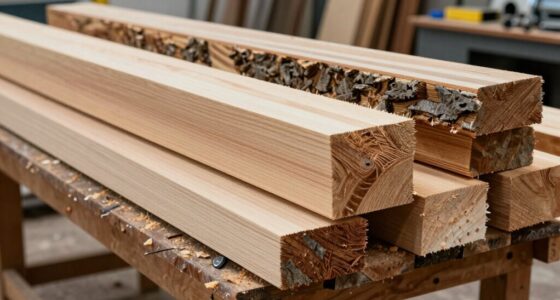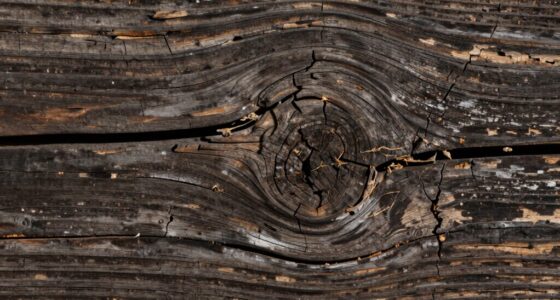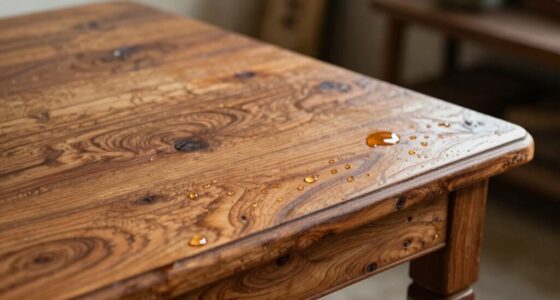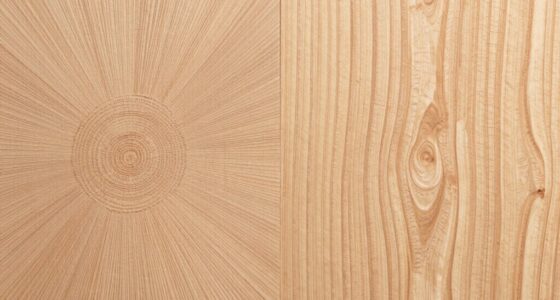

When choosing between MDF, plywood, and solid wood, consider your project’s needs. MDF is best for smooth, painted surfaces and detailed finishes, making it ideal for decorative panels and cabinetry. Plywood offers strength and water resistance for structural uses like flooring and roofing. Solid wood brings natural beauty and durability for high-quality furniture. To pick the perfect material, explore their strengths, applications, and aesthetics to match your specific project requirements.
Key Takeaways
- MDF is ideal for painted, detailed projects requiring smooth, uniform surfaces and precision cutting.
- Plywood offers superior strength and moisture resistance, suitable for structural and load-bearing applications.
- Solid wood excels in aesthetic appeal, durability, and craftsmanship for furniture and decorative accents.
- MDF is cost-effective for indoor uses, while plywood balances performance and affordability; solid wood is premium.
- Choose MDF for finishing versatility, plywood for structural integrity, and solid wood for authentic, high-end aesthetics.

Bright Creations Unfinished Wood Painting Blocks – Wood Squares for DIY Craft & Photo Display – Smooth MDF Panels for Crafting & Stenciling – 5 x 5 in, 1 in Thick, 4 Pack
Versatile Wood Squares: These unfinished 5×5 wood blocks are ideal for creating custom wall art, plaques, alphabet blocks,…
As an affiliate, we earn on qualifying purchases.
As an affiliate, we earn on qualifying purchases.
What Are the Main Differences Between MDF, Plywood, and Solid Wood?

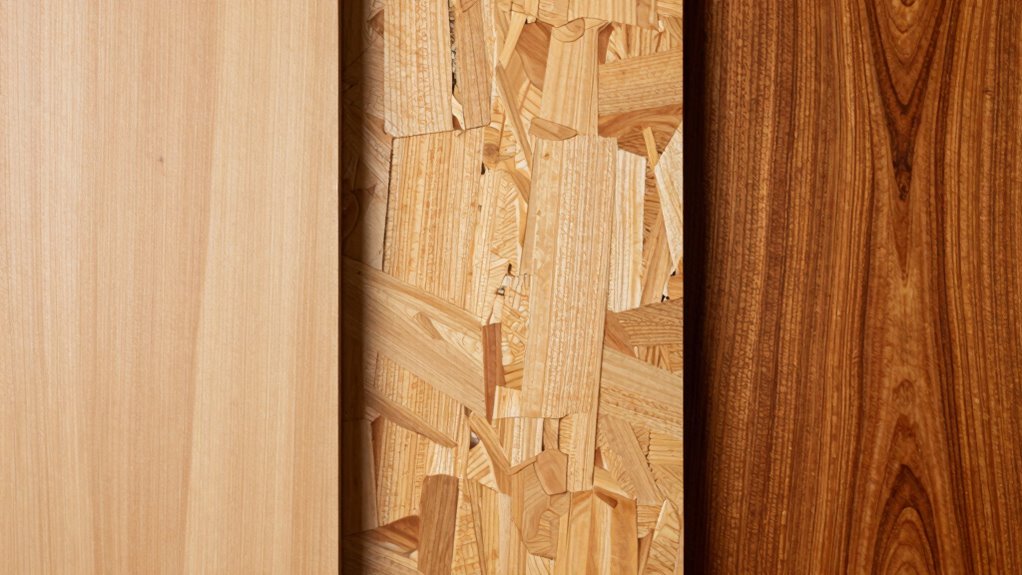
Understanding the main differences between MDF, plywood, and solid wood helps you make better choices for your projects. MDF has a smooth surface with a consistent appearance, lacking distinct grain patterns, which makes it ideal for painted finishes. Plywood features visible grain patterns that vary across layers, giving it a more natural look. Solid wood displays unique and prominent grain patterns, adding character and authenticity to furniture. When considering environmental impact, MDF often uses adhesives and resins that can release formaldehyde, whereas plywood and solid wood generally have a lower chemical footprint if sourced responsibly. Solid wood is renewable and biodegradable, making it an eco-friendlier option. Additionally, grain visibility varies among these materials, influencing their aesthetic appeal and suitability for different styles and applications. Understanding the environmental impact of each material can help you select options that align with sustainable practices. Recognizing the cost differences is also important, as these materials vary significantly in price depending on quality and sourcing. Knowing these differences helps you select the right material based on appearance, sustainability, and project needs.

LotFancy Basswood Sheets, 6 Pack, 12 x 12 x 1/16 Inch, Plywood Sheets with Smooth Surfaces, 1.5mm Craft Wood Board for Laser Cutting, DIY Architectural Models, Wood Burning and Staining
BASSWOOD SHEETS FOR CRAFTS: You will get 6 pcs unfinished square basswood sheets; Each of these plywood boards…
As an affiliate, we earn on qualifying purchases.
As an affiliate, we earn on qualifying purchases.
How Do MDF, Plywood, and Solid Wood Differ in Strength and Durability?
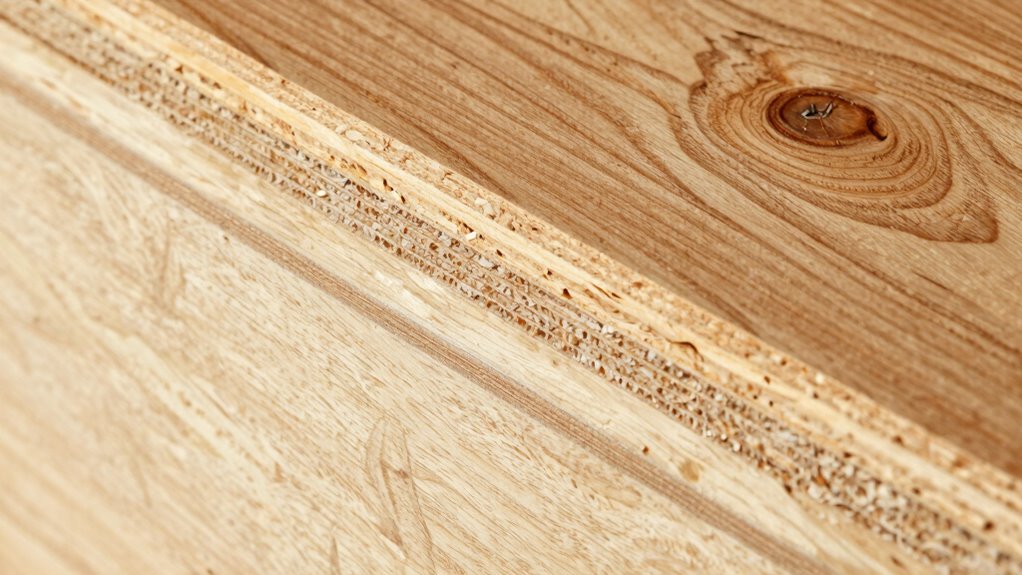
When comparing MDF, plywood, and solid wood regarding strength and durability, each material offers distinct advantages suited to different applications. MDF is dense and resistant to warping but can be weaker under heavy load or moisture. Plywood, with its layered grain patterns, provides excellent strength and bending resistance, making it durable for structural uses. Solid wood offers natural grain patterns and high durability but can be prone to expansion and contraction with environmental changes. Additionally, understanding the upfitting fundamentals helps ensure proper material selection for specific vehicle modifications. For example, selecting the right material based on environmental impact considerations can impact the longevity and sustainability of your projects. Moreover, considering moisture resistance is crucial when choosing materials for outdoor or humid environments. MDF is less resilient to moisture but easy to shape. Plywood’s layered structure enhances strength and environmental impact resistance. Solid wood’s durability depends on the species and grain, but it’s more sensitive to environmental fluctuations. Recognizing the structural properties of each material can guide you in making the most suitable choice for your specific needs. Furthermore, understanding the maintenance requirements of each type can help prolong their lifespan and performance. Understanding these differences helps you choose the right material based on strength needs and environmental impact considerations.

Grain Wood Furniture Shaker 5-Drawer Chest, Solid Wood with a Walnut Finish
Made of 100% solid wood using blockboard construction.
As an affiliate, we earn on qualifying purchases.
As an affiliate, we earn on qualifying purchases.
When Should You Use MDF for Your Projects?
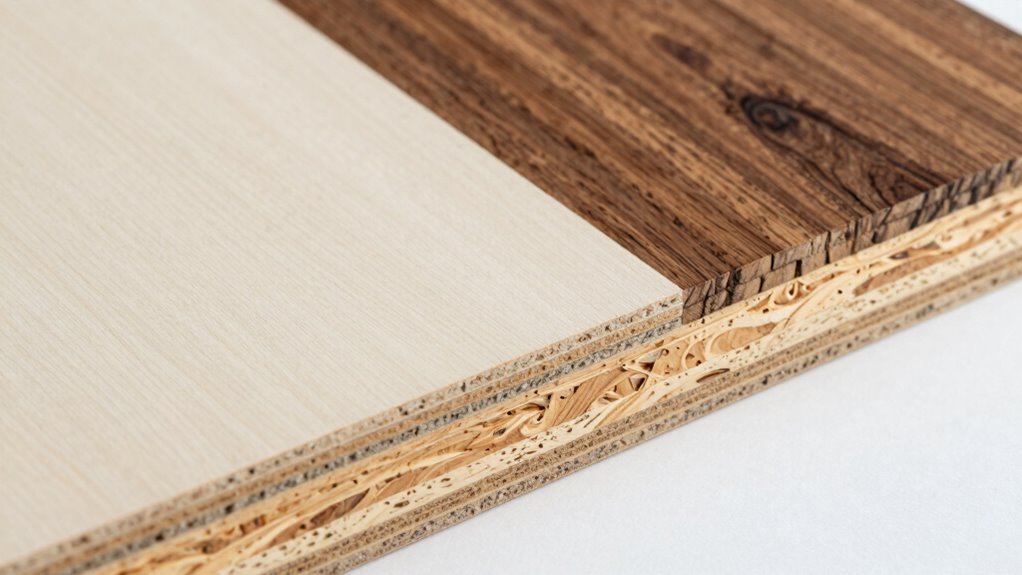
MDF is an excellent choice for projects where smooth, consistent surfaces are essential, especially when intricate cuts and detailed finishes are required. It’s ideal for decorative surface options like painted furniture, cabinetry, and decorative panels, offering a flawless finish without visible grain or imperfections. You should consider MDF when you need a uniform material that can be easily shaped and detailed. Additionally, MDF’s high-quality finish makes it a preferred choice for many interior design applications. However, keep in mind its environmental impact; MDF often contains formaldehyde-based resins, which can affect indoor air quality. If you’re prioritizing a smooth, versatile surface and are mindful of environmental concerns, MDF is a smart choice. Its affordability and ease of customization make it perfect for projects demanding precision and a refined look.
What Are the Best Applications for Plywood?
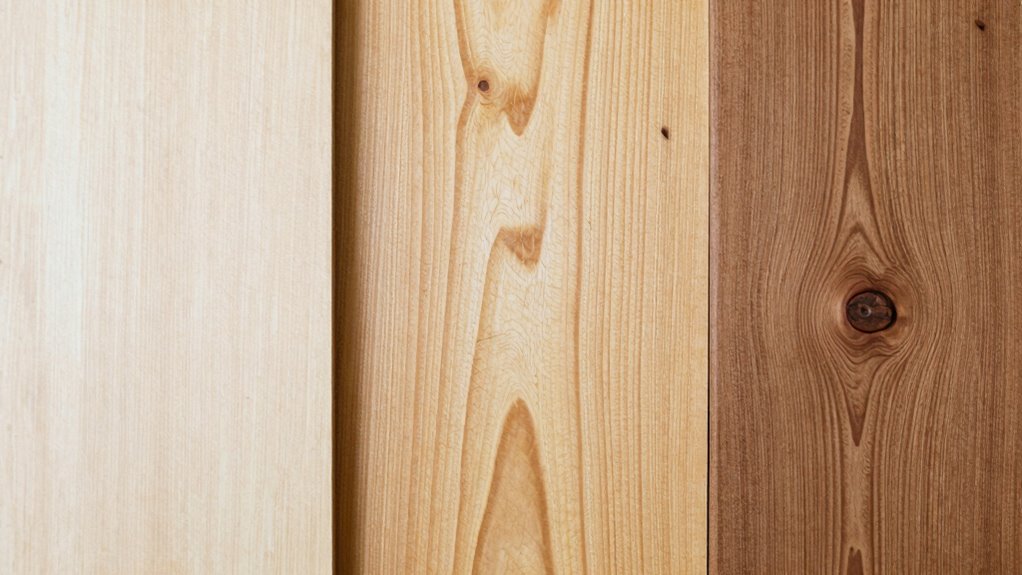
Plywood works well for structural panels like flooring, roofing, and wall sheathing because of its strength and stability. It’s also a popular choice for furniture and decorative projects, thanks to its versatility and smooth surface. If you need durable, reliable material, plywood is often your best option. Additionally, its moisture resistance makes it suitable for environments exposed to humidity. Its manufacturing process enhances these qualities, making it a dependable material for various applications. When selecting plywood, considering safety and quality standards can help ensure you choose a product that performs reliably over time, especially since heat distribution is an important factor when using plywood in certain applications. Understanding material durability can further aid in selecting the right type of plywood for your project.
Structural Panel Uses
Plywood’s strength, durability, and versatility make it an ideal choice for a wide range of structural applications. Its layered composites provide exceptional stability and load-bearing capacity, making it suitable for demanding projects. You’ll often see plywood used where strength matters most, such as in flooring substructures, wall sheathing, and roofing structures. Decorative veneers can enhance its appearance for exposed surfaces, while layered composites ensure durability under stress. Its resistance to warping and cracking adds to its reliability in structural roles. Additionally, understanding the different types of plywood can help you select the best option for your specific project needs based on your requirements. Recognizing the types of plywood can further optimize your material choice for specific applications. Knowing the manufacturing process behind plywood can also help you assess its quality and suitability for different tasks. The performance characteristics of plywood, such as moisture resistance and load capacity, are crucial factors to consider for long-lasting results. You can confidently use plywood in construction projects that require sturdy, dependable panels. Whether for framing or supporting other materials, plywood delivers performance and resilience across various structural needs. Being aware of support breakfast options available in your area can also inspire creative ways to incorporate quality meals into your construction or DIY projects, providing energy and motivation.
Furniture and Decor Applications
Thanks to its strength, stability, and versatility, plywood is a popular choice for a variety of furniture and decorative projects. Its design versatility allows you to create everything from sleek cabinets to intricate wall panels. Plus, plywood’s layered construction offers durability and a smooth surface, making it ideal for both functional and aesthetic pieces. When considering environmental impact, opt for sustainably sourced plywood to reduce ecological footprints. Here’s a quick overview:
| Application | Why It Works |
|---|---|
| Cabinets & Shelves | Strong, stable, and customizable |
| Wall Panels | Stylish, durable, and eco-friendly options |
| Furniture Frames | Supports weight and resists warping |
| Decorative Accents | Unique grain patterns for visual appeal |
| Children’s Furniture | Safe, sturdy, and resilient |
Why Choose Solid Wood for High-Quality Furniture?
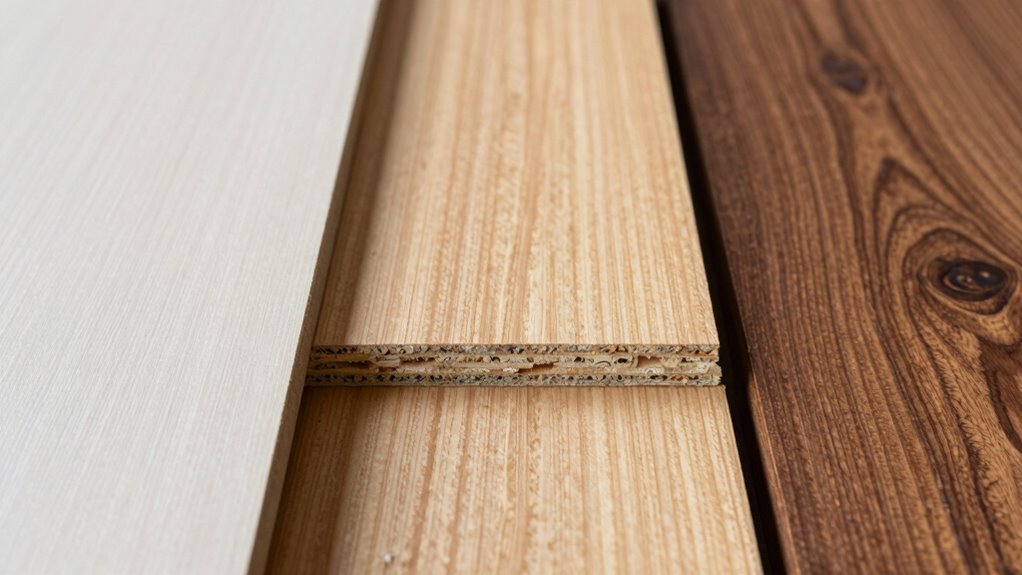
Choosing solid wood for high-quality furniture means investing in durability and timeless beauty. Its unique grain patterns add character and elegance that age gracefully, making each piece truly one-of-a-kind. Solid wood also tends to be more environmentally friendly when sourced responsibly, as it’s a renewable resource with minimal processing. Additionally, it offers unmatched strength, ensuring your furniture lasts for generations. You’ll appreciate its ability to be sanded and refinished, keeping it looking new over time.
Some reasons to choose solid wood include:
- Rich, distinctive grain patterns that enhance aesthetics
- Longer lifespan and better repairability
- More sustainable options with responsible sourcing
This makes solid wood an excellent choice for those seeking quality, style, and environmental consciousness.
How Much Do MDF, Plywood, and Solid Wood Cost?
Understanding the cost differences between MDF, plywood, and solid wood helps you make smarter choices for your projects. You’ll find that prices vary based on material quality and size, but there are budget-friendly options for every need. Considering your budget now guarantees you select the right material without surprises later. Additionally, floating on water options like water-resistant materials can impact overall costs depending on the environment and usage.
Material Price Differences
When comparing the costs of MDF, plywood, and solid wood, you’ll notice significant price differences that can influence your project budget. MDF tends to be the most affordable option, making it ideal for budget-conscious projects. Plywood offers a balance between cost and durability, though prices can vary based on quality. Solid wood is usually the most expensive, especially premium hardwoods, but provides natural beauty and strength. Additionally, advanced manufacturing techniques can affect the overall pricing and quality of these materials. Understanding these material price differences helps you make smarter decisions, aligning your project needs with your budget constraints. Moreover, considering wood grain and finish can influence both the aesthetic appeal and the overall cost of your chosen material. Recognizing the impact of material type on longevity can further guide your selection process to ensure durability over time.
Cost-Effective Options Available
If you’re looking to stay within your budget, knowing the actual costs of MDF, plywood, and solid wood can help you make smarter choices. A clear cost comparison reveals that MDF is generally the most affordable option, making it ideal for projects on a tight budget. Plywood tends to fall in the middle, offering a balance between price and durability. Solid wood, while often more expensive, provides natural beauty and strength, which can justify the higher cost for certain applications. Affordability factors, like the project’s scope and desired finish, influence your selection. If cost-effectiveness is your priority, MDF often wins, but understanding your specific needs will help you choose the best material without overspending.
Budget Considerations
Curious about how much each material costs? Budget considerations play a big role when choosing between MDF, plywood, and solid wood. MDF is generally the most affordable option, especially if you prioritize budget over appearance. Plywood tends to cost more but offers better durability and can be sustainably sourced, reducing environmental impact. Solid wood is usually the priciest, but it provides unmatched strength and aesthetic appeal.
- MDF is budget-friendly and ideal for projects where cost matters most.
- Plywood strikes a balance between cost and sustainability, with options for eco-friendly sourcing.
- Solid wood demands a higher investment but offers long-term value and natural beauty.
Choosing wisely depends on your financial limits and environmental priorities.
How Easy Is It to Work With MDF, Plywood, and Solid Wood?
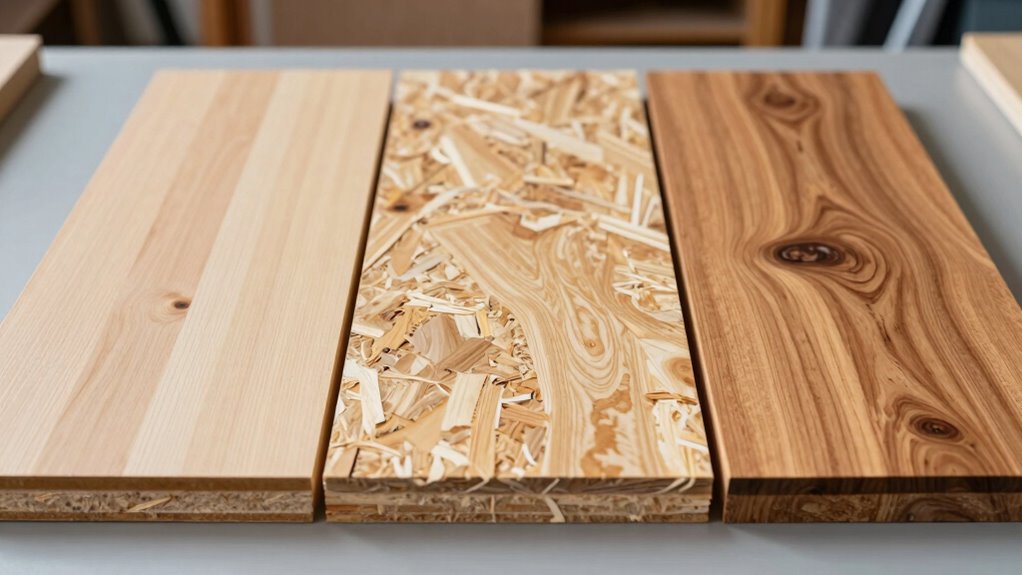
Working with MDF, plywood, and solid wood each presents its own set of challenges and advantages. MDF is highly manageable because it has a smooth surface and uniform density, making it easy to cut and shape, though its lack of distinct grain patterns means it doesn’t reveal saw marks easily. Plywood offers moderate ease of working, with layered grain patterns that can complicate cutting slightly, especially along the edges. Solid wood provides a natural feel, but its grain patterns can vary greatly, and some species are more difficult to cut cleanly. Overall, MDF is the easiest to work with in terms of precision, while plywood and solid wood require more attention to grain direction and cutting techniques. Your choice depends on your project’s complexity and desired finish.
What Are the Aesthetic Finishes and Looks of Each Material?
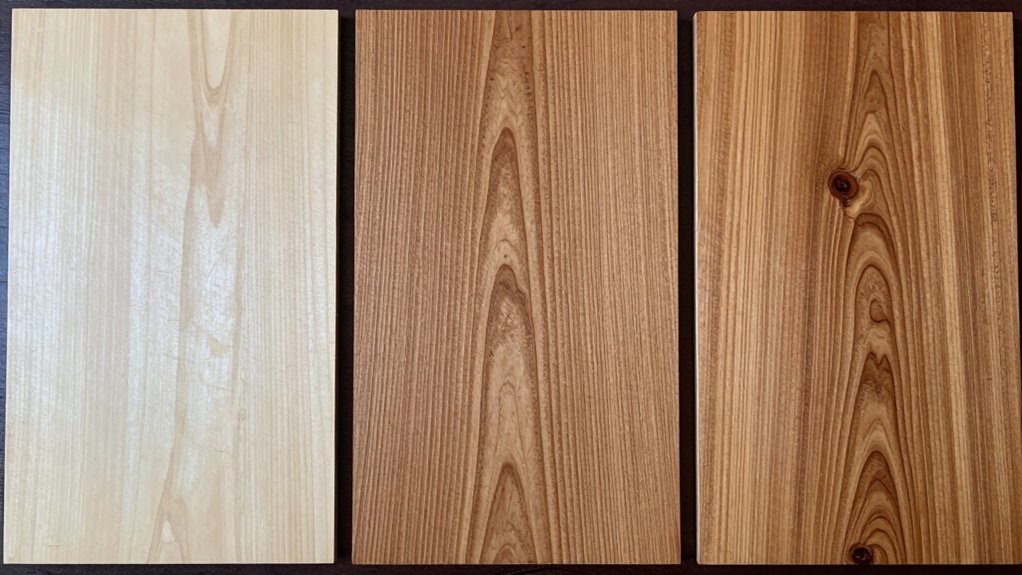
Each material offers distinct aesthetic qualities that can greatly influence the look of your project. MDF has a smooth surface ideal for finishing techniques like painting and veneer, providing a sleek, uniform appearance. Plywood features a natural, layered surface with visible grain patterns, adding warmth and character. Solid wood showcases rich, unique grain textures that vary with species, offering an authentic, timeless look.
Different materials bring unique aesthetic qualities, from sleek MDF to textured plywood and rich solid wood.
- MDF’s surface textures can be easily customized with paint or laminate finishes.
- Plywood’s layered edges and surface grain create a rustic or modern vibe depending on the finish.
- Solid wood’s natural grain and knots add depth and personality, highlighting craftsmanship.
Choosing the right material depends on the aesthetic effect you desire and the finishing techniques you prefer.
How to Decide Which Material Is Right for Your Next Project?
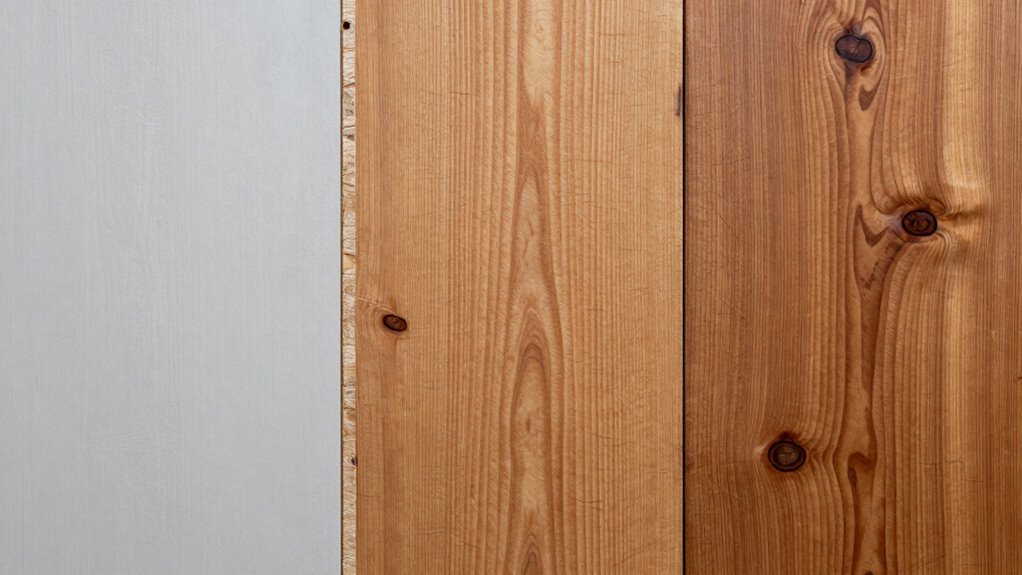
Choosing the right material for your project hinges on understanding both its aesthetic qualities and how you’ll finish it. Consider the grain patterns, which influence the visual appeal, and the environmental impact of each option. Plywood offers versatile grain patterns and lower environmental concerns due to its layered construction. Solid wood displays natural, distinctive grains but may be less sustainable depending on sourcing. MDF provides a smooth surface with no grain pattern, ideal for painted finishes, and has a lower environmental footprint if sourced responsibly. Use this table to compare key factors:
| Material | Grain Patterns | Environmental Impact |
|---|---|---|
| MDF | None | Lower if recycled, formaldehyde concerns |
| Plywood | Layered, varied | Moderate, depends on veneer source |
| Solid Wood | Unique, natural | Higher if not sustainably sourced |
Frequently Asked Questions
How Environmentally Friendly Are MDF, Plywood, and Solid Wood Options?
You’ll find that solid wood generally has the best environmental impact due to its renewability and minimal processing, especially when sourced sustainably. Plywood often uses adhesives with formaldehyde, which can impact air quality, but choosing low-VOC options helps. MDF typically involves more adhesives and resins, making it less eco-friendly. Always check for sustainability practices like FSC certification to guarantee materials are responsibly harvested and environmentally conscious.
Can MDF, Plywood, and Solid Wood Be Recycled or Reused?
You can recycle and reuse MDF, plywood, and solid wood through various recycling processes. MDF may be challenging due to adhesives, but some facilities process it into particleboard or fuel. Plywood and solid wood are more easily repurposed—think furniture, flooring, or art projects. Reuse possibilities are plentiful, especially if you sand, refinish, or repurpose these materials, extending their life and reducing waste.
What Are the Best Adhesives and Finishes for Each Material?
Ever wondered which adhesives and finishes work best for your project? For MDF, use PVA glue for strong adhesion and water-based paints for finishing—these guarantee good adhesive compatibility and smooth finishes. Plywood responds well to contact cement and oil-based finishes that penetrate its layers. Solid wood benefits from polyurethane adhesives and oil-based or shellac finishes that enhance its natural beauty. Choosing the right combination ensures durability and a professional look.
How Do Humidity Levels Affect the Stability of Each Material?
Humidity effects markedly impact each material’s stability. High humidity causes MDF and plywood to expand, leading to warping or swelling, while solid wood also expands but can be more resilient if properly sealed. Low humidity can cause these materials to contract, creating gaps or cracks. You should control your environment’s humidity levels to minimize material expansion or contraction, ensuring your project remains stable and durable over time.
Are There Health Considerations When Working With These Materials?
Working with these materials can feel like handling toxic missiles if you’re not cautious. MDF, in particular, emits VOCs that could irritate your eyes and lungs, raising allergy concerns. Plywood and solid wood typically pose fewer health risks, but always guarantee proper ventilation and wear masks. Choosing low-VOC or formaldehyde-free options helps minimize health issues, making your workspace safer and more comfortable.
Conclusion
Choosing between MDF, plywood, and solid wood depends on your project needs. Did you know that plywood is often twice as strong as MDF for load-bearing tasks? By understanding each material’s strengths—from affordability and ease of use to durability and appearance—you can make smarter choices. Whether you’re crafting furniture or finishing a wall, selecting the right material guarantees your project stands the test of time and looks great.