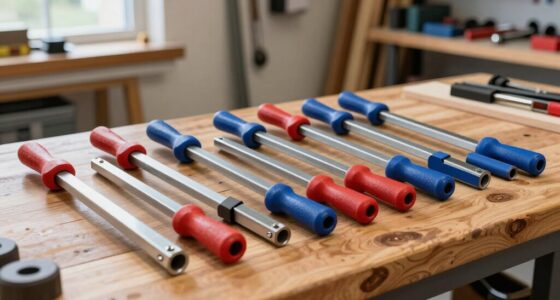
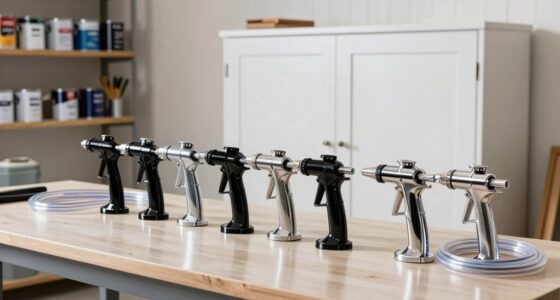
This checklist is for DIY woodworkers choosing clamps and workholding for projects at home or in the shop. It covers gluing, positioning, and securing work so you can match each tool to the job.

Get business pricing on tools and workshop supplies
- Business-only prices and quantity discounts
- Tax-exempt purchasing
- Multiple users, one account, clear invoices
The sections move through bar, F-style, parallel, and spring clamps, then bench vises and bench dogs. Some slots offer buying guidance only; the others include a named pick to consider.
Start with the kind of work you do most, then check opening capacity, throat depth, and how the tool attaches to your bench or project. Use the look-for points to compare options and confirm dimensions and compatibility before buying.
Bar Clamps
Bar clamps are useful when a project needs pressure across a longer span, such as during a glue-up. The right choice depends on the dimensions of your work and where you can place the clamp. Measure the project first, including any blocks or cauls that will sit between the clamp and the wood.
A common mistake is choosing by maximum opening alone. Check the bar length, throat depth, and how the clamp handle and head will fit around the assembly. Consider whether you need one clamp or several spaced along the joint, and make sure the pressure can be applied without shifting the pieces. Plan clamp placement before spreading glue so you are not improvising while parts are wet.
For delicate or finished surfaces, use protective pads or scrap blocks between the clamp and the work. Compare how the clamp locks and adjusts, and check that its stated capacity covers your intended setup. Fit and access matter as much as reach.
What to look for:
- Opening capacity that covers the assembled work and any cauls
- Throat depth suited to where pressure must be applied
- Bar length and profile that fit your storage and project setup
- A locking and adjustment mechanism you can operate around the work
- Protective pads or room to add sacrificial blocks
F-Style Clamps
F-style clamps offer adjustable reach in a form that can work for many general shop tasks. Their sliding jaw makes it possible to position the clamp around different thicknesses, but the useful range depends on both the opening and the throat depth. Match the clamp to the work rather than assuming one size will cover every project.
Check how easily the sliding jaw moves and locks, especially if you will be repositioning clamps frequently. A common buying mistake is overlooking handle clearance: the clamp may technically fit, yet leave too little room to tighten it beside a panel, frame, or bench edge. Think about how many clamps can be applied at once and where each one will sit. Dry-fit the arrangement before starting a glue-up.
Also consider pressure distribution. Narrow contact points can mark wood or concentrate force, so protective pads or scrap blocks may be useful. Verify the clamp’s stated capacity and construction details for the tasks you expect to do. Comfortable adjustment helps when several clamps need attention during assembly.
What to look for:
- Opening range suited to your usual stock and assemblies
- Throat depth that reaches the intended clamping point
- Sliding jaw that repositions and locks securely
- Handle clearance around the project and workbench
- Contact pads or space for protective blocks
Parallel Clamps
Parallel clamps are intended for setups where keeping the jaws aligned matters, such as bringing boards together during a panel glue-up. The listed pick is “Parallel Clamps for Woodworking, 24-inch, 2-Pack.” Its stated length and pack size give you a starting point, but confirm that the opening and clamp arrangement match the panels you plan to assemble.
A common mistake is focusing only on the 24-inch measurement. Check what that measurement refers to, the usable opening, throat depth, and whether the pair is enough for your panel width and glue-up plan. You may need additional clamps to distribute pressure along a longer joint. Plan the spacing and consider alternating clamps above and below the work to help manage alignment.
Before buying, review the product details for jaw contact, adjustment, and any included accessories. Protect the wood from marks with suitable pads or barriers, and confirm you can tighten each clamp without the handles colliding with the bench or neighboring clamps. Test the layout dry so the clamps are ready when adhesive is applied.
What to look for:
- Confirm the stated 24-inch dimension and usable opening
- Check throat depth against the panel or assembly
- Determine whether a 2-pack covers the planned clamp spacing
- Look for details on jaw alignment and adjustment
- Plan protective barriers and handle clearance
Parallel Clamps for Woodworking, 24-inch, 2-Pack

These heavy-duty parallel clamps feature a 4-way pressure design with parallelogram couplers, ensuring flat panels and flush joints in woodworking projects. Fully adjustable to accommodate panels up to 24 inches wide and 3 inches thick, they are built from durable steel with a powder-coat finish for longevity.
Pros:
- Innovative 4-way pressure for even clamping
- Fully adjustable for various project sizes
- Durable construction with rust-resistant finish
- Includes two clamps for efficient workflow
Cons:
- May be heavier than standard clamps
- Adjustments require manual setup
Best for: Woodworkers planning smaller panel glue-ups
Not ideal for: Assemblies whose span or clamp spacing exceeds the set
Bottom line: Verify usable reach and plan how many clamps your glue-up requires.
Spring Clamps
Spring clamps are handy when you need a quick hold for light positioning or temporary tasks. They are typically chosen for convenience, so consider how much pressure your work actually needs and whether the clamp can reach the spot. Use them for suitable tasks rather than expecting a quick clamp to replace a firmly tightened clamp for every glue-up.
Check the jaw opening, throat depth, and contact shape against the material. A frequent mistake is buying clamps that open wide enough but do not reach around the work, or whose narrow jaws leave marks. Make sure the spring action feels manageable for repeated use and that the clamp can be positioned without blocking your hands or tools. Try the placement before relying on it to hold a piece in alignment.
For finished or soft surfaces, use a protective layer between the jaws and the wood. Consider how many clamps are needed to hold the work evenly, and confirm that the spring pressure is appropriate for the material and task. Access and protection are practical parts of the fit check.
What to look for:
- Jaw opening suited to the material thickness
- Throat depth that reaches the intended holding point
- Jaw shape and contact area appropriate for the work
- Spring action comfortable for repeated positioning
- Room for protective pads or scrap between jaws and wood
Bench Vise
A bench vise holds work steady while you shape, assemble, or adjust it. The named pick is the Yost HD650-C Heavy Duty 6-1/2 Inch Mechanics Work Bench Vise with Swiv. Since the product name identifies a 6-1/2-inch vise and includes “Mechanics,” check the product details carefully to confirm that its jaw design and mounting suit woodworking.
A common mistake is assuming a vise will attach to any bench or grip wood without marking it. Verify the mounting pattern, required bench thickness, jaw opening, and jaw depth. For woodworking, consider whether the jaws accept replaceable wood faces or whether you can add protective liners. Confirm the mounting fit and the contact surface before committing to a setup.
Also account for the vise’s footprint and how its position affects your working space. If a swivel feature is part of the exact model, review its range and locking arrangement in the product listing; do not rely on an abbreviated name to establish those details. Check the full specifications and make sure the vise can hold the shapes and sizes you typically work with.
What to look for:
- Confirm the full model name and woodworking suitability
- Jaw opening and depth appropriate for your workpieces
- Mounting pattern compatible with your bench
- Options for protective or replaceable jaw faces
- Footprint and swivel details confirmed in the product listing
Yost HD650-C Heavy Duty 6-1/2 Inch Mechanics Work Bench Vise with Swivel Base an
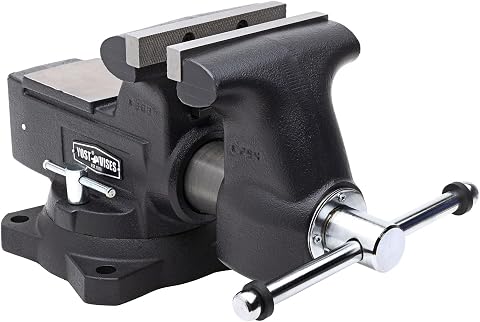
The Yost HD650-C is a heavy-duty mechanics bench vise made from 60,000 PSI ductile iron, featuring a 6-1/2 inch jaw width, a large anvil surface, and a secure swivel base. Designed for professional and heavy-duty use, it provides high clamping force and durability for woodworking and metalworking projects.
Pros:
- Heavy-duty construction with high clamping force
- Durable 60,000 PSI ductile iron material
- Includes replaceable pipe jaws and a secure swivel base
- Large anvil surface for versatile use
Cons:
- Heavy weight may be difficult to move
- Requires proper setup to ensure safety
- No mention of included accessories
Best for: Woodworkers whose bench and workpieces suit this vise’s specifications
Not ideal for: Benches with incompatible mounting or projects needing different jaw capacity
Bottom line: Confirm the jaw faces, mounting, and full model specifications before choosing this vise.
Bench Dogs
Bench dogs work with compatible bench openings and workholding setups to help position or secure a workpiece. The listed pick is “Woodworking Bench Vise, Portable Hard Wood Vise for Workbench.” The name describes a portable wooden vise, so check the listing to clarify its design and whether it functions as a bench dog or requires a different mounting arrangement.
A common mistake is assuming that anything labeled for a workbench fits standard dog holes. Measure the openings and spacing on your bench, then compare them with the product’s dimensions and attachment method. Check whether the item is intended to work alone, with a vise, or with a particular bench configuration. Compatibility comes first because a mismatch can prevent secure positioning.
Consider the size and shape of the workpieces you need to hold, along with how much adjustment the setup allows. Wood contact may be gentler than bare metal, but confirm the contact surface and whether it can be replaced or adapted. Review the complete product details and compare them with your bench before purchase.
What to look for:
- Clarify whether the item is a bench dog, vise, or combined setup
- Measure bench holes and spacing for compatibility
- Check dimensions and the attachment method
- Confirm how it works with an existing vise or bench
- Review contact surfaces and adjustment range
Woodworking Bench Vise, Portable Hard Wood Vise for Workbench

This portable woodworking vise is made from high-quality, impact-resistant beech wood with a non-toxic finish, providing a gentle clamping surface that protects workpieces. Compact and lightweight, it measures 18.5 x 11 x 2.7 inches and weighs 13 lbs, making it easy to carry and suitable for various workspaces.
Pros:
- Made from durable, impact-resistant beech wood
- Compact and lightweight for portability
- Protects workpieces with wooden clamping surface
- Includes versatile accessories for various projects
Cons:
- Limited jaw opening size for larger workpieces
- Wooden construction may be less durable than metal vises over time
- Not suitable for heavy-duty industrial use
Best for: Woodworkers with a compatible workbench setup
Not ideal for: Benches whose holes or mounting arrangement do not match
Bottom line: Verify the product’s actual design and dimensions against your bench.
Buy in the order that solves your most frequent workholding problem: first the clamps or vise needed for your current projects, then additional sizes or accessories after you know where your setup falls short. Measure before you buy, and give compatibility checks priority for bench-mounted items.
You do not need every tool at once. Start with a simple, well-matched setup, test it on a dry assembly, and add pieces as your projects call for them. Thoughtful fit checks make it easier to work steadily and protect your wood.