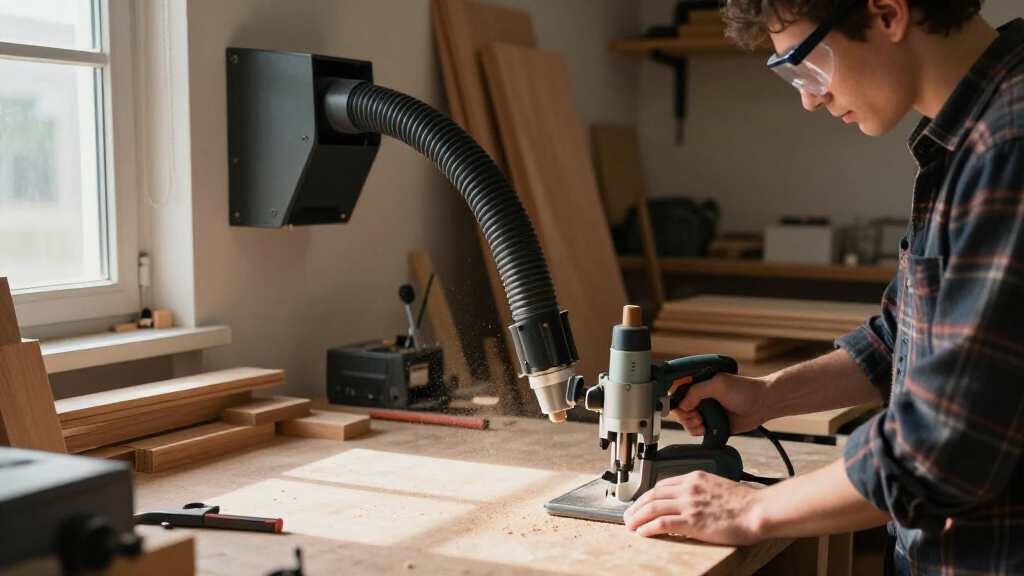

Among these woodworking dust collection systems, the Bucktool 1.2 HP Auto-Start Dust Collector is my best overall pick because its 750 CFM airflow and automatic activation offer a strong balance of suction and everyday convenience. The WEN DC1300 stands out for larger shops needing far more airflow and collection capacity, while the Dustopper PRO is a practical entry point for buyers who already own a compatible shop vacuum. The main tradeoffs are airflow versus footprint, fine-dust filtration versus cost, and complete collectors versus separators that require another suction source. Buyers also need to match hose size, electrical demand, and collection capacity to their machines rather than choosing by CFM alone. Continue reading for the full breakdown and buyer-specific recommendations.
Listen free for 30 days with Audible
Thousands of audiobooks and originals — cancel anytime.
Start your free trialAs an affiliate, we earn on qualifying purchases.
Complete the kit


Key Takeaways
- The Bucktool 1.2 HP model offers the strongest all-around balance in this group, pairing 750 CFM with auto-start convenience that the similarly sized WEN and POWERTEC options lack.
- The WEN DC1300 leads the roundup in stated airflow at 1,300 CFM, but its 14-amp motor, larger footprint, and 5-micron filtration make it better suited to capacity-focused shops than small workspaces.
- The POWERTEC wall-mount collector is the space-saving specialist, and its 1-micron bags target finer particles than the 5-micron WEN DC1300 despite offering much lower airflow.
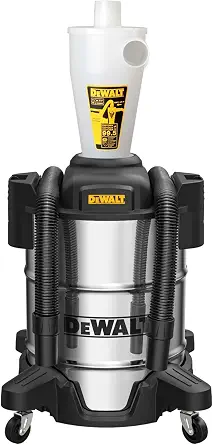
- The Dustopper PRO and 10-gallon stainless-steel separator are not stand-alone collectors; both make more sense as pre-separators for a shop vacuum or existing dust system.
- Capacity divides the lineup almost as much as suction: the 12- and 15-gallon WEN models suit modest workloads, while the VEVOR and WEN DC1300 reduce emptying during high-volume planing or jointing.




| woodworking dust collection system | Airflow |
|---|---|
| WEN Woodworking Dust Collector | 600 CFM |
| Bucktool 1.2 HP Auto-Start Dus | 750 CFM |
| WEN Woodworking Dust Collector | 660 CFM |
| POWERTEC 1 HP Wall Mount Dust | 560 CFM |
| Dustopper PRO 99.9% Efficiency | — |
| Dust Separator with 10 Gallon | — |
| VEVOR 1100 CFM 1.5HP Dust Coll | 1100 CFM |
| WEN DC1300 1,300 CFM 14-Amp 5- | 1300 CFM |
More Details on Our Top Picks
WEN Woodworking Dust Collector with 7.4-Amp Motor and 15-Gallon Bag
I place the WEN 7.4-Amp Dust Collector in the Best Flexible Installation slot because its caster base, handle, and wall-mount option let a small shop choose floor mobility or reclaim floor space. Its 7.4-amp induction motor and 9-inch impeller deliver 600 CFM, enough for a single 4-inch machine connection and a meaningful step beyond a shop-vac separator setup. The tradeoff is awkward positioning: the lighter WEN 5.7-Amp Dust Collector claims 660 CFM and weighs only 17 pounds, while this model reaches 41.1 pounds. What this WEN adds is a larger 15-gallon bag and a more substantial motor. I rank it below the Bucktool for automation and airflow, and the missing filtration rating leaves fine-dust performance less clear.
Pros:- Mobile base, handle, and wall-mount option support several shop layouts
- 15-gallon bag requires less frequent emptying than the 12-gallon WEN
- 7.4-amp induction motor drives a substantial 9-inch impeller
- Standard 4-inch port connects directly to many woodworking machines
Cons:- Its 41.1-pound weight makes repositioning harder than with the 17-pound WEN
- 600 CFM trails the smaller WEN model and the 750 CFM Bucktool
- No filtration rating is supplied for judging fine-dust capture
Best for: Woodworkers who want one collector that can roll between stationary machines or mount permanently on a shop wall
Not ideal for: Buyers who frequently lift their collector or need a documented fine-dust filtration rating
- Motor:7.4-amp induction motor
- Impeller:9 inches
- Airflow:600 CFM
- Dust Port:4 inches
- Collection Capacity:15 gallons
- Dimensions:43.3 x 17.7 x 20.1 inches
- Weight:41.1 pounds
- Warranty:2 years
Our verdict“I recommend this WEN to space-conscious woodworkers who value mounting flexibility and bag capacity more than maximum airflow.”
Bucktool 1.2 HP Auto-Start Dust Collector, 750 CFM for Woodworking
I give the Bucktool 1.2 HP Dust Collector the Best Auto-Start Collector role because it removes a small but persistent workshop chore: switching extraction on before every cut. Its 750 CFM airflow exceeds both compact WEN models here, making it better suited to chip-heavy tools such as planers and jointers when connected one at a time. It still lacks the capacity of the 1,100 CFM VEVOR or 1,300 CFM WEN DC1300, so I would not treat it as a whole-shop collection system. The supplied 5-foot hose, reducer set, and three collection bags make the package more complete than most compact alternatives. Its drawbacks are a comparatively bulky footprint, uncertain auto-start compatibility across tools, and no stated filter-micron rating for buyers focused on fine airborne dust.
Pros:- 750 CFM output leads the compact powered collectors in this batch
- Auto-start function reduces missed collection during quick cuts
- Caster wheels allow movement between workshop machines
- Includes three bags, a reducer set, and a 5-foot hose
Cons:- Bulkier than the compact 17-pound WEN alternative
- Auto-start operation may not work with every woodworking tool
- No filter-micron specification is provided
Best for: Solo woodworkers who connect one machine at a time and want dust collection to start automatically with compatible tools
Not ideal for: Multi-machine shops needing central ducting or buyers whose tools may not support the auto-start system
- Motor Power:1.2 HP
- Voltage:120V
- Airflow:750 CFM
- Full-Load Current:6.5A
- Motor Speed:3450 RPM
- Collection Bags:3 included
- Included Hose:5 feet x 4 inches
- Dimensions:16-1/2 x 26-3/8 inches
Our verdict“I favor the Bucktool for one-machine-at-a-time workshops where automatic operation matters more than whole-shop airflow.”
WEN Woodworking Dust Collector with 5.7-Amp Motor and 12-Gallon Bag
I chose the WEN 5.7-Amp Dust Collector as the Best Compact Mobile Collector because it combines a narrow 13-by-14.2-inch footprint with a manageable 17-pound weight. That makes it much easier to wheel between a table saw, bandsaw, and sander than the 41.1-pound WEN 7.4-Amp model. Its claimed 660 CFM also edges past that larger WEN’s 600 CFM, though the 12-gallon bag fills sooner and the smaller motor may be less appealing for sustained chip-heavy work. Lockable casters and an optional wall mount help it fit changing workshop layouts, while the standard 4-inch inlet suits common stationary tools. I rank the Bucktool higher for airflow and automatic starting, but this model’s lighter, smaller format is the better match for a garage shop that gets rearranged often.
Pros:- 17-pound construction is easy to move around a shared workspace
- 660 CFM output is strong for its compact dimensions
- Lockable casters provide mobility without sacrificing stability
- Optional wall mounting can free limited floor space
Cons:- 12-gallon bag needs emptying sooner than the larger WEN bags
- Single 4-inch connection is not designed for simultaneous machine collection
- No noise level or filter-micron rating is stated
Best for: Garage-shop woodworkers who frequently move one collector among several 4-inch dust ports
Not ideal for: High-volume planer users who need a larger bag or buyers who require a documented noise or filtration rating
- Motor:5.7 amps
- Airflow:660 CFM
- Dust Port:4 inches
- Collection Capacity:12 gallons
- Dimensions:34.25 x 13 x 14.2 inches
- Weight:17 pounds
- Mobility:Lockable swivel casters and onboard handle
- Warranty:2 years
Our verdict“I recommend this WEN for compact workshops where low weight and easy repositioning outweigh bag capacity and automation.”
POWERTEC 1 HP Wall Mount Dust Collector with 560 CFM and 1-Micron Filter Bags
I rank the POWERTEC 1 HP Wall Mount Dust Collector as the Best Wall-Mounted Fine-Dust Filter because its reusable 1-micron bag provides filtration information missing from both compact WEN collectors and the Bucktool. That rating gives buyers a clearer basis for limiting finer particles returned to the shop. The vortex base helps direct debris into the bag, while a viewing window makes fill checks less disruptive. However, its 560 CFM airflow is the lowest among the powered collectors in this batch, so it makes more sense beside a single saw or sander than on long duct runs. Wall mounting saves floor space but removes the machine-to-machine mobility offered by the WEN models. I also see the inlet grate as a mixed feature: it blocks larger objects, yet potential clogging adds maintenance when collecting stringy shavings.
Pros:- Reusable 1-micron bag provides a defined fine-dust filtration level
- Wall-mounted design preserves valuable workshop floor space
- Vortex base promotes separation and bag loading
- Built-in window allows quick dust-level checks
Cons:- 560 CFM airflow is lower than every other powered collector in this batch
- Fixed wall placement sacrifices the mobility of the WEN and Bucktool models
- Protective inlet grate can collect debris and require frequent clearing
Best for: Small-shop woodworkers who want a permanent wall-mounted collector with a stated 1-micron filtration rating
Not ideal for: Planer-heavy or multi-machine shops that need high airflow, long duct runs, or a collector that moves between tools
- Motor Power:1 HP
- Airflow:560 CFM
- Voltage:120V/240V
- Motor Speed:3450 RPM
- Inlet Port:4 inches
- Filter:Reusable 1-micron bag
- Installation:Wall mounted
- Dust-Level Indicator:Built-in viewing window
Our verdict“I would choose the POWERTEC for a fixed small-shop station where fine filtration and floor-space savings matter more than raw airflow.”
Dustopper PRO 99.9% Efficiency Cyclone Dust Separator
I selected the Dustopper PRO as the Best Shop-Vac Pre-Separator, a different role from the powered collectors in this lineup. It has no motor or collection bag; instead, its cyclone design separates a claimed 99.9% of debris before it reaches a connected vacuum. That can reduce filter loading and bag purchases when collecting sawdust from sanders, routers, and portable tools. Compared with the Bucktool or either WEN collector, it is easier to pair with a compact shop-vac setup, but it cannot supply their 4-inch, high-volume airflow for large stationary machines. The leak-resistant EPDM gasket and two high-flow sweep elbows address common homemade-separator weak points. Still, the required vacuum and separate 5-gallon pail add components, the pail fills quickly under a planer, and specific vacuum compatibility is not documented.
Pros:- Claimed 99.9% separation reduces debris reaching vacuum filters and bags
- EPDM gasket supports a leak-resistant seal on a standard pail
- Two high-flow sweep elbows are included for smoother hose routing
- Compact separator format suits portable-tool collection setups
Cons:- Requires a separate shop vacuum and standard 5-gallon pail
- Five-gallon capacity fills rapidly when handling planer chips
- Compatibility with individual vacuum models is not specified
Best for: Shop-vac owners collecting dust from sanders, routers, track saws, and other small-port woodworking tools
Not ideal for: Woodworkers seeking a self-powered 4-inch collector for planers, jointers, or central shop ducting
- Product Type:Cyclone dust separator
- Claimed Separation Efficiency:99.9%
- Gasket Material:EPDM
- Included Fittings:Two patented high-flow sweep elbows
- Pail Compatibility:Standard 5-gallon pails
- Country of Manufacture:USA
Our verdict“I recommend the Dustopper PRO as a filter-saving shop-vac upgrade, not as a replacement for a powered high-volume dust collector.”
Dust Separator with 10 Gallon Stainless Steel Tank
I give the Dust Separator with 10 Gallon Stainless Steel Tank a specialist role because its durable vessel offers a sturdier alternative to plastic separators such as the Dustopper PRO. The 10-gallon capacity can reduce how often a connected vacuum needs emptying, while stainless steel is better suited to workshop knocks and abrasive debris. It ranks below powered systems such as the WEN DC1300 for whole-shop collection because the listing provides no motor rating or hose compatibility. Buyers must confirm how it will connect to their existing suction equipment. I see this as a useful system add-on, not a complete collector: it can keep debris out of a vacuum, but its limited technical documentation makes it less convenient for anyone wanting a fully specified, ready-to-run package.
Pros:- Stainless steel tank resists workshop wear better than common plastic separator bins
- 10-gallon capacity limits interruptions during moderate cleanup jobs
- Separates dust and debris before it reaches the primary collection machine
- Useful for expanding an existing vacuum-based setup
Cons:- No motor or airflow rating is provided because this is not presented as a complete powered collector
- Hose sizes and equipment compatibility are not documented
- Smaller capacity than the collection bags supplied with the VEVOR and WEN DC1300
Best for: Woodworkers who already own a compatible shop vacuum or collector and want a durable, higher-capacity separation tank
Not ideal for: First-time buyers seeking a complete powered system with clearly documented hose connections and airflow performance
- Product Type:Dust separator
- Tank Capacity:10 gallons
- Tank Material:Stainless steel
- Collected Material:Dust and debris
- Motor Rating:Not specified
- Compatibility:Not specified
Our verdict“I recommend this separator to buyers upgrading an existing suction setup, provided they can verify every hose and machine connection before ordering.”
VEVOR 1100 CFM 1.5HP Dust Collector
I rank the VEVOR 1100 CFM Dust Collector as the better choice for extended woodworking sessions because its 35-gallon collector and 42-gallon filter bag reduce disposal stops. Its 1.5HP motor and 1100 CFM airflow offer far more collection muscle than the 560 CFM POWERTEC wall-mount model. Compared with the WEN DC1300, however, the VEVOR gives up 200 CFM and some collection capacity. Its advantage is finer 2.5-micron filtration versus the WEN DC1300’s 5-micron rating, making it the stronger compromise when airborne fine dust matters more than maximum airflow. The tradeoffs are substantial: this is a large, heavy machine, and output below 90 dB can still feel loud in an enclosed garage. It also cannot match POWERTEC’s 1-micron filtration.
Pros:- 1100 CFM airflow supports demanding woodworking machines
- Large collector and filter bags reduce work interruptions
- 2.5-micron filtration captures finer particles than the WEN DC1300
- Bag access is designed for less cumbersome maintenance
Cons:- Lower airflow and collection capacity than the WEN DC1300
- Bulky, heavy construction consumes valuable floor space
- Sub-90 dB operation may still require hearing protection and disturb nearby rooms
Best for: Frequent furniture makers and cabinet builders who produce sustained chip volume and want fewer bag changes with finer filtration than the WEN DC1300
Not ideal for: Woodworkers in cramped or shared garages who need quiet operation, wall-mounted storage, or filtration finer than 2.5 microns
- Airflow:1100 CFM
- Filtration:2.5 microns
- Motor Power:1.5 HP
- Dust Collector Capacity:35 gallons
- Filter Bag Capacity:42 gallons
- Motor Speed:3400 RPM
- Noise Level:Under 90 dB
Our verdict“I would choose the VEVOR for sustained shop work when finer filtration and long intervals between bag changes outweigh compactness.”
WEN DC1300 1,300 CFM 14-Amp 5-Micron Woodworking Dust Collector
I place the WEN DC1300 highest among these three for raw collection reach. Its 1300 CFM airflow and dual 4-inch inlets make it better suited to a shop with two connected machines than the 1100 CFM VEVOR, while the mobile base lets one collector serve changing work areas. A 50-gallon bag also favors high-volume tools because chips can accumulate longer before disposal. That performance comes with a filtration compromise: the 5-micron rating is coarser than VEVOR’s 2.5-micron filter and POWERTEC’s 1-micron bags, so buyers focused on the finest airborne particles may prefer either rival. The WEN is also heavy, bulky, and likely loud at its 3450 RPM impeller speed. I see its 14-amp motor as a workshop-strength choice that deserves a planned circuit and permanent floor space.
Pros:- Highest airflow of the three products in this batch
- Dual 4-inch inlets support two connected woodworking machines
- 50-gallon collection bag handles high chip volume with fewer emptying stops
- Swivel-caster mobile base helps reposition the collector around a larger shop
Cons:- 5-micron filtration is coarser than the VEVOR and POWERTEC filters
- Heavy, bulky assembly still requires meaningful floor space despite its casters
- High-speed operation can be noisy and requires routine bag and impeller care
Best for: Woodworkers running high-volume stationary machines who want two 4-inch connections, strong airflow, and a large mobile collector
Not ideal for: Small-shop users prioritizing fine-particle filtration, low noise, or a collector that can be stored on a wall
- Airflow:1300 CFM
- Motor Draw:14 amps
- Filtration:5 microns
- Collection Capacity:50 gallons
- Impeller Speed:3450 RPM
- Inlet Configuration:Dual 4-inch inlets
- Impeller Size:10 inches
- Base:Mobile base with swivel casters
Our verdict“I recommend the WEN DC1300 for buyers who value maximum airflow and multi-machine connections more than fine filtration or compact storage.”
How We Picked
I ranked these systems by looking at usable airflow, motor output, filtration rating, collection capacity, portability, installation demands, and workflow features such as automatic startup. Published CFM mattered, but I gave equal weight to whether a machine fits the buyer’s likely tools and shop layout. A high airflow figure has limited value when the electrical circuit, hose network, or available floor space cannot support the collector. I also separated complete dust collectors from cyclone-style separators because they solve different parts of the dust-control problem.
The top positions favor systems that balance collection performance and daily usability across common woodworking machines. Specialized picks rank lower overall when they demand more space, provide less airflow, or require a separate vacuum, yet they can still be the better purchase for a defined need. Filtration influenced the order because capturing chips is not the same as controlling fine airborne dust. I also weighed maintenance burden and capacity, since frequent bag changes or filter cleaning can erase the convenience of a lower-priced machine.
Factors to Consider When Choosing Woodworking Dust Collection Systems
The right collector depends on more than choosing the largest motor or highest advertised CFM. I would start with the dust-producing machine, then work outward through the hose run, filter, collection container, electrical supply, and available space. That approach prevents paying for capacity the shop cannot use or buying a compact unit that struggles with the intended workload.
Match Airflow to the Machine, Not the Marketing Number
Airflow requirements rise sharply when moving from handheld sanders to table saws, planers, and jointers. A compact collector may handle one small machine through a short hose but lose effectiveness when connected to long ductwork or multiple branches. Published CFM figures are usually measured under favorable conditions, while bends, reducers, flexible hose, and dirty filters lower real airflow. I would treat 500 to 750 CFM machines as single-tool solutions for modest runs rather than whole-shop systems. Models rated around 1,100 to 1,300 CFM provide more headroom for chip-heavy machines, though they still need well-designed ducting. Buying extra airflow makes sense only when the port size, hose diameter, and electrical circuit can support it.
Separate Chip Collection From Fine-Dust Filtration
A collector can remove visible shavings while allowing fine airborne particles to pass through its filter bag. Lower micron ratings generally capture smaller particles, making a 1-micron bag more attractive for indoor shops than a basic 5-micron bag. Airflow may fall as filtration becomes finer, especially when the filter loads with dust. I would compare both the micron rating and the available filter area rather than treating either number as the full story. Sanding creates a different hazard profile from planing, so frequent sanding may justify finer filtration or a separate air cleaner. A respirator remains sensible during dusty work because source collection cannot capture every particle.
Plan the Hose Network Before Choosing the Collector
Duct layout can determine performance as much as motor size. Long runs, sharp elbows, narrow hose, and unnecessary adapters create resistance that reduces pickup at the tool. A wall-mounted collector works well when several machines sit near one fixed collection point, while a mobile base is more flexible when tools move around the shop. I would keep flexible hose sections short and use smoother rigid duct for permanent runs where practical. Blast gates help focus suction on one machine, but poorly sealed fittings can waste much of the available airflow. Before buying, map each connection and check whether port diameters and included adapters fit without excessive reduction.
Balance Collection Capacity Against Shop Space
Larger bags and drums reduce emptying, which matters when a planer produces high volumes of chips in minutes. The tradeoff is a bulkier machine that may be awkward in a garage shared with vehicles or household storage. Small containers are easier to handle, yet repeated emptying interrupts work and exposes the user to more dust. I would choose capacity based on the messiest machine in the shop rather than average cleanup needs. Clear or easily inspected containers help prevent overfilling, while disposable liners can make removal cleaner. For occasional projects, a compact 12- or 15-gallon system may be more practical than dedicating floor space to a large bag collector.
Know When a Cyclone Separator Is Enough
A cyclone separator uses spinning airflow to drop chips into a container before they reach a vacuum or collector. This can protect filters, preserve suction longer, and make routine emptying less messy. It does not create suction by itself, so the attached vacuum must still deliver enough airflow for the tool. Shop-vacuum combinations are best matched to smaller ports and high-static-pressure tasks such as sanders, routers, and portable saws. Large stationary machines usually benefit more from a true dust collector with wider hose and greater air volume. I would choose a separator when upgrading an existing vacuum, but choose a complete collector for chip-heavy machinery.
Frequently Asked Questions
Is a 750 CFM dust collector enough for a small woodworking shop?
A 750 CFM collector can serve a small shop well when it connects to one machine at a time through a short, properly sized hose. It is a reasonable match for many table saws, bandsaws, and smaller jointers, though actual performance depends heavily on the tool’s hood design. Long duct runs and multiple open branches can reduce pickup below a useful level. Planers may also overwhelm a modest collector when producing heavy chips at a fast feed rate. I would choose this class for focused single-machine collection, not a complex whole-shop network.
Should I choose a 1-micron or 5-micron filter bag?
A 1-micron filter bag is the stronger choice when fine-dust control matters, especially in a basement or attached garage. A 5-micron bag may flow air more freely and capture chips effectively, but it can release smaller particles back into the room. Filter area and cleanliness also affect performance, so micron rating alone does not predict suction. Buyers who choose a 5-micron system can often improve it later with a compatible finer bag or cartridge filter. I would favor finer filtration for sanding-heavy work and treat room ventilation and respiratory protection as separate safeguards.
Can a cyclone separator replace a full dust collector?
No, a cyclone separator needs a suction source such as a shop vacuum or dust collector. Its job is to remove most chips before they reach the primary filter or bag. Paired with a shop vacuum, it can work well for handheld tools and machines with small dust ports. It is less suitable for large planers or jointers that need high air volume through a wider hose. I would view the Dustopper PRO and stainless-steel tank option as system upgrades rather than complete systems.
Is a 1,100 or 1,300 CFM collector worth the extra space?
Higher airflow earns its footprint when the shop contains chip-heavy stationary machines, longer duct runs, or larger dust ports. It can improve capture around planers, cabinet saws, and jointers where a compact collector may leave debris behind. The benefit shrinks if every connection is reduced to a narrow hose or the tool has a poorly designed dust hood. Bigger units also bring more noise, higher electrical demand, and larger bags to handle. I would pay for this class when production volume and duct length justify it, not simply because the CFM number is larger.
Is a wall-mounted or mobile dust collector better for a garage shop?
A wall-mounted collector preserves floor space and works best when tools stay near fixed hose connections. It can also reduce clutter around a crowded work area, but changing the layout later may require rerouting ductwork. A mobile collector moves directly to each machine, keeping hose runs short and reducing airflow loss. Its base and bag still occupy valuable floor space when stored. I would choose wall mounting for a stable compact layout and a mobile base for frequently rearranged shops.
Conclusion
For most small and midsize shops, my best overall pick is the Bucktool 1.2 HP Auto-Start Dust Collector because 750 CFM and automatic activation balance collection power with daily convenience. The WEN 5.7-Amp 12-Gallon model is the best value for lighter workloads, while the 7.4-amp 15-gallon WEN is the better conventional choice when extra capacity matters. Buyers with limited floor space should favor the POWERTEC wall-mount collector, which also offers finer 1-micron filtration than several higher-airflow options.
For maximum capacity, the WEN DC1300 is my premium pick, combining the highest stated airflow in the group with a 50-gallon bag and mobile base. The VEVOR 1.5 HP collector is the better high-volume alternative for buyers who want 1,100 CFM and a vortex-cone design without stepping up to the WEN’s 1,300 CFM specification. For beginners who already own a shop vacuum, the Dustopper PRO provides the simplest route to better chip separation, while the 10-gallon stainless-steel separator suits buyers who prioritize a rigid, reusable collection tank. My final choice would follow the largest dust-producing tool: compact collectors for short single-machine runs, separators for shop-vacuum setups, and high-airflow bag collectors for planers, jointers, and larger duct networks.
NFL season / tailgating Picks
team gear
As an affiliate, we earn on qualifying purchases.