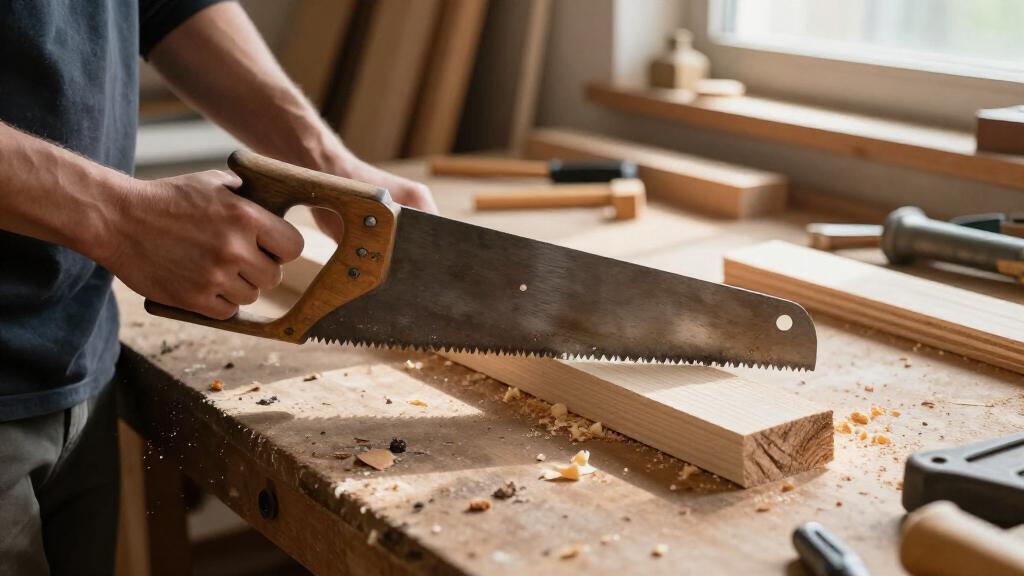
The best hand saw for woodworking depends on the cuts you make most often: fast rough rip cuts, clean crosscuts, or precise joinery. The 9.5-inch Japanese Ryoba pull saw stands out as the best overall pick because its double-edged blade handles both rip and crosscut work in one tool, with a thinner kerf than any Western saw here. For buyers who prefer a push stroke and faster stock removal, the Jorgensen 15-inch 8 TPI saw is the strongest coarse-cut option, while the 3-piece Japanese saw set offers the widest range for the money. The main tradeoff in this category is speed versus finish — coarse Western blades power through lumber but leave rough edges, while fine Japanese pull saws produce glass-smooth cuts at a slower pace. Keep reading for the full breakdown of all 12 saws.

Get business pricing on tools and workshop supplies
- Business-only prices and quantity discounts
- Tax-exempt purchasing
- Multiple users, one account, clear invoices
Complete the kit


Key Takeaways
- Japanese pull saws dominated the top of this comparison because their thin blades and pull-stroke cutting deliver cleaner results for joinery and finish work than any similarly priced Western push saw.
- The Jorgensen 15-inch and Hautmec 14-inch Western saws remain the fastest choices for breaking down rough lumber, but their kerf is nearly double that of the Ryoba-style saws, so expect more waste and rougher edges.
- Six-inch Japanese saws (WORKPRO, RUITOOL, and the 6-inch double-edge SK5) overlap heavily in price and performance; handle comfort and blade replacement availability were the real differentiators between them.
- Multi-blade and multi-tool kits like the 8-in-1 quick-change saw and 5-piece Konvixon set offer convenience, but none of their individual blades match a dedicated saw’s cut quality — they’re best as backup or job-site tools.
- Flush-cut capability was the hidden value driver in this lineup: saws that can trim dowels and plugs flush without marring the surface (RUITOOL, the 3-piece set) solved a problem the general-purpose saws couldn’t.
| Jorgensen 15-Inch Hand Saw, 8 TPI Coarse Blade for Wood Cutting |  | Best for Fast Rough Cuts | Blade Length: 15 inches | Teeth: 8 TPI, triple-ground | Blade Material: SK5 high-carbon steel | VIEW LATEST PRICE | See Our Full Breakdown |
| 14-inch Pro Hand Saw, 11 TPI Fine-Cut with Soft-Grip Handle |  | Best Value General-Purpose Saw | Blade Length: 14 inches | Teeth: 11 TPI | Blade Material: 65Mn steel, heat-treated | VIEW LATEST PRICE | See Our Full Breakdown |
| Japanese Pull Saw – 9.5 Ryoba Hand Saw with Rip-cut and Crosscut |  | Best Overall for Woodworking | Blade Length: 9.5 inches | Type: Ryoba (double-edge, rip and crosscut) | Blade Material: High-carbon steel | VIEW LATEST PRICE | See Our Full Breakdown |
| Japanese Hand Saw, 6-Inch Double-Edge Pull Saw, 14/17 TPI |  | Best for Detail and Flush Cuts | Blade Length: 6 inches | Teeth: 14/17 TPI double-edge | Blade Material: SK5 steel, flexible | VIEW LATEST PRICE | See Our Full Breakdown |
| WORKPRO 6-Inch Japanese Pull Saw, Double-Edged with Beech Handle |  | Best Budget Japanese Pull Saw | Blade Length: 6 inches | Teeth: 14 TPI (rip) / 17 TPI (crosscut) | Blade Material: SK5 high-carbon steel, 0.6mm thick | VIEW LATEST PRICE | See Our Full Breakdown |
| Frocopo 6-Inch Hand Saw for Woodworking and Garden Trimming | 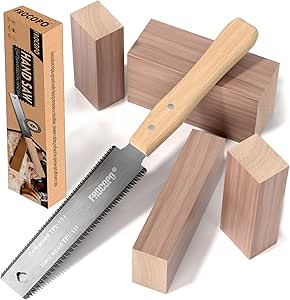 | Best Pocket-Sized Utility Pick | Blade Length: 6 inches | Blade Material: SK5 Steel | Teeth: 17/11 TPI double-edged | VIEW LATEST PRICE | See Our Full Breakdown |
| Hautmec 14 Inch Hand Saw for Wood Cutting, 11 TPI Crosscut Handsaw with Triple-Ground Teeth |  | Best Western-Style All-Rounder | Blade Length: 14 inches | Teeth Per Inch: 11 TPI triple-ground | Blade Thickness: 1.0mm | VIEW LATEST PRICE | See Our Full Breakdown |
| 8-In-1 Multi-Blade Hand Saw with Quick-Change Mechanism |  | Best Versatility for DIY Repairs | Blade Length: 6 inches | Blade Material: Alloy steel | Number of Blades: 8 interchangeable | VIEW LATEST PRICE | See Our Full Breakdown |
| Japanese Hand Saw Set, 3-Piece with 6″ Ryoba, 6″ Flush Cut & 8″ Pruning Blade, SK5 Steel for Woodworking |  | Best Starter Kit for Japanese-Style Sawing | Set Contents: 6″ Ryoba, 6″ Flush Cut, 8″ Pruning Saw | Blade Material: SK5 high-carbon steel | Number of Items: 3 | VIEW LATEST PRICE | See Our Full Breakdown |
| RUITOOL Japanese Hand Saw 6 Inch Double Edge Ryoba Pull Saw for Flush Cuts |  | Best for Fine Finish Work | Blade Length: 6 inches | Blade Material: SK5 steel, flexible | Teeth Per Inch: 14/17 TPI double-edged | VIEW LATEST PRICE | See Our Full Breakdown |
| Konvixon 5PCS Hand Saw Set, SK5 Steel Blade, Hardened Teeth, Teflon Coating |  | Best Multi-Task Starter Kit | Number of Saws: 5-piece set | Blade Material: Flexible SK5 steel | Teeth: 17, dual and triple ground, impulse hardened | VIEW LATEST PRICE | See Our Full Breakdown |
| Japanese Pull Saw Set, 9.5″ & 11.5″ Double Edge Flush Cut Saw |  | Best Two-Blade Precision Set | Blade Lengths: 9.5 inches and 11.5 inches | Teeth Per Inch: 14/18 TPI (fine) and 7/11 TPI (fast) | Blade Material: SK5 steel | VIEW LATEST PRICE | See Our Full Breakdown |
| hand saws for woodworking | Blade Material | Weight | Blade Length | Teeth |
|---|---|---|---|---|
| Jorgensen 15-Inch Hand Saw | SK5 high-carbon steel | 0.61 kg | 15 inches | 8 TPI, triple-ground |
| 14-inch Pro Hand Saw | 65Mn steel, heat-treated | 12 ounces | 14 inches | 11 TPI |
| Japanese Pull Saw | High-carbon steel | 1 kg | 9.5 inches | — |
| Japanese Hand Saw | SK5 steel, flexible | 0.11 kg | 6 inches | 14/17 TPI double-edge |
| WORKPRO 6-Inch Japanese Pull S | SK5 high-carbon steel, 0.6mm thick | 2.72 ounces | 6 inches | 14 TPI (rip) / 17 TPI (crosscut) |
| Frocopo 6-Inch Hand Saw for Wo | SK5 Steel | 2.82 ounces | 6 inches | 17/11 TPI double-edged |
| Hautmec 14 Inch Hand Saw for W | — | 13 ounces | 14 inches | — |
| 8-In-1 Multi-Blade Hand Saw wi | Alloy steel | 8.48 ounces | 6 inches | 32 (per blade) |
| Japanese Hand Saw Set | SK5 high-carbon steel | — | — | — |
| RUITOOL Japanese Hand Saw 6 In | SK5 steel, flexible | 0.11 kg (approx. 3.9 oz) | 6 inches | — |
| Konvixon 5PCS Hand Saw Set | Flexible SK5 steel | 14.4 ounces | 6 inches | 17, dual and triple ground, impulse hardened |
| Japanese Pull Saw Set | SK5 steel | 1.1 pounds | — | — |
More Details on Our Top Picks
Jorgensen 15-Inch Hand Saw, 8 TPI Coarse Blade for Wood Cutting
When the job is about stock removal speed rather than refinement, this Jorgensen stands out. The 8 TPI triple-ground teeth chew through dimensional lumber quickly, and the Teflon-coated SK5 blade keeps the cut from binding — a real advantage on long rip cuts where cheaper uncoated blades tend to stall. Compared with the 14-inch 11 TPI Pro Hand Saw below, this model trades finish quality for raw pace, leaving a noticeably rougher kerf.
That tradeoff defines who belongs here. The aluminum-and-TPE handle is comfortable for extended sessions, but the fixed 15-inch length and coarse pitch make it a poor match for joinery. Anyone doing furniture work should step up to the 9.5-inch Japanese Ryoba instead, which cuts cleaner at half the aggression.
Pros:- Very fast cutting thanks to 8 TPI triple-ground teeth
- Teflon coating reduces friction and resists rust
- SK5 high-carbon steel blade holds an edge through heavy use
- Ergonomic handle with built-in 90-degree cutting guides
Cons:- Coarse pitch limits it to rough work; fine woodworking is out
- Fixed 15-inch blade is awkward in tight spaces
- Handle shape may not suit larger or smaller hands
Best for: DIYers and framer-types who mostly break down boards, trim PVC, or prune and want fast cuts over fine finishes
Not ideal for: Woodworkers focused on joinery, dovetails, or visible finish work — the 8 TPI pitch leaves tear-out that requires heavy cleanup
- Blade Length:15 inches
- Teeth:8 TPI, triple-ground
- Blade Material:SK5 high-carbon steel
- Coating:Teflon (black)
- Handle:Aluminum, TPE, ABS
- Cutting Angle:90 degrees
- Weight:0.61 kg
Our verdict“Buy this if speed on rough cuts matters more than surface finish; skip it for anything that will be seen.”
14-inch Pro Hand Saw, 11 TPI Fine-Cut with Soft-Grip Handle
This 14-inch saw lands in the sweet spot of tooth pitch: 11 TPI is fine enough for presentable crosscuts yet aggressive enough to keep pace on framing-adjacent work. At just 12 ounces, it is lighter than the Jorgensen 15-inch, and the deep gullets clear sawdust fast enough that it does not bog down in thicker stock — a small detail that saves real effort over a long afternoon.
The multi-material flexibility is what separates it from everything else here. Where the WORKPRO and RUITOOL pull saws are wood-only tools, this one handles drywall and plastic pipe without complaint, which makes it the sensible pick for a single-saw household. The compromise is moderation in both directions: it is neither as fast as the 8 TPI Jorgensen nor as clean as a Japanese pull saw. The plastic handle is also the weakest link and may develop play after years of hard use.
Pros:- Versatile across wood, drywall, and plastic pipe
- 11 TPI pitch balances speed and finish quality
- Heat-treated 65Mn steel blade stays sharp
- Light 12-ounce weight reduces fatigue
Cons:- Plastic handle may wear or loosen with heavy long-term use
- Mid-range TPI excels at nothing in particular
- No fine-teeth option for delicate joinery
Best for: Homeowners and hobbyists who want one affordable saw that handles wood, drywall, and plastic competently
Not ideal for: Dedicated woodworkers who need either coarse ripping speed or fine joinery precision — this saw compromises on both ends
- Blade Length:14 inches
- Teeth:11 TPI
- Blade Material:65Mn steel, heat-treated
- Handle:Thermoplastic rubber, non-slip
- Weight:12 ounces
- Recommended Surfaces:Wood, drywall, plastic
Our verdict“The smart default for buyers who want solid all-around performance at a budget price without specializing.”
Japanese Pull Saw – 9.5 Ryoba Hand Saw with Rip-cut and Crosscut
This is the pick that best answers the actual question of this roundup: which saw serves woodworking best? A ryoba-style pull saw with dedicated rip teeth on one edge and crosscut teeth on the other covers nearly every furniture-making task — breaking down stock, cutting tenons, sawing dovetails — with one tool. The thin Japanese blade leaves a narrower kerf than any Western-style saw here, which means less waste, less effort, and a cleaner surface straight off the saw.
Compared with the 6-inch double-edge pull saws from WORKPRO and RUITOOL, the 9.5-inch blade gives it enough reach for serious joinery and board work, not just flush cuts and small repairs. The tension-based pull stroke also demands a lighter touch than the push-stroke Jorgensen; beginners will kink the blade until their technique settles. And with no included blade cover, storage needs a little planning.
Pros:- Dual rip/crosscut edges replace two dedicated saws
- Thin kerf produces exceptionally clean cuts with less effort
- High-quality Japanese steel holds sharpness well
- Wooden handle is comfortable and durably made
Cons:- Requires pull-saw technique; forcing bends the blade
- Indoor woodworking only — not for pruning or site work
- No blade cover included, so safe storage needs a DIY solution
Best for: Serious hobbyist and furniture woodworkers who want one joinery-capable saw for rip and crosscut work
Not ideal for: Impatient beginners or rough-construction users — pull-stroke technique takes practice, and the thin blade punishes forcing
- Blade Length:9.5 inches
- Type:Ryoba (double-edge, rip and crosscut)
- Blade Material:High-carbon steel
- Handle:Wood
- Weight:1 kg
- Origin:Made in Japan
Our verdict“If woodworking joinery is the goal, this is the saw to buy first — it does the widest range of shop tasks well.”
Japanese Hand Saw, 6-Inch Double-Edge Pull Saw, 14/17 TPI
At 14 and 17 TPI on opposing edges, this 6-inch pull saw is the finest-toothed option in this lineup, built for work where a single stray tooth mark ruins the piece — trimming dowels flush, cutting small tenon cheeks, cleaning up 3D-printed or craft components. The flexible SK5 blade can flex flat against a surface to saw off protruding pins without scarring the surrounding wood, something the stiffer Jorgensen and 14-inch Pro saw simply cannot do.
Against the WORKPRO 6-inch, the differences are subtle but real: this one’s higher tooth count and softer grip favor tiny, controlled cuts, while the WORKPRO’s beech handle feels more refined in the hand. The obvious limit is scale — six inches of blade makes short work of small joints but turns a board breakdown into a chore. At 0.11 kg, it disappears into an apron pocket, which is exactly the point.
Pros:- 14/17 TPI teeth deliver very fine, splinter-free cuts
- Flexible blade excels at flush cuts against flat surfaces
- Featherweight 0.11 kg build enables precise control
- Compact enough for tool aprons and tight joinery spots
Cons:- Too small for general-purpose or rough cutting
- Fine teeth clog and slow down in thicker softwood
- No protective sheath included
Best for: Woodworkers and furniture repairers who need a dedicated flush-cut and fine-detail saw alongside their main saw
Not ideal for: Anyone expecting a primary saw — the 6-inch blade is impractical for breaking down boards or any coarse work
- Blade Length:6 inches
- Teeth:14/17 TPI double-edge
- Blade Material:SK5 steel, flexible
- Handle:Plastic, soft grip
- Weight:0.11 kg
- Total Teeth:168
- Recommended Surface:Wood
Our verdict“A specialist’s second saw — add it for flush cuts and detail work, not as your only hand saw.”
WORKPRO 6-Inch Japanese Pull Saw, Double-Edged with Beech Handle
This WORKPRO delivers the Japanese pull-saw experience at the most accessible price in the lineup. The 14 TPI rip edge and 17 TPI crosscut edge mirror the pricier Japanese-made Ryoba’s dual-blade concept in miniature, and the flexible 0.6mm SK5 blade handles trim work and small joinery with clean results. The standout physical difference is the non-slip beechwood handle, which feels warmer and more secure in the grip than the plastic handle on the comparable 6-inch saw from the same batch.
Where the 9.5-inch Ryoba earns its higher price is reach and joinery capacity — six inches limits this saw to small projects, dowels, and model or craft-scale work. Compared with the 6-inch 14/17 TPI detail saw, this one is the better everyday carry for small tasks thanks to the nicer handle, though it gives up nothing in tooth count. The absence of a sheath is a recurring annoyance in this category, and this saw is no exception.
Pros:- Dual rip/crosscut edges at a budget-friendly price
- Comfortable non-slip beechwood handle
- Flexible, corrosion-resistant SK5 blade makes clean cuts
- Featherlight at 2.72 ounces for tight-space control
Cons:- 6-inch blade caps it at small tasks and light joinery
- Very sharp teeth with no sheath demand careful storage
- Blade flexibility requires a light touch to avoid bending
Best for: Beginners curious about Japanese pull saws, or makers who want an affordable, comfortable small saw for hobby-scale projects
Not ideal for: Woodworkers cutting larger stock — the 6-inch blade turns any substantial cut into slow, multi-stroke work
- Blade Length:6 inches
- Teeth:14 TPI (rip) / 17 TPI (crosscut)
- Blade Material:SK5 high-carbon steel, 0.6mm thick
- Handle:Beechwood, non-slip
- Weight:2.72 ounces
- Recommended Surface:Wood
- Warranty:Amazon 30-Day Return Guarantee
Our verdict“The cheapest credible way to try Japanese pull-saw woodworking — just accept the small-blade limitations.”
Frocopo 6-Inch Hand Saw for Woodworking and Garden Trimming
At under three ounces, the Frocopo 6-inch is the lightest saw in this lineup, and that changes how you use it. The double-edged SK5 blade pairs 17 TPI fine teeth on one side with 11 TPI coarse teeth on the other, so one tool handles joinery touch-ups and quick garden trimming without swapping blades. Compared with the RUITOOL 6-inch Ryoba, the Frocopo leans more toward all-purpose utility than finish work — its rectangular blade shape feels sturdier in rough material but less refined for flush cuts. The wooden handle is comfortable but demands occasional care to prevent splintering. The obvious tradeoff is reach: a 6-inch blade limits you to small stock, so anyone breaking down boards should look at the Hautmec 14-inch instead.
Pros:- Double-edged blade covers both fine and coarse cutting without blade changes
- Featherlight 2.82-ounce build virtually eliminates fatigue
- SK5 steel holds a sharp edge through mixed wood and green-branch work
- Ergonomic wooden handle offers a warm, secure grip
Cons:- 6-inch blade is too short for breaking down lumber or long rip cuts
- No sheath or storage case included, so the exposed teeth are a drawer hazard
- Wooden handle needs periodic maintenance to avoid splintering
Best for: DIYers and gardeners who want one ultra-light saw for small woodworking jobs and occasional branch trimming
Not ideal for: Anyone cutting large boards or sheet goods — the 6-inch blade simply can’t cover long strokes efficiently
- Blade Length:6 inches
- Blade Material:SK5 Steel
- Teeth:17/11 TPI double-edged
- Handle Material:Wood
- Weight:2.82 ounces
- Dimensions:12.2″L x 1.8″W x 0.62″H
Our verdict“A grab-and-go mini saw for small cuts and yard touch-ups, not a workshop workhorse.”
Hautmec 14 Inch Hand Saw for Wood Cutting, 11 TPI Crosscut Handsaw with Triple-Ground Teeth
This is the pick for buyers who want a familiar push-stroke Western saw that just works. The 14-inch blade with 11 TPI triple-ground teeth produces clean crosscuts in wood, PVC, and plastic, and the 1.0mm 65Mn high-carbon steel resists the bending that plagues cheaper thin blades. Where the 8-in-1 Multi-Blade Saw asks you to swap blades between materials, the Hautmec powers through most of them with one blade — a real time-saver on mixed home-improvement jobs. The rubberized ABS handle is grippier than the bare wood on the Frocopo, which matters on sweaty or dusty days. The tradeoff: this is a generalist. For fine joinery or flush cuts, the RUITOOL pull saw will out-cut it on precision every time.
Pros:- 14-inch stroke makes quick work of boards and larger stock
- Thick 1.0mm blade resists bending and twisting mid-cut
- Triple-ground teeth deliver noticeably smoother cuts than stamped alternatives
- Non-slip TPR handle stays comfortable through long sessions
Cons:- Teeth dull with heavy use and need sharpening to restore performance
- Blade length still falls short of full-size 15-inch options like the Jorgensen for big framing cuts
Best for: Homeowners and hobbyists who want a single dependable saw for woodworking, PVC, and general repair work
Not ideal for: Fine woodworkers doing joinery or flush trimming — the thick blade and crosscut-only tooth pattern leave a rougher finish
- Blade Length:14 inches
- Teeth Per Inch:11 TPI triple-ground
- Blade Thickness:1.0mm
- Material:65Mn high-carbon steel
- Handle:ABS with TPR rubber
- Weight:13 ounces
- Warranty:1 Year
Our verdict“The safest default choice for general woodcutting when you only want to buy one saw.”
8-In-1 Multi-Blade Hand Saw with Quick-Change Mechanism
If your projects jump between drywall, plywood, plastic, and metal, this 8-in-1 multi-blade saw replaces a whole drawer of tools. The quick-change mechanism lets you swap between eight alloy-steel blades sized for different materials, and the whole package packs down smaller than any dedicated saw here. Compared with the Hautmec 14-inch, it trades raw cutting speed for material range — you’ll work slower, but you’ll never be stuck without the right blade. Against the Evertools 3-piece Japanese set, it offers more blade options at a similar footprint, though none match a true ryoba for fine woodworking. The compromises are real: blades this small demand effort on tough cuts, and the change mechanism has a learning curve that frustrates first-time users.
Pros:- Eight included blades cover wood, metal, drywall, plastic, and plywood
- Quick-change mechanism avoids loose blade handling
- Compact 6.8-inch package fits in a toolbox or kitchen drawer
- Light 8.48-ounce build is easy to carry between jobs
Cons:- Short blades make cutting thick or dense material slow and tiring
- Blade-change mechanism takes practice to operate smoothly
- Plastic handle feels less durable than wood or rubberized alternatives
Best for: Apartment DIYers and home repair tinkerers who need many cutting capabilities in minimal storage space
Not ideal for: Dedicated woodworkers — the short blades and jack-of-all-trades design can’t match a purpose-built saw’s speed or finish
- Blade Length:6 inches
- Blade Material:Alloy steel
- Number of Blades:8 interchangeable
- Teeth:32 (per blade)
- Handle Material:Plastic
- Weight:8.48 ounces
- Dimensions:1.6″L x 2.6″W x 6.8″H
Our verdict“A space-saving problem-solver for mixed-material repairs, not a primary woodworking saw.”
Japanese Hand Saw Set, 3-Piece with 6″ Ryoba, 6″ Flush Cut & 8″ Pruning Blade, SK5 Steel for Woodworking
For woodworkers curious about pull-stroke Japanese saws, this Evertools 3-piece set is the cheapest way to learn the technique properly. You get a double-edged ryoba for general cuts, a flush-cut saw for trimming pegs and dowels flush, and an 8-inch pruning blade — three distinct jobs covered at a bundle price. Compared with buying the RUITOOL 6-inch Ryoba alone, you give up a little refinement in exchange for two extra tools and broader capability. The thin SK5 blades cut on the pull stroke, meaning thinner kerfs and cleaner results than the push-stroke Hautmec 14-inch, but they also demand a lighter touch and some practice. Light-to-medium duty is the ceiling here; there’s no storage case, and the blades won’t survive prying or rough treatment.
Pros:- Three specialized saws cover joinery, flush trimming, and pruning
- SK5 high-carbon steel blades hold a fine, sharp edge
- Pull-stroke design produces thin kerfs and clean finishes
- Bundle pricing undercuts buying each saw individually
Cons:- Requires pull-saw technique that newcomers may find unintuitive
- Limited to light and medium cutting tasks
- No storage case to protect the thin blades between uses
Best for: Beginner and intermediate woodworkers building a first Japanese-saw setup without buying each tool separately
Not ideal for: Impatient users or heavy-duty cutters — pull-saw technique takes practice, and these blades are too thin for aggressive work
- Set Contents:6″ Ryoba, 6″ Flush Cut, 8″ Pruning Saw
- Blade Material:SK5 high-carbon steel
- Number of Items:3
- Cutting Style:Japanese pull stroke
- Model:HDR10014
- Applications:Wood, bamboo, PVC, drywall, light branches
Our verdict“The smartest entry point into Japanese-style woodworking for buyers who want all three saw types at once.”
RUITOOL Japanese Hand Saw 6 Inch Double Edge Ryoba Pull Saw for Flush Cuts
When the job is precise flush cuts and delicate joinery, this RUITOOL ryoba is the most focused tool in the batch. Its flexible SK5 blade carries 14 TPI teeth for rip cuts on one edge and 17 TPI for crosscuts on the other, letting the saw switch between hardwood and softwood work without a pause. The flexible blade also flexes flat against a surface for flush-cutting dowels — something the stiffer Hautmec 14-inch simply cannot do. A lifetime warranty backs it, which the Frocopo and Evertools sets don’t offer. Be realistic about limits, though: a 6-inch blade with a beechwood handle is built for control, not speed, and the grip shape gets uncomfortable during long sessions. Buyers cutting large stock should pair it with a longer Western saw rather than expect this to do everything.
Pros:- Flexible blade lies flat for true flush cuts on dowels and tenons
- Dual 14/17 TPI edges handle both rip and crosscut work
- SK5 steel stays sharp through fine detail work
- Lifetime warranty signals real confidence in build quality
Cons:- Beechwood handle lacks contours, causing discomfort during prolonged use
- Small 6-inch blade makes any larger cutting task tedious
- Thinnish blade punishes sloppy technique with kinks and bent edges
Best for: Detail-oriented woodworkers and carpenters who primarily need clean flush cuts, trim work, and precise joinery
Not ideal for: Anyone framing, ripping long boards, or cutting rough stock — the short flexible blade is too slow and delicate for it
- Blade Length:6 inches
- Blade Material:SK5 steel, flexible
- Teeth Per Inch:14/17 TPI double-edged
- Handle Material:Beechwood
- Weight:0.11 kg (approx. 3.9 oz)
- Dimensions:12.2″L x 1.77″W x 0.59″H
- Warranty:Lifetime
Our verdict“A precision specialist for finish carpentry — buy it alongside a bigger saw, not instead of one.”
Konvixon 5PCS Hand Saw Set, SK5 Steel Blade, Hardened Teeth, Teflon Coating
Most saws in this roundup do one job well — the Konvixon 5-piece set takes the opposite approach: give a homeowner a drawer-ready kit that covers woodworking, drywall, pruning, and repairs without buying five separate tools. The SK5 steel blades with impulse-hardened teeth hold an edge far longer than generic hardware-store saws, and the Teflon coating genuinely reduces drag when cutting resinous softwood or plywood, which means less effort per stroke.
Compared with the Jorgensen 15-Inch Hand Saw, this set trades deep cutting capacity for breadth — a 6-inch blade simply can’t rip a board the way a full-size 15-inch saw can. Compared with the 8-In-1 Multi-Blade Hand Saw, Konvixon offers more actual saws but zero blade interchangeability. The tradeoff is weight: at 14.4 ounces per saw with solid beech handles, these feel stout during long sessions.
Pros:- Five distinct saws cover woodworking, drywall, pruning, and repair tasks in one purchase
- Impulse-hardened SK5 teeth stay sharp through heavy, mixed-material use
- Teflon coating cuts friction and prevents resin buildup on plywood and softwood
- Beech wood handles offer a warm, secure grip at a kit price
Cons:- Blades top out around 6 inches, limiting capacity for larger woodworking tasks
- Individual saws run heavy for their size, causing fatigue during prolonged cutting
Best for: Homeowners and new woodworkers who want one purchase to cover shop work, drywall, and yard pruning
Not ideal for: Woodworkers breaking down large stock — the 6-inch blades are too short for serious rip cuts
- Number of Saws:5-piece set
- Blade Material:Flexible SK5 steel
- Teeth:17, dual and triple ground, impulse hardened
- Blade Length:6 inches
- Handle Material:Beech wood
- Coating:Teflon non-stick
- Weight:14.4 ounces
- Recommended Surfaces:Hardwood, softwood, plywood, drywall, cement board, tree branches
Our verdict“Buy this set if you want maximum task coverage per dollar; skip it if your work is purely dimensional lumber and long cuts.”
Japanese Pull Saw Set, 9.5″ & 11.5″ Double Edge Flush Cut Saw
This two-saw Japanese pull saw set splits the difference between the compact WORKPRO 6-Inch Japanese Pull Saw and the longer dedicated Ryobas in this guide. The 9.5-inch fine blade at 14/18 TPI produces clean, burr-free crosscuts and trim work, while the 11.5-inch fast-cut blade at 7/11 TPI handles quicker stock removal when a fine finish doesn’t matter. Having both means one purchase covers joinery and rough sizing.
Compared with the Japanese Pull Saw 9.5 Ryoba, this set gives up a little blade length on the fine side but adds a second purpose-built blade instead of compromising on one. Pull-stroke cutting puts the blade in tension, so the SK5 steel can be thinner than Western saws — that’s why the kerf is narrower and the waste is less. The real gap: no storage case, so those thin, flexible blades are vulnerable rattling around in a toolbox.
Pros:- Two dedicated blades (fine and fast) match tooth pitch to the task instead of compromising
- Dual-edge design handles both rip cuts and crosscuts on each blade
- Thin SK5 pull-cut blades leave narrow kerfs and burr-free surfaces
- Rubber non-slip handle keeps control during precise flush cuts
Cons:- Wood-only — cutting drywall or plastic will wreck the fine tooth geometry
- No storage case, leaving the thin, flexible blades exposed to damage in transit
Best for: DIY woodworkers and furniture hobbyists who want both fine joinery cuts and faster rough cuts without buying two separate saws
Not ideal for: Anyone expecting to cut plastic, drywall, or mixed household materials — these blades are wood-only
- Blade Lengths:9.5 inches and 11.5 inches
- Teeth Per Inch:14/18 TPI (fine) and 7/11 TPI (fast)
- Blade Material:SK5 steel
- Blade Type:Double-edge, pull-stroke
- Handle Material:Rubber, non-slip
- Cutting Angle:90 degrees
- Weight:1.1 pounds
- Dimensions:24.88″L x 3.74″W x 0.79″H
Our verdict“This is the pick for woodworkers who want precision and speed in one box, provided they’ll store the blades carefully themselves.”
How We Picked
I evaluated each saw against four factors that directly affect woodworking outcomes. Cut quality came first: tooth geometry, kerf thickness, and whether the saw produces a surface that needs sanding or one that’s ready for finish. Versatility was second — a saw that handles rip cuts, crosscuts, and detail work ranked higher than a single-purpose blade, which is why the double-edged Ryoba designs scored so well. Build quality covered blade steel (SK5 ranked highest among budget options), tooth hardening, handle ergonomics, and whether replacement blades are actually available.
Finally, I weighed value relative to intended use, because a $15 saw that excels at flush cuts can be a smarter buy than a $40 generalist that does everything adequately. Saws are ranked by how well they serve a woodworker’s core tasks — joinery, crosscutting, and trimming — rather than by raw features. Products with overlapping capabilities were separated by the details that matter in practice: handle comfort during long sessions, blade stability, and how forgiving the saw is for a beginner still developing sawing technique.
| hand saws for woodworking | Handle |
|---|---|
| Jorgensen 15-Inch Hand Saw | Aluminum, TPE, ABS |
| 14-inch Pro Hand Saw | Thermoplastic rubber, non-slip |
| Japanese Pull Saw | Wood |
| Japanese Hand Saw | Plastic, soft grip |
| WORKPRO 6-Inch Japanese Pull S | Beechwood, non-slip |
| Frocopo 6-Inch Hand Saw for Wo | — |
| Hautmec 14 Inch Hand Saw for W | ABS with TPR rubber |
| 8-In-1 Multi-Blade Hand Saw wi | — |
| Japanese Hand Saw Set | — |
| RUITOOL Japanese Hand Saw 6 In | — |
| Konvixon 5PCS Hand Saw Set | — |
| Japanese Pull Saw Set | — |
Factors to Consider When Choosing Hand Saws For Woodworking
Before settling on a single saw, it helps to understand how differently these tools behave. The 12 products here split into three distinct families, and choosing the wrong family is the most common — and most expensive — mistake buyers make.Pull Stroke vs. Push Stroke: The Fundamental Choice
Western saws cut on the push stroke; Japanese saws cut on the pull stroke, and this single difference shapes everything else. A pull stroke puts the blade under tension, so the steel can be thinner without buckling — which means a narrower kerf, less wasted wood, and less effort per cut. Push-stroke saws need thicker, stiffer blades, but that stiffness makes them more forgiving when your cut drifts off line, and they remove material faster in thick stock. Beginners often assume Western saws are easier because the motion feels more natural, but the opposite is usually true: a pull saw self-corrects because the blade wants to stay straight under tension. If you’re cutting hardwoods thicker than two inches regularly, lean Western. For furniture-scale work, joinery, and plywood, pull saws win on almost every measure.
TPI: Matching Tooth Count to Your Work
Teeth per inch determines the character of every cut you’ll make, and it’s the spec buyers most often misread. Fewer teeth (8 TPI and below) means aggressive, fast cutting with a rough finish — right for breaking down construction lumber, wrong for visible furniture surfaces. More teeth (14 TPI and up) cuts slower but leaves an edge that often needs no cleanup at all. The double-edge Ryoba design exists precisely because woodworkers need both, and a saw with 10–14 TPI on one edge and 15–20 on the other covers ninety percent of typical tasks. A common mistake is buying a single fine-tooth saw and forcing it through thick stock — the blade heats, wanders, and the cut takes three times longer than it should. Match your tooth count to your thickest and most visible cuts, not to an imaginary average job.
Blade Steel and Replacement Availability
SK5 high-carbon steel is the sweet spot for hand saws at this price level — it holds a sharp edge far longer than cheap stamped steel, and hardened teeth stay sharp for years of hobby use. The catch is that hardened teeth can’t be resharpened, which makes the blade a consumable. Before buying any saw, check whether replacement blades are sold separately and reasonably priced; a cheap saw with unavailable blades is a disposable tool no matter how well it cuts today. This is where well-known Japanese-style brands have an advantage over no-name imports. Also check the mounting system: tools with quick-change blade mechanisms trade a little rigidity for convenience, which matters if you cut a variety of materials but works against you in precision joinery.
Saw Length: Bigger Isn’t Better
Blade length determines the stroke length, and longer isn’t automatically superior. A 15-inch saw needs full arm extension to use efficiently — great on a sawhorse, awkward at a bench or inside a cabinet. Six-inch saws excel at detail work, flush cuts, and tight spaces but require many more strokes to crosscut a board. Fourteen to 15 inches suits construction-scale cutting; 9 to 12 inches is the sweet spot for furniture work; 6 inches is a specialty tool, not a primary saw. Many woodworkers end up owning both a long saw for stock prep and a short one for joinery, which is exactly why the multi-saw sets in this roundup exist. If you can only buy one, a 9.5-inch Ryoba splits the difference better than anything else.
Handle Comfort and Control
The handle determines how much control you have when your arm gets tired, and fatigue is where mistakes happen. Rubberized soft-grip handles (like the 14-inch Pro saw’s) feel good for the first ten minutes but can mask sloppy grip alignment. Traditional wooden pistol-grip handles, common on Japanese saws, encourage a lighter grip and a straighter wrist, which improves accuracy over long sessions. Wrap-style rattan or beech handles on Ryoba saws take a session or two to adapt to but reward you with better feedback through the cut. If you have larger hands, check the grip opening — some budget Japanese saws run narrow enough to cramp after twenty minutes of use.
Sets vs. Single Saws: When Bundling Pays Off
Three of the twelve options here are multi-saw or multi-blade kits, and bundles only pay off when every included blade serves a job you actually do. A kit with a Ryoba, a flush-cut saw, and a pruning blade covers furniture work plus garden maintenance — a genuinely useful spread. A kit with five near-identical blades is just redundancy dressed up as value. Quality also tends to slip in bundles: manufacturers hit a price point by economizing on each blade, so a $40 set of three often cuts worse than a single $25 saw. My rule: buy a single high-quality general-purpose saw first, then add a dedicated flush-cut or detail saw once you know what your projects demand. That sequence costs a little more upfront and avoids the drawer full of mediocre blades that most bundled buyers end up with.
Frequently Asked Questions
Can one hand saw handle both rip cuts and crosscuts, or do I need two?
A double-edged Ryoba saw like the 9.5-inch Japanese model is specifically designed to do both, with rip-cut teeth on one edge and crosscut teeth on the other. This works well for most furniture-scale work, and the switch between edges takes seconds. The compromise is that each edge is a generalist rather than a specialist — a dedicated Western rip saw with large, deep-gullet teeth will still outpace a Ryoba’s rip edge on thick, dense hardwood. If you regularly mill rough lumber from full thickness, a second dedicated rip saw earns its place. For typical project work from dimensioned stock, a single Ryoba genuinely covers both tasks without a meaningful penalty.
Why do Japanese pull saws cut so much cleaner than Western saws at the same price?
It comes down to physics and blade thickness. Because the pull stroke tensions the blade rather than compressing it, manufacturers can use steel roughly half as thick without the blade buckling mid-cut. A thinner blade removes less wood per stroke, which means less resistance, less tear-out at the cut line, and a narrower kerf. Western saws must be built stiffer to survive push forces, so even fine-toothed Western saws cut a wider, rougher channel. This isn’t a quality difference — premium Western saws from Lie-Nielsen or Veritas cut beautifully — but in the $15–$40 range covered by this roundup, the pull-saw design simply delivers more cut quality per dollar.
Are hardened teeth really unsharpenable, and does that make those saws disposable?
Induction-hardened teeth are hardened to a point where a file simply skates off them, so they cannot be resharpened with normal hand tools. That sounds like a flaw, but in practice hardened teeth typically hold their edge for five to ten years of hobby-level use, which outlasts the rest of the saw at these prices. The real question is whether the saw accepts replacement blades — models with replaceable SK5 blades (most Japanese-style saws here) become long-term tools, while the Western saws with fixed, hardened blades are effectively consumables. Given that most of these saws cost less than a single sharpening service visit on a premium saw, disposability is less of a problem than it first appears.
Is a flush-cut saw worth buying if I already own a general-purpose saw?
If your projects involve dowels, plugs, through-tenons, or any trim that needs to be cut flush with a surface, a flush-cut saw is one of the cheapest problem-solvers in woodworking. A general-purpose saw’s teeth extend past the blade on both sides, so cutting flush inevitably scratches the surrounding surface. Flush-cut saws have teeth set only on one edge or none at all, letting the blade lie flat against the work without marring it. Both the RUITOOL 6-inch and the saw included in the 3-piece set handle this job for around the price of a pizza. If you never do joinery with protruding parts, you can skip it — but most woodworkers who buy one wonder how they managed without it.
What should a total beginner buy first?
Start with a single 9-to-10-inch double-edged Japanese pull saw rather than a set. The pull stroke is more forgiving of technique errors, the blade tracks a line with less correction, and having both rip and crosscut teeth teaches you how differently each cut behaves. Resist the temptation of the multi-piece sets until you’ve completed a few projects — you don’t yet know which specialized saw your work actually demands, and a $25 Ryoba plus $15 flush-cut saw later is a better path than a $35 kit with blades you may never use. Add a coarse Western saw only when you find yourself regularly cutting stock thicker than about two inches, at which point the speed difference becomes worth owning both styles.
Conclusion
For best overall, the 9.5-inch Japanese Ryoba pull saw earns the top spot with genuine rip and crosscut capability, a thin kerf, and finish quality that none of the Western-style saws in this roundup can match at the price. The best value pick is the RUITOOL 6-inch double-edge saw — it costs less than lunch and handles detail work and flush cuts that saws three times its price can’t. For best premium, the 3-piece Japanese saw set delivers a Ryoba, a flush-cut saw, and a pruning blade with consistent SK5 steel across the board, making it the most complete kit here without the quality dip typical of bundles.
Beginners should start with a single mid-size Ryoba and learn on its forgiving pull stroke before adding anything else. If you mainly break down construction lumber, drywall, or thick stock, the Jorgensen 15-inch 8 TPI is the right tool despite its rougher finish — speed matters more than polish in that work. For specific needs: the WORKPRO and 6-inch SK5 double-edge saws are ideal compact bench companions, the Hautmec 14-inch suits anyone who wants a fine-cut Western push saw, and the 8-in-1 quick-change saw fits job-site generalists who value one-tool convenience over cut perfection. Whichever direction you take, the biggest decision is pull versus push stroke — get that right, and everything else falls into place.
Halloween Picks
halloween
As an affiliate, we earn on qualifying purchases.