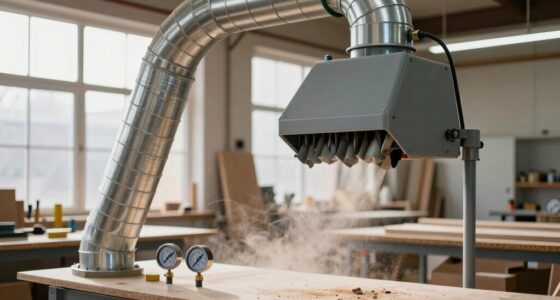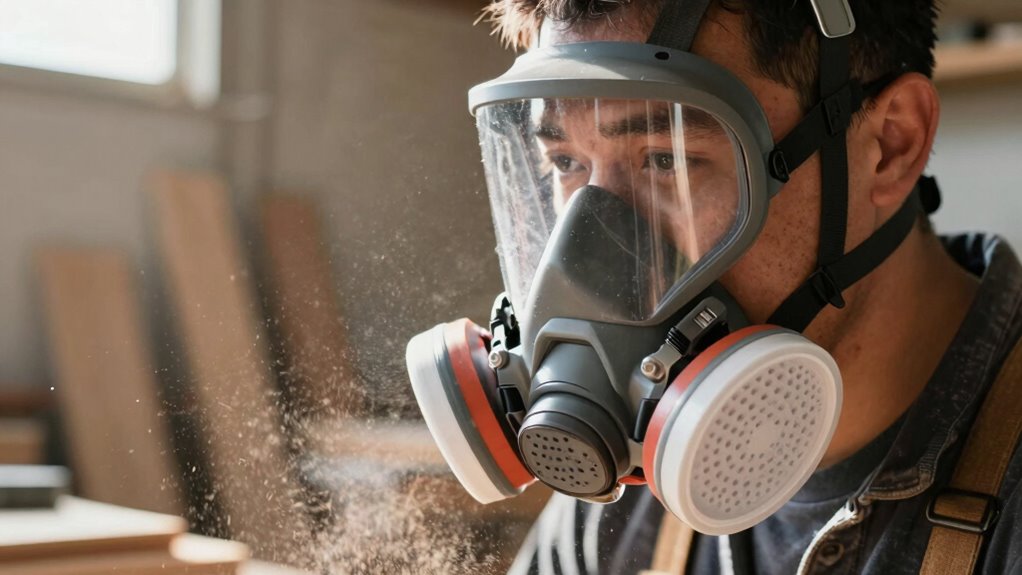

Dust collection systems and masks are essential, but they don’t guarantee complete lung protection. Micro-dust particles can bypass filters unless you use high-efficiency respirators like N95 or P100 masks. Proper fit, regular maintenance, and good airflow are vital to prevent inhalation of harmful particles. Remember, not all dust protection methods are equal—staying informed helps you choose the right gear and practices for your safety. Continue exploring to learn how to truly safeguard your lungs.
Key Takeaways
- High-efficiency respirators like N95 and P100 filters provide better protection against micro-dust particles than standard masks.
- Proper fit and seal checks are essential; even the best mask fails if it leaks around the edges.
- Dust collection systems reduce visible dust but may not eliminate microscopic airborne particles.
- Ventilation and air purifiers help minimize overall dust in the environment, reducing inhalation risks.
- Consistent maintenance, filter replacement, and safety education are critical for long-term respiratory protection.

3M N95 Respirator 8511, Cool Flow Valve, 10 Pack, NIOSH-APPROVED, Advanced Filter Media For Easy Breathing, Comfortable For Long Periods Of Wear, Helps Filter Pollen, Mold Spores & Dust (8511PB1-A-PS)
NIOSH-APPROVED N95 for at least 95 percent filtration efficiency against certain non-oil-based particles and aerosols
As an affiliate, we earn on qualifying purchases.
As an affiliate, we earn on qualifying purchases.
What Are Dust Particles, and Why Do They Matter?

Dust particles are tiny fragments of dirt, pollen, skin cells, and other materials that become airborne in your workspace. These airborne hazards vary in size, shape, and particle composition, influencing how deeply they can penetrate your respiratory system. Understanding particle composition helps you grasp why some dust is more harmful than others. For example, fine particles can stay suspended longer and are more likely to reach your lungs, increasing health risks. Larger particles tend to settle quickly but can still cause irritation. Recognizing that dust isn’t just dirt but a complex mixture of different materials emphasizes the importance of effective dust collection. Properly managing these airborne hazards reduces exposure and protects your respiratory health over time. Additionally, the contrast ratio of your filtration system plays a role in how effectively it captures these particles, especially the finer ones that pose the greatest health risks. Moreover, selecting the right dust collection system can significantly improve your workspace safety by efficiently removing hazardous particles before they become inhaled. Understanding the types of dust particles involved can help you choose the most appropriate filtration solutions for your environment. Knowing the particle size distribution is also crucial in designing an effective filtration approach to capture the most dangerous particles efficiently. Analyzing the particle behavior in your workspace can further enhance the effectiveness of your dust management strategies.

3M P100/OV Odor/Particulate Multi-Purpose Reusable Respirator 65021, Medium Size, NIOSH-APPROVED Organic Vapor Cartridge & P100 Rated Filters, Flexible, Thermoplastic Faceseal For Comfort (65021H1-DC)
NIOSH-APPROVED OV CARTRIDGE WITH P100 FILTER filters at least 99.97% of solids and liquid aerosols as well as…
As an affiliate, we earn on qualifying purchases.
As an affiliate, we earn on qualifying purchases.
Why Standard Dust Masks and Collection Systems Might Not Be Enough
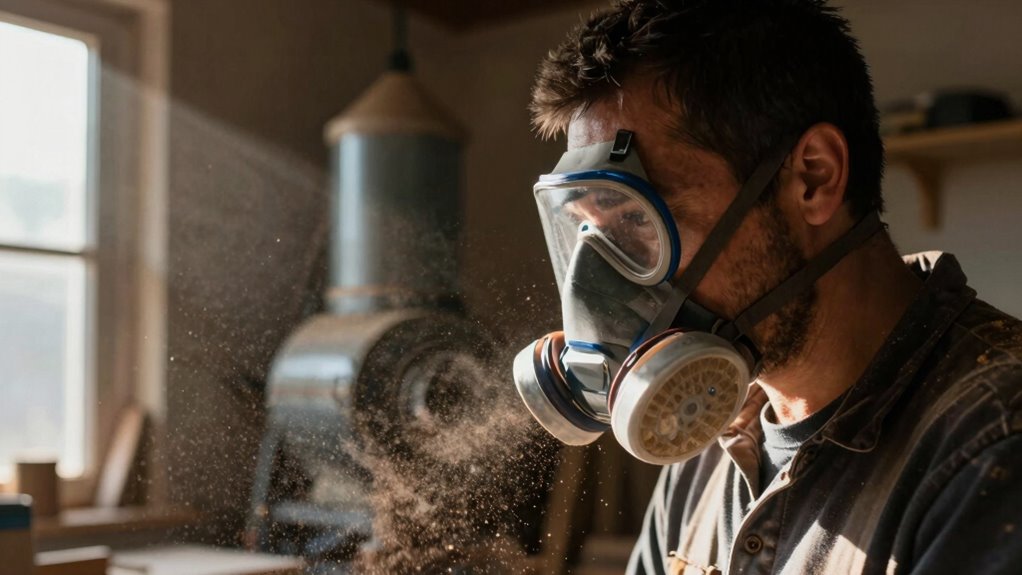
While standard dust masks and collection systems are essential tools, they often fall short of providing complete protection against airborne hazards in your workshop. Dust particle composition varies widely, including fine particles that can penetrate masks and settle deep in your lungs. These tiny particles, often less than 2.5 microns, pose serious respiratory health effects, such as irritation, inflammation, and long-term lung damage. Many masks only filter larger particles and may not effectively block the smaller, more dangerous ones. Similarly, collection systems might reduce visible dust but don’t always capture the microscopic particles suspended in the air. The presence of micro-dust particles underscores the importance of wearing appropriate respirators that offer higher filtration efficiency beyond standard masks. Proper respiratory protection is crucial because relying solely on masks and collection systems can leave gaps in your safety, especially when dealing with fine, airborne particulates. Additionally, airborne particle size plays a critical role in determining the level of protection needed for safe workshop environments. In fact, filtration efficiency varies significantly between different types of masks and respirators, emphasizing the need for the right equipment. Understanding filter maintenance and ensuring it is up-to-date can make a significant difference in your safety measures.
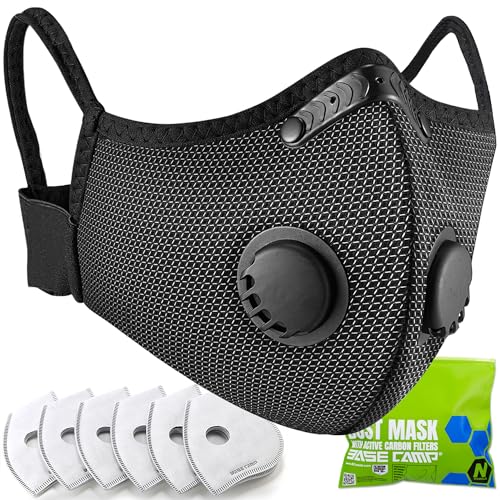
BASE CAMP Silver and Black Upgrade M Plus Dust Mask, Reusable Respirator Face Mask with 6 Activated Carbon Filters, Safety Work Masks for Woodworking, Construction, Yard Lawn Paint, Dust
【STYLISH & OUTSTANDING】Tired of your boring black dust mask? Try this unique sliver dust masks from BASE CAMP!…
As an affiliate, we earn on qualifying purchases.
As an affiliate, we earn on qualifying purchases.
How Proper Respiratory Equipment Protects Your Lungs
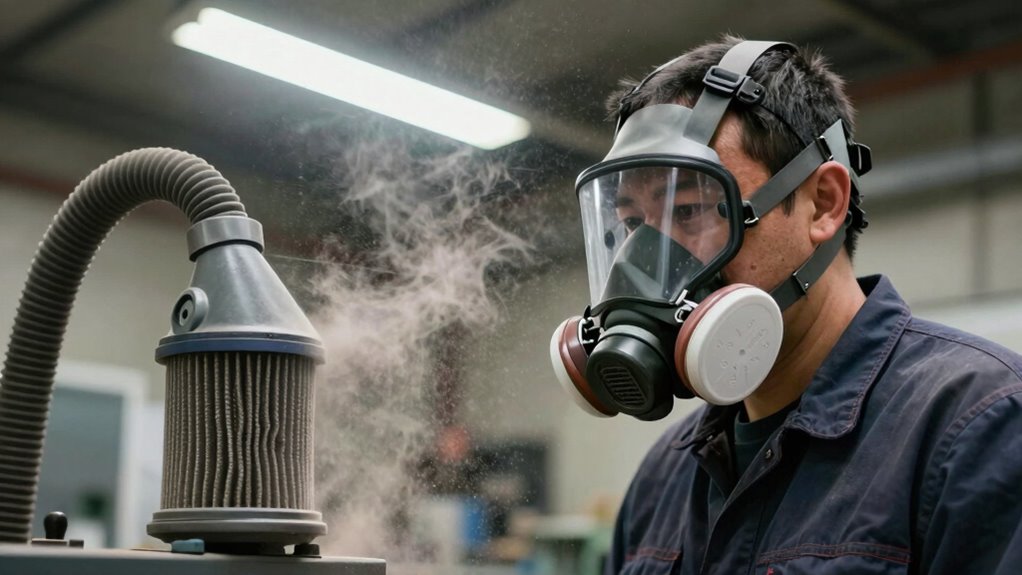
Wearing proper respiratory equipment guarantees your lungs stay protected from harmful dust particles, but only if it fits correctly. A well-fitted respirator creates a secure seal, preventing contaminants from bypassing the filter. Additionally, choosing equipment that meets filter efficiency standards guarantees you’re getting reliable protection against airborne hazards. To ensure maximum safety, it is essential to understand the importance of proper fit and seal, which directly impacts the effectiveness of your respiratory gear. Proper respirator maintenance and regular fit checks further enhance protection and ensure the equipment functions effectively over time. Incorporating techniques from Mastering R Sounds in Speech Therapy can also improve communication about proper fit and safety procedures.
Proper Respirator Fit
A proper fit for your respirator is essential to guarantee it effectively protects your lungs. Without a good respirator fit, airborne dust particles can bypass the filter and enter your lungs. To ensure a secure seal, perform a seal check each time you put on your respirator. This involves covering the filters or cartridges and inhaling gently; if your face collapses inward and no air leaks are felt, your respirator fit is good. If you detect leaks, adjust the straps or reposition the mask until it seals tightly. Remember, a well-fitted respirator creates a barrier that prevents dust from slipping in around the edges. Regularly checking the fit ensures ongoing protection and keeps your lungs safe during dust-intensive tasks. Proper respirator fit is a key aspect of protective gear that directly impacts its effectiveness. Ensuring a proper fit also helps maintain the integrity of filtration, maximizing safety during use. Additionally, understanding the importance of fit testing can help verify that your respirator provides optimal protection. Conducting fit testing procedures regularly can help confirm that your respirator continues to provide an effective seal over time.
Filter Efficiency Standards
Understanding filter efficiency standards is essential because they determine how well your respirator protects you from hazardous dust particles. These standards specify the level of particle filtration a mask provides, often categorized by ratings like N95, P100, or HEPA. Each rating indicates the percentage of airborne particles the filter can block; for example, an N95 filters at least 95% of particles. Knowing these filter standards helps you choose the right equipment for your needs, ensuring maximum protection. Higher standards mean better particle filtration and reduced risk of inhaling dangerous dust. Always verify that your respirator meets recognized standards and is suitable for your environment. Proper understanding of filter efficiency standards guarantees you’re getting the protection needed to keep your lungs safe from airborne hazards. Additionally, understanding the role of media in shaping public perception of cryptids can remind us of the importance of credible information in assessing threats and safety. Recognizing the testing and certification processes involved in standard-setting can help ensure your respiratory equipment performs reliably in critical situations. Being aware of regulatory bodies that oversee these standards can further enhance confidence in your safety gear. Moreover, staying informed about latest advancements in filtration technology can help you select the most effective respiratory protection available.
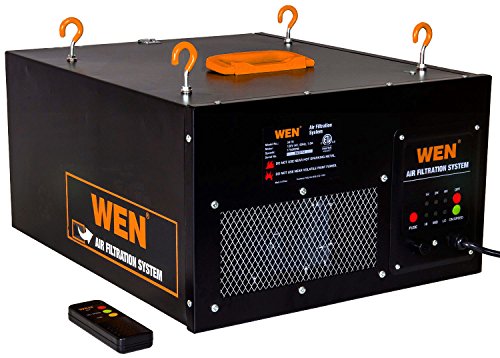
WEN 3410 3-Speed Remote-Controlled Air Filtration System (300/350/400 CFM), Basic w/ RF Remote (400 CFM) , Black
Includes a 1-micron filter and a 5-micron pre-filter, both of which can be easily replaced
As an affiliate, we earn on qualifying purchases.
As an affiliate, we earn on qualifying purchases.
What Do N95 and P100 Masks Do?
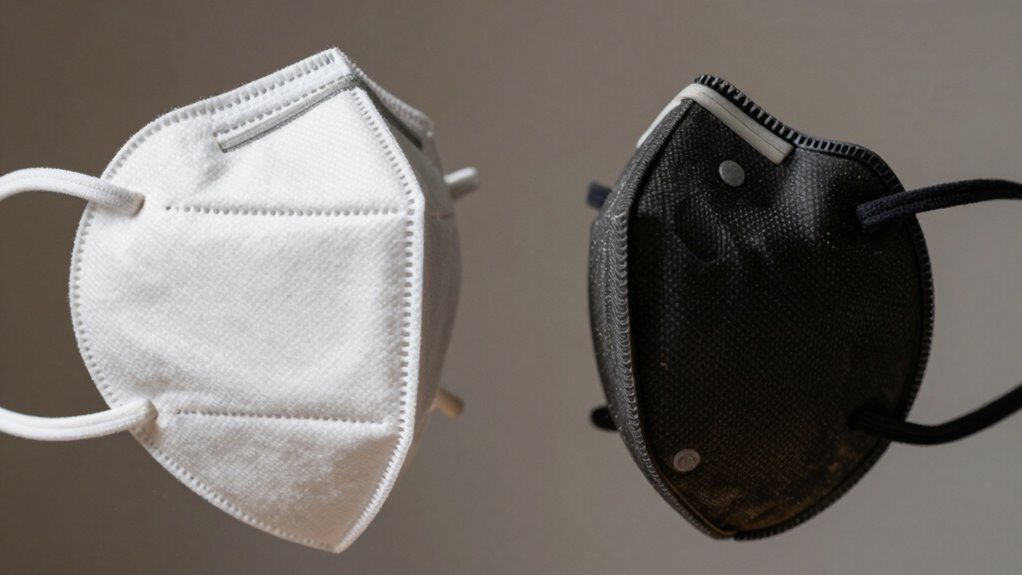
N95 and P100 masks are designed to filter out airborne particles, providing a high level of respiratory protection. These respirator types excel at mask filtration, blocking most dust, fumes, and pathogens. Their design guarantees you breathe cleaner air, reducing health risks during dust collection. The difference lies in filtration efficiency: N95 masks filter at least 95% of particles, while P100 masks filter at least 99.97%. Their effectiveness is supported by expertise in filtration technology, ensuring better protection for users. Additionally, choosing the right mask depends on understanding the filtration efficiency standards, which specify the performance levels of different respirators. With these masks, you gain confidence knowing your lungs are better protected, making your work safer and less risky.
When Should You Wear a Respirator Versus a Mask?
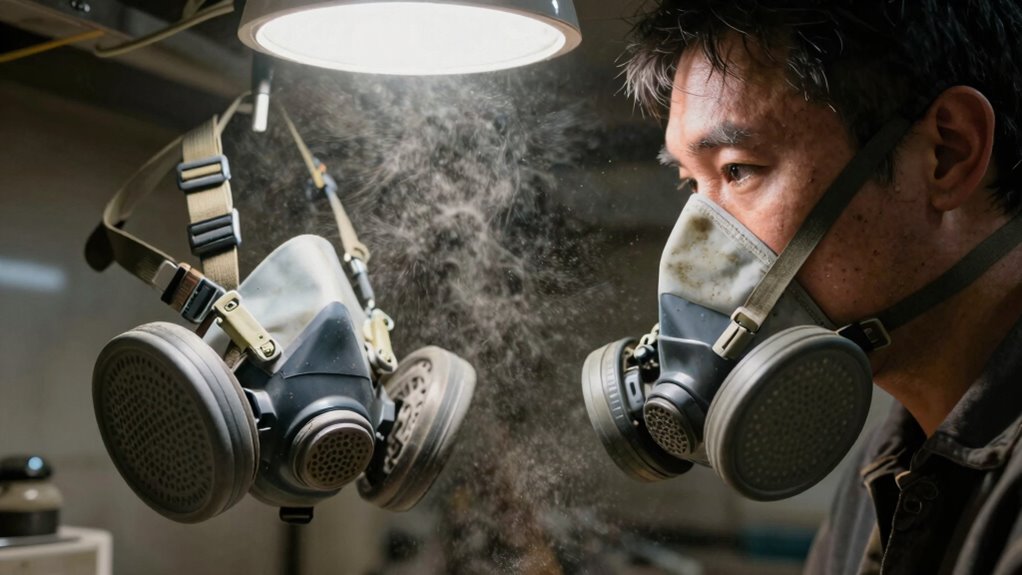
Understanding the differences in mask filtration efficiency and respirator fit helps you decide when to wear a mask or a respirator. Masks may be enough for light dust, but respirators offer better protection for heavy or hazardous particles. Knowing when and how to use each guarantees your safety during dust collection tasks.
Mask Filtration Efficiency
Ever wonder when a simple mask isn’t enough and you need a respirator instead? It depends on the filtration efficiency of your mask. A basic cloth or surgical mask offers limited protection, especially against fine dust particles. When working with hazardous dust, you should choose a mask with a high-quality filter material, designed to trap smaller particles. Keep in mind that mask lifespan affects performance; a worn-out or saturated mask won’t protect you properly. Consider these factors:
- Dust particle size and hazard level
- Mask material and filtration capabilities
- Duration of exposure
- Mask condition and age
If your task involves fine or toxic dust, opt for a respirator. For lighter, casual use, a well-maintained mask might suffice.
Respirator Fit and Use
Have you ever wondered when a mask is enough and when you should switch to a respirator? The key lies in respirator fit and proper use. If you’re working with hazardous dust or fumes, a well-fitting respirator offers better protection than a mask. Ensure your respirator creates a complete seal around your face; otherwise, airborne particles can bypass the filter. Mask selection depends on the contaminant’s size and concentration. Here’s a quick guide:
| Situation | Recommended PPE | Fit Requirements |
|---|---|---|
| Low dust levels | Mask (e.g., surgical or cloth) | Not critical |
| Moderate dust or fumes | Dust mask or half-face respirator | Proper fit essential |
| High toxic dust or fumes | Full-face respirator | Must achieve a secure fit |
Always prioritize respirator fit for maximum protection.
How Ventilation and Air Purifiers Help Reduce Dust Exposure
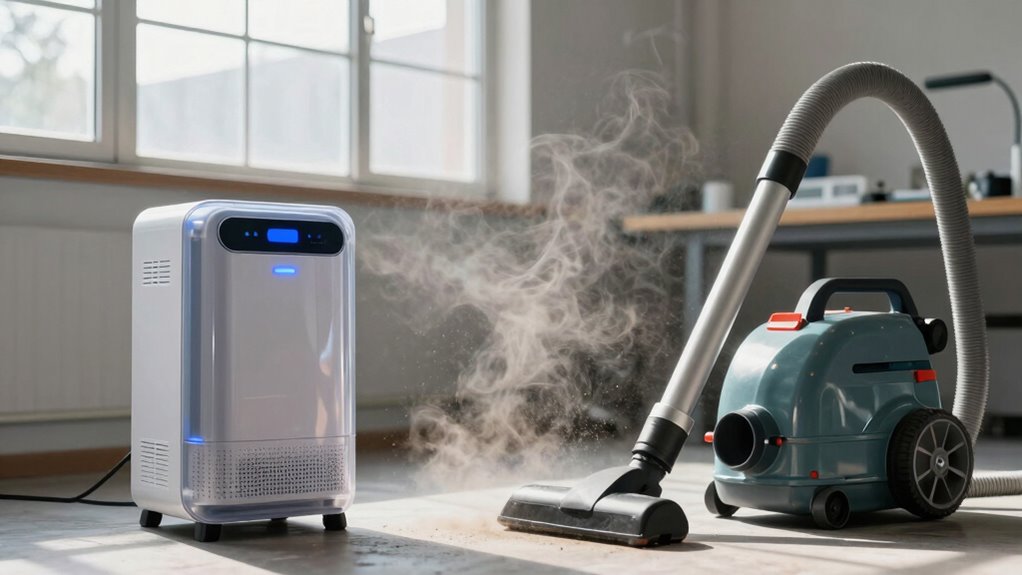
Ventilation systems and air purifiers play a crucial role in reducing dust exposure by actively filtering and circulating indoor air. Proper air quality monitoring helps you identify dust levels and optimize air purifier placement for maximum effectiveness. When positioned correctly, air purifiers can capture airborne particles before they settle. Ventilation ensures fresh air exchange, diluting indoor dust concentrations. To maximize benefits:
- Regularly monitor dust levels with air quality sensors
- Place air purifiers in high-traffic or dusty areas
- Use filters with a high MERV rating for better particle removal
- Maintain and replace filters as recommended
How to Properly Fit and Maintain Your Respirator
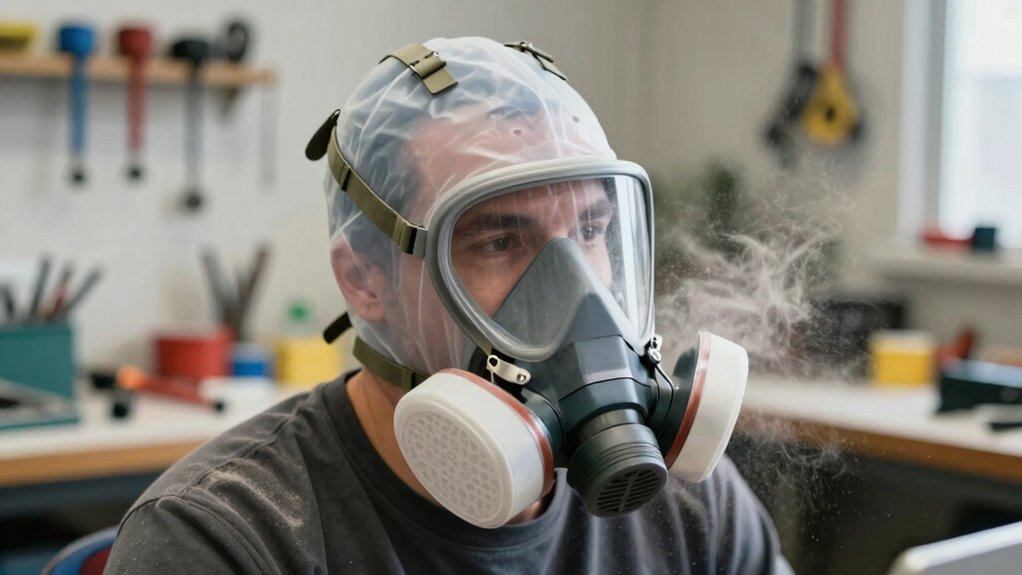
To guarantee your respirator provides maximum protection, you need to fit it properly and perform regular maintenance. Proper fit testing procedures are essential to ensure there are no leaks, which can compromise your safety. Start by adjusting the straps so the mask fits snugly against your face without causing discomfort. Conduct a seal check every time you wear it—cover the filter and inhale gently; the mask should collapse slightly and stay sealed. Regular respirator maintenance involves cleaning it according to manufacturer instructions and replacing filters when needed. Inspect for cracks, tears, or worn-out components before each use. Maintaining a good fit and keeping your respirator in top condition ensures it effectively protects your lungs from airborne dust and contaminants.
Practical Tips to Minimize Dust During Your Work
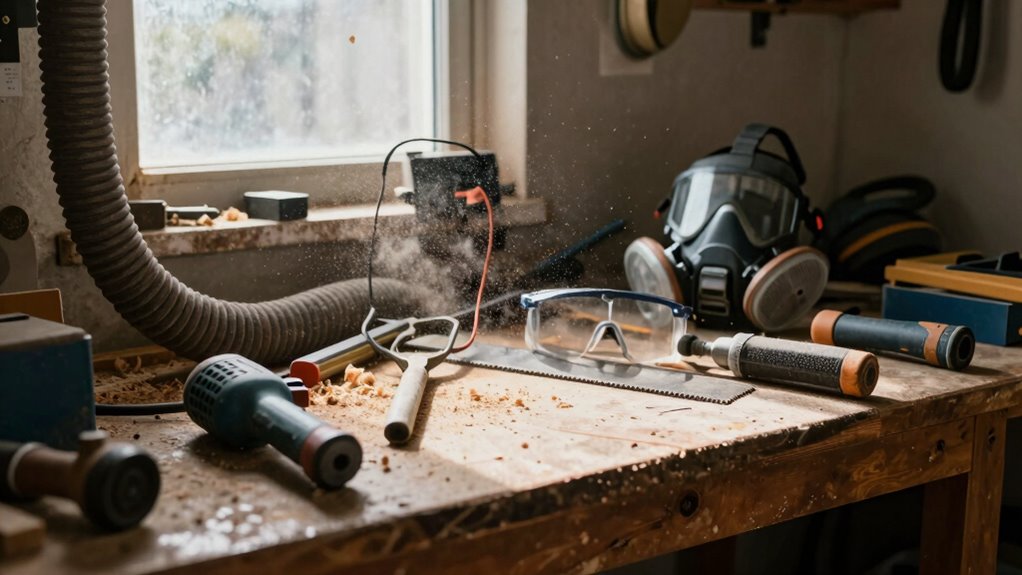
To keep dust levels low while you work, proper ventilation is key—you should guarantee good airflow in your workspace. Wearing personal protective equipment, like masks and goggles, adds an extra layer of safety. Combining these strategies helps you minimize dust and protect your health effectively.
Proper Ventilation Strategies
Implementing effective ventilation strategies is essential to keep dust levels down during your work. Proper airflow design assures dust is directed away from breathing zones, reducing inhalation risks. Pay close attention to exhaust placement; positioning vents near dust sources helps capture particles at their origin. You can improve ventilation by:
- Ensuring airflow moves from clean areas toward exhaust points
- Using adjustable vents to control dust flow
- Maintaining clear paths for air to circulate freely
- Regularly inspecting and cleaning exhaust systems for maximum efficiency
Personal Protective Equipment
Wearing the right personal protective equipment (PPE) is essential for minimizing dust exposure during your work. A properly fitted respirator helps you stay within dust exposure limits and offers crucial protection. Regular respirator maintenance ensures it functions correctly, preventing leaks that could let dust in. Check filters frequently and replace them as recommended to keep your PPE effective. Wearing a dust mask alone might not be enough if it isn’t maintained properly. Always select PPE rated for your specific dust type and follow manufacturer instructions. Remember, even with PPE, practicing good work habits and proper ventilation support your protection. Staying vigilant about respirator maintenance and understanding dust exposure limits are your best strategies for safeguarding your lungs.
Common Mistakes That Weaken Your Dust Safety
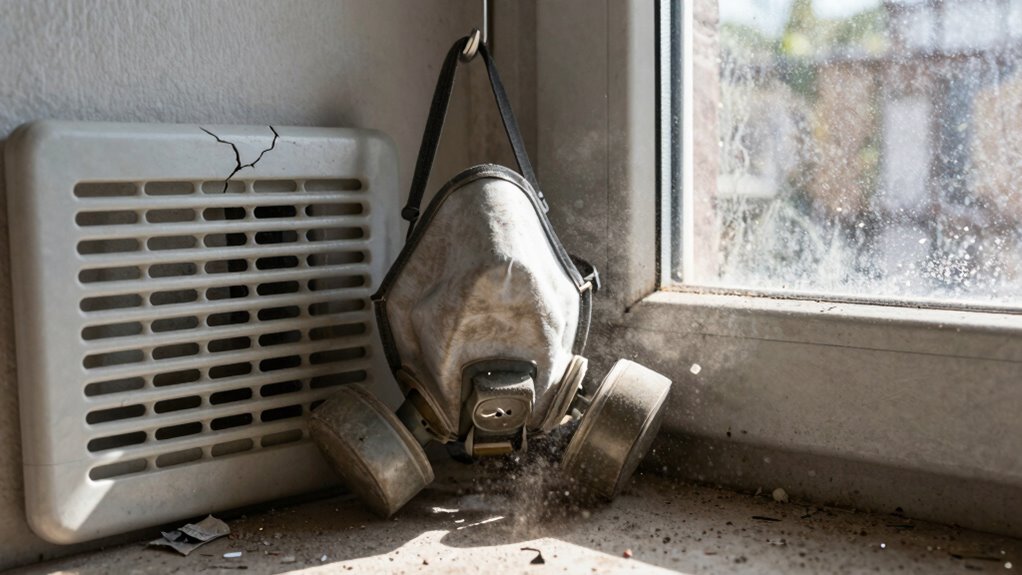
One of the most common mistakes that weakens your dust safety is neglecting regular maintenance of your dust collection system. Ignoring filter cleaning, bag replacement, or duct inspections hampers dust particle science and allows particles to escape. This reduces the system’s efficiency and increases inhalation risks, undermining respiratory health awareness. Failing to monitor airflow can cause leaks or blockages, decreasing dust capture. Additionally, neglecting proper filter sealing lets fine particles bypass filters, exposing you to airborne hazards. Lastly, not updating or upgrading your system with newer safety features leaves gaps in protection. Regular maintenance ensures your dust collection system performs at its best, keeping hazardous particles contained and protecting your lungs from long-term damage. Consistent care is essential for effective dust safety.
Making Smart Choices for Long-Term Lung Health
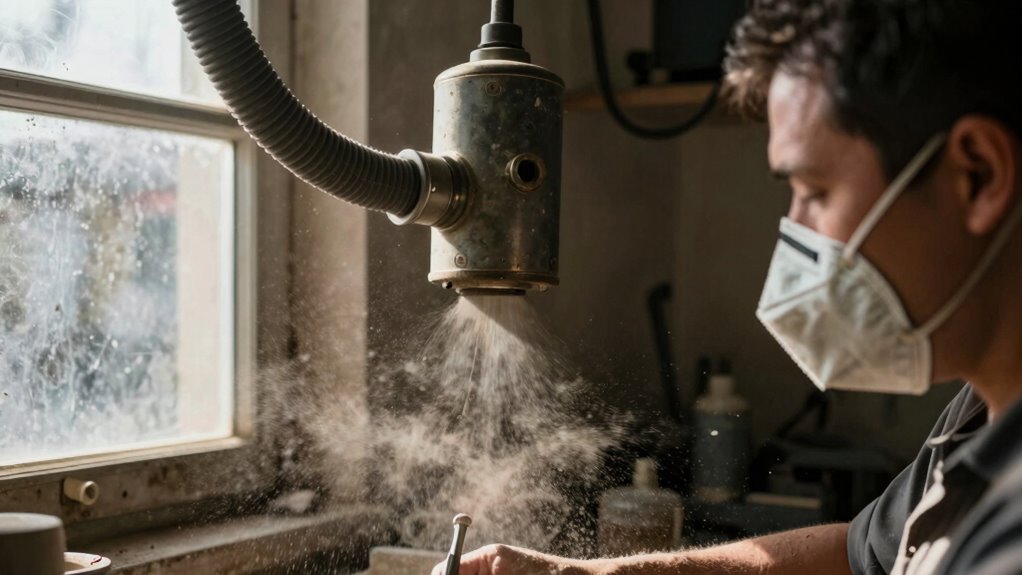
To protect your lungs over the long term, making informed choices about your dust safety practices is essential. Prioritize using proper protective equipment, like respirators rated for dust particles, to safeguard your respiratory health. Regularly maintain and upgrade your dust collection system to guarantee it functions effectively, reducing airborne contaminants. Keep your workspace clean and well-ventilated, minimizing dust accumulation that can harm your lungs over time. Educate yourself on the risks of long-term exposure and stay updated on safety standards. By actively choosing consistent safety measures, you improve your long-term safety and preserve your respiratory health. Remember, small, deliberate decisions today can considerably impact your lung health in the years to come.
Frequently Asked Questions
Are Homemade Dust Masks Effective for Lung Protection?
DIY masks, or homemade dust masks, generally aren’t effective for lung protection. Material effectiveness varies widely, and many DIY designs lack proper filtration capabilities needed to block fine dust particles. You might think you’re protected, but without the right materials like HEPA filters or N95-grade fabrics, your lungs remain vulnerable. For real safety, invest in certified masks designed specifically for dust and airborne particles, rather than relying on homemade solutions.
How Often Should I Replace My Respirator Filters?
Think of your respirator filters like batteries—they don’t last forever. You should replace them based on filter lifespan and replacement frequency, typically every 40 hours of use or when breathing becomes difficult. Check manufacturer guidelines for specific recommendations. Regularly inspecting your filters for damage or clogging is key. Don’t wait until you notice reduced airflow—timely replacements keep your lungs protected and your respirator working effectively.
Can Dust Particles Cause Long-Term Health Issues?
Yes, dust particles can cause long-term health issues if you’re exposed to airborne contaminants regularly. Breathing in dust can lead to serious lung diseases like silicosis, pneumoconiosis, or chronic bronchitis. To protect your lungs, always wear proper respiratory gear, make certain your dust collection system is effective, and avoid prolonged exposure. Regularly replacing filters and maintaining equipment help reduce airborne contaminants and lower your risk of long-term health problems.
What Are Signs of Inadequate Dust Protection?
If you notice persistent respiratory symptoms like coughing, wheezing, or shortness of breath, it’s a sign your dust protection isn’t sufficient. You might also experience mask fit issues, where your mask doesn’t seal properly, allowing dust particles to enter your lungs. These signs indicate you need to improve your dust collection setup or switch to better-fitting protective gear to guarantee your lungs stay safe.
Is Higher Filtration Always Better for Dust Masks?
Higher filtration isn’t always better for dust masks if the mask doesn’t fit well. You need a mask with high filter efficiency, but if it gaps, dust can bypass the filter entirely. Make certain your mask forms a snug seal around your face, preventing leaks. Focus on both filter efficiency and proper fit; together, they offer real protection for your lungs. A well-fitted mask with the right filter keeps you safer.
Conclusion
Protecting your lungs is like guarding a precious treasure—every breath counts. By choosing the right gear, fitting it properly, and staying vigilant, you shield yourself from invisible enemies lurking in dust. Don’t let careless moments turn your breath into a silent struggle. Arm yourself with knowledge and smart habits, so your lungs can breathe freely and thrive, painting a vibrant future where every inhale feels like a fresh start amid clear skies.