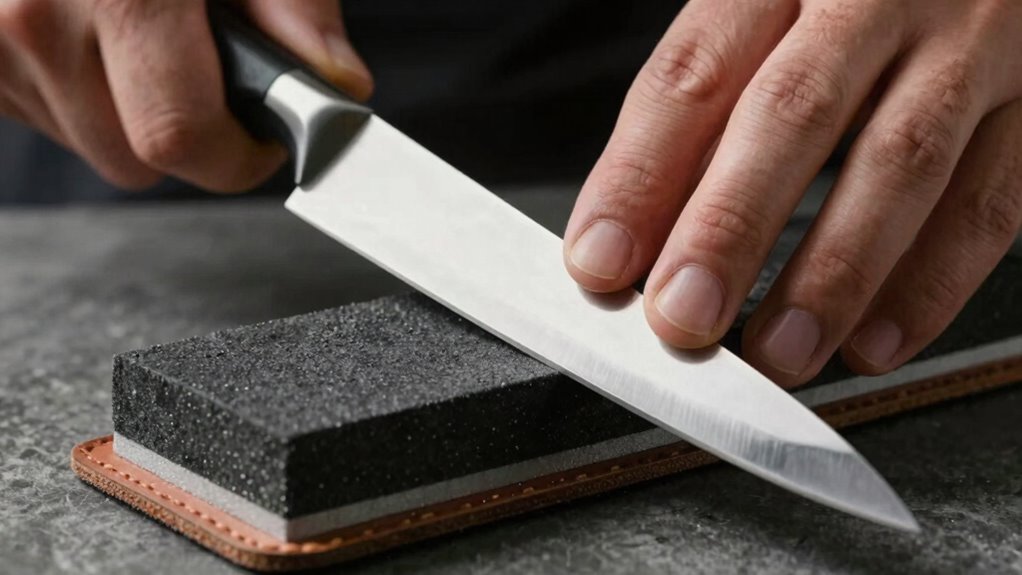
Honing and sharpening are different ways to keep your knives in top shape. Honing realigns the microscopic edges, helping your knife cut smoothly day-to-day without removing much metal. Sharpening, on the other hand, grinding away material to create a new, sharper edge when your knife becomes dull. Knowing when and how to do each task saves you time and effort, so mastering these techniques ensures your knives stay sharp longer—there’s more to discover if you keep exploring.

Get business pricing on tools and workshop supplies
- Business-only prices and quantity discounts
- Tax-exempt purchasing
- Multiple users, one account, clear invoices
Key Takeaways
- Honing realigns microscopic blade edges without removing material, maintaining sharpness longer and requiring less frequent maintenance.
- Sharpening removes metal to create a new, sharper edge, which is essential when honing no longer restores edge quality.
- Regular honing prevents the need for frequent sharpening, saving time and preserving blade integrity.
- Proper technique and tools ensure efficient honing, reducing the time spent on blade maintenance.
- Knowing when to hone versus sharpen optimizes maintenance, saving time and extending blade lifespan.
As an affiliate, we earn on qualifying purchases.
What’s the Difference Between Honing and Sharpening Knives?
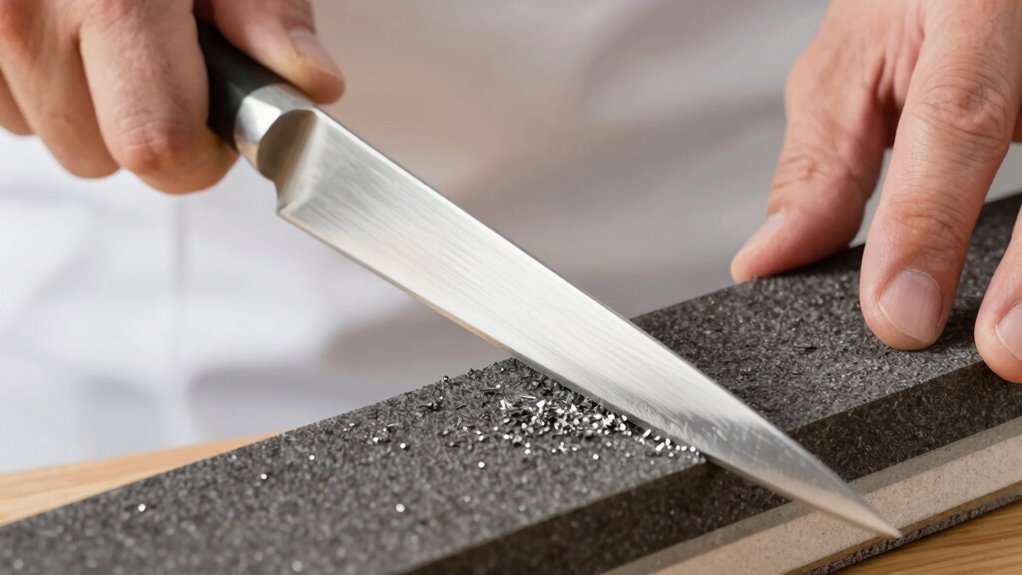
Have you ever wondered what truly differentiates honing from sharpening your knives? The key lies in understanding their roles and how blade materials come into play. Honing realigns the microscopic edge of your knife, using a honing steel, without removing material. It’s a routine maintenance step that keeps your blade performing smoothly. Sharpening, on the other hand, involves grinding away metal to create a new, sharper edge, often using a whetstone or electric sharpener. Kitchen ergonomics also influence the process; a comfortable grip and proper technique ensure safety and precision. Different blade materials respond uniquely—ceramic blades, for example, require special tools. Knowing when to hone and when to sharpen helps you maintain ideal cutting performance, saving you time and effort in the kitchen. Proper maintenance of your knives ensures longevity and optimal performance for your culinary needs. Proper technique and understanding blade materials can significantly extend the life of your knives and enhance your overall cooking experience. Additionally, understanding the blade edge geometry is essential for choosing the appropriate maintenance method. Regularly checking the cutting edge integrity helps prevent unnecessary sharpening and preserves your blades longer.
As an affiliate, we earn on qualifying purchases.
Why Regular Honing Keeps Your Knife Sharp Day-to-Day
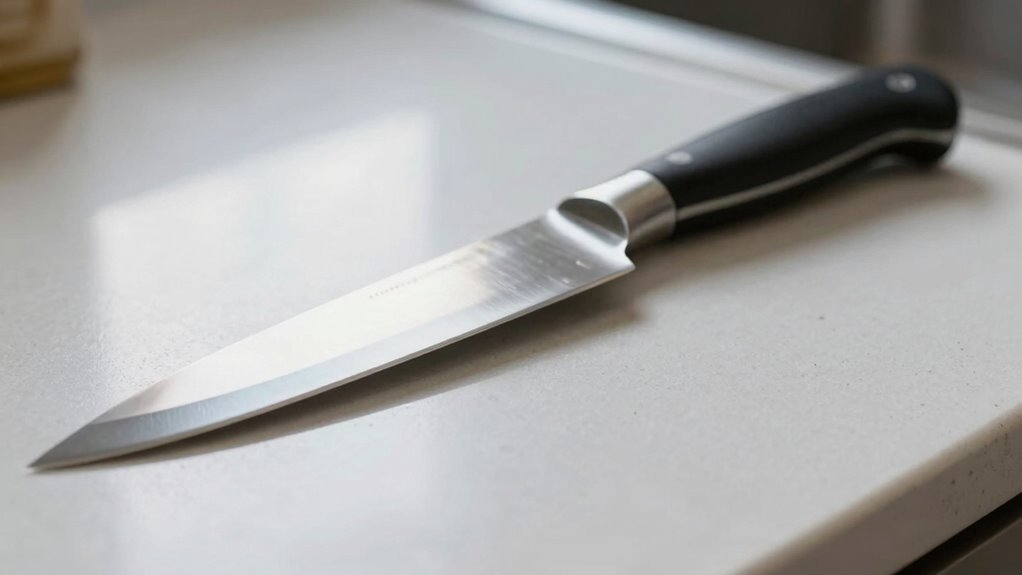
Regular honing realigns your blade edges, keeping them straight and effective. It also removes tiny bumps that can cause jagged cuts. By doing this consistently, your knife stays sharp and precise for everyday use. Incorporating proper maintenance techniques can further extend the lifespan of your blades and ensure optimal performance. Additionally, using water-based lubricants during honing can reduce wear and improve the process.
Realigns Blade Edges
Since small misalignments can develop with everyday use, honing helps realign the blade’s edge, guaranteeing it remains sharp and effective. Regular honing maintains your knife’s edge stability, preventing it from becoming uneven or dull over time. This process supports blade durability by keeping the edge properly aligned, reducing the risk of chips or cracks. When you hone, you’re fundamentally nudging the microscopic teeth back into place, which preserves the sharpness you rely on daily. The table below highlights how honing influences blade performance:
| Effect | Benefit | Result |
|---|---|---|
| Realigns edges | Maintains edge stability | Consistent slicing and chopping |
| Prevents misalignment | Extends blade durability | Longer lifespan for your knife |
| Supports sharpness | Ensures effective cutting | Less need for frequent sharpening |
In addition, understanding the importance of edge alignment can help you optimize your maintenance routine. Proper ear wax odor detection can also serve as an indicator of your overall health, emphasizing the significance of cleanliness and hygiene.
Removes Tiny Bumps
Over time, tiny bumps and micro-imperfections can develop along your knife’s edge due to everyday use. These tiny bumps, or blade burrs, can make your knife feel dull even if it looks intact. Regular honing helps remove these imperfections by gently realigning the edge and knocking off the tiny bumps. This process doesn’t reshape the blade like sharpening but ensures the edge stays smooth and consistent. By consistently honing your knife, you prevent the buildup of blade burrs and micro-imperfections that hinder cutting performance. This maintenance step keeps your knife sharp day-to-day, reducing the need for frequent sharpening. In short, honing is your quick, effective way to maintain a clean, burr-free edge, ensuring your knife remains precise and efficient with minimal effort. Proper maintenance helps prolong the lifespan of your blade and keeps it performing at its best. Additionally, understanding the differences between honing and sharpening can help you choose the right tool for your needs. Regular blade care practices, including honing, are essential for maintaining optimal cutting performance over time. Developing a consistent knife maintenance routine ensures your tools stay in top condition and can save you time in the kitchen. Incorporating micro-imperfection removal into your routine can further enhance your knife’s longevity and performance.
Maintains Cutting Precision
Maintaining your knife’s cutting precision depends heavily on consistent honing. Regular honing realigns the cutting edge, keeping it sharp and effective for daily knife maintenance. Without it, tiny bends and misalignments develop, reducing cutting efficiency. To illustrate, consider this table:
| Honed Knife | Dull Knife |
|---|---|
| Sharp cutting edge | Bent or misaligned edge |
| Maintains precision | Requires sharpening |
| Easy to control | Difficult to handle |
| Keeps knife performing | Loses effectiveness |
Honing keeps your knife performing at its best, ensuring precise cuts every time. It’s a simple step that preserves your knife’s longevity and efficiency, saving you time and effort in the kitchen. Regular honing is the key to maintaining a consistently sharp cutting edge.
As an affiliate, we earn on qualifying purchases.
How to Recognize When Your Knife Needs Honing or Sharpening: And How Often
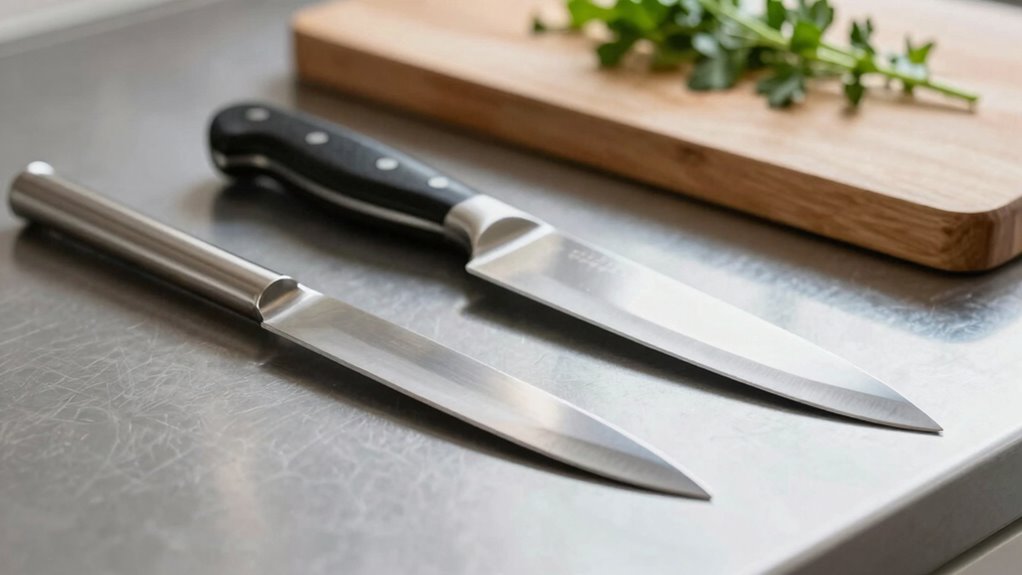
How can you tell if your knife needs honing or sharpening? Regular blade inspection is key to proper knife maintenance. You’ll notice if your cuts start to drag or tear instead of slice smoothly. To determine whether honing or sharpening is needed, look for these signs:
- The knife feels dull even after washing
- Cutting requires more pressure
- Food slips instead of gliding cleanly
- The edge looks visibly bent or rolled
- You hear a scraping sound when cutting
- Understanding the blade maintenance process helps extend the lifespan of your knives and maintain their cutting efficiency. Additionally, learning about proper knife care can prevent premature dullness and damage. Using the right sharpening tools at appropriate intervals ensures your knives stay in peak condition without unnecessary wear. Regularly checking your cutting edge can help you identify when a honing or sharpening session is needed before performance declines significantly. Staying informed about edge retention techniques can further improve your knife’s longevity.
As an affiliate, we earn on qualifying purchases.
Essential Tools for Honing and Sharpening Your Knives
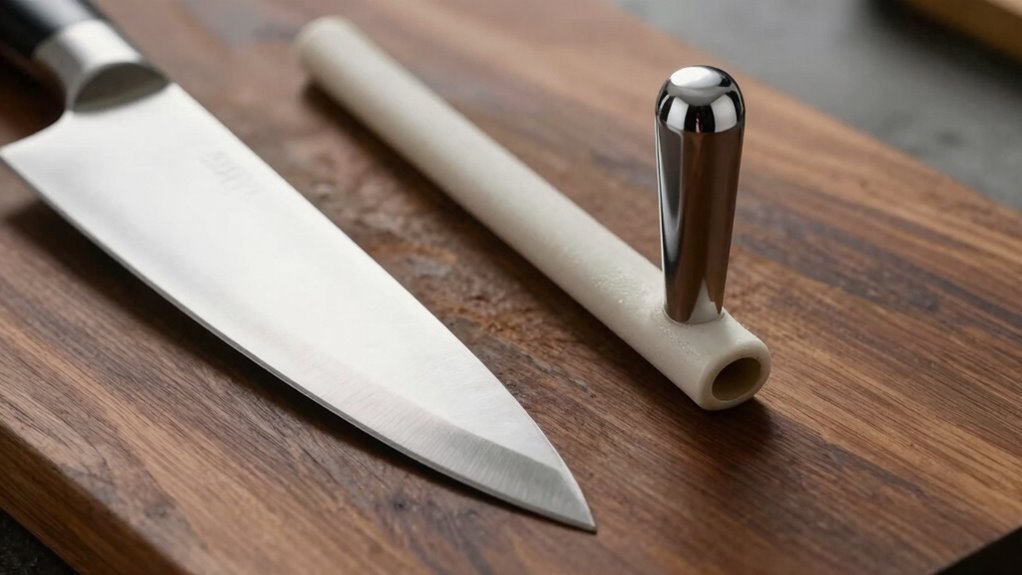
To keep your knives performing at their best, having the right tools for honing and sharpening is essential. Start with a honing steel or ceramic rod; these tools help realign the edge without removing metal, maintaining your knife’s sharpness. For sharpening, choose a whetstone, electric sharpener, or manual sharpening system based on your knife material—carbon steel, stainless steel, or ceramic. Your choice should consider kitchen ergonomics; comfortable handles and proper grip make the process safer and easier. Investing in quality tools guarantees consistent results and extends your blades’ lifespan. Remember, the right tools match your knife’s material and your skill level, making maintenance efficient and safe. Proper equipment is key to keeping your knives sharp and ready for any task. Proper maintenance ensures your knives stay in top condition and last longer.
How to Hone Your Knife Correctly
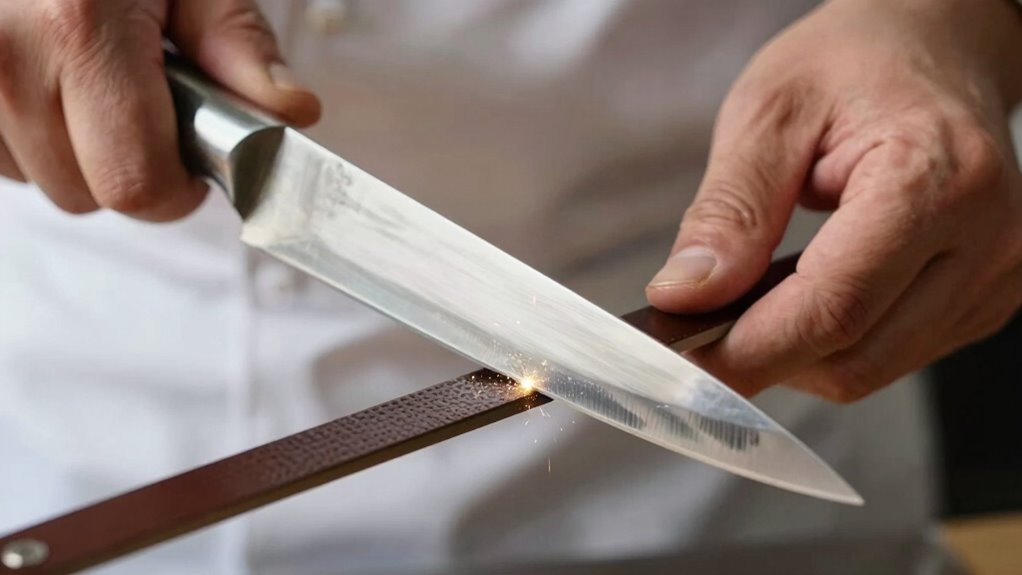
Ever wondered why your knife feels dull even after a quick cut? Proper honing is key to maintaining sharpness and extending your knife’s lifespan. To hone correctly, focus on consistent knife maintenance and mastering honing techniques. Position your honing rod at a 20-degree angle, ensuring contact along the entire length of the blade. Use smooth, controlled strokes, alternating sides with each pass. Visualize the process:
Proper honing maintains sharpness and extends your knife’s lifespan with controlled, consistent strokes.
- Guiding the blade along a sleek honing rod
- Maintaining a steady, even pressure
- Honing from heel to tip in each stroke
- Keeping the angle precise throughout
- Repeating the process 5-10 times for optimal results. Remember, understanding the importance of proper technique helps prevent damage and keeps your blades in top condition. Additionally, using a quality honing rod designed for your knife type can significantly improve results. Regular honing not only maintains your knife’s cutting performance but also reduces the need for frequent sharpening, saving you time and effort in the long run. Incorporating herbalism principles such as proper technique and maintenance practices ensures your knives stay sharp and functional over time.
How to Sharpen Your Knife Safely and Effectively
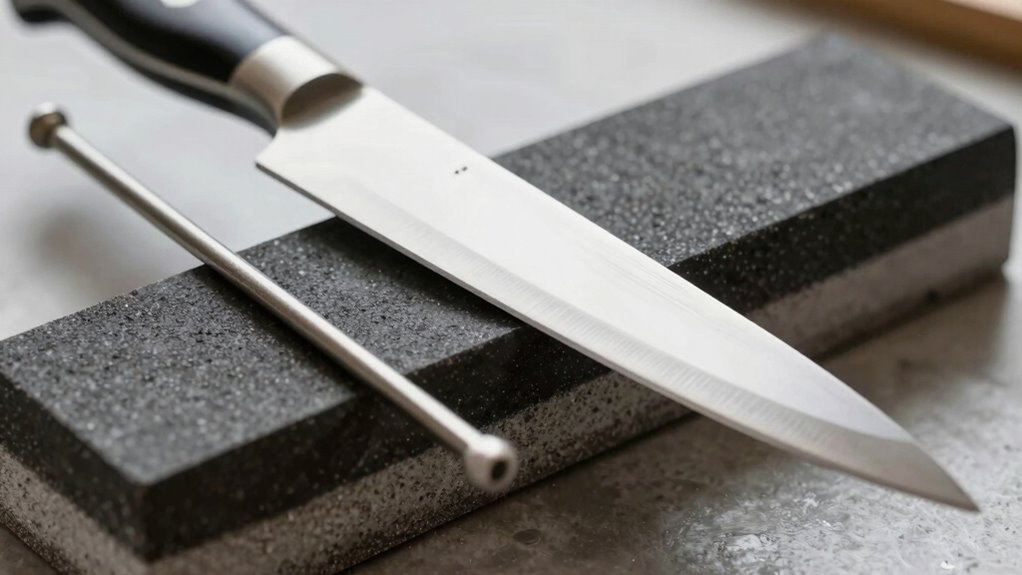
Sharpening your knife safely and effectively requires attention to technique and caution. Proper knife maintenance is essential to keep your blades in top condition without risking injury. Always use a stable surface and secure your knife to prevent slips. When sharpening, hold the blade at the correct angle—usually 20 degrees—and apply consistent pressure. Use safety precautions like wearing cut-resistant gloves if needed, and keep your fingers clear of the sharpening edge. Regularly clean your sharpening tools to prevent debris buildup, which can cause uneven edges. Remember, rushing or applying uneven pressure can lead to accidents or damage to your knife. Following these safety precautions and techniques assures you maintain your knife effectively while minimizing risk. Proper sharpening prolongs your knife’s lifespan and enhances its performance.
Common Mistakes to Avoid When Honing and Sharpening
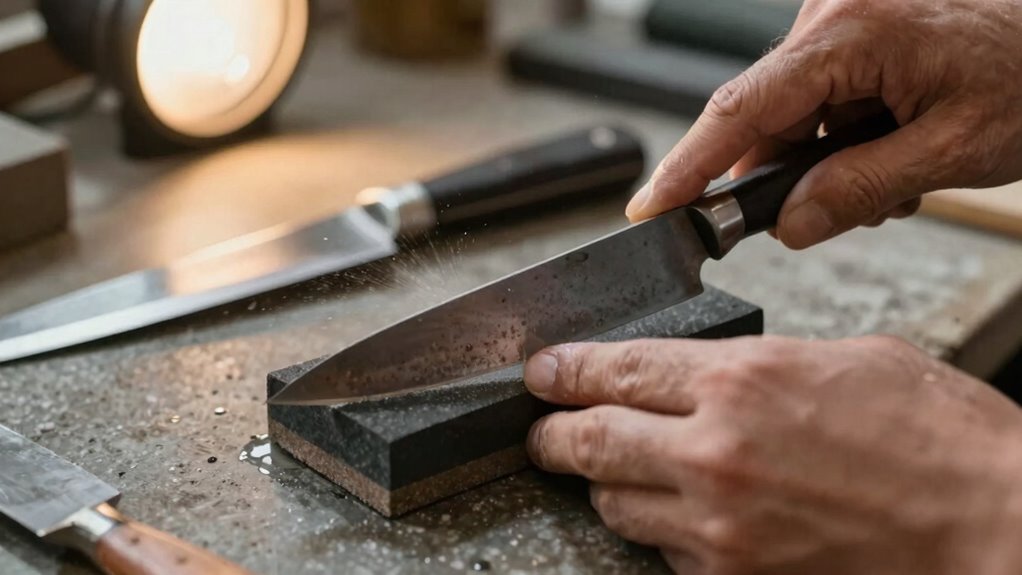
Many common mistakes during honing and sharpening can compromise your knife’s performance or cause injury if not avoided. One mistake is honing too infrequently, which leads to jagged edges that are harder to cut through. Conversely, honing too often can wear down the edge prematurely. Using the wrong angle or applying uneven pressure can create inconsistent results, resulting in a dull or damaged blade. Rushing the process or using dull tools can also cause slips and injuries. Additionally, neglecting to clean your sharpening tools regularly can transfer debris onto the blade. Be mindful of these pitfalls to maintain a sharp, safe knife. Remember, proper honing frequency and technique help prevent jagged edges and ensure your blade stays effective longer.
Quick Tips to Maintain Your Knives and Extend Their Sharpness
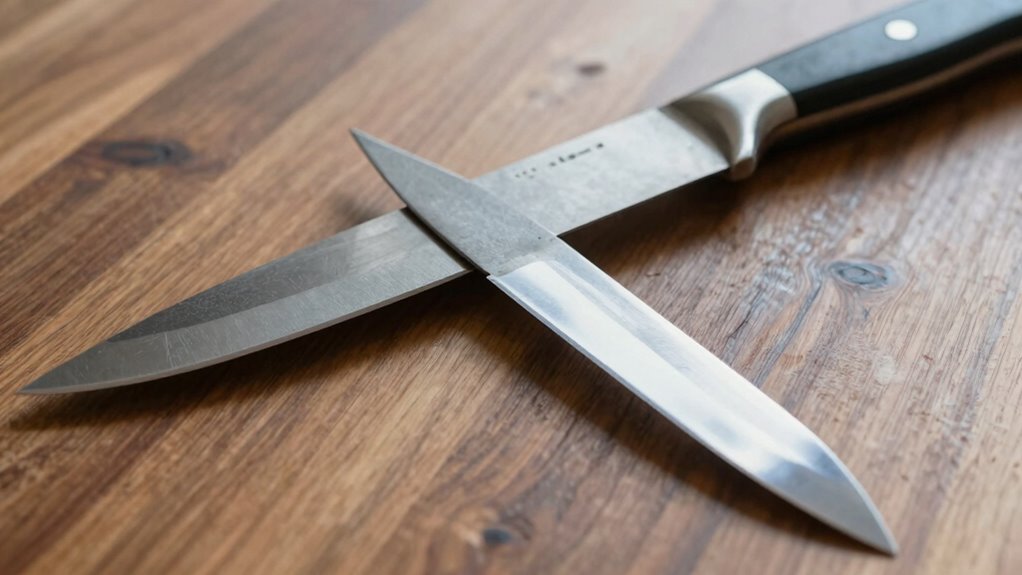
To keep your knives sharp longer, focus on regular honing and using proper cutting surfaces like wood or plastic. Store your knives safely to prevent dulling and damage. These simple steps help maintain their edge and make your tools last.
Regular Honing Techniques
Regular honing is essential for keeping your knives in top condition and preventing unnecessary dulling. It realigns the blade edge, ensuring smooth cuts and less effort. To maintain your knife’s sharpness, incorporate simple techniques like using a honing rod or ceramic stick regularly.
- Visualize the fine shimmer of stone polishing as you glide the blade along your honing tool.
- Imagine the gentle, precise motion that keeps your edge aligned.
- Think of blade polishing as restoring a mirror finish to your knife’s surface.
- Picture yourself quickly removing tiny burrs with a few quick passes.
- Envision your knife slicing effortlessly through ingredients, thanks to consistent honing.
These habits extend your blade’s lifespan, reduce the need for frequent sharpening, and keep your knives performing like new.
Proper Cutting Surfaces
Choosing the right cutting surface plays a vital role in maintaining your knives’ sharpness and longevity. Hard surfaces like glass or ceramic can dull your knife quickly, regardless of the knife material. Instead, opt for softer surfaces like wood or plastic, which preserve the edge longer. Different knife materials respond best to specific surfaces; for example, high-carbon steel blades perform well on wood, while ceramic knives require gentle cutting boards to avoid chipping. Here’s a quick comparison:
| Cutting Surface | Best For |
|---|---|
| Wood | Most knife materials |
| Plastic | All types |
| Glass | Not recommended |
| Ceramic | Soft surfaces only |
| Bamboo | Durable, gentle |
Choosing the right surface helps you extend sharpness and reduces frequent honing or sharpening.
Safe Storage Practices
Proper storage is essential for keeping your knives sharp and safe. When you use proper knife storage, you prevent accidental cuts and protect the blade’s edge. Always store knives in a designated knife block, on a magnetic strip, or in a protective sheath. This keeps the blades from rubbing against other utensils or surfaces, which dulls the edge. Remember safety precautions by keeping knives out of reach of children and avoiding loose drawers. Visualize a knife safely nestled in a wooden block, a magnetic strip securely mounted on the wall, or a sheath hugging the blade. Avoid tossing knives into drawers or stacking them loosely. Safe storage practices ensure longevity and sharpness, saving time and preventing injuries. Proper knife storage is a simple step toward maintaining your tools efficiently.
Frequently Asked Questions
How Often Should I Hone or Sharpen My Specific Type of Knife?
You should hone your knife every 1-2 weeks to maintain its edge and prolong its lifespan, especially with regular kitchen maintenance. Sharpen it when you notice it’s cutting less effectively, usually every few months depending on use. Regular honing keeps your knife in top shape, saving you time and effort, while infrequent sharpening extends the tool’s lifespan, ensuring it stays sharp longer and performs better in your kitchen.
What Signs Indicate My Knife Needs Professional Sharpening?
You’ll know your knife needs professional sharpening if you notice blade burrs or edge chipping. For example, if your once-smooth slicing suddenly feels rough and uneven, it’s a sign the edge is damaged. These issues indicate the blade’s edge is dull or compromised, and a sharpening professional can restore its sharpness and remove burrs or chips. Trust a pro when your knife struggles with basic cutting tasks, ensuring safety and efficiency.
Can Sharpening Tools Damage My Knife if Used Improperly?
Sharpening tools can damage your knife if you use improper technique or apply too much pressure. You might cause tool damage, like uneven edges or chips. To prevent this, follow the manufacturer’s instructions carefully and use the right angle. Practicing proper technique ensures your knife stays in good condition and sharpens effectively without risking damage. If unsure, consider seeking professional help for the best results.
Is Ceramic or Steel Honing Better for Maintaining Edge Longevity?
Ever wonder which keeps your blade sharper longer? Ceramic honing gently realigns your edge, making it ideal for maintaining your knife’s sharpness over time. Steel honing is sturdy and effective for quick touch-ups, but can be rougher. When comparing ceramic vs steel, honing preserves your edge without removing material, unlike sharpening. For peak longevity, choose ceramic for delicate honing and steel for more frequent, light maintenance.
How Does the Material of My Knife Affect Honing and Sharpening Techniques?
Your knife’s material impacts both honing and sharpening techniques because different blade materials have varying durability and material compatibility. For instance, high-carbon steel blades can handle more aggressive sharpening, while softer metals may chip or dull faster. Honing is generally safe across materials, but for delicate or specialty blades, choose the proper abrasive and technique to preserve your blade’s integrity and prolong its lifespan.
Conclusion
By understanding the subtle dance between honing and sharpening, you’ll effortlessly keep your knives in prime condition. Regular honing gently maintains your blades’ finesse, while thoughtful sharpening restores their cutting prowess when needed. With the right tools and techniques, you’ll enjoy a seamless culinary experience, turning everyday tasks into moments of mastery. Embrace these practices, and your knives will continue to serve you with grace and precision, elevating every meal you create.
Fall yard work Picks
leaf blowers
As an affiliate, we earn on qualifying purchases.