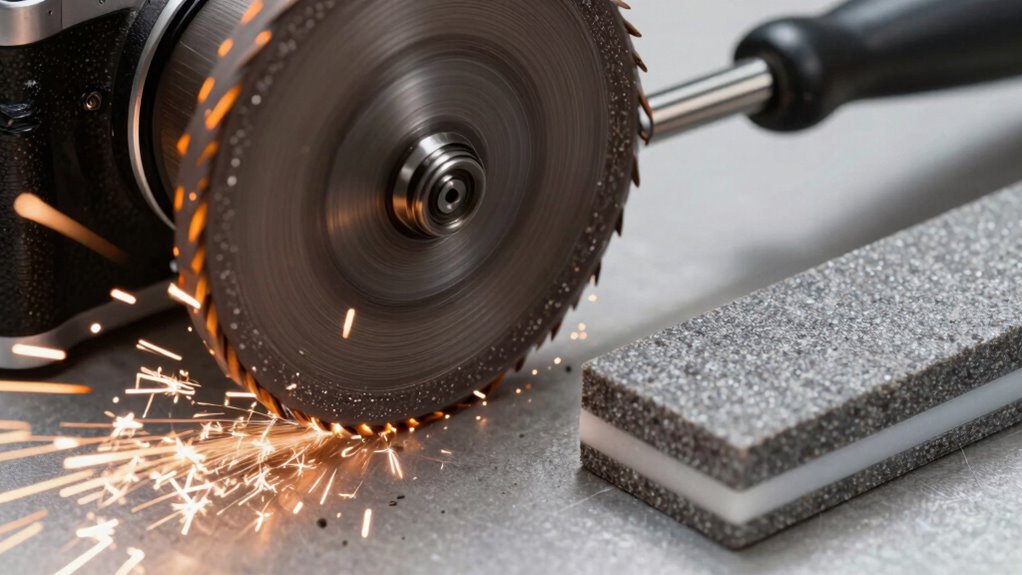

To decide whether you need grinding or honing, consider the surface finish and precision required. Use grinding for heavy material removal, rough shaping, or preparing surfaces with imperfections. Turn to honing when you need a fine, mirror-like finish, tighter tolerances, or to remove scratches left by grinding. Understanding these differences helps you pick the right wheel. Keep exploring to learn how to optimize your metal surface finishing process effectively.
Open a free Amazon Business account
Business pricing, bulk buying and tax-exempt orders.
As an affiliate, we earn on qualifying purchases.
Key Takeaways
- Use grinding for rapid material removal and rough shaping; switch to honing for fine finishing and achieving precise dimensions.
- Choose grinding when surface imperfections are heavy or uneven; opt for honing when surface scratches or pits need smoothing.
- Assess the surface finish requirements: rougher surfaces suit grinding, while tight tolerances require honing.
- Consider material properties: softer metals may need gentler grinding, whereas harder metals benefit from honing for finer results.
- Transition from grinding to honing to restore surface quality, eliminate microcracks, and achieve a mirror-like finish.
abrasive grinding wheel for metal
As an affiliate, we earn on qualifying purchases.
As an affiliate, we earn on qualifying purchases.
Understanding the Differences Between Grinding and Honing
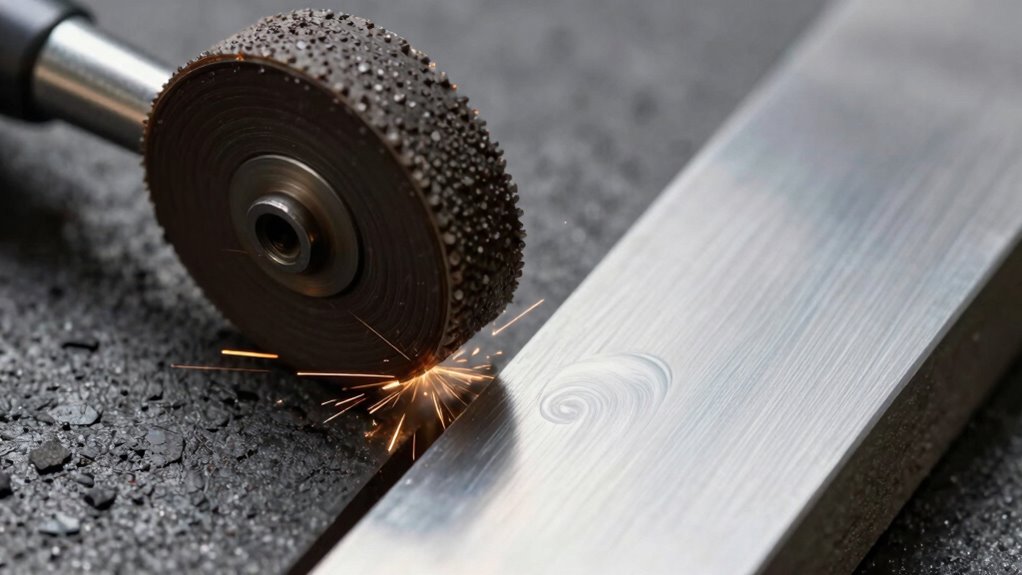
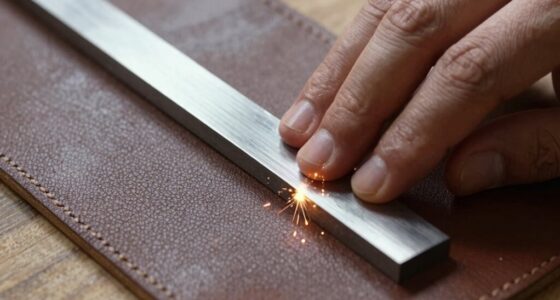
Although grinding and honing both shape and finish metal surfaces, they serve different purposes and use distinct techniques. When it comes to abrasive techniques, your tool selection is vital. Grinding employs coarse abrasives to remove material quickly, making it ideal for rough shaping or heavy material removal. In contrast, honing uses finer abrasives and is focused on achieving precise dimensions and smooth finishes. Choosing the right tools depends on your goal: for rapid material removal, opt for grinding wheels or discs; for fine finishing, select honing stones or abrasive sticks. Understanding these differences ensures you pick the appropriate method for your project, avoiding damage and guaranteeing excellent results. Proper tool selection based on these abrasive techniques is key to effective metal surface treatment. Surface finishing techniques play a crucial role in achieving the desired final quality.
fine honing stones for metal finishing
As an affiliate, we earn on qualifying purchases.
As an affiliate, we earn on qualifying purchases.
When Should You Use Grinding for Metal Surface Restoration?
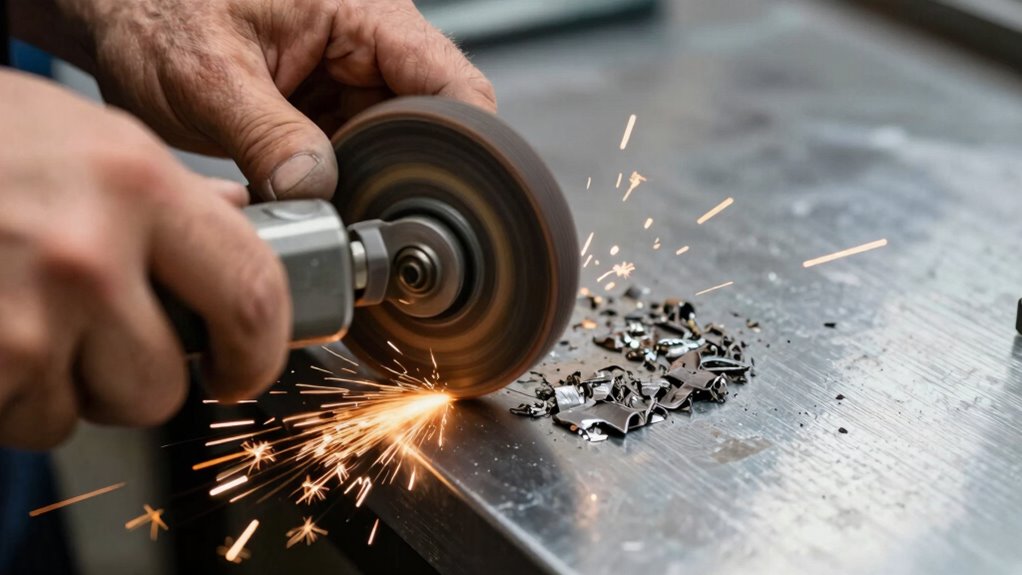
You should consider grinding for surface preparation when removing heavy imperfections or old coatings. Make sure the material you’re working with can handle the abrasive process without excessive wear or damage. Proper surface prep and compatibility are key to achieving the best results with grinding. Additionally, understanding the differences between grinding and honing can help you select the most appropriate method for your project tool selection.
Surface Preparation Techniques
Grinding is the ideal surface preparation technique when you need to quickly remove rust, corrosion, or old coatings from a metal surface. It’s perfect for coating removal and preparing surfaces for surface polishing. Use grinding when you want to achieve a rough, even finish fast, especially on large areas. Additionally, grinding can be used to prepare surfaces for further treatment, ensuring the metal is properly conditioned for subsequent processes. Consider these situations:
- Removing heavy rust or corrosion layers
- Stripping old paint or coatings efficiently
- Leveling uneven surfaces before further finishing
- Preparing metal for surface polishing to achieve a smooth, clean finish
Grinding excels at quickly cleaning and restoring metal surfaces, making it the go-to choice when time is critical. Just remember, it’s best for initial, aggressive surface prep rather than fine finishing.
Material Compatibility Considerations
Choosing the right situations to use grinding for metal surface restoration depends largely on the material’s compatibility with abrasive processes. Not all metals respond the same way to grinding; some may easily distort or weaken, while others withstand aggressive removal. Before proceeding, assess the material’s hardness, heat sensitivity, and surface finish requirements. Proper abrasive selection is essential—using the wrong grit or type can cause damage or ineffective results. For softer metals like aluminum or brass, milder abrasives prevent excessive removal, whereas harder steels may require aggressive grinding wheels. Always verify material compatibility to avoid compromising the integrity of your workpiece. When in doubt, consult manufacturer guidelines or perform a small test. This guarantees you choose the right grinding approach without risking damage. Additionally, considering energy-efficient solutions can help minimize environmental impact while maintaining high-quality results.
As an affiliate, we earn on qualifying purchases.
How to Recognize When Honing Is Necessary on Metal Parts?

You’ll want to contemplate honing when you notice surface imperfections or scratches that grinding can’t fix. If your parts don’t meet precise dimensions or have slight inaccuracies, honing can help restore accuracy. Recognizing these signs early ensures you choose the right process to maintain quality. Additionally, understanding craftsmanship techniques can help you better assess when honing is the appropriate step in your maintenance routine.
Visible Surface Imperfections
Visible surface imperfections are clear indicators that honing might be necessary to restore metal parts. When you notice surface irregularities such as scratches, pits, or uneven textures, it’s a sign the finish quality has degraded. These imperfections can compromise the part’s performance and longevity. To determine if honing is needed, check for:
- Visible scratches or gouges that cannot be smoothed out by polishing
- Pitting or corrosion spots disrupting a uniform surface
- Rough or uneven areas that impact fit and function
- Loss of the original smooth, reflective finish quality
- A decline in surface smoothness that affects the part’s overall integrity
If these surface irregularities are present and persistent, honing can help refine the surface and improve finish quality, restoring the part’s precision and performance.
Dimensional Inaccuracies
Surface imperfections often signal that a part’s dimensions may no longer meet specifications. When you notice that a component’s size or shape deviates beyond its specified dimensional tolerance, it’s a clear sign you need to consider honing. Precision measurement tools, like micrometers and calipers, help you detect these inaccuracies accurately. If the measurements fall outside acceptable limits, honing can restore the part’s dimensional accuracy without removing excessive material. Ignoring these deviations can lead to poor fit, increased wear, or failure in assembled machinery. Recognizing when honing is necessary ensures your parts stay within tight tolerances, maintaining performance and reliability. Regular inspection and precise measurement are key to identifying when this specialized process becomes essential, especially in maintaining home energy efficiency in manufacturing settings.
As an affiliate, we earn on qualifying purchases.
Advantages and Disadvantages of Grinding vs Honing
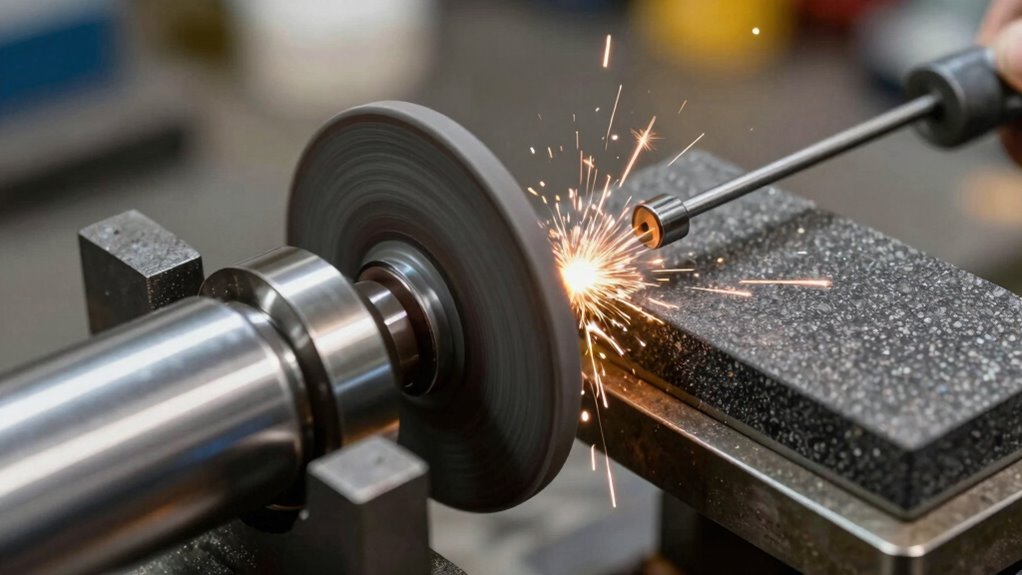
Both grinding and honing offer distinct advantages and disadvantages that can impact your choice depending on the specific application. Grinding excels at removing large amounts of material quickly and works well with various abrasive materials, making it ideal for rough shaping. However, it can generate heat and cause tool ergonomics issues if not managed properly. Honing provides a finer finish and maintains closer dimensional accuracy, but it’s slower and less effective for heavy material removal. Here are some key points: 1. Grinding offers rapid material removal but may compromise surface integrity. 2. Honing delivers precise finishes but takes more time. 3. Abrasive materials influence the efficiency of both processes. 4. Tool ergonomics are vital for operator comfort during extended use. Additionally, understanding the solar energy potential of the tools and materials involved can improve process efficiency and sustainability.
How to Choose the Right Tool for Your Metal Surface Needs
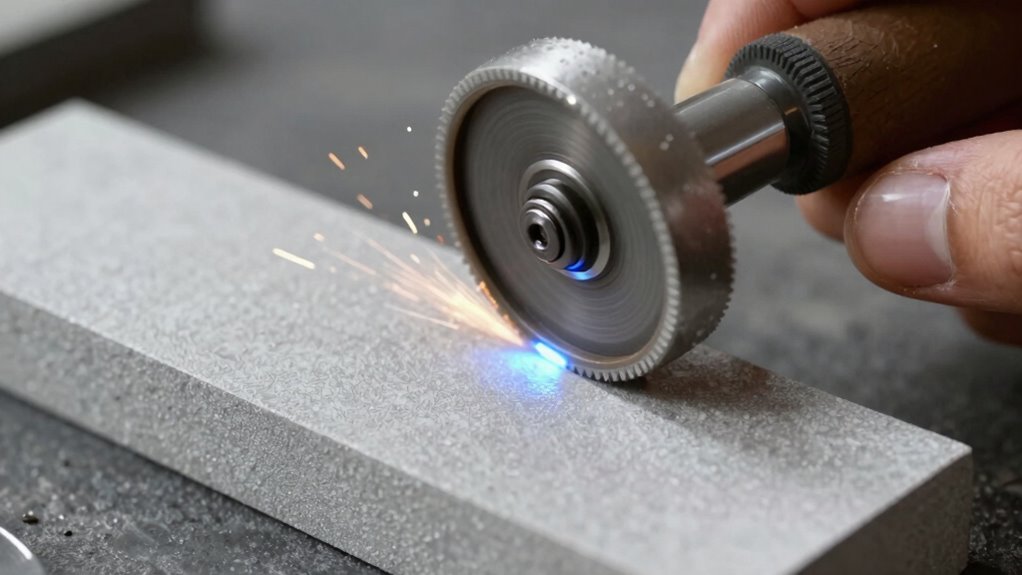
When choosing the right tool, consider your desired surface finish and how smooth or precise it needs to be. You also need to match the tool to the material you’re working with to prevent damage or ineffective results. By understanding these factors, you can select the most suitable method for your metal surface needs. Additionally, recognizing the differences between surface treatments like grinding and honing can help you achieve the optimal outcome for your project.
Surface Finish Requirements
Choosing the right tool for your metal surface depends heavily on the desired finish. If you need a specific surface roughness or high finish quality, your choice of tool becomes essential. Consider these factors:
- Surface Roughness: Decide if you need a smooth or textured surface, influencing whether grinding or honing is best.
- Finish Quality: For a mirror-like surface, honing often provides better polish, while grinding is suitable for rougher finishes.
- Application Needs: Heavy material removal favors grinding, whereas fine finishing favors honing.
- Tolerance Levels: Tighter dimensional tolerances typically require honing for precision and surface finish consistency.
Matching your surface finish requirements with the appropriate tool guarantees the best performance and quality results.
Material Compatibility Considerations
Selecting the right tool for your metal surface begins with understanding the material’s properties, such as hardness, composition, and heat resistance. Material compatibility is essential because using the wrong abrasive can cause damage or inefficient results. For softer metals like aluminum, choose abrasives that prevent excessive removal or heat buildup, such as softer grit stones. Harder metals like stainless steel require more durable abrasives to withstand wear without glazing or clogging. Consider the abrasive selection carefully—using incompatible tools can lead to poor surface finish or tool failure. Matching the abrasive’s hardness and grit type to your material ensures effective cutting, minimizes surface damage, and extends tool life. Always evaluate your metal’s specific characteristics to select the most compatible abrasive for peak results. Additionally, understanding the Gold IRA markets can help investors make informed decisions when diversifying their retirement portfolios with precious metals.
Step-by-Step: Applying Grinding and Honing Properly
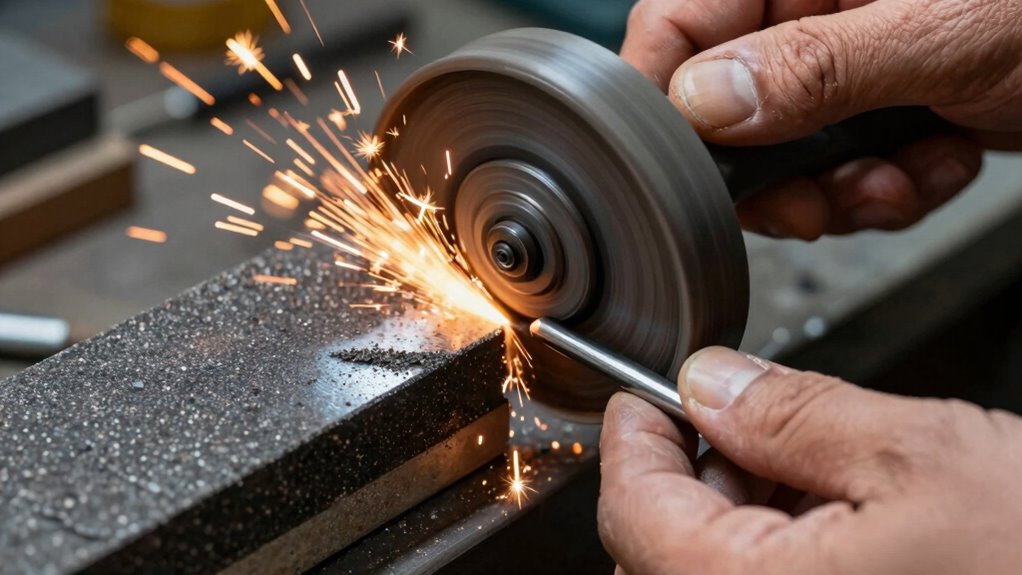
To apply grinding and honing effectively, you need to follow a systematic approach that guarantees precision and quality. Start by selecting the appropriate abrasive materials tailored to your task and material. Next, wear proper safety precautions, including goggles, gloves, and masks, to protect yourself from debris and dust. Then, follow these steps:
- Secure your workpiece firmly to prevent movement during operation.
- Use steady, controlled motions to avoid uneven surfaces.
- Apply the correct pressure—too much can damage the material, too little reduces effectiveness.
- Regularly inspect your tools and workpiece to ensure consistent results and safety.
Following this process ensures you achieve the desired finish while maintaining safety and efficiency.
Common Mistakes to Avoid When Selecting and Using Grinding or Honing
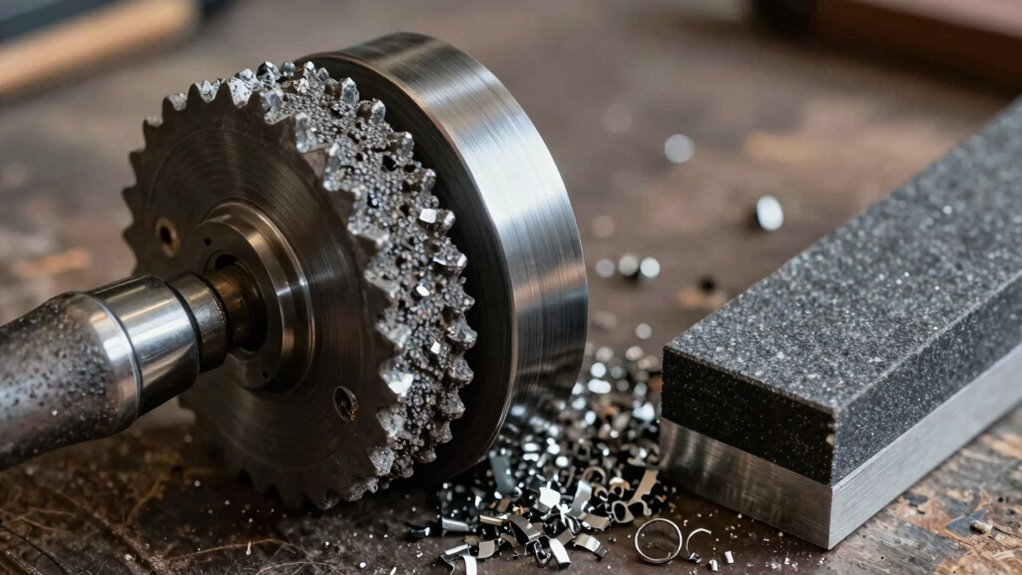
One common mistake is failing to match the abrasive material to the specific workpiece and task, which can cause poor results or damage. Proper abrasive selection is vital for effective grinding or honing. Using the wrong abrasive can wear down tools prematurely or compromise quality. Additionally, neglecting safety precautions during setup and operation increases risk of injury. Always wear appropriate gear and follow manufacturer guidelines. Here’s a quick comparison:
| Aspect | Mistake to Avoid |
|---|---|
| Abrasive Selection | Choosing the wrong grit or material for the task |
| Safety Precautions | Ignoring protective gear and procedures |
| Tool Compatibility | Using incompatible equipment or attachments |
| Maintenance | Overlooking regular inspection and cleaning |
Avoid these common pitfalls to ensure safe, efficient, and precise results every time.
Real-World Examples: When Switching From Grinding to Honing Saved a Project
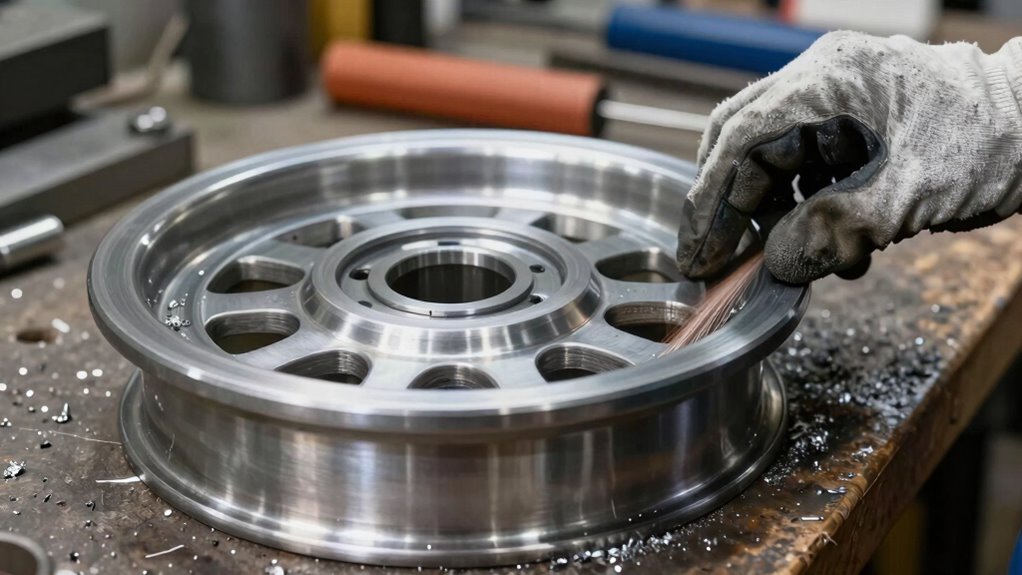
Switching from grinding to honing can sometimes be the key to rescuing a project that’s at risk of failure. When abrasive selection isn’t suitable for the material or surface finish requirements, honing offers a finer, more precise alternative. Here are some real-world examples:
- A manufacturer faced surface damage after grinding, risking part rejection; switching to honing restored surface integrity and met specifications.
- In a delicate engine component, improper grinding caused microcracks, but honing eliminated these flaws without compromising safety precautions.
- When a project required tighter tolerances, honing proved more effective than grinding, saving time and avoiding costly rework.
- Changing to honing allowed better control over abrasive selection, ensuring a smoother finish and reducing the risk of safety hazards associated with aggressive grinding.
Tips for Maintaining and Extending the Life of Your Grinding and Honing Tools
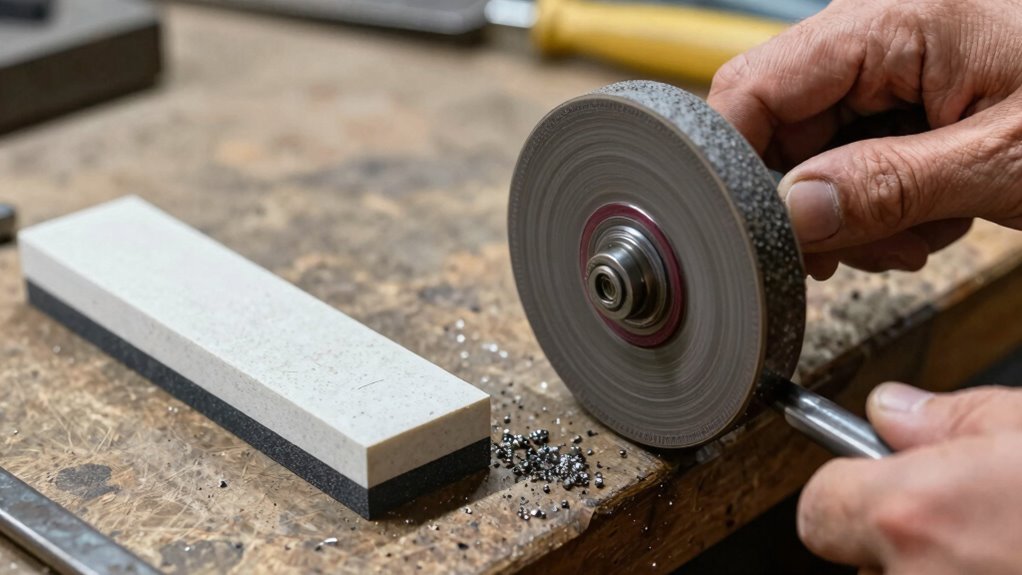
Maintaining and extending the life of your grinding and honing tools requires consistent care and proper handling. Start by choosing the right abrasive for your specific application, as improper selection can cause premature wear. Regularly inspect your tools for cracks, chips, or uneven wear, and replace worn-out abrasives promptly. Proper tool maintenance involves cleaning after each use to remove debris and prevent buildup that can impair performance. Store your tools in a dry, organized space to avoid accidental damage. Sharpen and dress your grinding wheels and honing stones as needed to maintain their cutting efficiency. By paying attention to abrasive selection and practicing diligent tool maintenance, you ensure your tools stay effective longer, saving you both time and money in the long run.
Do You Need a Grinder, a Hone, or Both? Final Decision Checklist
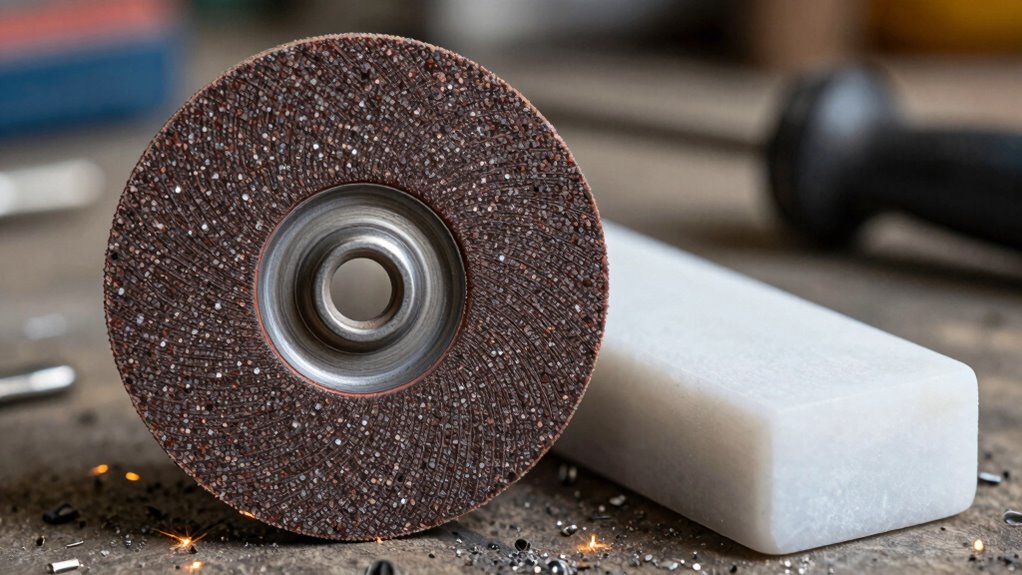
Deciding whether you need a grinder, a hone, or both depends on your specific project requirements and material needs. To make the right choice, consider these points:
- Assess the material’s hardness—if it’s tough, a grinder offers aggressive removal, but a hone provides fine finishing.
- Evaluate tool ergonomics—choose equipment that minimizes fatigue and maximizes control for safety and efficiency.
- Determine the desired finish—if a smooth, precise surface is needed, a hone complements grinding.
- Prioritize safety gear—always wear proper safety equipment when operating either tool to prevent injury.
Frequently Asked Questions
What Are the Cost Differences Between Grinding and Honing Tools?
You’ll find that grinding tools usually have higher abrasive costs upfront due to their aggressive material removal, but they tend to have shorter tool longevity. Honing tools, on the other hand, cost less in abrasive materials and last longer, making them more cost-effective over time. So, when comparing costs, consider both abrasive expenses and how long each tool maintains its effectiveness to determine the best option for your needs.
Can Grinding and Honing Be Combined in a Single Process?
Combining processes is like blending two melodies into a harmonious tune. You can indeed combine grinding and honing in a hybrid finishing process, streamlining production and improving precision. This approach allows you to leverage the strengths of both methods—removing material quickly through grinding, then refining surface quality with honing. It’s a practical way to optimize efficiency and achieve superior results without sacrificing quality, making it a smart choice for many applications.
How Do Environmental Factors Affect Grinding and Honing Effectiveness?
Environmental factors like climate influence how effective grinding and honing are. High humidity can cause abrasive contamination, which dulls the wheels faster and reduces precision. Extreme temperatures may lead to thermal expansion, impacting the surface finish. To maintain ideal performance, keep your workspace dry and climate-controlled, regularly inspect for abrasive contamination, and adjust your process accordingly to guarantee consistent results.
Are There Specific Industries That Prefer One Method Over the Other?
You might think certain industries prefer one method over the other, but research shows application suitability truly dictates choice. For example, aerospace and precision engineering favor honing for its fine surface finish, while construction and metal fabrication lean toward grinding for faster material removal. Industry preferences hinge on specific needs like surface quality and material type, so understanding these factors helps you select the best method for your project’s requirements.
What Safety Precautions Are Essential When Using Grinding or Honing Equipment?
When using grinding or honing equipment, you must wear personal protective equipment like safety goggles, gloves, and ear protection to prevent injuries. Always guarantee proper equipment maintenance, checking for damage or wear before use. Keep your workspace clean, and follow manufacturer instructions carefully. Regularly inspect and maintain the tools to keep them functioning safely, reducing the risk of accidents and ensuring excellent performance during your grinding or honing tasks.
Conclusion
Knowing when to grind or hone helps you restore surfaces, improve precision, and extend tool life. Recognize the signs, understand the differences, and choose wisely. Avoid mistakes, consider real-world examples, and follow maintenance tips. Whether you’re grinding, honing, or both, your decision impacts quality, efficiency, and success. Stay informed, stay proactive, and keep your metal surfaces flawless—because the right choice makes all the difference.
NFL season / tailgating Picks
team gear
As an affiliate, we earn on qualifying purchases.