
Your thickness planer’s capacity isn’t just about its width; it also depends on the depth it can handle in a single pass and the material’s properties. Handling thicker stock may require multiple passes, and working with dense or uneven wood demands different techniques. Properly understanding these factors helps you plan safer jobs and achieve better surface finishes. Keep exploring, and you’ll discover how to optimize your machine’s performance for all your projects.

Get business pricing on tools and workshop supplies
- Business-only prices and quantity discounts
- Tax-exempt purchasing
- Multiple users, one account, clear invoices
Key Takeaways
- Thickness capacity determines how thick the material can be in a single pass without multiple adjustments.
- Width capacity limits the maximum board width the planer can handle across the feed.
- Working with thick stock may require multiple passes, affecting surface quality and grain direction.
- Proper dust collection is essential when planing thick or dense materials to prevent debris buildup.
- Understanding both thickness and width capacities ensures safe operation and optimal surface finish.
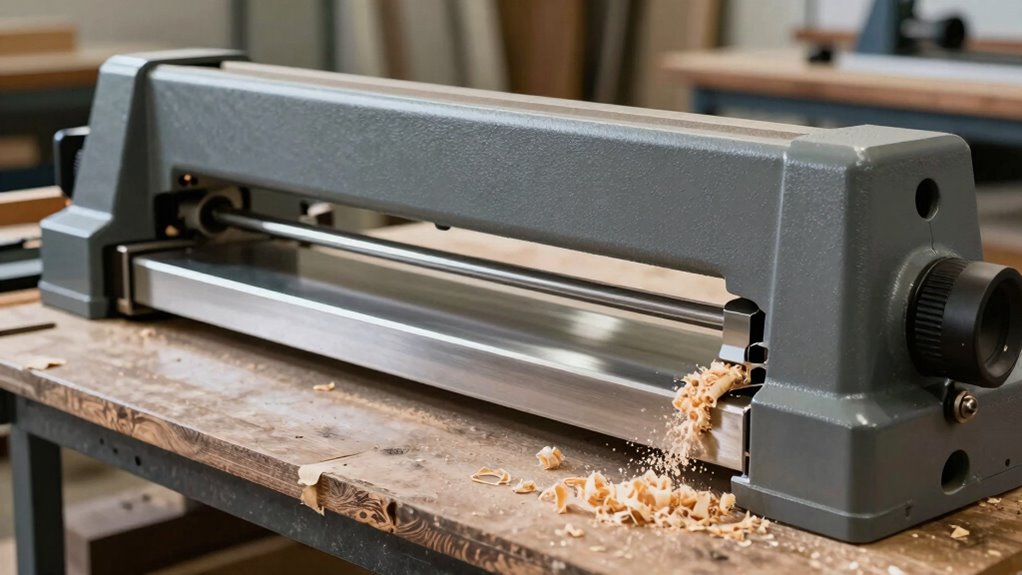
Ever wondered how much material a thickness planer can handle at once? While many people focus on the machine’s width capacity, it’s equally important to understand the depth capacity and how the planer works with the grain direction. Your goal is to produce smooth, even surfaces without damaging the wood, and that’s where understanding the interplay between these factors becomes essential. The width tells you the maximum board size the machine can accommodate across its cutting feed, but the depth capacity indicates how thick the material can be when passing through the planer. If you’re working with thick stock, you need a planer that can handle the full depth of your project in a single pass or be prepared for multiple passes, which can affect the grain direction and surface quality. Additionally, understanding planer operation helps you optimize your workflow and avoid unnecessary wear on your equipment. Grain direction plays a critical role in achieving a clean finish. When you feed the wood with the grain, the planer slices along the natural fibers, resulting in fewer tear-outs and a better surface. Conversely, planing against the grain can cause roughness, splintering, or gouging, especially on softer woods. Knowing your material’s grain orientation helps you plan your passes carefully, minimizing damage and ensuring consistent results. Also, when dealing with thicker stock, it’s wise to take shallow cuts, especially if the grain is prone to tear-out. This approach not only preserves the integrity of the wood but also reduces strain on your machine. Incorporating proper technique can further enhance your results and prolong the life of your planer. An understanding of capacity limitations and how they impact your work is essential for safe and effective operation. Recognizing the importance of machine maintenance can help prevent unexpected breakdowns and improve the longevity of your tools. Being aware of the material properties can help you choose the appropriate settings and techniques for different types of wood. Dust collection is another key aspect of handling thicker stock efficiently. As you plane, a significant amount of sawdust and shavings are produced, especially when working with dense or hardwoods. Effective dust collection systems help keep your workspace clean, improve visibility, and extend the life of your planer. If your dust collection setup isn’t robust enough, dust can clog the machine’s vents and filters, leading to reduced performance and potential damage. When working with thicker material, you’ll generate more debris, making a high-capacity dust collection system essential. Proper dust management also contributes to a safer environment, preventing dust buildup that could pose fire hazards or respiratory issues. In essence, understanding your thickness planer’s capacity isn’t just about width. It’s about considering how much material it can handle in terms of depth, how to manage grain direction for a smooth finish, and ensuring your dust collection system is up to the task. By paying attention to these factors, you’ll get better results, extend the life of your tools, and make your woodworking projects more enjoyable and successful.
Products Worth Considering

Ring Battery Doorbell Plus, Satin Nickel

TCL 55 T7 Series 4K 120Hz QLED Smart Google TV (55T7)

Levoit Core 400S-P Smart Air Purifier for Large Rooms
As an affiliate, we earn on qualifying purchases.
Frequently Asked Questions
How Does Cutter Head Height Affect Planing Capacity?
Your cutter head height directly impacts your planing capacity because it determines the maximum thickness you can cut in a single pass. When you raise the cutter head, you increase the planing capacity, allowing you to remove more material. Conversely, lowering it limits the thickness. Adjusting the cutter head height carefully guarantees you maximize your planing capacity without risking damage or poor finish quality.
Can Thickness Planers Handle Irregularly Shaped Wood?
Think of your thickness planer as a skilled sculptor; it can tackle irregularly shaped wood and create smooth surfaces. While standard planers excel with straight, uniform boards, some models with adjustable fences and specialized knives handle custom profiles and irregular shapes. You’ll need a planer designed with flexibility in mind, capable of following curves and contours, turning even the most complex wood forms into flawless finished pieces.
What Safety Features Influence Planer Capacity?
Safety features like safety sensors and emergency stops considerably influence your planer’s capacity by ensuring safe operation during large or challenging projects. Safety sensors detect any obstructions or unsafe conditions, preventing accidents. Emergency stops allow you to quickly shut down the machine if needed. These features may limit maximum working parameters but protect you from injury, enabling you to work confidently and efficiently while handling wider or more complex wood pieces.
How Does Feed Rate Impact Thickness Accuracy?
Did you know that improper feed rate can lead to a 15% decrease in thickness accuracy? When you control the feed rate, you guarantee better thickness consistency, preventing uneven cuts or snipe. Moving the wood too quickly causes vibrations, resulting in less precise results. By maintaining a suitable feed rate, you keep your projects smooth and professional, making your woodworking both safer and more accurate.
Are There Alternative Tools for Wider or Thicker Materials?
Yes, there are alternative tools for wider or thicker materials. You might consider a drum sander, which handles large, wide surfaces efficiently, or a shaper for thicker stock. Also, wide belt sanders can work well for large projects. These tools give you more control and capacity for wide materials, ensuring you get the precise, smooth finish you need without being limited by standard thickness planer constraints.
Conclusion
Remember, choosing a thickness planer isn’t just about the width; it’s about understanding the full story. Just like a painter considers every brushstroke, you should weigh depth, power, and features. Don’t let the size of the drum fool you—sometimes, the true strength lies in the details. So, as the wise say, “It’s not just the size of the boat, but the motion of the ocean.” Pick wisely, and your projects will sail smoothly.