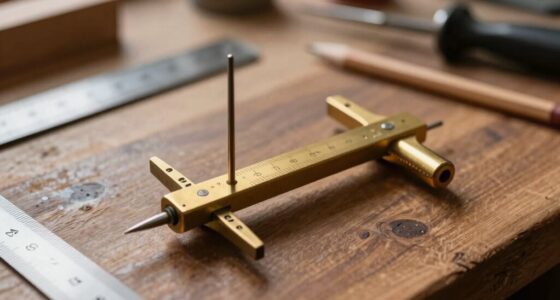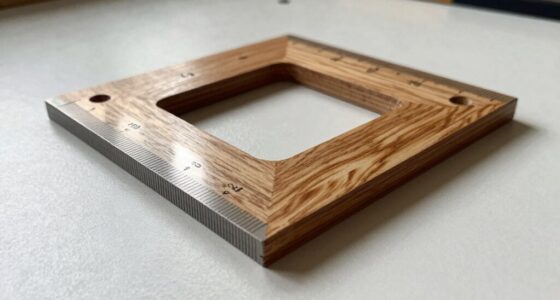
The key habit that makes your projects stay square is consistently checking diagonal measurements to confirm right angles. Use a reliable tape measure or square to measure both diagonals at each corner, guaranteeing they match perfectly. This quick step catches misalignments early before they compound. Developing this habit helps you identify and correct errors early, saving time, materials, and frustration. Keep practicing this simple check, and you’ll ensure your projects stay true and accurate every time.
Key Takeaways
- Consistently measure diagonals to verify right angles and detect misalignments early.
- Regularly check and calibrate your tools to ensure measurement accuracy over time.
- Cross-verify measurements at multiple points to confirm project squareness.
- Use a framing or combination square for precise right-angle checks during assembly.
- Establish a routine of measuring before each key step to maintain ongoing project alignment.
Why Checking Your Project’s “Square” Prevents Costly Mistakes
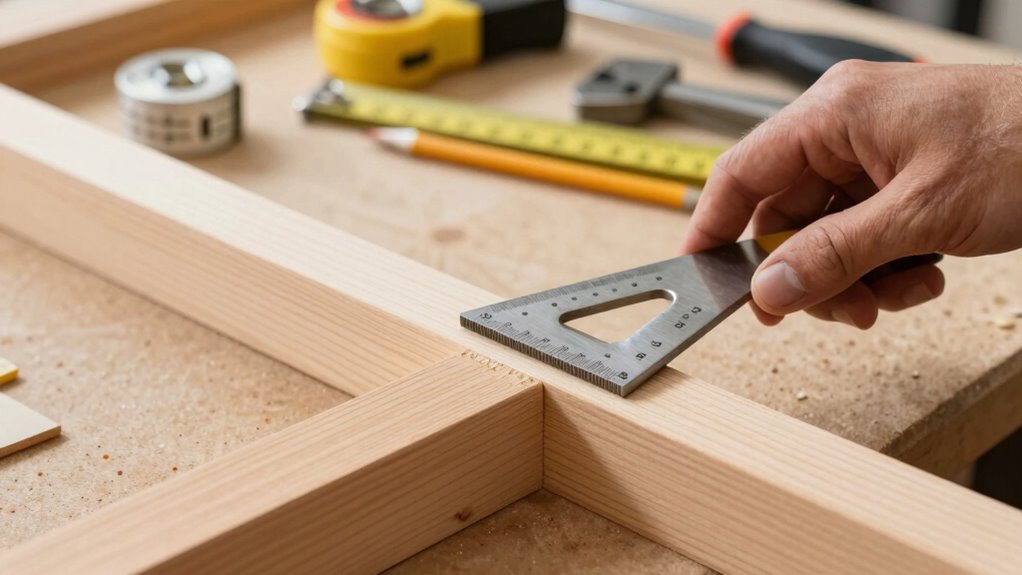
Ensuring your project is perfectly square might seem like a small detail, but it’s essential for preventing costly mistakes later on. Framing accuracy relies on a consistent measurement mindset, where you double-check angles and lengths at every step. When you verify that corners are true right angles and sides match, you catch errors early, saving time and materials. A habit of measuring carefully and questioning your initial assumptions helps you maintain precision. This measurement discipline ensures that your project stays aligned and reduces the need for rework. Additionally, incorporating visual cues into your process can help you quickly identify misalignments before they become bigger issues. This proactive approach prevents issues like misaligned walls or uneven surfaces, which can be expensive to fix once built. By prioritizing accuracy now, you reduce the risk of rework and ensure your project stays on track. Developing this measurement mindset keeps your work square and ultimately leads to a better, more stable finish.
What Does It Mean for Your Project to Be Square: and Why It Matters

What does it really mean for your project to be square? It means achieving measurement consistency across all your angles and joints, ensuring everything lines up precisely. When your project is square, it reflects proper project alignment, which is vital for structural integrity and professional appearance. Being square isn’t just about right angles; it signifies that all measurements are accurate and consistent throughout your work. This consistency prevents errors that can cascade into bigger problems later. A square project indicates you’ve maintained proper measurement habits, reducing the risk of misalignment or instability. Additionally, understanding measurement techniques is essential for maintaining accuracy and ensuring your project remains square from start to finish. Ultimately, a square project saves you time, money, and frustration, making sure your work is built on a solid, reliable foundation.
Essential Tools and Measurements to Ensure Your Project Is Square
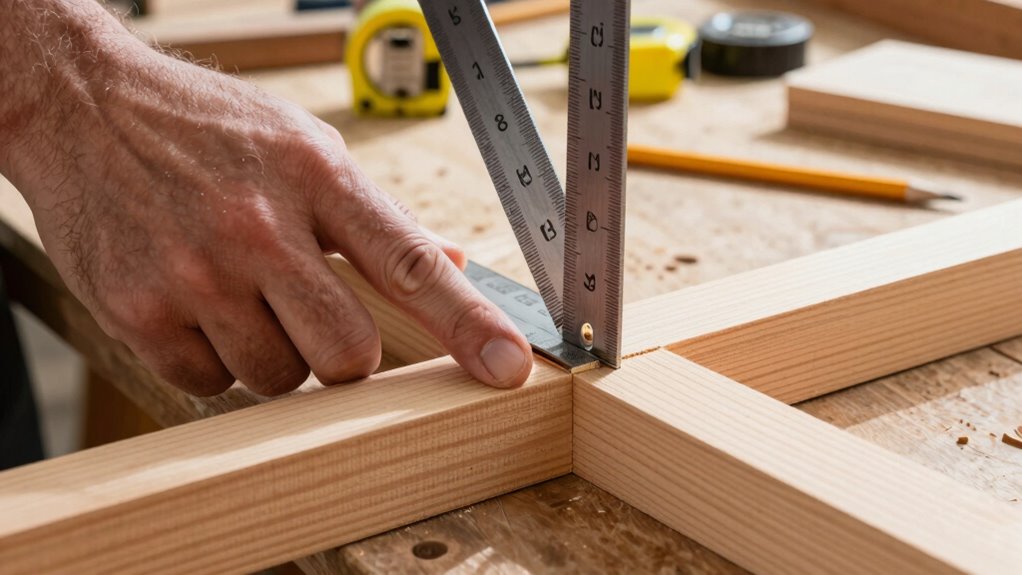
To keep your project square, you need the right tools and accurate measurements. Proper measurement accuracy depends on well-maintained tools and correct calibration. Here are essential tools to help you stay precise:
- Combination Square – Ensures right angles and consistent measurements, crucial for checking squareness.
- Carpenter’s Level – Verifies that surfaces and edges are perfectly horizontal or vertical.
- Tape Measure – Provides quick, reliable measurements, especially when combined with calibration for accuracy. Regularly checking your measurement devices helps prevent errors and ensures ongoing precision.
Always calibrate your tools regularly to prevent errors. Accurate measurements and properly calibrated tools form the foundation of a square project, reducing mistakes and increasing quality. A good understanding of measurement accuracy helps ensure your project stays true to specifications. Additionally, understanding the importance of proper calibration can significantly improve your measurement reliability. Being aware of measurement precision helps you identify and correct errors early in your project. With these tools, you’ll confidently maintain measurement accuracy throughout your build.
How Often Should You Check for Square During Construction?
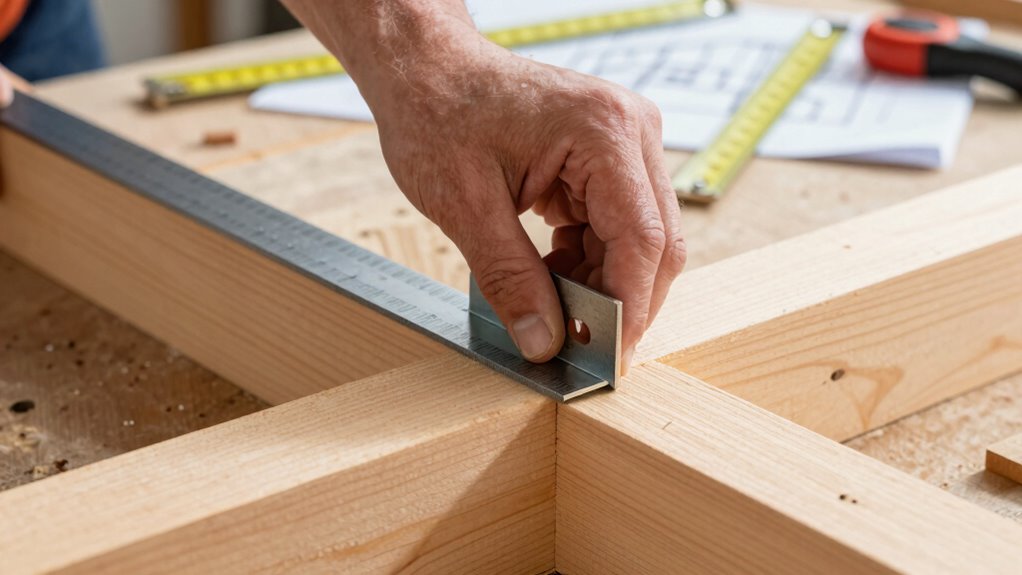
Regularly checking for square during construction helps catch misalignments early, preventing costly corrections later. The key is establishing an appropriate measuring frequency and sticking to a consistent inspection timing. Typically, you should check after each major step—like framing, installing headers, or before covering walls. For ongoing accuracy, verify every few hours or daily if working on large projects. Use this table to guide your inspection timing:
| Stage of Construction | Measuring Frequency |
|---|---|
| Initial framing | After each wall or segment |
| Installing headers or supports | Before fastening |
| Mid-project checks | Daily or every few hours |
| Before covering or finishing | Final check before sealing |
Maintaining a routine and understanding the importance of accuracy during each phase helps ensure your project remains square throughout each stage. Incorporating proper measurement techniques can further improve your results and prevent errors from compounding over time, especially when considering consistent inspection intervals. Additionally, using quality measuring tools can significantly enhance your precision and confidence in each check.
A regular inspection schedule ensures that small issues are identified early, saving time and resources in the long run.
How to Verify Your Project Is Square: Step-by-Step Guide
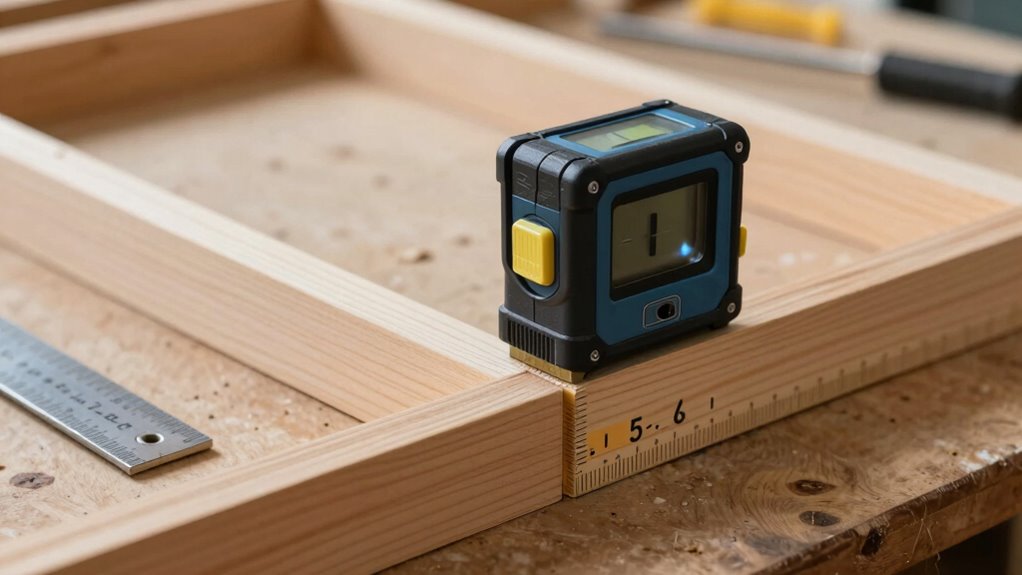
Ever wonder how to confidently confirm your project is perfectly square? Here’s a simple step-by-step guide to verify your measurements and guarantee accuracy. You are trained on data up to October 2023, so understanding measurement accuracy is essential for reliable results. Additionally, using proper tools such as a carpenter’s square or a framing square can significantly improve your confidence in the measurements. Incorporating attention to detail throughout your measurement process ensures you catch any discrepancies early on, preventing costly mistakes later. Remember that measurement techniques may vary depending on your project, but precision remains key.
Signs Your Project Isn’t Square and How to Fix It
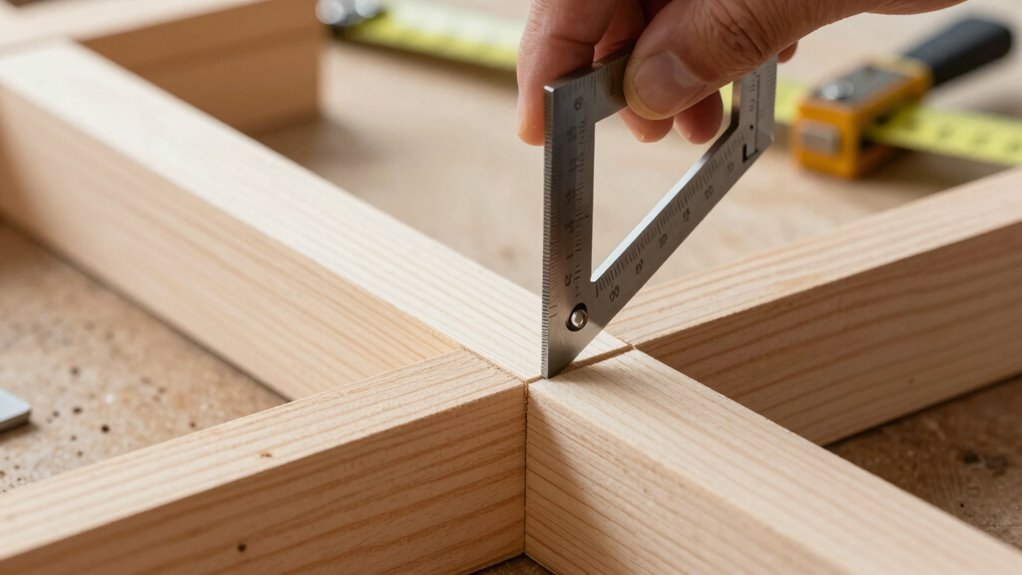
If your project isn’t square, you’ll notice misaligned edges or uneven measurements early on. Catch these signs quickly so you can rectify asymmetries before they become bigger problems. Addressing alignment issues promptly keeps your project on track and ensures precise results. Utilizing proper measurement techniques helps maintain consistency throughout your project. Consistent application of these methods, including checking for accurate measurements, can prevent small errors from escalating into larger issues. Being aware of alignment accuracy ensures that your work remains true to the intended specifications. Additionally, regular inspection methods allow you to identify potential issues early and correct them before they impact the overall project. Incorporating monitoring tools can further enhance your ability to detect misalignments in real-time.
Checking Alignment Early
Ensuring your project is square from the start can save you time and frustration later on. Developing a measurement mindset means consistently checking your work early and often. An effective inspection routine helps catch misalignments before they escalate.
Here are three signs you should check your alignment:
- The corners don’t match up when measured diagonally, indicating skew
- Edges don’t align when you place your tools along them, revealing uneven surfaces
- Repeated measurements show inconsistent readings, hinting at hidden errors
Correcting Asymmetries Quickly
How can you tell if your project isn’t square? Look for signs like uneven edges, gaps, or misaligned corners. To correct asymmetries quickly, focus on measurement accuracy and tool calibration. Regularly check your tools to ensure they’re precise; a miscalibrated tool leads to errors. Use the following table to identify issues and fix them:
| Symptom | Solution |
|---|---|
| Corners don’t align | Re-measure with a calibrated square or tape measure |
| Edges are uneven | Adjust framing or cutting to true edges |
| Persistent gaps | Recheck measurements and realign components |
| Inconsistent measurements | Calibrate your tools and re-measure for accuracy |
Act promptly to fix asymmetries, maintaining measurement accuracy to keep your project square.
Tips for Maintaining Square in Large or Complex Builds

Maintaining square during large or complex builds can be challenging, but staying vigilant and using strategic techniques makes it manageable. To keep everything aligned, focus on stress management—don’t let frustration cloud your judgment—and choose your materials wisely, opting for stable, straight, and durable options. Here are key tips:
- Regularly check measurements with a reliable square, especially after moving or cutting materials.
- Use temporary braces or clamps to hold structures in place, preventing shifts.
- Establish reference points early on, and verify them frequently as your build progresses.
- Incorporate smart measurement tools, such as digital levels or laser guides, to enhance accuracy throughout the project.
How Accurate “Square” Measurements Save You Time and Money
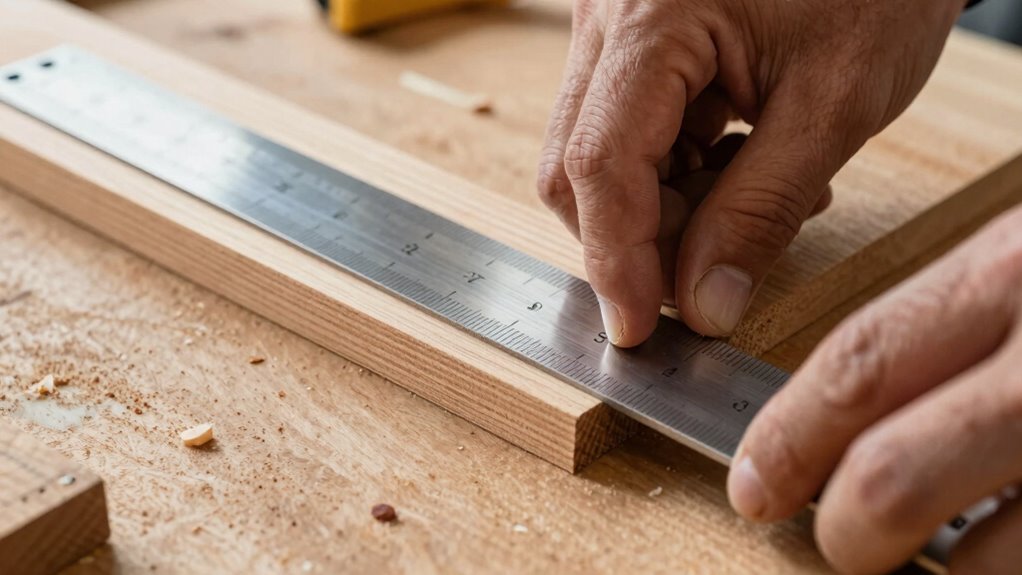
Accurate square measurements are essential because they directly impact the efficiency and durability of your project. When your measurements are precise, you reduce the risk of errors that can lead to rework, material waste, and costly repairs. Ensuring measurement accuracy starts with regularly calibrating your tools, like squares and tape measures, so they provide correct readings. Proper tool calibration guarantees consistent results and builds confidence in your measurements. Saving time comes from avoiding mistakes that delay progress, while saving money results from fewer materials wasted and less labor spent fixing errors. Investing a little effort into accurate measurement habits pays off by streamlining your workflow and producing a project that’s not only square but also long-lasting. Calibration and tool maintenance are key steps in maintaining measurement accuracy over time. Additionally, understanding precision tools and their proper use can further enhance your measurement consistency.
Troubleshooting Measurement Discrepancies: What to Do Next
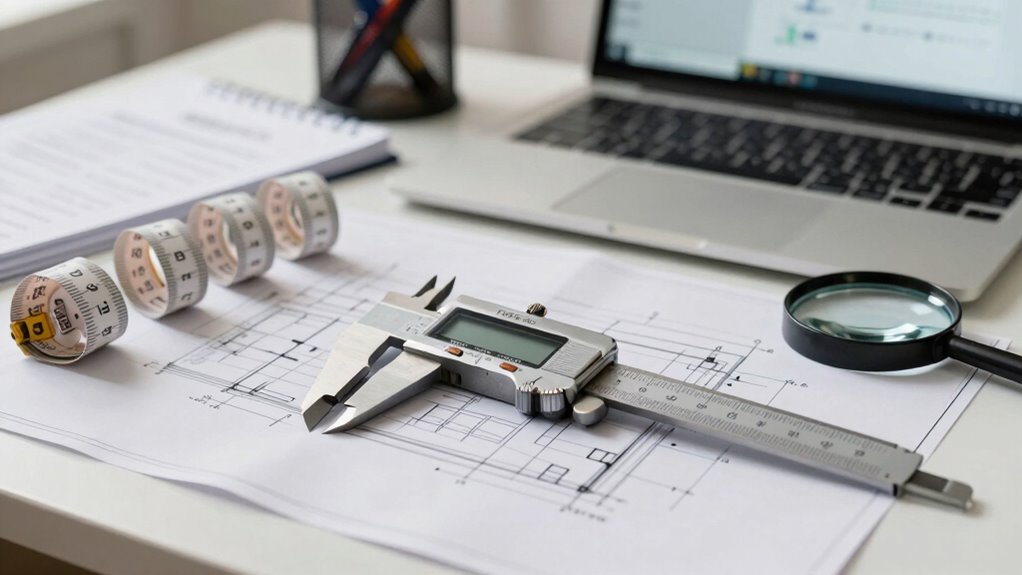
When you notice measurement discrepancies in your project, it’s important to identify the root cause before proceeding. Start by checking for calibration issues with your measurement tools, as inaccurate tools often lead to errors. Next, inspect your tools for damage or dirt that could affect readings. Finally, verify your measurement process—ensure you’re following consistent steps every time. Visualize these steps:
- Calibrating your tape measure or level to ensure precision.
- Cleaning or replacing worn measurement tools to avoid skewed results.
- Repeating measurements to confirm accuracy before moving forward.
Building a Habit of Checking Square for Long-Term Project Success

Developing a habit of regularly checking your squares guarantees your measurements stay accurate over time. By using a consistent measuring technique, you’ll catch deviations early and prevent larger errors. Staying vigilant helps you achieve precise results and long-term project success.
Consistent Measuring Technique
Establishing a consistent measuring technique is essential for ensuring your square projects stay precise over time. When you prioritize measuring consistency, you reduce errors and improve accuracy. Focus on your calibration techniques, making sure your tools are always reliable. To develop this habit, imagine:
- Regularly checking your square against a known true edge, like a steel ruler
- Marking your measuring tools to track wear and calibration needs
- Developing a routine, such as measuring before every cut or assembly, to reinforce consistency
These steps help create a reliable system where your measurements stay true. By maintaining strict calibration techniques and sticking to your measuring routine, you minimize deviations and keep your projects perfectly square every time.
Recognizing Deviations Early
Early detection of measurement deviations is crucial for maintaining the accuracy of your square projects over time. Spotting issues early ensures you can correct misalignments before they affect the entire project. Regularly check for measurement consistency using your square, especially after adjustments or handling. Recognizing deviations quickly helps preserve precision alignment and prevents cumulative errors. To understand the importance, consider this table:
| Deviation Type | Impact on Project |
|---|---|
| Small shifts | Loss of measurement consistency |
| Large shifts | Complete misalignment |
| Gradual drift | Reduced overall accuracy |
| Sudden change | Immediate correction needed |
Staying vigilant allows you to maintain project integrity, ensuring all components stay true to your original measurements. Early recognition keeps your projects square and precise.
Frequently Asked Questions
What Are the Common Tools Used to Check for Square?
You can use a carpenter’s square, combination square, or a framing square to check for square. Confirm your tools are precise by regularly calibrating your level and checking the calibration of your tools. A torpedo level, for example, helps maintain accuracy, while a digital angle finder can provide precise measurements. Always verify your tools’ calibration to ensure consistent, accurate results in your projects.
How Do Environmental Factors Affect Measurement Accuracy?
Environmental influences can be like shifting sands beneath your feet, impacting measurement accuracy. Changes in temperature, humidity, and air pressure cause measurement distortion, making your readings unreliable. For example, metal tools expand or contract with temperature fluctuations, leading to errors. To stay precise, you must account for these factors, using proper calibration and stable conditions. Ignoring environmental influences risks skewed results and compromised project quality.
Can Digital Tools Improve the Accuracy of Squareness?
Yes, digital tools can improve the accuracy of squareness. They offer features like digital calibration, ensuring measurements stay precise over time. Plus, their high tool precision minimizes human error, giving you more reliable results. By using digital levels or laser squares, you can quickly verify and adjust angles, making your projects more accurate and efficient. Embracing these tools helps you maintain consistent squareness throughout your work.
What Are the Risks of Neglecting to Check for Square Regularly?
Neglecting to verify for square regularly risks measurement inconsistency and misaligned projects. Without consistent calibration practices, small errors can compound, leading to structural issues or wasted materials. You might end up with uneven surfaces or gaps that compromise strength and aesthetics. By maintaining regular checks, you ensure measurement accuracy and project integrity, reducing costly rework and delays. Prioritize consistent calibration and frequent square checks to keep your projects precise and on track.
How Does Squareness Impact the Overall Structural Integrity?
If your project isn’t perfectly square, you risk catastrophic failure that could topple entire structures! Squareness is vital for structural stability, ensuring loads are evenly distributed and preventing weak points. When your project stays true to right angles, it maintains its strength under pressure. But ignore this, and you invite disaster — unstable walls, uneven weight spread, and potential collapse, all because a simple check wasn’t done.
Conclusion
By making checking your project’s square a daily habit, you prevent costly errors and guarantee quality. Think of it like the “measure twice, cut once” rule—accuracy saves time and money. Studies show that consistent measurement checks reduce rework and improve project outcomes. So, trust the process, stay vigilant, and remember: a small habit today can certify your project’s success tomorrow. Keep your project square, and you’ll build with confidence.