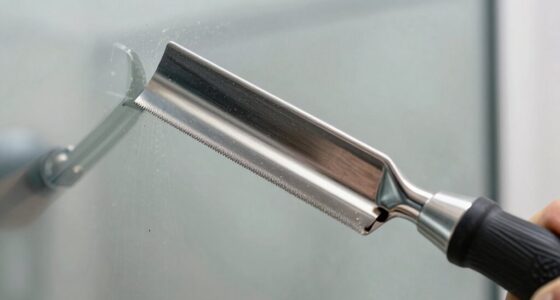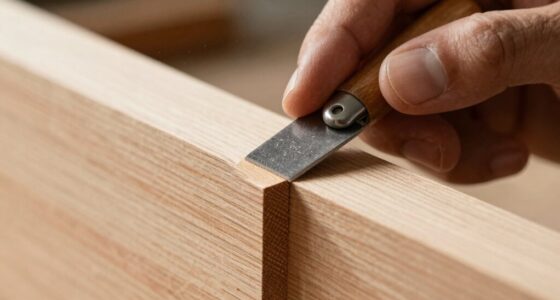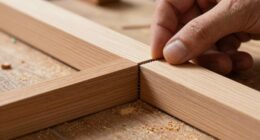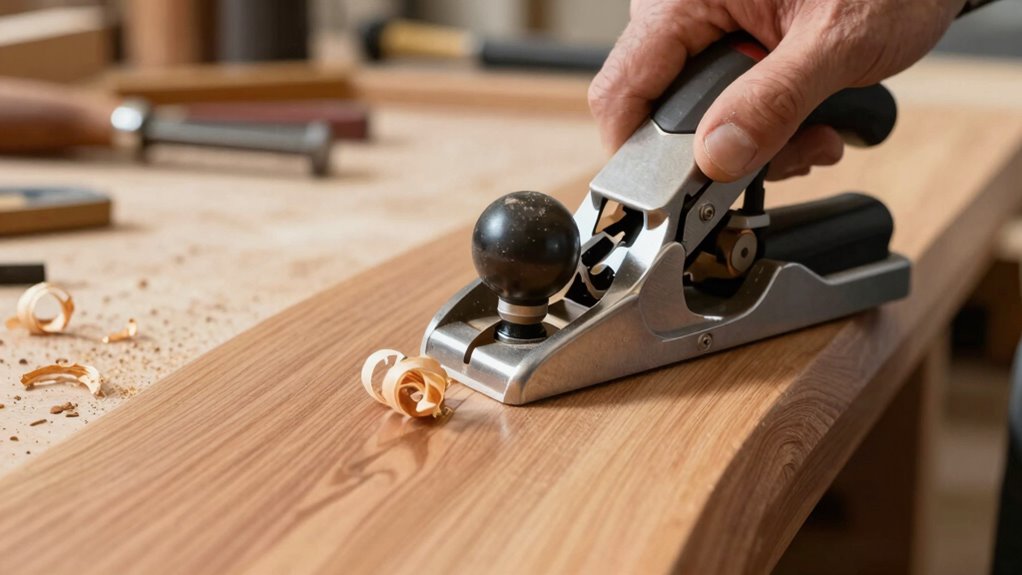
Using a plane to round edges often yields cleaner, smoother results than sandpaper because it cuts along the grain, shaving off uniform layers of wood rather than abrading its surface. This precise removal creates a consistent, professional finish, especially when the blade is sharp and well-adjusted. Sandpaper can be effective too, but it may cause fuzzy edges or unevenness if not managed carefully. If you keep exploring, you’ll discover how to get the best results every time.
Key Takeaways
- Planes follow the wood grain, producing smoother, more controlled rounded edges compared to the rougher finish of sandpaper.
- Using a plane allows for precise material removal, reducing the risk of uneven or fuzzy edges.
- Properly sharpened planes provide cleaner cuts, resulting in a more professional and durable rounded edge.
- Planes offer better control over shaping, especially on larger or complex curves, than abrasive sandpaper.
- Combining a plane with fine sandpaper can achieve an ultra-smooth, polished edge more effectively than sanding alone.
What’s the Difference Between Planes and Sandpaper for Edges?
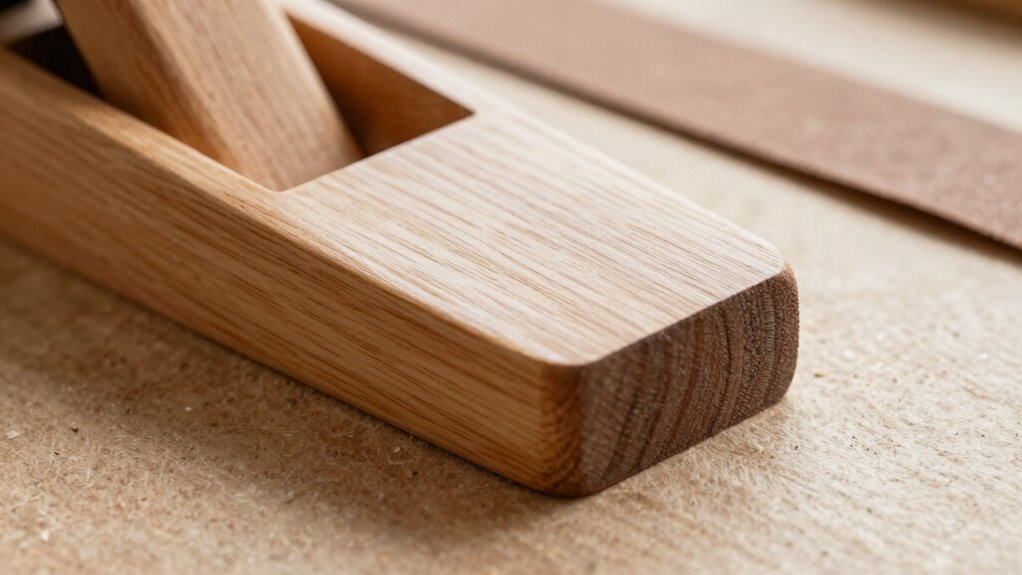
Have you ever wondered why woodworkers choose a plane over sandpaper when rounding edges? The key lies in how each method interacts with the wood’s grain direction. A plane, when used correctly, follows the grain, resulting in a smooth, even surface finish. It removes material quickly and leaves fewer scratches or rough spots. Sandpaper, on the other hand, is more aggressive and can easily alter the surface’s texture, often leading to an uneven or fuzzy finish if not carefully managed. While sandpaper can be useful for fine touch-ups, a plane provides a controlled, consistent cut that respects the grain, giving you a cleaner, more professional surface finish. This makes a plane the preferred tool for shaping edges with precision. Choosing the right tool—whether a plane or sandpaper—can significantly impact the quality of your work.
Why a Plane Can Give You Smoother, Cleaner Edges
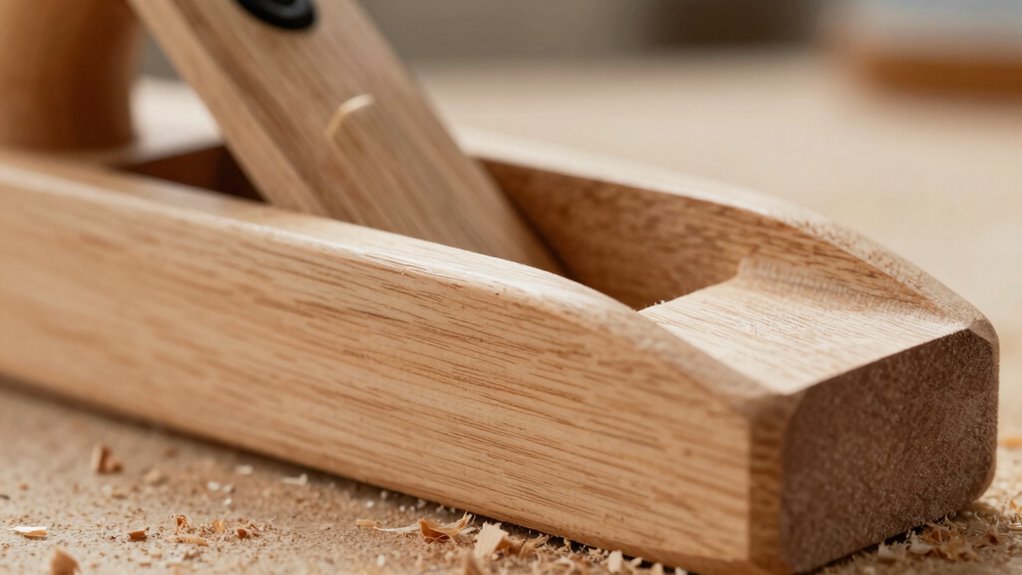
Using a plane to shape edges results in a smoother, cleaner finish compared to sandpaper. When you plane, you follow the grain direction, which minimizes tear-out and creates a uniform surface. Proper tool sharpening ensures your blade stays sharp, making it easier to produce a fine, consistent cut. A sharp blade slices through wood fibers smoothly, reducing roughness and irregularities. If your tool isn’t sharp, you risk tearing the grain or leaving uneven marks, which compromise the finish. Consistently maintaining your plane’s blade and paying attention to grain direction allows you to achieve edges that are not only visually cleaner but also mechanically smoother. This precision results in a more professional look and a better fit for your project. Additionally, understanding and controlling grain direction can significantly improve your results and reduce frustration during the shaping process.
How a Plane Removes Material More Precisely Than Sandpaper
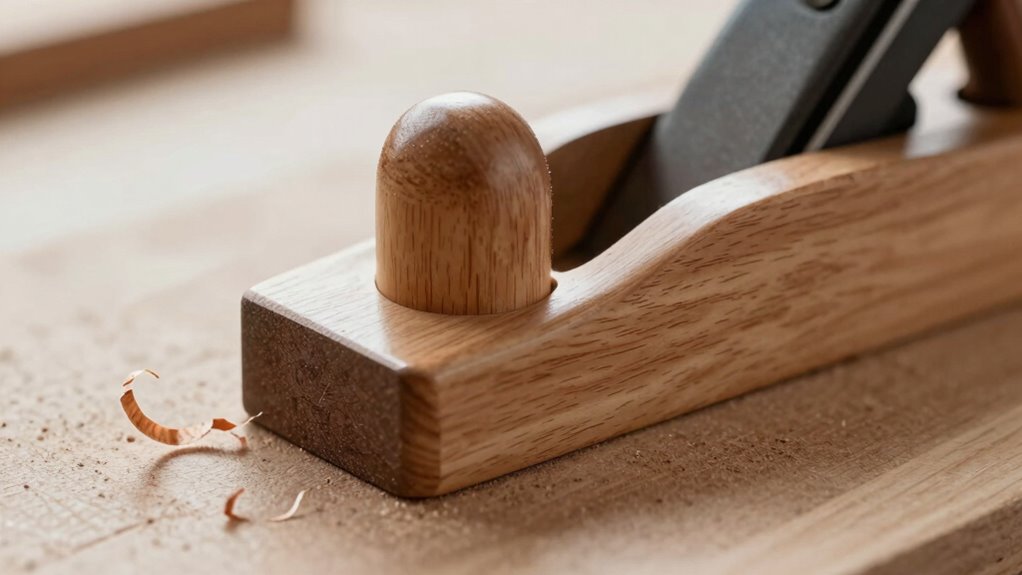
A plane removes material with greater precision than sandpaper because it cuts along the wood’s grain, slicing off thin, uniform shavings. This controlled removal depends on understanding the grain pattern and material hardness. With a plane, you can set the blade depth for consistent shaving thickness, ensuring a smooth, accurate finish. In contrast, sandpaper relies on abrasive grit, which can unevenly remove material and create rough surfaces. The table below highlights how grain pattern and hardness influence removal precision:
| Grain Pattern | Material Hardness |
|---|---|
| Linear, predictable | Softer woods easier to plane |
| Irregular, complex | Harder woods require sharper blades |
| Straight grain | Uniform removal |
| Cross grain | Increased tear-out |
| Dense grain | More effort needed |
Using a plane provides control and predictability that sandpaper can’t match. For optimal results, understanding the material properties helps in selecting the right tool for the job.
When Should You Use a Plane to Round Edges Quickly?
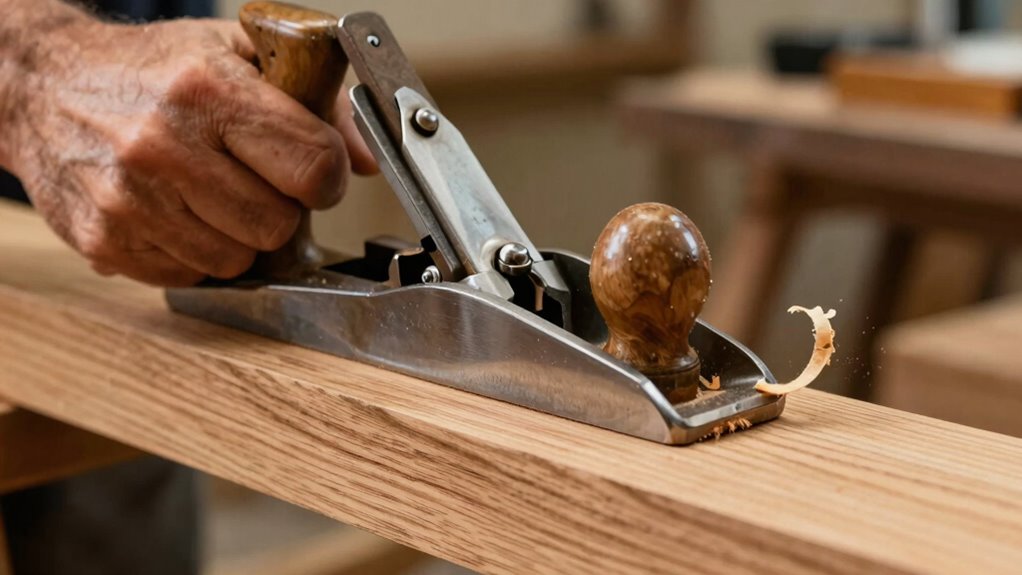
You should use a plane to round edges quickly when they’re sharp and need smoothing. It’s especially helpful for achieving precise curves that sandpaper can’t easily shape. Saving time and effort makes the plane your go-to tool for efficient edge rounding.
When Edges Are Sharp
When edges are sharp, a plane can be the quickest way to smooth them out and prevent potential injuries or damage. By carefully following the grain direction, you guarantee a cleaner cut and better finish quality. Using a plane immediately after noticing sharp edges saves time compared to sanding, which can be more labor-intensive. Keep the blade sharp to avoid tear-out and achieve a smooth, even surface. Rounding edges with a plane also helps control the shape, especially on larger or more irregular surfaces. This method not only improves safety but also produces a professional-looking result. When sharp edges threaten to chip or splinter, a quick pass with the plane effectively softens the edge, making it safer and more aesthetically pleasing. Additionally, understanding grain direction is essential for achieving the best finish when using a plane.
For Precise Curves
While sanding is often used for precise curves, a plane can be a quick and effective tool when you need to round edges with accuracy. When working with wood, pay attention to grain orientation—running the plane along the grain produces smoother, cleaner results. A plane excels with woods that have moderate to high density, allowing you to carve curves precisely without tearing or gouging. For fine, detailed shaping, start with light passes, adjusting your angle to follow the natural grain pattern. Using a well-sharpened blade helps you achieve smooth, consistent curves efficiently. In contrast to sandpaper, a plane provides control and speed, especially on dense woods where sanding can be slow and uneven. Consider your wood’s grain and density to determine if a plane is your best tool for precise curves. Additionally, choosing the right tool can depend on the wood’s density and grain, making a plane particularly suitable for more robust materials.
To Save Time
Ever find yourself pressed for time but still needing smooth, rounded edges? Using a plane is the quickest way to achieve that, especially when working with softer materials or edge grain. When material hardness is low, a plane removes material rapidly and cleanly, saving you effort and time. It’s ideal for quick rounds on edges where precision isn’t critical. If you’re working with hardwoods or dense materials, a plane can still be effective, but it may take longer. Relying on a plane for edge grain helps prevent uneven results that sandpaper might cause, especially when speed is your priority. In these situations, the plane’s efficiency makes it the best choice for rounding edges quickly without sacrificing too much control.
Tips for Using a Plane to Achieve the Best Finish on Edges
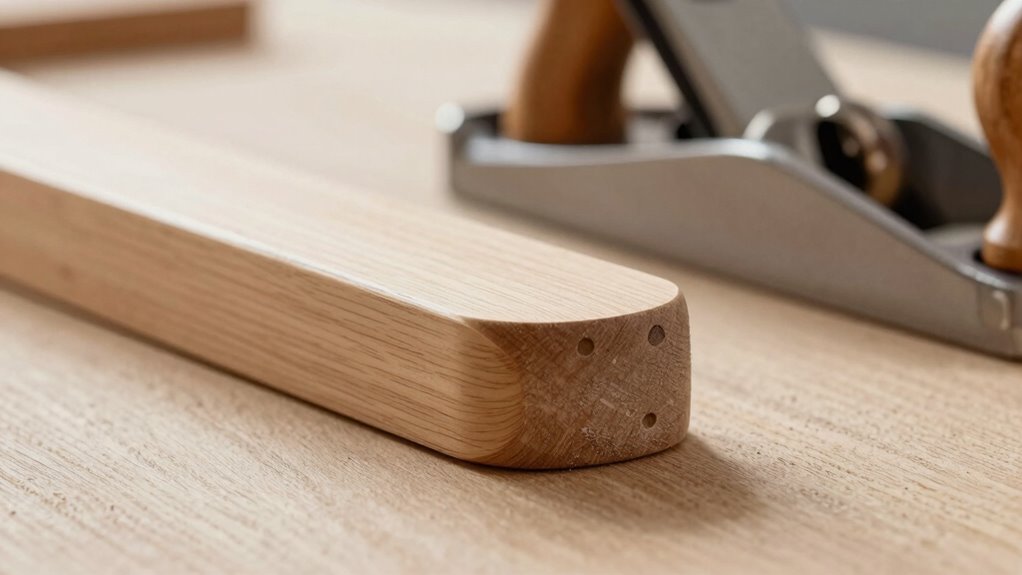
To achieve a smooth, professional finish on edges with a plane, focus on maintaining consistent pressure and proper blade alignment. Pay attention to grain patterns to avoid tear-out, especially if the grain runs against your cut. Adjust your plane for the wood’s density; denser woods may require a sharper blade and lighter pressure. Here are some tips:
- Always plane with the grain, following its direction for cleaner cuts.
- Sharpen and set the blade correctly to match the wood’s density.
- Use light, even strokes to prevent gouging or uneven edges.
- Check the edge frequently, adjusting your technique if grain patterns change or if the wood is particularly dense.
Following these tips helps guarantee a smooth, polished finish on your project’s edges.
Common Situations Where Sandpaper Just Isn’t Enough
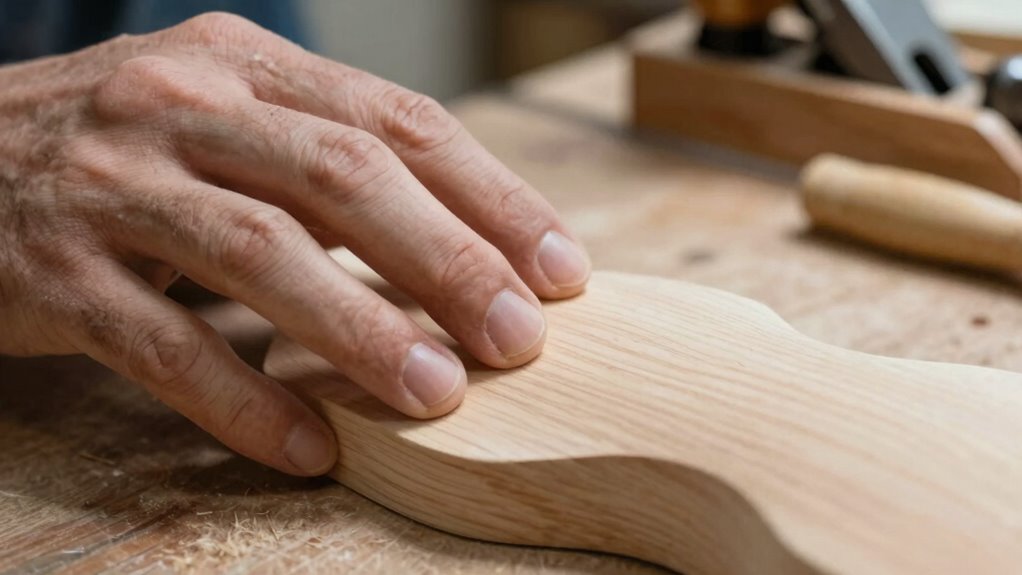
Sandpaper can smooth surfaces effectively in many cases, but there are situations where it simply can’t achieve the desired results. When you need a precise, clean edge or a uniform curve, sandpaper falls short. For example, working along grain direction can cause uneven sanding, and complex shapes challenge hand-sanding. Additionally, when tools need sharpening, sandpaper can’t restore sharp edges efficiently. You might also struggle with deep or stubborn scratches that require more control than abrasive paper provides. In such cases, specialized tools like planes can offer a more consistent and precise finish that sandpaper cannot achieve.
How to Choose the Right Plane for Edge Rounding Tasks
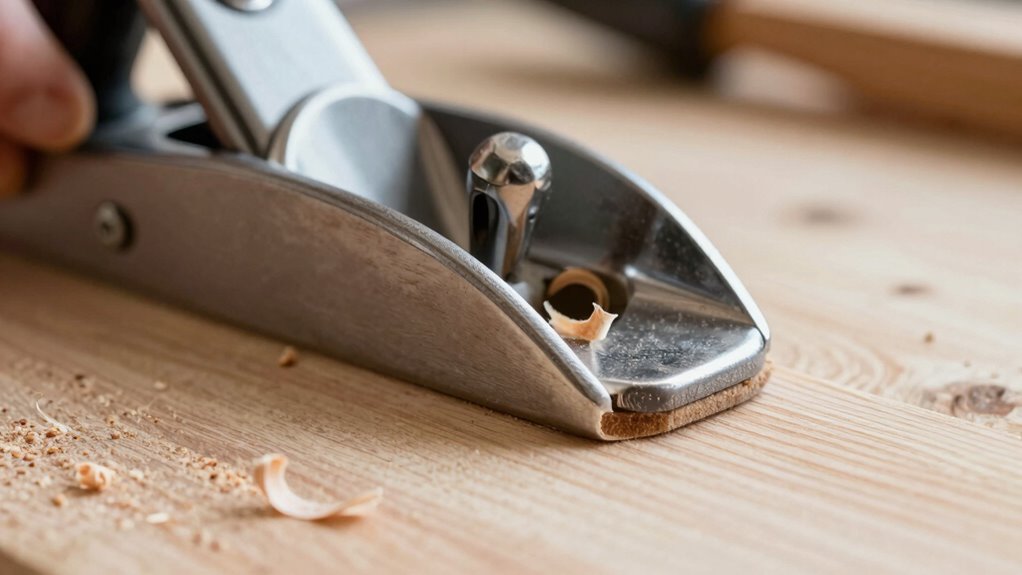
Choosing the right plane depends on blade size and shape, which affect how smoothly you can round edges. You also want a plane with good adjustability and control to match your project’s precision needs. Consider these factors carefully to achieve clean, consistent results every time. Using a properly set plane can significantly improve the quality of your edge rounding compared to sandpaper.
Blade Size and Shape
The size and shape of a plane’s blade play a crucial role in how effectively you can round edges. A wider blade covers more surface quickly, ideal for smoothing large, curved edges, while a narrower blade offers precision on detailed work. The shape of the blade, especially the edge bevel, influences cut quality; a sharper bevel produces a cleaner finish, respecting grain direction. When choosing a blade, consider these factors:
- Width of the blade for surface coverage versus detail work
- Blade shape, including bevel angle, for smooth, controlled cuts
- Grain direction, which affects how easily the blade slices through fibers
- Edge bevel sharpness, impacting the smoothness and ease of rounding
- The blade sharpness itself, which determines how cleanly and effortlessly the edge is rounded
Matching blade size and shape to your task ensures clean, efficient edge rounding.
Adjustability and Control
Since precise control is essential for smooth, consistent edge rounding, selecting a plane with adjustable features allows you to fine-tune your cuts to match the task at hand. An adjustable plane helps you manage grain direction, preventing tear-out and ensuring clean results. It also offers control over cutting depth and blade alignment, giving you better safety precautions during use. When choosing a plane, consider models with adjustable mouth openings and blade depth settings for versatility. This control lets you adapt to different wood types and grain orientations, making your work safer and more efficient. Additionally, understanding the Gold IRA Markets can inform you about secure investment options for your financial future.
Maintaining Your Plane for Smooth, Consistent Results
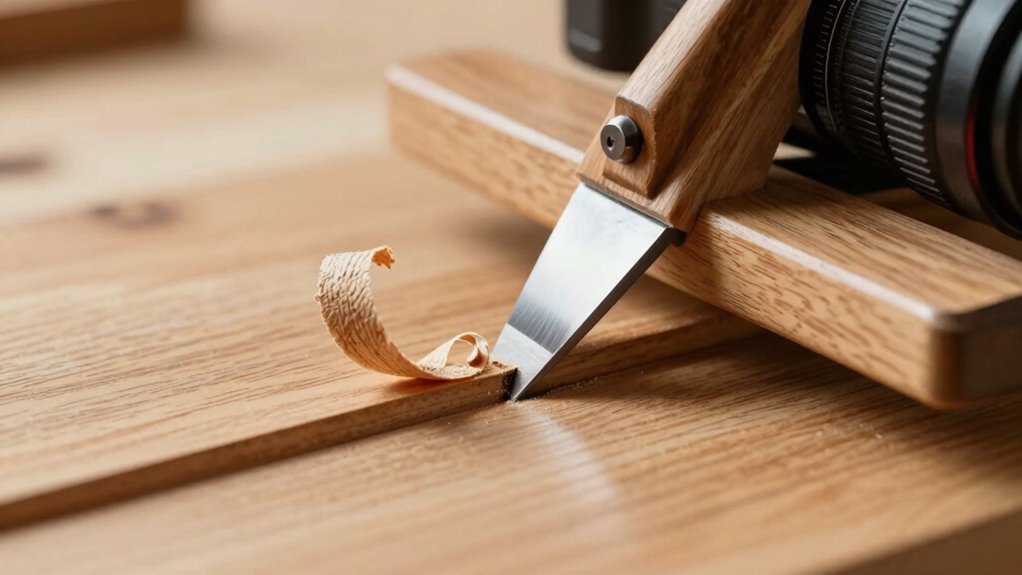
To keep your plane working smoothly and producing even results, regular maintenance is essential. Proper upkeep ensures consistent cutting and clean edges. Focus on these key steps:
- Sharpen your blade regularly using hand tool techniques to maintain a keen edge.
- Check the blade alignment, ensuring it matches the wood grain orientation for maximum control.
- Clean out any pitch or resin buildup to prevent uneven cuts.
- Inspect the sole for flatness, lightly honing if necessary to avoid dips or bumps.
- Consider eco-friendly materials in your maintenance supplies to align with ethical fashion trends and promote sustainability.
Combining Planes and Sandpaper for Perfect Edges

By combining the use of planes and sandpaper, you can achieve precise curves and smooth shifts. This method allows you to blend edges seamlessly, giving your work a professional finish. Using both tools together makes it easier to control the shape and feel more confident in your craftsmanship.
Achieving Precise Curves
Achieving precise curves requires a careful combination of planing and sanding techniques. You need to follow the natural flow of the wood grain, adjusting your tools to match the curve’s shape. Here’s how to get it right:
- Use a plane to establish a smooth, even surface along the curve, following the grain direction.
- Switch to finer finishing techniques, gradually refining the shape without gouging the wood.
- Sand lightly, working with the wood grain to remove tool marks and create a seamless gradation.
- Regularly check your progress, ensuring the curve is smooth and consistent.
Blending Edges Seamlessly
Seamlessly blending edges involves skillfully combining the use of planes and sandpaper to create smooth, natural shifts. You need to master tool selection for effective edge finishing. Start with a plane to remove large imperfections, then switch to finer sandpaper for gentle smoothing. This combination guarantees a seamless transition between surfaces, avoiding visible lines or ridges. Understanding when to switch tools is key. Use the table below to grasp the importance of blending techniques:
| Tool Choice | Purpose |
|---|---|
| Plane | Rapid material removal, initial shaping |
| Fine Sandpaper | Smoothing, polishing, seamless blending |
Choosing the right tools and knowing how to blend edges flawlessly results in professional-quality finishes.
Final Tips for Better Edge Smoothing With the Right Tools
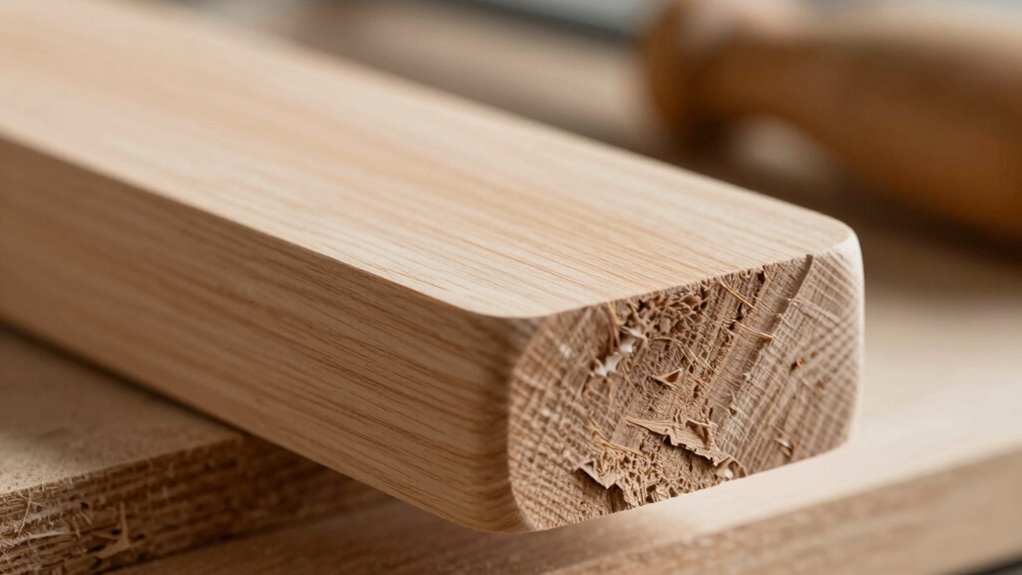
Using the right tools can considerably improve your edge smoothing results. To achieve a clean, durable finish, focus on these tips:
Choosing the right tools ensures a smooth, durable edge finish with precision and care.
- Use a sharp plane blade to follow grain patterns precisely, reducing tear-out and maintaining a smooth surface.
- Opt for a fine-grit sanding block if you need extra refinement, ensuring the grain patterns are nicely aligned for better finish durability.
- Consider a scraper for stubborn high spots, which helps preserve the integrity of the grain and prevents uneven wear.
- Always work with controlled, consistent strokes, paying attention to grain direction, to prevent gouges and enhance the overall finish durability. These tools and techniques help you achieve a polished edge that lasts.
Frequently Asked Questions
Can I Use a Hand Plane on Delicate or Soft Woods?
Yes, you can use a hand plane on delicate or soft woods, but you need to be careful. Always pay attention to the grain direction to avoid tear-out, and make sure your blade is sharp through regular sharpening. A sharp blade slices through soft fibers smoothly, giving you a clean finish without gouging or damaging the wood. Take your time, and adjust your technique based on the wood’s softness for the best results.
What’s the Best Type of Sandpaper for Rounding Edges?
Choosing the right sandpaper is like selecting the perfect brush for a masterpiece. For rounding edges, start with medium abrasive grit (around 120) to shape smoothly, then move to finer grits (220-320) for a polished finish. Opt for durable sandpaper with good grit adhesion to prevent frequent replacements. This guarantees efficient sanding, giving you smooth, rounded edges without tearing up your material or wasting time on ineffective paper.
How Do I Prevent Tear-Out When Planing Edges?
To prevent tear-out when planing edges, always follow the grain direction to minimize stress on the wood fibers. Sharpen your blade regularly and set the correct blade angle—generally around 45 degrees—to guarantee a smooth cut. Take light passes and adjust your technique if you notice tear-out starting. These steps help you achieve clean, professional edges without damaging the wood, making your planing more efficient and precise.
Is There a Risk of Gouging the Wood With a Plane?
Yes, there’s a risk of gouging the wood with a plane if you’re not careful. Proper technique helps prevent blade gouging and reduces grain tear out. Always make certain your blade is sharp and set correctly, and plane with the grain, not against it. Use light, even strokes, and adjust the depth of cut if you notice any gouging. These steps minimize damage and give you a smooth, clean finish.
How Do I Sharpen a Hand Plane Blade Effectively?
Imagine honing a sword, your hand steady as you sharpen a hand plane blade. To do this effectively, start with sharpening techniques that involve a coarse grit to reshape, then progress to finer stones for a razor edge. Maintain the blade’s bevel and keep it flat. Regular blade maintenance ensures peak cutting performance, reducing tear-out and making your woodworking smooth and precise. Always keep your tools sharp and well cared for.
Conclusion
Think of your tools as musical instruments—using the right one creates a harmony of smooth, clean edges. A plane, like a finely tuned violin, can sculpt edges with precision and finesse, outplaying sandpaper’s rougher notes. When you select the right tool for each task, your work becomes a symphony of craftsmanship. Mastering both guarantees your edges are perfectly rounded, turning rough wood into a polished masterpiece that sings with quality.