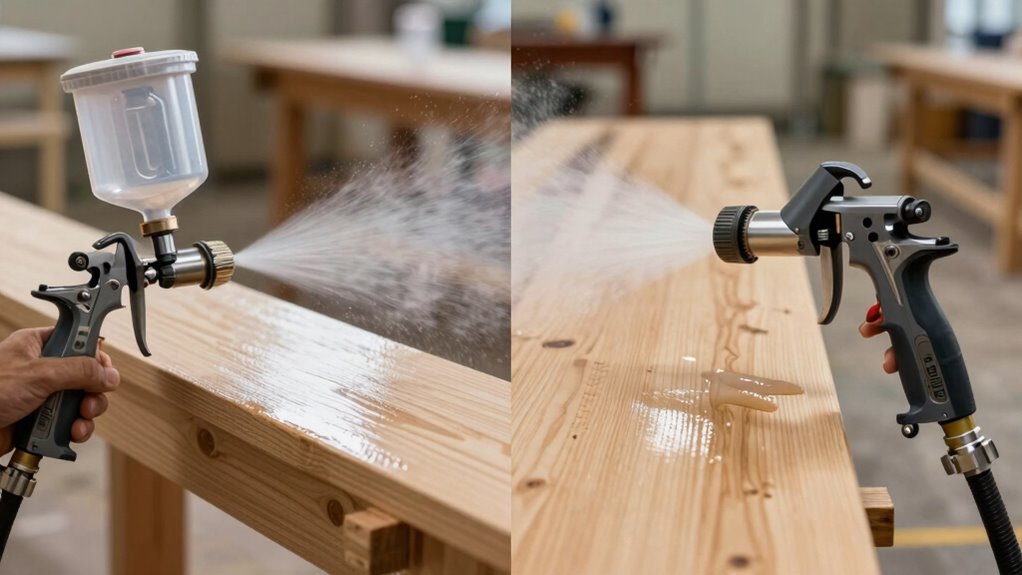
For wood finishing, HVLP sprayers give you finer, more controlled spray patterns ideal for delicate, detailed work. They produce less overspray, making cleanup easier and offering higher finish quality. Airless sprayers are faster and better for large areas but may sacrifice some finish smoothness and create more overspray. Choosing between them depends on your project’s scale and precision needs. Keep exploring to discover which sprayer best suits your wood finishing goals.
Key Takeaways
- HVLP offers finer control and smoother finishes, ideal for detailed woodwork and furniture projects.
- Airless sprayers cover large surfaces quickly but may produce less refined results for intricate wood finishes.
- For precision and minimal overspray, HVLP is preferable; for speed on large areas, airless is more efficient.
- HVLP operates at lower pressure, reducing paint waste and cleanup time, suitable for smaller, detailed projects.
- Choose based on project size, detail needs, and finish quality: HVLP for finesse, airless for rapid coverage.

Wagner Spraytech 2443205 Earlex 5700 Stationary HVLP Paint Sprayer for Woodworking and Furniture Refinishing, Fine Finishing with Oil & Water Based Materials, Adjustable Settings
WOODWORKING PAINT SPRAYER: The Earlex 5700 stationary paint sprayer is designed for woodworking enthusiasts wanting to spray a…
As an affiliate, we earn on qualifying purchases.
As an affiliate, we earn on qualifying purchases.
What Are HVLP and Airless Sprayers? A Beginner’s Guide
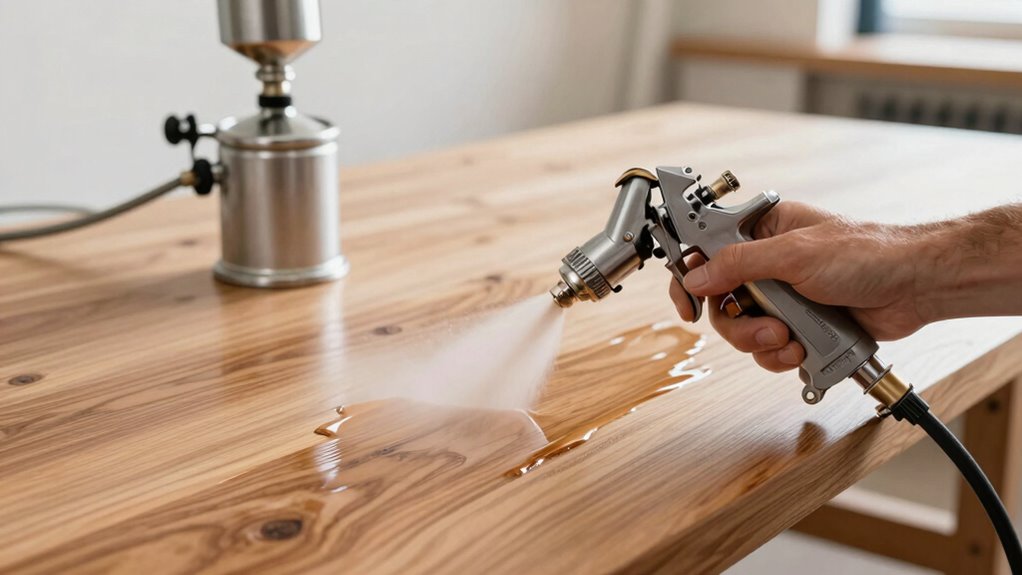
Have you ever wondered how different spray guns work for painting projects? HVLP and airless sprayers are popular choices, but they operate differently. HVLP sprayers use a high volume of air at low pressure, allowing for better control over paint thickness and a finer spray pattern. This helps you achieve smooth finishes with less overspray. Additionally, HVLP systems are often more energy-efficient, which can reduce your overall project costs. They are also known for producing a more precise application, making them ideal for detailed woodworking projects. Understanding these differences helps you choose the right tool for your project. Whether you need precision or speed, knowing how each sprayer affects paint thickness and spray pattern is key to successful wood finishing. Additionally, spray pattern uniformity is important for achieving consistent coverage across your project. The application technique you choose can also influence paint waste, which is a significant factor in cost and environmental impact.
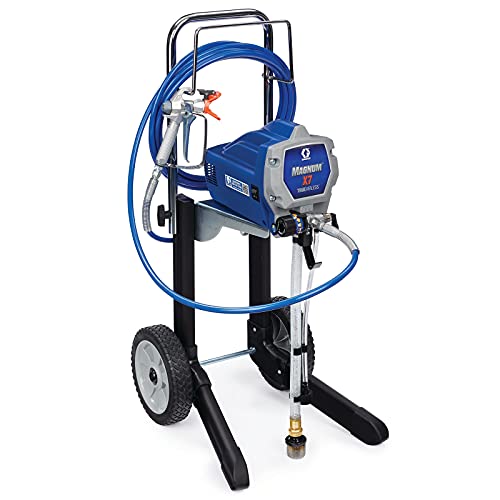
Graco Magnum 262805 X7 Cart Airless Paint Sprayer, Gray
CONTROL PAINT FLOW: Fully adjustable pressure to give you ultimate control of paint flow for any project size;…
As an affiliate, we earn on qualifying purchases.
As an affiliate, we earn on qualifying purchases.
How Do HVLP and Airless Sprayers Differ in Technology and Use?
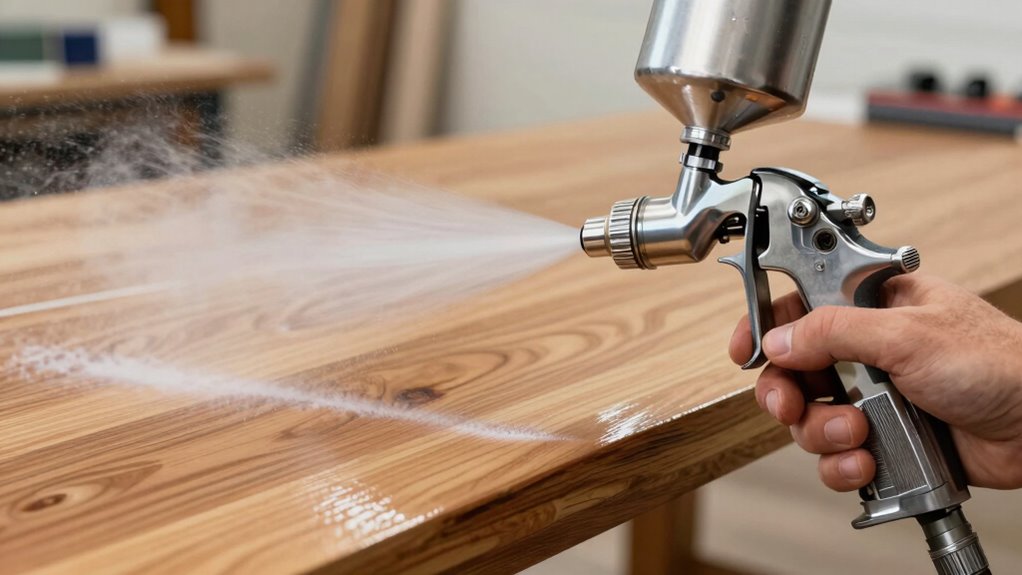
HVLP and airless sprayers operate on fundamentally different technologies, which directly impacts how you use them for painting projects. HVLP sprayers use a high volume of air at low pressure to atomize paint, giving you better spray pattern consistency and control. This makes them ideal for detailed wood finishing. In contrast, airless sprayers pump paint at very high pressure through a nozzle, producing a larger spray fan and faster coverage. Nozzle selection is essential for both types: HVLP nozzles are typically smaller and designed for fine detail, while airless nozzles vary in size for different coverage needs. These technological differences determine how each sprayer handles paint flow, spray quality, and application speed, shaping your approach depending on your project requirements. Additionally, understanding piercing care and hygiene can help maintain equipment cleanliness and prevent contamination during your finishing projects.

Mini HVLP Touch Up Spray Gun with 0.8 mm Nozzle, 125 cc Cup Gravity Feed Air Paint Sprayer Spot Repair, Spray Paint Gun for Car Furniture Painting, Auto Primer, Wall Painting (0.8)
【Adjustable Design】: This car paint spray gun is designed with 3 control valve adjustments. You can adjust the…
As an affiliate, we earn on qualifying purchases.
As an affiliate, we earn on qualifying purchases.
Which Sprayer Is Easier to Set Up and Use? Cost and Convenience Compared
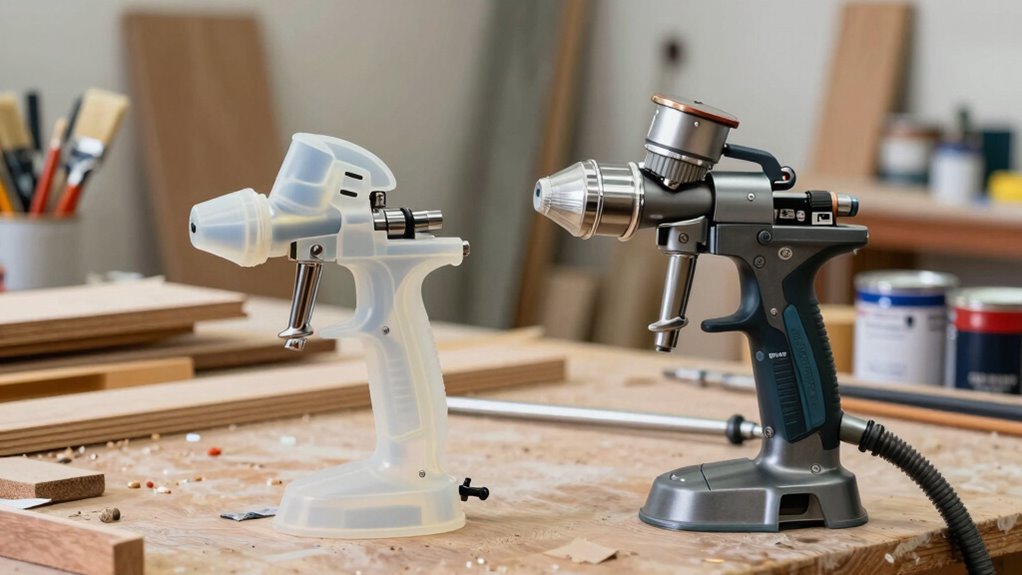
When choosing between HVLP and airless sprayers, setup time and effort are key factors to contemplate. You’ll also want to compare operating costs and how user-friendly each option is for your needs. Let’s explore which sprayer offers better convenience and affordability for your projects. Additionally, ease of setup can significantly impact your workflow and overall satisfaction with the finishing process. Understanding the technological differences between the two sprayers can help you make a more informed decision tailored to your specific project requirements.
Setup Time and Effort
Setting up a sprayer can considerably impact your project’s overall convenience, and HVLP systems generally offer a quicker, simpler process compared to airless sprayers. HVLP setups tend to have lower setup complexity, requiring fewer components and less time to assemble. You’ll find that connecting the gun, adjusting pressure, and preparing the paint are straightforward tasks. Cleaning procedures are also simpler with HVLP sprayers because they produce less overspray and overspill, making cleanup faster and less messy. In contrast, airless sprayers often involve more parts, higher pressure adjustments, and longer preparation times. Overall, HVLP sprayers save you time upfront, letting you start your project sooner and reducing the effort needed to get everything ready.
Operating Costs and Expenses
Choosing a sprayer often comes down to how much it will cost to operate and maintain over time. Your cost analysis should include initial investment, maintenance expenses, and ongoing supplies. HVLP sprayers generally have lower maintenance costs but may need more frequent cleaning, while airless sprayers might be pricier to maintain. Consider these factors:
| Aspect | Impact on Cost and Convenience |
|---|---|
| Setup | HVLP is quicker to assemble, saving time |
| Maintenance | Airless may have higher expenses but fewer cleanings |
| Operating | HVLP uses less energy, lowering costs |
Balancing these factors helps determine which sprayer fits your budget and project needs, ensuring you get the best value without sacrificing quality.
User-Friendliness and Accessibility
Compared to airless sprayers, HVLP units are generally easier to set up and operate, making them ideal for users seeking a straightforward, hassle-free experience. Their ergonomic design offers greater comfort during extended use, reducing fatigue. The user interface on HVLP sprayers is typically more intuitive, allowing you to quickly learn controls without confusion. This simplicity means less time spent on adjustments and more time on actual finishing. Additionally, HVLP units often come with convenient features that enhance accessibility, such as adjustable spray patterns and easy-to-clean components. Overall, their user-friendly ergonomics and straightforward interface make HVLP sprayers a more accessible choice for beginners and seasoned wood finishers alike.

ENDOZER Professional HVLP Spray Gun Set Gravity Feed Air Spray Gun with 1.4, 1.7, 2.0mm Nozzles 20oz 600cc with Gauge for Auto Paint, Primer, Clear/Top Coat & Touch-Up (Not Suitable for Latex Paint)
This spray gun is supplied with a 20 oz. (600 ml) gravity feed cup, with 1.4 1.7 2.0mm…
As an affiliate, we earn on qualifying purchases.
As an affiliate, we earn on qualifying purchases.
Which Technique Produces a Better Finish for Wood Projects? Performance Compared
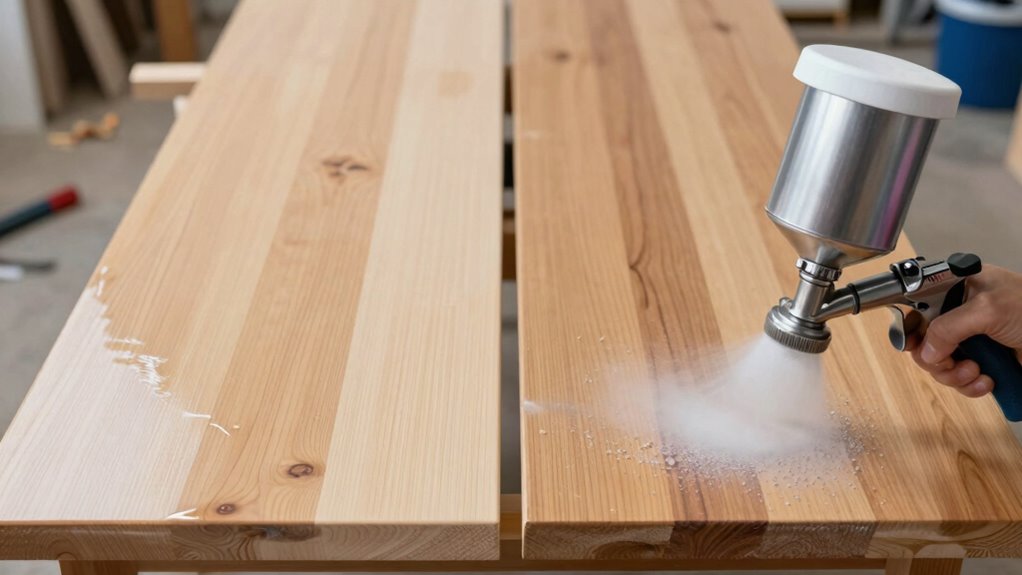
When it comes to achieving a smooth, professional-looking finish on your wood projects, the choice between HVLP and airless spraying can considerably impact the outcome. HVLP systems generally deliver superior finish quality because they produce a finer spray, resulting in fewer overspray and smoother coats. This fine atomization also helps to reduce overspray, making the process cleaner and more efficient. This allows for better application precision, especially on detailed or intricate surfaces. Airless sprayers, on the other hand, excel in covering large areas quickly and efficiently, though they may sacrifice some finish quality due to their higher pressure and atomization. If you prioritize a flawless, detailed finish with minimal overspray, HVLP is your best option. But if speed and volume matter more, airless spraying might be the better choice, even if the finish isn’t quite as refined.
What Are the Pros and Cons of HVLP and Airless Spraying? A Quick Breakdown
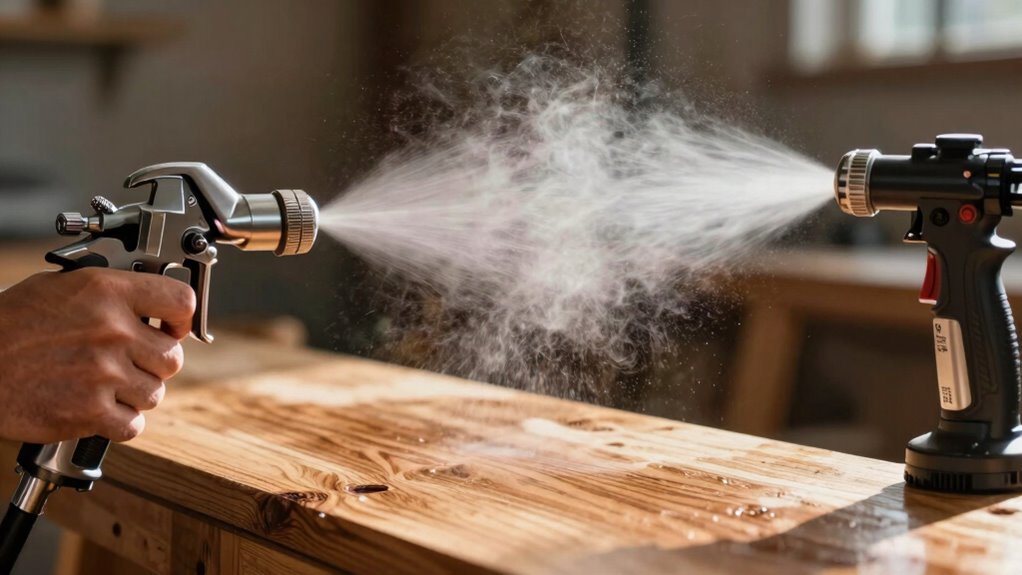
Understanding the strengths and limitations of HVLP and airless spraying helps you select the right tool for your project. HVLP sprayers excel at controlling paint thickness and producing a fine, detailed spray pattern, making them ideal for precision work. They use lower pressure, reducing overspray and waste, but may take longer to cover large surfaces. Conversely, airless sprayers deliver higher pressure, allowing you to quickly cover big areas with thicker paint layers, but they can produce a wider spray pattern and more overspray, which requires careful handling. HVLP offers better control and a smoother finish, while airless provides speed and efficiency. Your choice depends on whether you prioritize detail and control or speed and coverage. Both have their pros and cons, tailored to different project needs.
How to Choose the Best Sprayer for Your Wood Finishing Needs
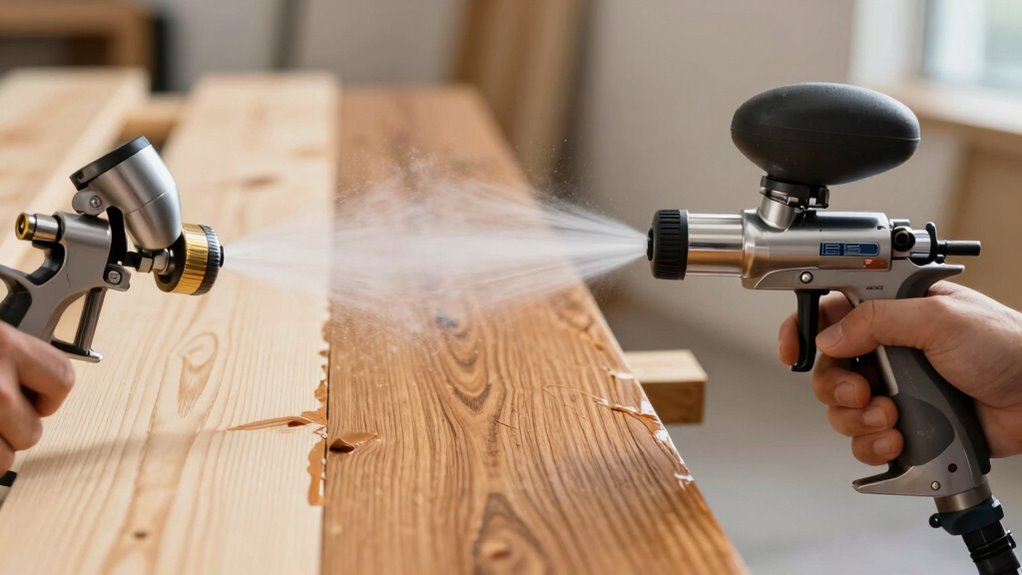
Choosing the right sprayer for your wood finishing project depends on several key factors, including the type of finish you want, the size of the surface, and your level of experience. If you prefer a smooth, detailed finish, an HVLP sprayer might be best, but consider its sprayer maintenance needs to keep it performing well. For larger surfaces or faster work, an airless sprayer can save time but may produce more overspray and environmental impact. Think about how often you’ll use the sprayer, as frequent use requires easier cleaning and maintenance. Additionally, consider the environmental impact—some sprayers use less solvent and produce fewer fumes. Understanding the sound therapy techniques can also inform you about how different tools and methods impact the environment and user health. Choosing the right equipment ensures efficient, high-quality results while minimizing cleanup and ecological footprint. Moreover, evaluating the performance differences between sprayer types can help you select the most suitable device for your specific project requirements.
Tips for Getting Professional Results With HVLP and Airless Sprayers
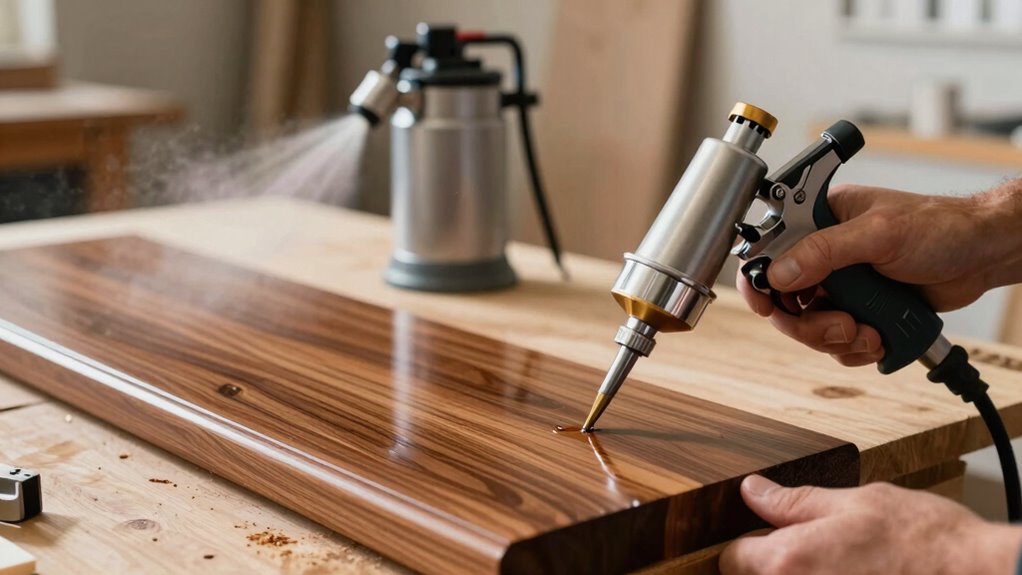
To achieve professional results with HVLP and airless sprayers, focus on proper technique and preparation. Start by mastering brush techniques for touch-ups and detail work, blending smoothly with sprayed finishes. Always verify your paint is well-mixed; proper paint mixing prevents splatter and uneven coverage. Keep a consistent distance from the surface, maintaining steady speed to avoid runs or thin spots. Test your spray pattern on scrap before starting your project. Use even, overlapping passes for a uniform coat. Clean your equipment thoroughly after each use to prevent clogging and guarantee peak performance. With careful attention to technique, proper paint mixing, and preparation, you’ll get professional-quality results whether you’re using an HVLP or airless sprayer.
Frequently Asked Questions
Can HVLP or Airless Sprayers Handle Thick Wood Stains Effectively?
You can handle thick wood stains with airless sprayers more effectively because they’re designed for higher viscosity compatibility and application thickness. HVLP sprayers work best with thinner stains, as they can struggle with thicker materials. If you want a smooth, even finish on heavy stains, an airless sprayer’s higher pressure and flow rate make it the better choice for tackling viscosity and application challenges.
How Long Does It Typically Take to Clean Each Type of Sprayer?
Cleaning time for HVLP sprayers usually takes about 10 to 15 minutes, thanks to their simpler maintenance procedures. You’ll need to disassemble the spray gun, rinse all parts with solvent or water, and verify no residual paint remains. Airless sprayers might take a bit longer, around 15 to 20 minutes, because of their larger components. Regular maintenance procedures help keep both sprayers functioning smoothly and extend their lifespan.
Are There Specific Safety Precautions for Using HVLP Versus Airless Sprayers?
When you operate a sprayer, safety is essential—you must wear protective gear like masks, goggles, and gloves to shield against fumes and overspray. For HVLP sprayers, make certain proper ventilation to prevent inhaling fine particles, while airless sprayers demand even more rigorous ventilation due to higher pressure and aerosolization. Skipping these precautions risks health hazards; stay alert, follow safety guidelines, and create a safe workspace before starting.
What Are the Environmental Impacts of HVLP and Airless Spraying?
You should consider the environmental footprint of both sprayers to make sustainable choices. HVLP sprayers tend to have lower overspray and waste, reducing environmental impact, while airless sprayers can produce more waste due to higher overspray. For sustainability considerations, HVLP may be more eco-friendly, but your decision should also account for energy use and material efficiency to minimize environmental effects in your finishing projects.
Can Both Sprayer Types Be Used for Large-Scale Wood Finishing Projects?
In the days of the Titanic, folks used large equipment for big tasks, and today, both HVLP and airless sprayers can handle large-scale wood finishing projects. HVLP offers excellent control but might need more equipment and time, while airless sprayers provide faster coverage and are more portable for big jobs. So, yes, both types work well, depending on your project’s scope and your equipment preferences.
Conclusion
Choosing between HVLP and airless sprayers depends on your project needs. Think of HVLP as a gentle breeze, perfect for detailed work, while airless is a powerful gust, ideal for large surfaces. Imagine your finish as a smooth, flawless coat—like a mirror reflecting your craftsmanship. When you pick the right sprayer, you’re not just applying paint; you’re creating art that lasts. Your perfect wood finish awaits—trust your choice and enjoy the process.