
Spray finishing looks easy at first, but the edges can make or break your project. You need to pay close attention to them, as proper preparation and technique are essential. Skipping edge prep can lead to uneven coverage and drips. Holding the spray gun at the right distance and using thin coats helps maintain consistency. Neglecting these details complicates the process. If you want to achieve that flawless finish, there’s more to uncover about mastering these techniques.

Get business pricing on tools and workshop supplies
- Business-only prices and quantity discounts
- Tax-exempt purchasing
- Multiple users, one account, clear invoices
Key Takeaways
- Proper edge preparation is crucial; neglecting it can lead to uneven coverage and visible imperfections.
- Spray techniques require consistent distance and motion to avoid runs and inconsistencies at edges.
- Multiple thin coats provide better control and minimize edge issues compared to one heavy coat.
- Attention to detail during edge inspection helps achieve a flawless finish and professional results.
- Mastering spray finishing techniques is essential, as edges can dramatically affect the overall appearance.
When it comes to achieving a flawless finish, mastering the art of spray finishing is essential. You might think it’s all about the spray techniques, but the truth is that the devil is in the details—especially regarding edge preparation. Many people underestimate the importance of how edges look until they realize that’s where the finish can make or break the project.
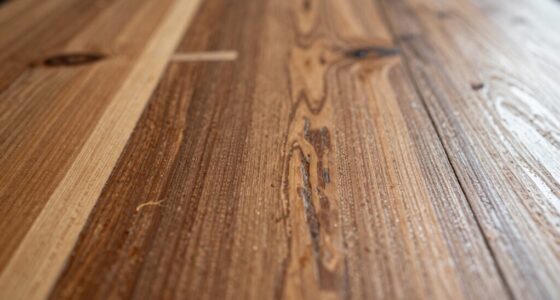
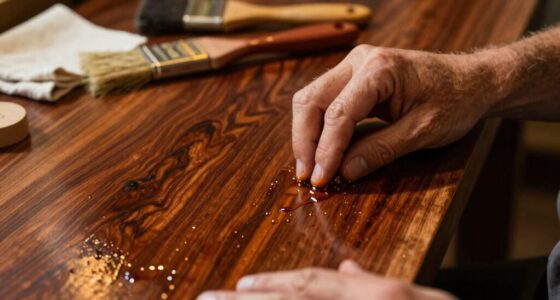
You can start with the best spray equipment and high-quality paint, but if your edges aren’t properly prepped, it won’t matter. When you spray, you need to take into account how the paint will interact with the edges of your project. If you don’t prepare them well, you’ll end up with uneven coverage or drips that ruin your hard work. Taking the time to sand and clean those edges can save you from a disappointing finish.
Even the best spray equipment can’t save a project with poorly prepped edges; take the time to sand and clean for a flawless finish.
Before you even pick up the spray gun, get into the habit of inspecting your project. Look for any rough spots or imperfections along the edges. Sanding these areas smooth not only improves adhesion but also enhances the overall appearance once the finish is applied. If you skip this step, you may find that the paint clings to some areas while not adhering properly to others, leading to an inconsistent look. Additionally, understanding the interaction between paint and surface edges can help you prevent uneven coverage.
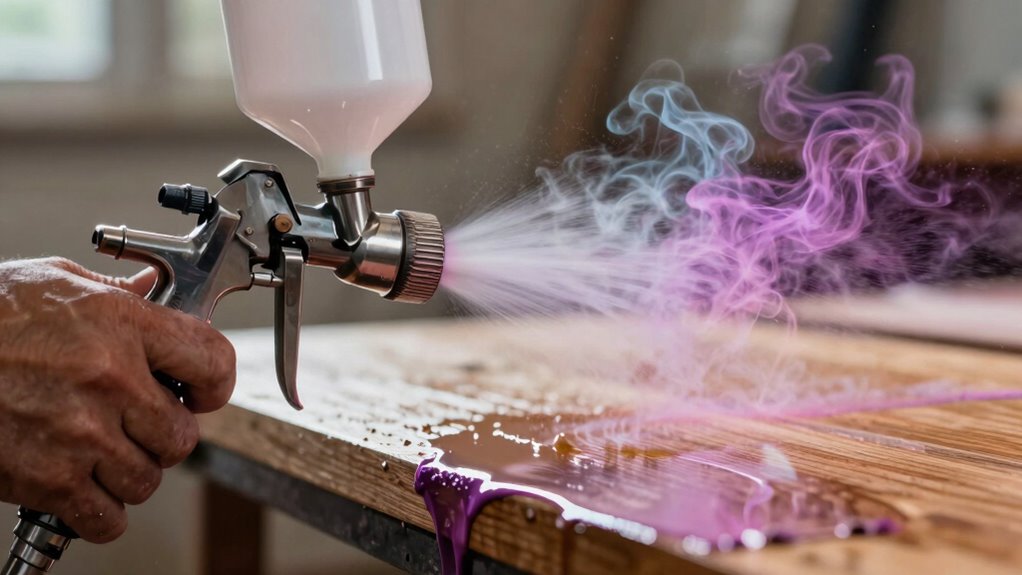
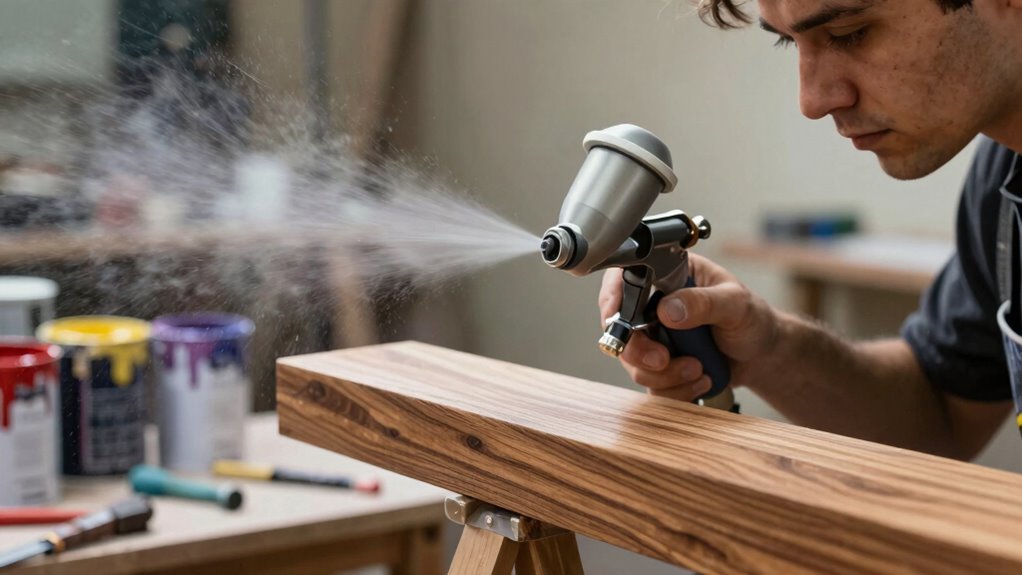
Once you’ve prepped the edges, it’s time to focus on your spray techniques. You’ll want to hold the gun at a consistent distance from the surface, usually around 6 to 12 inches, depending on the type of spray nozzle you’re using. Keeping that distance steady helps guarantee an even coat, especially along those critical edges. Proper edge preparation and technique are key to a professional-looking finish.
Also, remember to maintain a smooth, sweeping motion as you spray. This technique helps distribute the paint evenly and reduces the likelihood of drips. If you linger too long at the edges, you might end up with runs or uneven texture.
Don’t forget about the importance of multiple thin coats instead of one heavy coat. This approach allows for better control and fewer chances of issues at the edges. As you layer the paint, take a moment to inspect those edges again; they should remain crisp and clean.
In the end, achieving that flawless finish relies heavily on the foundational work you do with edge preparation and the spray techniques you employ. Ignore these details, and you’ll quickly find that spray finishing isn’t as easy as it seems.
As an affiliate, we earn on qualifying purchases.
Frequently Asked Questions
What Equipment Is Essential for Spray Finishing Projects?
For your spray finishing projects, you’ll need a reliable spray gun, which comes in various types like HVLP, airless, and conventional. Each type suits different finishing techniques, so choose based on your project needs. Don’t forget a compressor if you’re using an air-powered gun, and guarantee you have safety gear like a mask and goggles. Proper preparation and the right tools will make your finishing process smoother and more successful.
How Do I Choose the Right Spray Paint?
Choosing the right spray paint is like picking the perfect outfit for a special occasion. Start with color selection—think about how the hue will dance with your space. Next, don’t skimp on surface preparation; a smooth canvas makes all the difference. Clean, sand, and prime as needed. By blending these elements, you’ll turn your project into a masterpiece that shines brighter than a diamond in the sun!
Can I Spray Finish Indoors Safely?
Yes, you can spray finish indoors, but you need to take safety precautions. First, guarantee good ventilation by opening windows and using fans to circulate air. Always wear a mask to protect yourself from fumes. It’s also wise to cover floors and furniture to prevent overspray. If possible, use low-VOC paints to minimize harmful emissions. By prioritizing ventilation and safety, you can achieve great results without compromising your health.
What Is the Best Temperature for Spray Finishing?
The best temperature for spray finishing is typically between 65°F and 85°F. At this range, you’re ensuring ideal spray techniques and minimizing issues like uneven coverage or drips. If it’s too cold, the paint may not flow well, while excessive heat can cause it to dry too quickly, affecting adhesion. Keep an eye on humidity, too, as it can influence how your finish turns out. Aim for that sweet spot for the best results!
How Long Does Spray Finish Usually Take to Dry?
Spray finishes dance on the surface like a whispering breeze, but drying times can vary. Typically, you’ll find it takes about 30 minutes to an hour for the finish to touch-dry, depending on temperature and humidity. For the best results, proper surface preparation is key; it guarantees a smooth application that dries evenly. So, keep an eye on those edges, and let the magic happen as the finish sets!
professional spray finishing kit
As an affiliate, we earn on qualifying purchases.
As an affiliate, we earn on qualifying purchases.
Conclusion
Spray finishing may seem straightforward, but mastering the edges is where the real skill lies. You’ll find that patience pays off, practice sharpens your technique, and precision elevates your results. As you refine your approach, remember that every layer adds depth, every adjustment enhances clarity, and every detail defines your work. Embrace the challenge, and soon you’ll transform those tricky edges into seamless finishes that impress and inspire. Keep spraying; your craft is worth it!
air spray paint gun for furniture
As an affiliate, we earn on qualifying purchases.
As an affiliate, we earn on qualifying purchases.
As an affiliate, we earn on qualifying purchases.
Halloween Picks
halloween
As an affiliate, we earn on qualifying purchases.