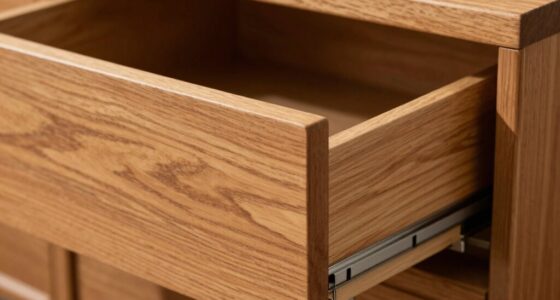
When comparing trim work and furniture work, you’ll find that each demands different tools due to their unique goals. Trim work typically uses miter saws and specialized hand saws to make precise angled cuts for wall and ceiling details. Furniture work often requires circular saws for rough cuts and routers for detailed joints. Understanding these differences helps you choose the right saws for the job. Keep exploring to discover how to optimize your projects with the right techniques.
Key Takeaways
- Trim work primarily uses miter saws and specialized hand saws for precise angled cuts on framing elements.
- Furniture work often involves circular saws and routers for rough cuts and detailed joints.
- The saw choice depends on project complexity, scale, and the need for accuracy in joints and edges.
- Trim work requires clean, accurate cuts for seamless joints, while furniture work emphasizes strong, precise joinery.
- Proper saw selection ensures quality finishes and durability in both trim and furniture projects.
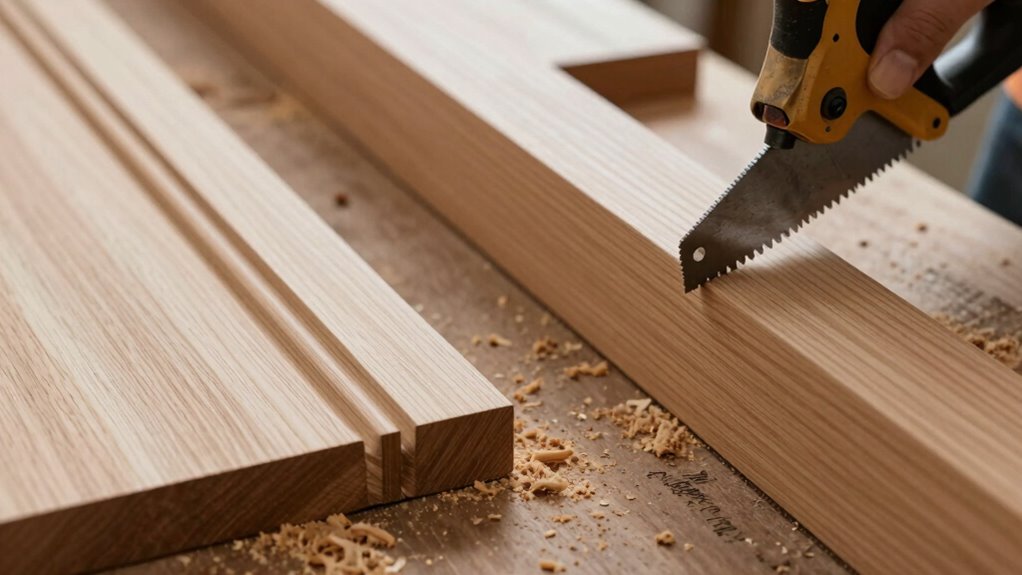
When deciding between trim work and furniture work for your space, understanding the differences can help you make informed choices. Both require specific skills and tools, but they serve distinct purposes and demand different techniques. Trim work involves installing moldings, baseboards, crown molding, and other decorative or functional elements that frame your walls and ceilings. Furniture work, on the other hand, focuses on crafting or assembling pieces like tables, cabinets, or chairs. While both projects often use similar types of wood, the approach to working with that wood varies considerably, especially in terms of wood grain and finishing techniques.
Understanding the differences between trim and furniture work helps you choose the right techniques and finishes for professional results.
For trim work, precision is key. You need to cut joints at perfect angles to ensure seamless fits, which often involves using saws like miter saws or specialized hand saws. The wood grain plays a crucial role here, as matching grain patterns can make joints less noticeable and more aesthetically pleasing. When working on trim, you often want to highlight the wood’s natural beauty, so choosing the right finishing techniques becomes necessary. Applying stain, varnish, or paint enhances the wood grain, bringing out its character and giving the space a polished look. The finishing method can also protect the trim from damage and wear over time, especially in high-traffic areas. An understanding of wood behavior is essential to anticipate how the material will respond to various finishes and environmental conditions.
Furniture work requires a different set of skills, and the saws you choose depend on the complexity and scale of your project. For example, crafting a table or cabinet demands precise cuts, but also involves joining pieces together securely. You might use a circular saw for rough cuts, then switch to a router for detailed edges or joints. Wood grain orientation matters just as much in furniture, as it influences strength and visual appeal. Properly aligning the grain can prevent warping and ensure durability. When finishing furniture, you often focus on smooth, even surfaces. You may use sanding techniques to prepare the wood, then apply finishing techniques like staining or sealing to highlight the grain and provide a protective layer. The choice of finish can vary depending on the look you want—whether you prefer a natural wood appearance or a painted surface.
Ultimately, both trim and furniture work demand an understanding of how wood behaves and how best to enhance its natural features. While the tools and techniques differ, mastering the appropriate saws and finishes for each project will give you professional results. Knowing when to emphasize the wood grain and which finishing techniques to use ensures your work looks cohesive and high-quality. Whether you’re framing a room or building a piece of furniture, paying attention to these details makes all the difference in creating a polished, durable finished product.
miter saw for trim work
As an affiliate, we earn on qualifying purchases.
As an affiliate, we earn on qualifying purchases.
Frequently Asked Questions
What Safety Precautions Are Essential for Trim and Furniture Saws?
When working with trim and furniture saws, you should always wear safety gear like goggles and gloves to protect your eyes and hands. Noise protection is essential, so use earplugs or earmuffs to guard against loud sounds. Keep your workspace clean and free of debris, and make certain the saw guard is in place before cutting. Stay alert and follow manufacturer instructions to prevent accidents and injuries.
How Do Blade Types Vary Between Trim and Furniture Work?
Did you know that blade types influence about 80% of your cutting precision? For trim work, you typically choose blades with finer teeth made from high-speed steel or carbide, focusing on smooth, accurate cuts. Furniture work often demands blades with larger teeth for faster, rougher cuts. Your blade material and tooth design directly affect how well you achieve precise, clean cuts, whether you’re detailing trim or shaping furniture pieces.
What Are the Cost Differences for Saws Used in Both Trades?
The cost comparison shows saws for trim work tend to be more affordable, often ranging from $50 to $200, since they’re usually simpler models like miter or hand saws. Furniture work saws, especially specialized or larger models, can be pricier, sometimes exceeding $300. Overall, saw affordability varies based on features and quality, but general-purpose saws for trim work are typically less expensive than those designed for detailed furniture crafting.
Can One Saw Handle Both Trim and Furniture Projects Effectively?
You can use one saw for both trim and furniture projects, but it depends on its blade versatility and tool ergonomics. Think of the saw as a chameleon, adapting to different scenes. A versatile blade helps you cut various materials smoothly, while good ergonomics let you work comfortably through long tasks. While it’s possible, specialized saws often deliver better precision and ease for each job, making your work more efficient.
How Does Workspace Size Influence Saw Selection for Each Task?
Your workspace size greatly influences saw selection because it affects ergonomics and maneuverability. In smaller spaces, choose compact saws that are easier to handle and maneuver without clutter. For larger areas, you can opt for bigger, more powerful saws that require more room to operate efficiently. Ensuring your workspace allows for comfortable saw handling helps prevent fatigue and improves precision, whether you’re working on trim or furniture projects.
circular saw for furniture making
As an affiliate, we earn on qualifying purchases.
As an affiliate, we earn on qualifying purchases.
Conclusion
Understanding the differences between trim and furniture work can transform your craftsmanship. Did you know that nearly 60% of professional woodworkers prefer specialized saws for their projects? Using the right saw not only boosts precision but also saves time and effort. Whether you’re tackling intricate furniture pieces or straightforward trim installations, choosing the correct tools makes all the difference. So, invest in the right saws to elevate your work and achieve professional results every time.
wood router for detailed joints
As an affiliate, we earn on qualifying purchases.
As an affiliate, we earn on qualifying purchases.
hand saws for precise cuts
As an affiliate, we earn on qualifying purchases.
As an affiliate, we earn on qualifying purchases.