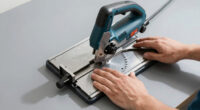
Cabinet toe kicks are small recessed areas at the bottom of cabinets that improve looks, protect against scuffs, and allow you to stand comfortably close to your counters. The right dimension depends on factors like cabinet style, ergonomic needs, and floor unevenness. Typically, they measure about 3 to 4 inches high and 3 inches deep, but customizing them guarantees a perfect fit. Keep exploring to discover how to choose the best size for your space.
Key Takeaways
- The right toe kick height typically ranges from 3 to 4 inches for optimal comfort and aesthetics.
- Depth around 3 inches ensures a seamless look while providing enough space for foot placement.
- Proper width matches the cabinet base, creating a cohesive and balanced appearance.
- Accurate measurements considering flooring and cabinet design ensure a “feels right” fit.
- Professional assistance can help customize dimensions for ergonomic comfort and style consistency.

Sanbege Stainless Steel Toe Kick Cover, 4" x 102" Baseboard Plate, Self Adhesive Kickplate for Bottom of Door, Kitchen Island, Cabinet, Cupboard (Brushed Nickel)
MATERIAL: The toe kick cover is made of stainless steel in brushed nickel finish, which is rustproof, scratch…
As an affiliate, we earn on qualifying purchases.
As an affiliate, we earn on qualifying purchases.
What Is a Cabinet Toe Kick and Why Does It Matter?

Have you ever noticed the small recessed area at the bottom of a kitchen cabinet? That’s a toe kick, a vital component that improves your cabinet’s functionality and appearance. It protects the base from wear and tear, enhancing cabinet durability over time. A well-designed toe kick allows you to stand closer to your countertop comfortably, making kitchen tasks easier. Maintaining it is simple but important; regular cleaning prevents dirt buildup that can damage the material. If neglected, debris can cause deterioration, affecting both durability and the cabinet’s overall look. The toe kick’s design and condition directly impact how long your cabinets last and how they perform daily. Paying attention to toe kick maintenance ensures your kitchen remains both stylish and functional for years to come. Energy-efficient materials used in construction can also extend the lifespan of your cabinetry by resisting moisture and damage.

UtySty 10 Pack Toe Kick Clips for Cabinet Leveler Leg 1 inch Adjustable Furniture Legs Kitchen Plinth Skirting Board Snap Plastic Feet Fastener Bracket PVC Wooden Panel Trims Kicker Connector
Package include:10 Pcs Clasp+10 Pcs Base (Black),Suitable for feet with diameter 26-28mm/1.02"-1.1".
As an affiliate, we earn on qualifying purchases.
As an affiliate, we earn on qualifying purchases.
What Are the Standard Toe Kick Dimensions?
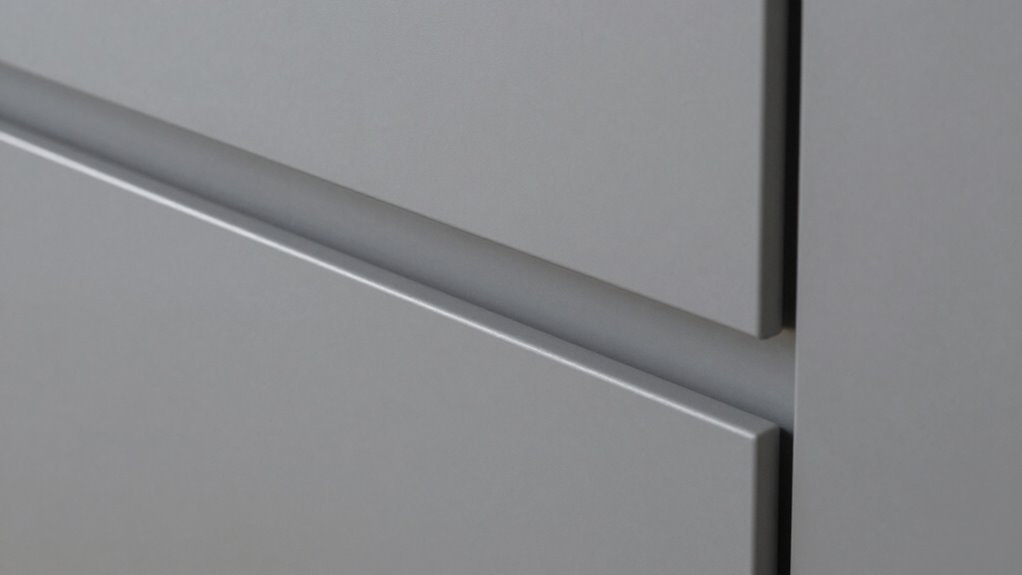
Standard toe kick dimensions are designed to optimize comfort and functionality in your kitchen. Typically, the height ranges from 3 to 4 inches, providing enough space for your toes to move comfortably while standing close to the cabinets. The depth usually measures around 3 inches, ensuring it blends seamlessly with cabinet aesthetics without protruding. Widths vary depending on cabinet size but generally match the cabinet base for a cohesive look. These dimensions help maintain a sleek appearance while offering practical benefits. Choosing the right toe kick size also impacts material durability, as properly proportioned kicks reduce wear and tear over time. When selecting standard dimensions, consider your cabinet style and user comfort, ensuring the toe kick complements your kitchen’s overall design and function. Additionally, understanding toe kick standards can help ensure your kitchen remains both stylish and ergonomic over time.

Woodworking & Carpentry Jig Set, Woodworking Scribing Tool Scribes Lines on Fillers Panels Toe Kick Scribes Tool for Carpenters Countertops Flooring Paneling Cabinet Furniture Installations
Solves the problem of holding long fillers whilst working alone
As an affiliate, we earn on qualifying purchases.
As an affiliate, we earn on qualifying purchases.
How to Measure Your Cabinet Base for the Perfect Toe Kick
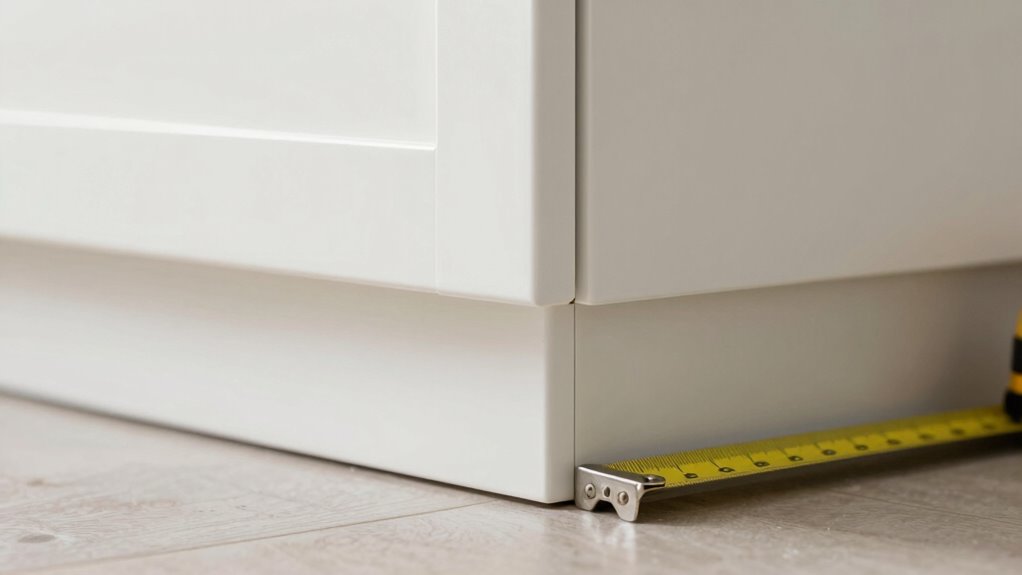
To make certain your toe kick fits perfectly, start by measuring the width and depth of your cabinet base. This ensures your toe kick complements your cabinet hardware and matches the overall design. Next, consider the height needed for comfortable foot clearance. Here are key steps:
Ensure your toe kick fits perfectly by measuring cabinet width, depth, and height for comfortable clearance.
- Measure the cabinet base width at the bottom of the cabinet.
- Determine the depth from the front edge to the back wall.
- Check the height from the floor to the bottom of the cabinet, accounting for countertop materials.

Sanbege Stainless Steel Toe Kick Cover, 4" x 102" Baseboard Plate, Self Adhesive Kickplate for Bottom of Door, Kitchen Island, Cabinet, Cupboard (Brushed Black)
Material: The toe kick cover is made of stainless steel in brushed black finish, which is rustproof, scratch…
As an affiliate, we earn on qualifying purchases.
As an affiliate, we earn on qualifying purchases.
Factors That Influence Toe Kick Height and Depth
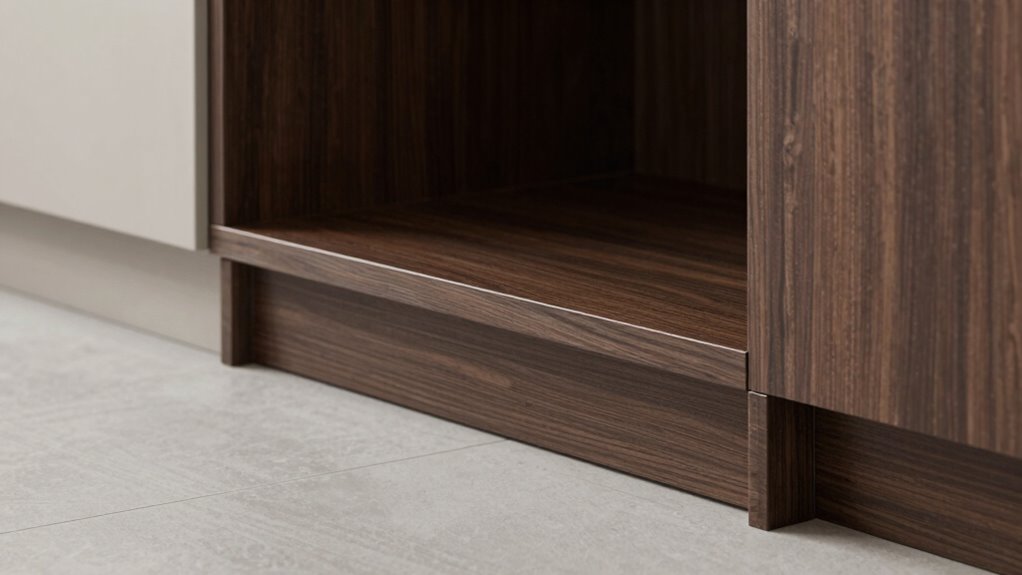
When choosing toe kick height and depth, you’ll want to take ergonomic comfort standards into account ease of movement and reduce strain. At the same time, your design aesthetic plays a role in creating a seamless look that complements your cabinetry. Balancing these factors helps you achieve both functionality and visual appeal. Additionally, understanding precious metal IRA options can provide insight into securing your investment portfolio while maintaining aesthetic value in your home design.
Ergonomic Comfort Standards
Understanding ergonomic comfort standards is essential when determining the ideal toe kick height and depth, as these factors directly impact user comfort and ease of movement. Your choice of cabinet materials can influence toe kick design, ensuring it minimizes strain during daily use. Proper toe kick depth should also account for kitchen lighting, preventing shadows that hinder visibility and safety. To optimize comfort, consider these factors:
- The height aligns with your natural standing posture for less fatigue
- The depth accommodates foot placement without discomfort
- The materials used allow for a smooth, non-slip surface that enhances safety
- Additionally, selecting appropriate standardized measurements can help ensure the toe kick design meets ergonomic safety guidelines.
Design Aesthetics Considerations
Design aesthetics play a significant role in determining the ideal toe kick height and depth, as these elements contribute to the overall look and harmony of your cabinetry. A lower toe kick creates a sleek, modern appearance, while a taller one adds traditional charm. Consider how cabinet ventilation might influence depth choices—deeper kicks allow for better airflow behind cabinets. Additionally, hardware placement impacts visual balance; flush or recessed hardware pairs well with minimal toe kicks, while prominent handles complement more substantial profiles. To help visualize, here’s a quick comparison: features like breathability also influence design decisions, especially when ventilation needs are considered.
| Aspect | Impact on Toe Kick Design | Aesthetic Effect |
|---|---|---|
| Cabinet Ventilation | Deeper kicks improve airflow | Enhances modern, functional look |
| Hardware Placement | Flush hardware suits minimal designs | Creates a clean, integrated appearance |
| Overall Style | Influences height and depth choices | Complements traditional or contemporary styles |
How Toe Kick Size Affects Comfort and Ergonomics
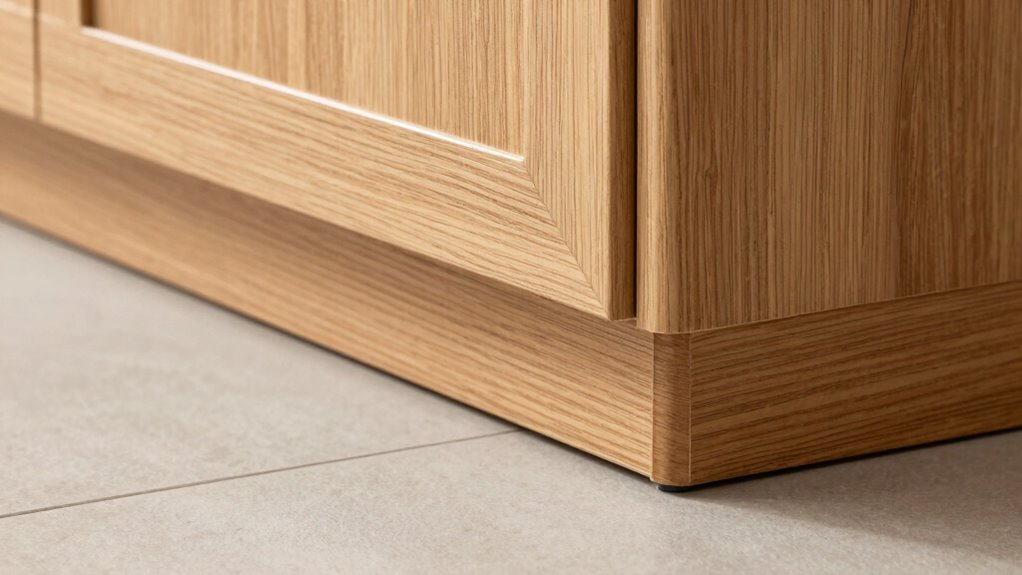
The size of the toe kick plays a crucial role in how comfortable and ergonomic your cabinetry feels during everyday use. A well-sized toe kick offers several ergonomic benefits, reducing strain on your knees and back. When the toe kick is appropriately proportioned, you’ll experience comfort improvements that make cooking and cleaning easier. For example:
- Provides enough space to stand close to cabinets without bending awkwardly
- Allows for natural foot positioning, reducing fatigue
- Minimizes the need to lean forward, promoting better posture
- Incorporating free floating design elements can also enhance accessibility and flexibility in your kitchen layout.
Choosing the right toe kick size enhances your overall comfort and supports ergonomic practices in your kitchen. It ensures you can work efficiently without discomfort, making your daily routines smoother and more enjoyable.
Tips for Designing Aesthetic and Functional Toe Kicks
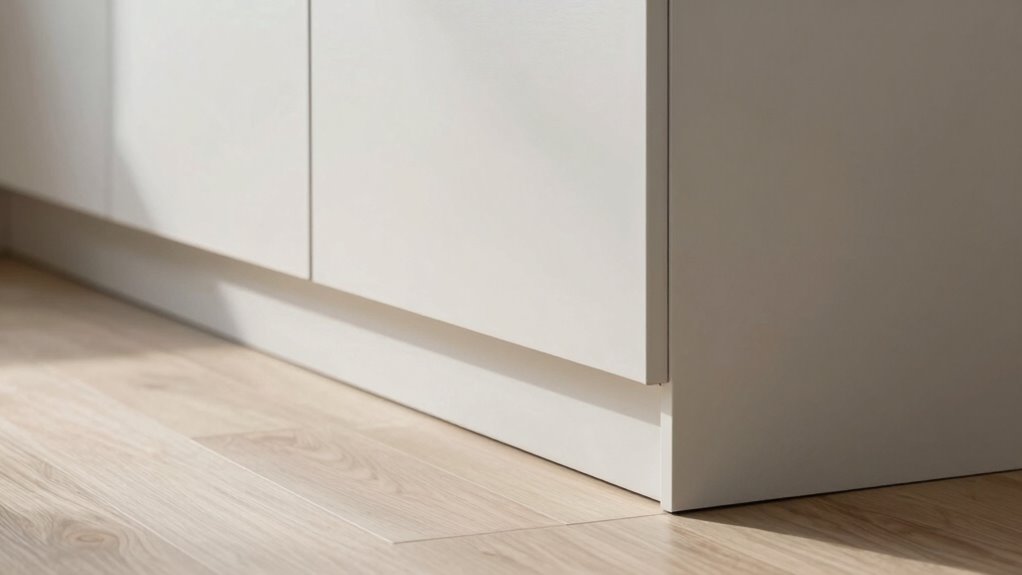
Creating an attractive and functional toe kick starts with balancing aesthetics and practicality. When designing your cabinet, consider how the toe kick complements your overall cabinet design and enhances the kitchen’s look. Choose a finish or material that matches or contrasts stylishly with your cabinets to create visual harmony. Keep the height and depth in proportion to the cabinets and countertop to ensure comfort during kitchen remodeling. Incorporate subtle details like rounded edges or integrated lighting for added elegance. Remember, the toe kick should blend seamlessly into your design while serving its purpose. Paying attention to wall surfaces and finishes ensures your toe kick complements the surrounding elements and contributes to a cohesive look. By paying attention to these details, you guarantee your toe kick enhances both the style and functionality of your kitchen, making it more comfortable and visually appealing.
Common Mistakes When Choosing Your Toe Kick Size

Choosing the wrong toe kick height can make your cabinets uncomfortable to use, so be sure you select a size that fits your needs. Ignoring floor variations might cause the toe kick to look uneven or be ineffective. Pay attention to these details to guarantee your toe kick functions and looks great. Additionally, understanding water flow rate and how it impacts your overall home setup can help you make more informed decisions about cabinet design and installation.
Incorrect Height Selection
Many people mistakenly select an incorrect height for their toe kick, which can lead to uncomfortable or awkward cabinetry. Choosing the wrong height may clash with crown molding or make cabinet hardware less accessible. To avoid this, consider these common pitfalls:
- Setting the toe kick too high, which can interfere with countertop clearance
- Making it too low, resulting in a cramped feel and difficulty cleaning
- Overlooking how crown molding impacts overall cabinet proportions
- Ignoring cabinet ergonomics, which ensures the toe kick height supports both comfort and visual harmony
Getting the height right ensures a seamless look and functional access. Remember, the toe kick should complement the crown molding without competing with it. Proper measurement and alignment with cabinet hardware placement are key. An incorrect height can throw off the entire design, making your kitchen feel off-balance or less practical. Choose wisely for a sleek, comfortable finish.
Ignoring Floor Variations
Ignoring floor variations can cause your toe kick to look uneven or feel uncomfortable underfoot. Floors aren’t always perfectly level, and flooring variations can create uneven surfaces. If you don’t take into account these differences, your toe kick may sit too high or low in certain areas, disrupting the overall look and comfort. To avoid this, measure the floor level at multiple points along your cabinetry’s path. Adjust the toe kick height accordingly, ensuring it remains consistent despite flooring fluctuations. Failing to consider these variations can result in gaps, uneven lines, or a toe kick that feels awkward to walk alongside. Taking the time to account for flooring differences ensures your toe kick looks seamless and feels comfortable underfoot, providing a polished, professional finish. Recognizing flooring inconsistencies early helps you make precise adjustments for a flawless result.
How Custom Toe Kicks Can Elevate Your Kitchen’s Look
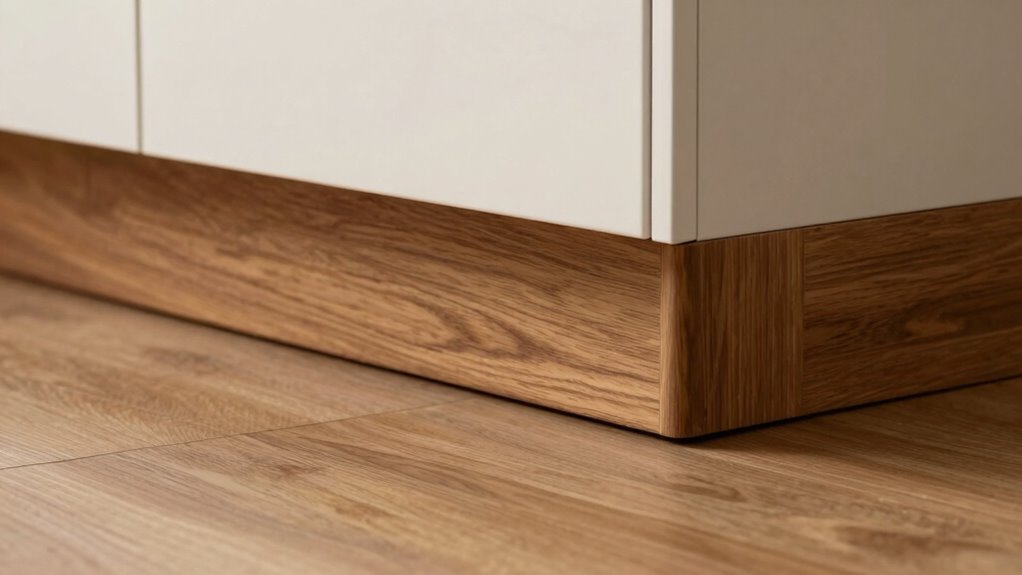
Custom toe kicks offer a simple yet powerful way to enhance your kitchen’s aesthetic. They add a sleek, finished look that seamlessly ties your cabinets to the floor, elevating your overall design. Plus, custom options can improve cabinet durability by protecting against bumps and scuffs. They also enable better storage optimization, hiding clutter beneath cabinets for a cleaner appearance. Consider these benefits:
Custom toe kicks enhance your kitchen’s look, protect cabinets, and hide clutter for a sleek, tailored finish.
- Match toe kicks perfectly to your cabinet style and color
- Customize height for a cohesive, tailored look
- Incorporate unique materials or finishes for added style
Which Toe Kick Size Is Best for Different Cabinet Styles?

Choosing the right toe kick size depends on your cabinet style, whether modern or traditional. You’ll want to think about the ideal height for comfort and look, along with material choices that match your cabinets. Let’s explore how these factors influence the best toe kick size for your kitchen.
Modern vs. Traditional Styles
When selecting a toe kick size, it’s important to take into account whether your cabinet style leans toward modern or traditional design, as each calls for a different approach. For a sleek, modern look, a smaller or concealed toe kick enhances clean lines and minimalism, emphasizing style coordination. Traditional cabinets, however, often feature a more prominent toe kick to add detail and craftsmanship.
Consider these points:
- Modern styles benefit from a low, subtle toe kick for simplicity.
- Traditional designs may include a larger, more noticeable toe kick.
- The choice impacts cabinet design, balancing aesthetics and functionality.
Matching toe kick size to your cabinet style ensures your kitchen feels cohesive and feels “right” in both form and function.
Optimal Toe Kick Height
Selecting the right toe kick height depends largely on your cabinet style, as it influences both appearance and comfort. A standard height of 3 to 4 inches works well for most designs, balancing ease of access with cabinet durability. For modern styles, a slightly lower toe kick can create a sleek, seamless look, while traditional cabinets often benefit from a higher kick for added visual weight. Keep in mind that a well-chosen toe kick improves cabinet stability and reduces wear over time. Proper maintenance tips, like regular cleaning and checking for damage, help preserve its function and appearance. Ultimately, selecting an ideal toe kick height enhances your cabinets’ longevity and ensures they feel “right” for your space.
Material Compatibility Tips
The material you choose for your toe kick should complement your cabinet style to guarantee durability and a cohesive look. Selecting the right material depends on your cabinet materials and finish options. For modern cabinets, sleek materials like MDF or laminated wood work well, offering smooth finishes and easy maintenance. Traditional styles benefit from solid wood toe kicks, which match wood grain cabinets and add warmth. For a more seamless appearance, consider painted or veneer finishes that blend with your cabinet color.
- Use hardwood or MDF for a polished, durable finish that matches your cabinet style
- Match materials like plywood or MDF with painted or laminate finishes for versatility
- Consider moisture-resistant materials like PVC or vinyl for kitchens prone to humidity
When to Get Professional Help for Toe Kick Sizing and Installation
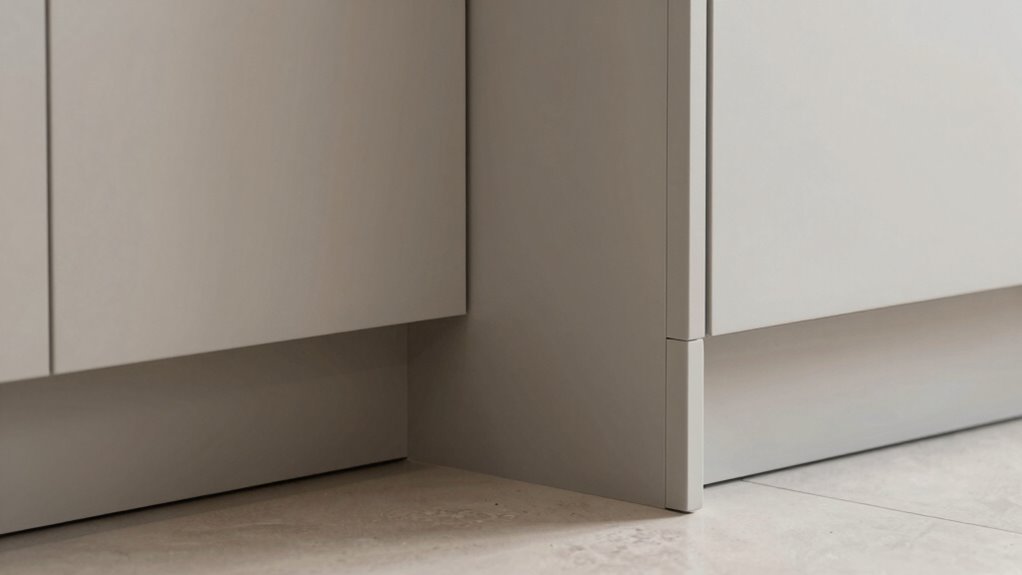
If you’re unsure about measuring and installing toe kicks accurately, it’s often best to call in a professional. Proper sizing assures your toe kick fits seamlessly, avoiding gaps that can hinder kitchen ventilation or catch on cabinet hardware. Professionals have the tools and experience to get precise measurements, especially if your cabinets have unusual dimensions or complex designs. They can also handle installation efficiently, reducing the risk of damage or uneven placement. If you’re unsure about how to coordinate toe kick height with existing cabinet hardware or layout, a pro can advise you on best practices. Getting expert help guarantees a clean, functional finish that enhances your kitchen’s look and usability, saving you time and frustration in the long run.
Frequently Asked Questions
Can Toe Kicks Be Customized Beyond Standard Dimensions?
Yes, you can customize toe kicks beyond standard dimensions. Many manufacturers offer custom height options, allowing you to tailor the toe kick to your specific needs. You can also choose decorative design choices to match your cabinet style, adding a unique touch to your kitchen. This flexibility helps guarantee your cabinets not only fit perfectly but also reflect your personal aesthetic, making your space more functional and stylish.
What Materials Are Best for Durable Toe Kicks?
For durable toe kicks, you should choose materials like hardwood, PVC, or MDF, which withstand moisture and daily wear. When considering toe kick height and design, opt for sturdy materials that can handle foot traffic without damage. A well-designed toe kick using robust materials guarantees longevity, maintains aesthetic appeal, and provides comfort. Make sure your selected material aligns with your cabinet style and offers the durability needed for everyday use.
How Do Toe Kicks Impact Cleaning and Maintenance?
Think of toe kick cleaning like dusting a hidden corner; it keeps your kitchen fresh. Toe kicks make maintenance easier by preventing debris buildup and allowing quick cleaning. Regular maintenance tips include wiping with a damp cloth and avoiding harsh chemicals. This simple step can prolong your cabinets’ lifespan, prevent stains, and keep your space looking neat. Proper care ensures your kitchen remains inviting and functional for years to come.
Are There Eco-Friendly Options for Toe Kick Materials?
Yes, you can choose eco-friendly toe kick materials. Look for options made from sustainable materials like bamboo, cork, or reclaimed wood. Recycled options, such as plastic or metal with recycled content, also work well. These choices reduce environmental impact and promote sustainability. By selecting eco-friendly materials, you can maintain a stylish kitchen while supporting environmental conservation efforts. It’s a practical way to make your space greener without compromising on design.
How Do I Match Toe Kicks With Different Cabinet Finishes?
Think of contrasting or complementing your cabinet design to match toe kicks with different finishes. If you have sleek, modern cabinets, choose toe kicks in a similar glossy or matte shade for a seamless look. For rustic or textured cabinets, opt for wood-toned or distressed finishes. This approach enhances aesthetic appeal, ensuring your toe kicks blend harmoniously or stand out intentionally, creating a cohesive and stylish kitchen space.
Conclusion
Choosing the right toe kick size might seem small, but it makes a big difference—like the difference between a cluttered countertop and a sleek, functional space. While standard dimensions offer comfort and style, custom options let your personality shine through. Don’t settle for guesswork or shortcuts; instead, consider it’s the foundation of your kitchen’s comfort and look. When in doubt, professional help guarantees your toe kick feels just right—because details matter.