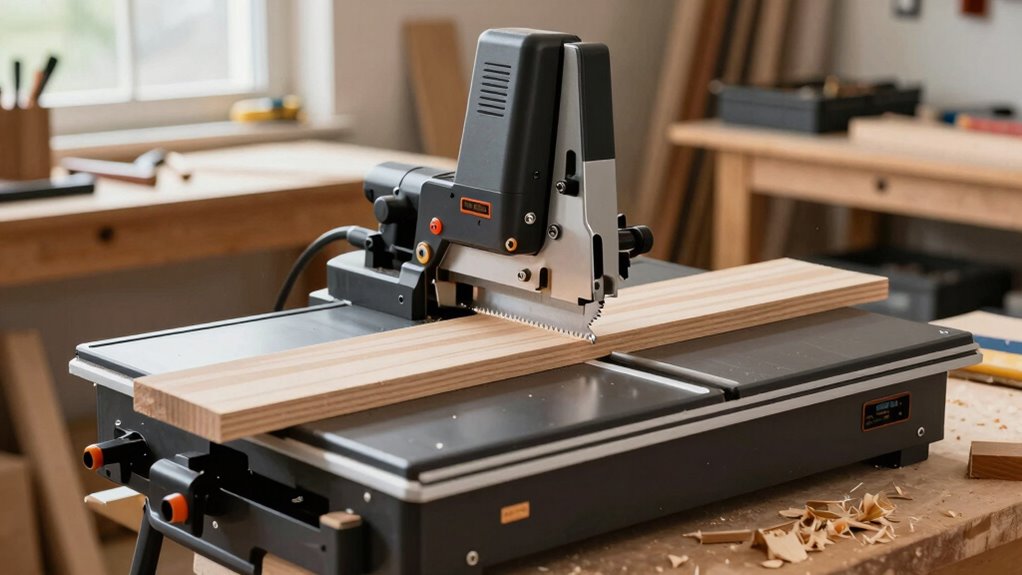

Benchtop bandsaws are more capable than you might expect, especially for small workshops or hobbyist projects. With a compact design, they can handle a variety of woodworking tasks, from precise cuts to thicker materials, when equipped with a strong motor and proper blade tension. Easy adjustments and routine maintenance make them flexible tools that boost efficiency. Keep exploring to discover how selecting the right features can turn your benchtop bandsaw into a versatile problem solver.

Get business pricing on tools and workshop supplies
- Business-only prices and quantity discounts
- Tax-exempt purchasing
- Multiple users, one account, clear invoices
Key Takeaways
- Compact design makes benchtop bandsaws ideal for small workshops and hobbyist projects.
- Proper blade tension ensures accurate cuts and extends blade life, enhancing overall performance.
- Easy adjustment features facilitate quick blade changes and routine maintenance.
- Sufficient motor power (1/3 to 3/4 HP) handles a variety of materials effectively.
- Well-chosen benchtop bandsaws offer versatile, reliable performance for many woodworking tasks.
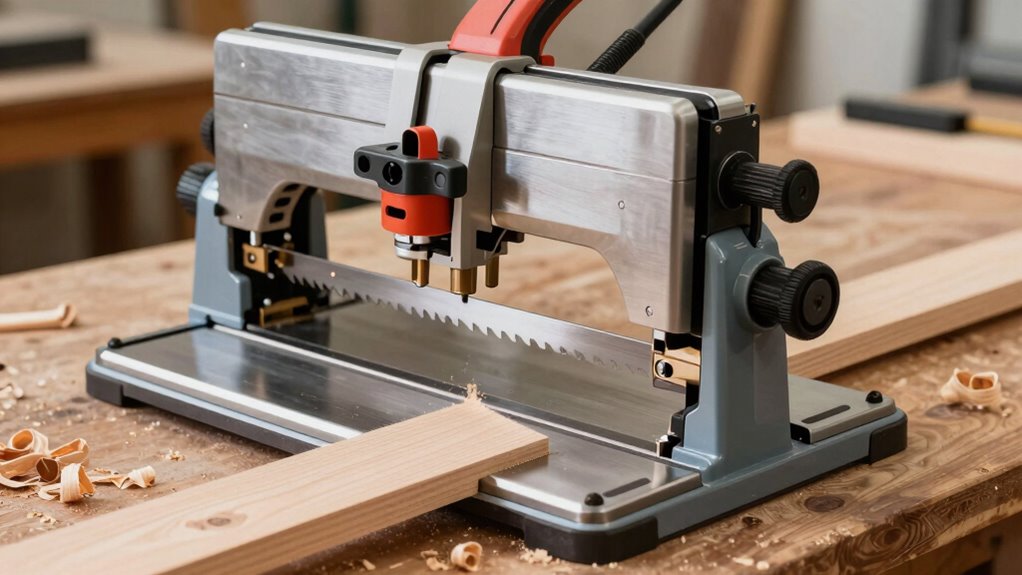
Are you looking for a versatile and space-efficient tool to handle your woodworking projects? Benchtop bandsaws might surprise you with how much they can do, especially when you choose the right one. Many overlook these compact machines, assuming they’re only good for simple cuts or small projects. However, a well-chosen benchtop bandsaw offers impressive capabilities, making it a valuable addition to any workshop. The key to unlocking their full potential lies in understanding some of their core features, like blade tension and motor power.
Blade tension is fundamental to getting clean, accurate cuts on a bandsaw. When you set the tension correctly, the blade stays straight and true during operation, preventing wandering or pinching. A good benchtop bandsaw allows for easy adjustment of blade tension, giving you precise control. This is especially important when switching between different blade types or thicknesses. Proper tension ensures that the blade runs smoothly, reduces wear, and extends its lifespan. It also improves safety, since a loose or overly tight blade can cause vibration or even break during use. Taking the time to learn how to adjust blade tension properly means you’ll get cleaner cuts and a more reliable tool overall. Additionally, understanding blade tension can help prevent premature machine wear and potential accidents. Investing in a bandsaw with easy adjustment features can make routine setup and maintenance much more manageable. Furthermore, selecting a bandsaw with adjustable blade guides can enhance accuracy and reduce blade deflection during cuts. Being aware of the motor specifications helps ensure your bandsaw can handle the scope of your projects without strain or overheating. Moreover, choosing a model with robust build quality can contribute to longer-lasting performance and durability.
Proper blade tension ensures clean cuts, safety, and blade longevity on your benchtop bandsaw.
Motor power is another critical factor that influences how well your benchtop bandsaw performs. While these machines are smaller than their floor-standing counterparts, they still pack enough punch for a variety of tasks. A motor with at least 1/3 to 1/2 horsepower is usually sufficient for most hobbyist and light to medium-duty projects. If you plan on cutting thicker or denser materials, look for a bandsaw with a more powerful motor, perhaps 3/4 horsepower or higher. The motor’s strength directly impacts the speed and ease with which you can cut through different types of wood. A more powerful motor reduces strain on the machine, minimizes bogging down, and allows for smoother, more consistent cuts. Plus, it provides the confidence to tackle a variety of projects without worrying about the machine struggling or overheating.
In essence, a benchtop bandsaw isn’t just a small, secondary tool; it’s a surprisingly capable machine when you pay attention to its features. Proper blade tension and sufficient motor power are what make all the difference. With these in mind, you can confidently select a bandsaw that fits your needs, knowing it will serve you well for a range of woodworking tasks. Don’t underestimate the potential of these compact machines—they’re more than capable of handling the right work when you understand how to optimize their key features.
benchtop bandsaw with adjustable blade tension
As an affiliate, we earn on qualifying purchases.
As an affiliate, we earn on qualifying purchases.
Frequently Asked Questions
Can Benchtop Bandsaws Cut Metal or Only Wood?
Benchtop bandsaws can cut both wood and metal if you choose the right model and blade. They offer excellent wood versatility, making them popular for woodworking projects. For metal cutting, you’ll need a bandsaw designed specifically for that purpose, with a suitable blade and proper safety precautions. Always verify the bandsaw’s specifications before attempting to cut metal, and confirm you’re using the appropriate blade for safe and efficient results.
What Safety Precautions Are Necessary When Using a Benchtop Bandsaw?
You should always wear safety gear, like goggles and gloves, when using a benchtop bandsaw. Before cutting, verify blade tension to prevent accidents. It’s essential to keep your hands clear of the blade and avoid loose clothing that can catch. Regularly inspect the saw for damaged parts and make sure the workpiece is secure. Following these safety precautions helps you operate the bandsaw safely and effectively.
How Do I Maintain and Clean My Benchtop Bandsaw?
To maintain and clean your benchtop bandsaw, regularly check blade tension to ensure smooth cuts and prevent damage. Keep the wheels aligned for peak performance, adjusting as needed. Clean the saw’s surfaces and dust collection area with a brush or vacuum to prevent buildup. Periodically inspect and replace worn blades, and lubricate moving parts to keep everything running efficiently. Proper maintenance extends your saw’s lifespan and enhances safety.
Are Benchtop Bandsaws Suitable for Professional Woodworking?
Benchtop bandsaws are suitable for professional woodworking when you focus on blade tension and dust collection. You need to guarantee the blade tension is precise for clean cuts and accurate work. Good dust collection keeps your workspace safe and your saw running smoothly. While they might not match larger, industrial models, many benchtop bandsaws offer the power and features professionals need for detailed, high-quality projects.
What Are the Typical Price Ranges for Benchtop Bandsaws?
Benchtop bandsaws usually cost between $150 and $600, depending on features like blade tension adjustment and dust collection. Cheaper models may lack precise blade tension controls, making accurate cuts tricky. Higher-end options often include built-in dust collection systems, helping keep your workspace cleaner. You can find a good balance of quality and affordability within this range, ensuring you get a machine suited for your specific woodworking needs.
compact benchtop bandsaw for woodworking
As an affiliate, we earn on qualifying purchases.
As an affiliate, we earn on qualifying purchases.
Conclusion
Don’t underestimate benchtop bandsaws—they’re the hidden heroes of your workshop. With the right work, they can outshine even the most expensive, full-sized machines. Compact, versatile, and surprisingly powerful, these saws pack a punch that’ll leave you wondering how you ever got along without one. Whether you’re a hobbyist or a seasoned pro, this mighty little tool will transform your projects and make you feel like a woodworking wizard. Trust me, once you try it, you’ll never look back!
hobbyist benchtop bandsaw 3/4 HP
As an affiliate, we earn on qualifying purchases.
As an affiliate, we earn on qualifying purchases.
small workshop bandsaw with easy blade adjustment
As an affiliate, we earn on qualifying purchases.
As an affiliate, we earn on qualifying purchases.
Halloween Picks
halloween
As an affiliate, we earn on qualifying purchases.