Stub tenons are a smart choice when you want strong, aesthetically pleasing joints in woodworking without extending through the material. They provide a snug fit in corresponding mortises, making them ideal for tight spaces and projects emphasizing structural integrity. Using hardwoods like oak or maple guarantees durability, while precise measurements assure a successful fit. Plus, the right workshop setup enhances safety and efficiency. Discover more about how stub tenons can elevate your woodworking projects.
Key Takeaways
- Stub tenons are shorter than traditional tenons, providing a strong bond without extending through the material for aesthetic appeal.
- They create snug, strong connections ideal for furniture and cabinetry, capable of withstanding stress and movement.
- Selecting the right hardwood, like oak or maple, enhances joint strength and durability over time.
- Precision in measurements and calibrated tools ensures accurate cuts, improving joint integrity and overall project quality.
- A well-organized workshop with a focus on safety contributes significantly to efficient construction and successful outcomes.
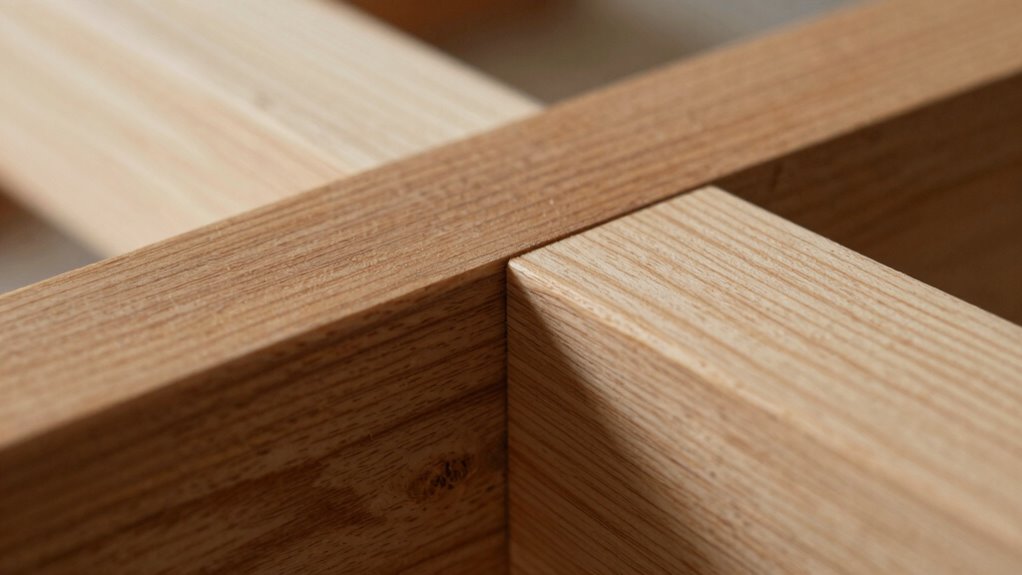
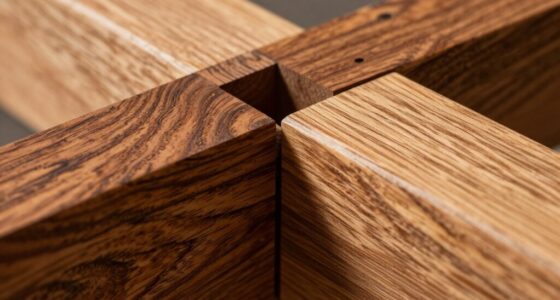
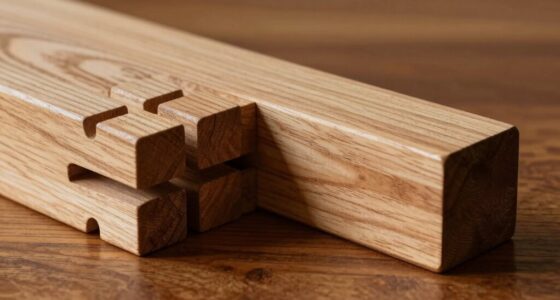
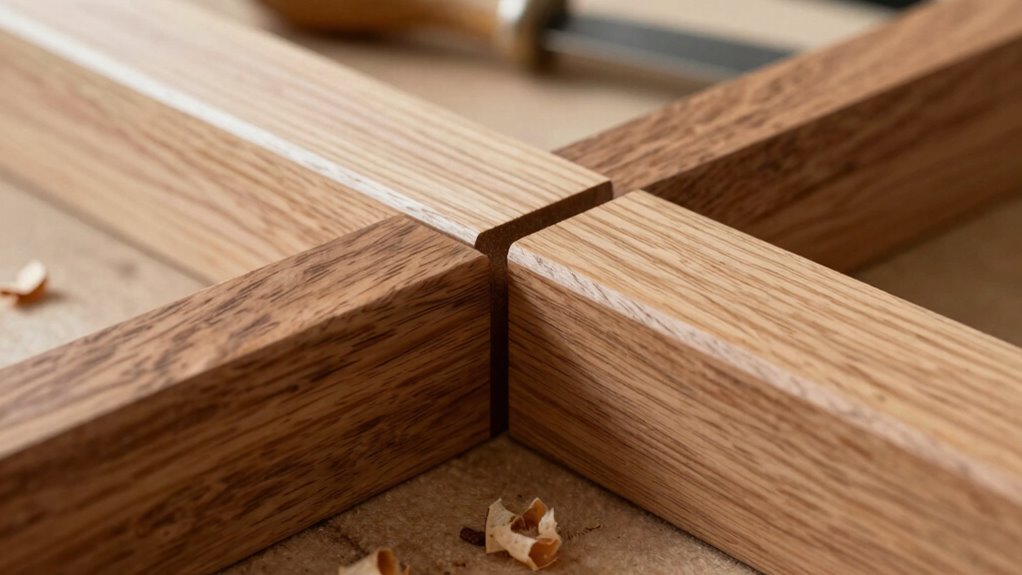
When you explore woodworking, understanding joint types is crucial, and stub tenons are no exception. These joints are a practical choice for various projects, offering a unique combination of simplicity and effectiveness. Stub tenons are shorter than traditional tenons and create a strong bond without extending through the material. This can be particularly advantageous in situations where aesthetics or structural integrity are paramount.
One of the main benefits of using stub tenons is their joint strength. They’re designed to fit snugly into the corresponding mortise, allowing for a solid connection between pieces. This snug fit guarantees that the joint can withstand stress and movement, which is essential in furniture and cabinetry. When you choose to use stub tenons, you’re also emphasizing the importance of reliable construction in your projects. Their shorter length often makes them easier to work with, especially in tighter spaces where traditional tenons might be cumbersome.
Stub tenons provide a snug, strong connection, ensuring reliability and ease of use, especially in tight spaces.
Material selection plays a critical role in the effectiveness of stub tenons. The type of wood you choose can greatly influence both the strength and durability of the joint. Hardwoods like oak or maple are excellent choices, providing the robustness required for long-lasting joints. On the other hand, softer woods might not offer the same level of support, leading to potential weaknesses over time. By understanding the characteristics of your chosen material, you can optimize your joint strength and guarantee that your stub tenons perform admirably. Additionally, selecting suitable woodworking materials can simplify your process and improve the overall quality of your project. Recognizing the importance of material properties can help you make better choices for your specific application. Being aware of wood properties can also guide you toward the best practices for shaping and fitting your joints. Paying attention to these properties can also improve your overall workshop safety and efficiency during the construction process.
Another aspect to reflect on is the precision of your cuts. A well-fitted stub tenon requires accurate measurements and careful crafting. If the tenon is too loose, it can compromise the joint’s integrity, while a tenon that’s too tight can cause splitting or damage to the material. Take your time with the setup and confirm your tools are calibrated. Properly executing these cuts also depends on your knowledge of workshop equipment, which ensures safety and accuracy. This attention to detail will pay off in the quality of your finished piece.

PSI Woodworking LCTEN Woodworking Tenon Cutting Tool
Tool length is 9" with a 5" blade & 4" wood handle
As an affiliate, we earn on qualifying purchases.
As an affiliate, we earn on qualifying purchases.
Frequently Asked Questions
What Tools Are Needed to Create Stub Tenons?
To create stub tenons, you’ll need a few essential tools. A table saw or miter saw helps you make precise cuts for the stub tenon advantages. A chisel and mallet are vital for refining the fit, while a router can create clean edges. For accurate measurements, have a tape measure and square on hand. Mastering these stub tenon techniques will guarantee strong joints and enhance your woodworking projects effectively.
Can Stub Tenons Be Used in Outdoor Furniture?
Yes, stub tenons can definitely be used in outdoor furniture. In fact, studies show that properly designed joints can increase the lifespan of outdoor pieces by up to 30%. When considering durability factors, choose weather-resistant materials to enhance strength. Plus, stub tenons can maintain design aesthetics, allowing for clean lines and seamless integration into your furniture’s overall look. Just guarantee you use quality finishes to protect against the elements for lasting beauty.
How Do Stub Tenons Compare to Traditional Mortise and Tenon Joints?
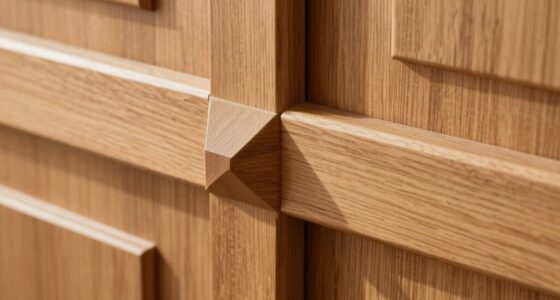
Stub tenons offer unique design advantages compared to traditional mortise and tenon joints. They’re easier to create, saving you time during assembly. Regarding joint aesthetics, stub tenons can provide a cleaner look, as they’re less visible than their traditional counterparts. This makes your furniture appear more streamlined. While both joints are strong, stub tenons can be a smarter choice for certain projects, especially when you want simplicity and elegance combined.
What Wood Types Work Best for Stub Tenons?
Hardwoods like oak, maple, and cherry are your best bets for stub tenons. Imagine the sturdy embrace of dense wood, ready to withstand the test of time. These woods offer high wood density, ensuring your joints maintain their strength under pressure. As you carve and fit your pieces, you’ll appreciate how these materials not only enhance durability but also bring a beautiful grain pattern to your project, marrying form and function seamlessly.
Are Stub Tenons Suitable for Structural Applications?
Stub tenons can be suitable for structural applications, but it depends on design considerations and load capacity. You need to assess the specific load requirements and the wood type you’re using. If the joint’s strength meets the demands of your project, stub tenons can work effectively. However, always verify that the dimensions and materials are well-matched to avoid any weaknesses in the structure you’re creating.

Kreg MortiseMate Loose Tenon Jig – Drill Jig for Woodworking – For Loose Tenon Joinery – Fits Workpieces 1/2" to 1 1/2" Thick
Premium Drill Jig: Effortlessly cut mortises with just a drill; the MortiseMate Loose Tenon Jig has an auto-indexing…
As an affiliate, we earn on qualifying purchases.
As an affiliate, we earn on qualifying purchases.
Conclusion
In summary, stub tenons offer a practical solution for joinery when space is limited or aesthetics are vital. While some believe they sacrifice strength, the right application and design can actually enhance stability. By understanding the nuances of your project and the materials involved, you can confidently choose stub tenons for a clean, efficient connection. Remember, it’s not just about the joinery itself, but how it fits into the bigger picture of your craftsmanship.

BICB 200-Piece Fluted Dowel Pins – 1/4" x 1-1/2" Premium European Beechwood – Kiln-Dried Hardwood Connectors for Furniture, Joinery & DIY Crafts
📏 PRECISION FIT & FLUTED DESIGN These 1/4" x 1-1/2" connectors feature a ribbed surface for superior glue…
As an affiliate, we earn on qualifying purchases.
As an affiliate, we earn on qualifying purchases.

Saysurey 4 Pcs Woodworking Ruler, Metal Precision Pocket Rulers 12, 8, 6 Inch with 3D Multi Angle Measuring Ruler 45/90 Degree for Precision Measuring Marking Inch and Metric
Your Woodworking Essential: a package that includes 3 pieces of woodworking ruler (in 3 sizes, 6 inches, 8…
As an affiliate, we earn on qualifying purchases.
As an affiliate, we earn on qualifying purchases.